Alpha Classics Sale 2026
Over 600 titles from Alpha Classics are on sale now at ArkivMusic!
Discover titles from composers such as Giacomelli, Haydn, Godowsky and more!
Sale ends at 9:00am ET, Tuesday, April 14th, 2026.
622 products
Reflet / Piau, Verdier, Orchestre Victor Hugo
Clair Obscur (Alpha 727), dedicated to German lieder with orchestra, explored the antagonism between light and shadow. Reflet conjures up the nuances and transparencies of French melodies. There is in reflection the idea of an echo, the shadow of a disquieting double, of a plural, diffracted sparkle… A clash of deceptive mirages, a kaleidoscope of senses and flashes of light, it interweaves in strange parallels the score of our lives, adorned with gold and illusions", writes Sandrine Piau. Berlioz, Gauthier, Britten, Hugo, Verlaine, Baudelaire, Duparc, Koechlin, Ravel, Mallarmé... the encounters between these composers and poets"create in me a firework display of colours and shimmers", concludes the French soprano, who is making her 14th recording for Alpha Classics.
REVIEW:
Here is a whole album that makes up a single, sublime musical utterance. One feels that every note is almost foreordained as the program opens with classic orchestral songs from Berlioz, Henri Duparc, and the less common Charles Koechlin, proceeding into darker, more mysterious realms with Ravel’s Three Mallarmé Songs, and ending with the youthful ebullience of Britten’s Quatre chansons françaises. Piau’s voice is delicate, soaring, and richly beautiful; one of the miracles of the current scene is its durability and versatility. Her support from conductor Jean-François Verdier, leading the Victor Hugo Orchestra, is confidently smooth, never intruding on the spell Piau weaves.
-- AllMusic.com (James Manheim)
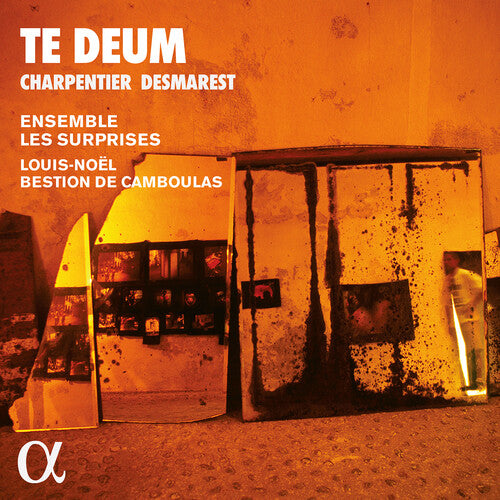
Charpentier & Desmarest: Te Deum / Camboulas, Ensemble Les Surprises
Two Te Deums go head to head! The famous one by Marc-Antoine Charpentier and a completely new one by Henry Desmarets. Charpentier and Desmarets, remarkable composers of both sacred music and opera, shared a taste for Italian music and travel, but they also shared the disadvantage of having spent some time in Jean-Baptiste Lully's 'shadow'! Desmarets' life was somewhat tormented, between disgrace and exile; it was while he was superintendent of music at the Court of Lorraine that he composed two Te Deums, including the Te Deum"de Lyon". Written for the same ensemble as Charpentier's famous Te Deum, it uses trumpets and timpani for the grandiloquent sections. It is a true work of craftsmanship, notably in the variety of instrumentation, but also in its alternation of different vocal forces.
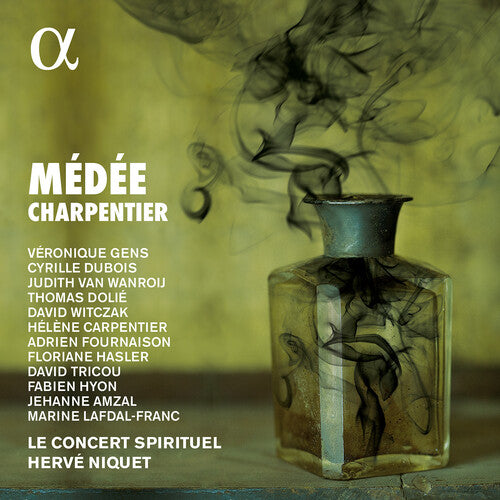
Charpentier: Médée / Niquet, Le Concert Spirituel
Médée, a tragedy in a prologue and five acts on a libretto by Thomas Corneille, was Marc-Antoine Charpentier’s first and last collaboration with the Académie Royale de Musique. The work was premiered on 4 December 1693, when Charpentier was exactly fifty years old and at the height of his career. Louis XIV attended the performance, proving that it was an eagerly awaited event. Yet this sombre drama, which disconcerted the public, was withdrawn after just ten performances, and not heard again until 1976. A specialist in the French repertory and a close associate of the Centre de musique baroque de Versailles, where he has followed all the advances in research and historically informed performance for thirty-five years, Hervé Niquet has endeavoured, in presenting this new Médée, scrupulously to apply all the scholarly findings available to us today.
Shadows of My Ancestors / Behzod Abduraimov
Whereas Prokofiev was captivated by Romeo and Juliet, Ravel had shut himself away a quarter of a century earlier in Levallois Perret to compose Gaspard de la nuit, inspired by Aloysius Bertrand's collection of poems subtitled Fantaisies à la manière de Rembrandt et de Callot. In 1973, the Uzbek composer Dilorom Saidaminova paid tribute to Mussorgsky's Pictures at an Exhibition and composed The Walls of Ancient Bukhara, which offers a sonic view of the historic centre of the Central Asian city founded four or five centuries before the common era. Her compatriot Behzod Abduraimov was keen to pay tribute to this little-known composer and record her music, which, like the other two works on this album, is evocative and colourful.
Messiaen: Quartet for the End of Time - Murail: Stalag VIIIA / Het Collectief
Philarmonica - Matteis, Purcell, & Mrs. Philarmonica / Le Consort
Mozart: Concertos; Andante for Flute
J.S. Bach: Cello Suites Nos. 3 & 4
Bach: Transcriptions / Fortin, Martin
"Johann Sebastian Bach used the recorder in two Brandenburg concertos and some twenty cantatas and oratorios, but alas, he left us no sonata with harpsichord," say Julien Martin and Olivier Fortin. Arranging chamber music for a variety of instrumental ensembles was a widespread practice in the eighteenth century. Bach himself seems to have created a number of works that did not necessarily require the use of a specific instrument. Here Julien Martin and Olivier Fortin, musical partners for many years, present the Sonata in F major, originally written for transverse flute and continuo, transcriptions of the Trio Sonata for organ No. 3 in E minor, the Partita for violin No. 2 in G minor, and the Chorale 'Nun komm, der Heiden Heiland', whose extensive ornamental flourishes elongate and transform the chorale melody to the point of rendering it unrecognisable.
Enigma / Aristidou, Gerzenberg, J. Widmann
‘Enigma’ is the Greek word for ‘riddle’, ‘mystery’, ‘secret’. At the moment of entering or leaving life, there is always a sound: the cry of a newborn baby or the last sigh of a dying person giving up the ghost. Soprano Sarah Aristidou sets out in search of the original sound in this program, which opens with Andreas Tsiartas’s Lamento Turco. The voice emerges from silence in a wordless lament on the vowel ‘A’. The piece ends with a heart-rending, ‘archaic’ scream... Rachmaninoff’s Vocalise also uses the vowel ‘A’ ... In Schubert’s Der Hirt auf dem Felsen, a shepherd sings across the valley: ‘The farther my voice carries, the clearer it comes back to me.’ In Messiaen’s Répétition planétaire, the singer’s call ‘Ahi’ is accompanied by the music of the planets and stars... After visiting music by Wolf and Ravel, the odyssey ends with a work by Jörg Widmann for clarinet, soprano and piano founded on the vowels ‘A’ and ‘O’. Naturally, it is Widmann himself who plays the clarinet part, as he does in Schubert’s Hirt auf dem Felsen, with Daniel Arkadij Gerzenberg at the piano.
REVIEWS:
[This] recital is a mixture of the very familiar and the totally unfamiliar, starting on an exotic note with Tsiartas’s lament, an unaccompanied, wordless vocalise that seems quite a workout for the singer. This is followed by Rachmaninoff’s VERY familiar ‘Vocalise’, also beautifully sung[.] The performance here of the lesser-known ‘A-Oo!’ is warmly expressive. Despite its brevity, this is not really a lightweight song. Ms. Aristidou climbs the vocal heights of Schubert’s ‘Shepherd on the Rock’ with aplomb...a radiant performance, with glowing clarinet playing from Jörg Widmann.
The album notes describe the title work, ‘Enigma’, as “the meeting of the wind and the strings of an Aeolian harp [that] creates a mysterious sound, while soprano and pianist improvise on the search for the answer.” It’s formed around a short text by Mr. Gerzeberg based on a Yiddish poem: “The world asks the old question / stars without mystery / disrupted love / as I fell through the clouds / you became faceless”. I’m not going to claim I’ve worked out what it means yet. It certainly IS an enigma—and a very effective introduction to Wolf’s well-loved song. Ms Aristidou’s [rendering of Wolf's "To an Aeolian Harp"] is gorgeously ecstatic and deeply expressive.
Ravel’s Greek song ["Song of the Lentisk Gatherers"] continues the mood of the Wolf in a more introspective vein, as does Schubert’s Chopinesque vocal ‘Nocturne’, with Ms. Aristidou and her accompanist navigating each twist and turn of reflective melody with aplomb. Messiaen’s spiky "L'escalier redit," with its sparkling accompaniment and vocal leaps, brings a definite change to the mood. Clarinetist Widmann wrote and performs in the long (14 minutes), improvisatory closing work, the Sphinx’s sayings and riddles being based entirely on the vowels A and O, representing Alpha and Omega. It ends on a tentative, questioning note.
This recital is a little more “out there” than Carolyn Sampson’s, but I found it riveting, even the decidedly ambitious closing improv. I like the combination of excellent performances of familiar songs with new, unfamiliar works. Kudos to Ms Aristidou and her partners for endeavoring to give us more than just a boilerplate song recital. The recorded sound is, by the way, excellent, with plenty of spaciousness in the otherworldly closing work.
-- American Record Guide
This Mediterranean-inspired album opens with Andreas Tsiartas’s striking Lamento Turco, an increasingly imploring vocal meditation delivered with passion and imagination by Aristidou. Rachmaninov’s oversentimental Vocalise is then dispatched swiftly, before his ‘A-oo!’, a weighty song of yearning.
[The] performance [of Schubert's "Shepherd on the Rock"] benefits from Widmann’s bright, glowing sound and an expansive, arch-Romantic approach from Aristidou (whose voice is really terrific).
Aristidou’s approach is fine in the earlier repertoire but really comes to life in newer works, including Messiaen’s ‘Répétition planétaire!’ (from the cycle Harawi), depicting the music of the universe. Gerzenberg shines here, too, layering colours and textures with care and craft. The exotic improvisation ‘Enigma’ works well and does not outstay its welcome.
The move to Wolf’s setting of Mörike’s paean to an Aeolian harp is successful, not least because of the exquisitely judged piano sound. Ravel’s popular Greek song ‘Chanson des cueilleuses de lentisques’ is breathtakingly intimate, hazy with sunshine. Schubert’s ‘Nachtstück’ is a touch bland and woolly but redeemed by a luminous rendition of ‘L’escalier redit, gestes du soleil’ (also from Harawi). Widmann’s substantial and otherworldly Sphinxensprüche und Rätselkanons is the perfect close.
This is intriguing and original music making...the performance is tremendously versatile, seductive and white-hot.
-- BBC Music Magazine
Rachmaninoff: Piano Sonata No. 1; Preludes Op. 32 / Geniušas
The pianist Lukas Geniušas has recorded the original version of Rachmaninoff’s Piano Sonata no.1 in the composer’s Swiss home Villa Senar (Sergei & Natalia Rachmaninoff) and on his own piano, an unusually long Steinway & Sons model, presented to the composer and concert pianist by the manufacturer to mark his sixtieth birthday. The difference between the original version of Sonata no.1 and the second version, shorter by more than 100 bars, is not just a question of length, according to Lukas Geniušas: ‘There is a lot lost between the first and second editions. I know it goes against the grain, but I would name this sonata to be one of, if not the best Rachmaninoff’s solo piano work. Its shattering might, its splendor and scale can only be likened to the Third piano concerto, which was written soon after.’ The programme is completed by four preludes from the Op. 32 set.
Ravel & Shostakovich: Piano Trios / Busch Trio
Ravel composed his Piano Trio M67 just before enlisting voluntarily in the First World War. Inspired by the Basque country and its zortziko dance, the Trio ends with a sombre, almost anguished fourth movement. A mood inspired by the impending war? In his Piano Trio No.2, op.67, Shostakovich too is affected by the horrors of war and the death of a close friend. For the first time in the Russian composer’s output, we hear a Jewish theme, a danse macabre echoing the terrible events of the time. Another point in common between the two works is that both include a passacaglia. For the Busch Trio, it was self-evident that these two heart-rending works should be brought together on the same album.
REVIEW:
The Busch Trio has the depth of musicianship to encompass the very different emotions of these great 20th-century chamber works. In the Ravel, the music’s dreamlike quality comes across particularly vividly, without any indulgence. At the same time, there’s no lack of urgency in the more agitated full-blooded sections that have a tremendous visceral energy.
After the Mediterranenan glow of the Ravel, the Shostakovich come as something of a shock. The Finale is the most challenging movement both for the players and the listeners. The Trio focus on holding back for as long as possible, so that when the climax is eventually reached – with the forceful restatement of the Trio’s opening material – the impact is absolutely overwhelming.
-- BBC Music Magazine
Shostakovich: Symphony No. 14 / Franck, Orchestre Philharmonique de Radio France
The baritone Matthias Goerne, the Orchestre Philharmonique de Radio France and Mikko Franck launch a trilogy of Shostakovich’s works for baritone and orchestra with a recording of Symphony No.14. This will be followed by Symphony no.13 (Babi Yar) and the Suite on poems by Michelangelo Buonarroti. The soprano Asmik Grigorian joins Matthias Goerne for this monumental yet highly subtle symphony setting poems by García Lorca, Apollinaire, Küchelbecker and Rilke. Drawing on their vast experience of the work and the passion that characterises them, they successfully embody all its dimensions: ‘The interpretative difficulty of this symphony is the need to hunt out subtle clues that are not immediately perceptible; a formidable expressive force is generated by their multiplicity, which, like a jigsaw puzzle, eventually makes sense’, writes Benjamin François. ‘It is Shostakovich’s fundamental affirmation that the inhuman actions of the executioners, Stalin and his henchmen, may well cause physical death, but cannot prevent the continued spiritual existence of works of art.’
L'opera de quat'sous / Pascal, Le Balcon
This album presents the songs from The Threepenny Opera in a new French translation by Alexandre Pateau. The recording was made at the 2023 Festival d'Aix-en-Provence during the run of the new production of the legendary work by Bertolt Brecht and Kurt Weill in collaboration with Elisabeth Hauptmann, which features the troupe of the Comédie-Française and the musicians of Le Balcon, conducted by Maxime Pascal with Thomas Ostermeier as stage director. In this parody of an opera, the songs are the driving force behind the action and the characters ape the bourgeois lifestyle of the audience, the better to denounce the period of moral confusion they are going through. With Maxime Pascal at the helm of a dozen multi-instrumentalists from Le Balcon, we hear a version based on that of the first performance – hard-hitting and as close as possible to the tremendous creative energy deployed by the two creators of the work in the summer of 1928 – acted and sung by the troupe of the Comédie-Française, who rise to all its challenges with brio. Other special features of this album are a previously unrecorded song on a text by Yvette Guilbert and the linking texts between the songs read in French by Ostermeier himself. As Diapason wrote of this production, ‘Almost a century after its premiere, The Threepenny Opera has lost none of its subversive power.’
Alfonsina - Canciones argentinas / Mariana Flores
In this programme, the soprano Mariana Flores pays tribute to the women of Latin America, and depicts their loves, their sorrows, their joys in music with popular songs from Argentina, its wine-producing region of Cuyo and elsewhere. Accompanied by Quito Gato, who made the arrangements, on piano and guitar and Romain Lecuyer on double bass, this recital is an opportunity for listeners to discover some of the most beautiful popular songs of the twentieth century from the musicians’ homeland, including Dorotea la cautiva and Alfonsina y el mar from Ariel Ramírez’s collection Mujeres Argentinas, published in 1968.
REVIEWS:
What a joy to discover a great baroque soprano in this popular Argentinian music which has never stopped flirting with the baroque heritage! On the guitar, Quito Gato has concocted subtle accompaniments that weave a secret link between the baroque and popular worlds.
-- Le Soir
This disc is full of gems that it would be stupid not to pick up. Mariana Flores and her friend Quito Gato offer us a shot of vitamin D and pure emotion that feels good!
-- La Voix du Nord
Wanderer Without Words / Juliette Journaux
For her first recital, Juliette Journaux evokes the figure of the Wanderer: a wayfarer, a traveller, a man who walks alone, without apparent purpose. He confronts a Nature that is beyond him and his deepest thoughts. The wanderer's drifting is also inseparable from the dream, the acceptance of a dilated time. Musically, one immediately thinks of the worlds of Schubert, Mahler and Wagner... Another aspect of this project is Juliette Journaux's passion for transcription. In tackling the difficult task of transcribing vocal or orchestral works for solo piano, she draws on her knowledge of the orchestra and the operatic voice thanks to her three masters degrees in piano, vocal accompaniment and voice direction from the Conservatoire National Supérieur de Paris... The album opens with Schubert's Lied Der Wanderer in a piano transcription by Liszt, followed by his three Klavierstücke D.946; then comes her transcription of Mahler's last two Lieder eines fahrendes Gesellen, full of pain and sorrow. She also evokes Wagner and his opera Siegfried where Wotan becomes the Wanderer. The farewell and renunciation of the world that is the Abschied from Mahler's Song of the Earth concludes the programme.
REVIEWS:
Enhancing the appeal of pianist Juliette Journaux’s first recital is the concept she used to shape its selections into its nearly hour-long form. In using the figure of the wanderer, a nomad walking alone with no apparent goal or destination, as a guide, she’s sequenced works by Liszt, Schubert, Wagner, and Mahler into an epic travelogue. As a result, the Romantic self-questioning and angst of the prototypical wanderer dovetails seamlessly with the inwardly probing character of the material and lends the recording a satisfying arc and design.
Making the project even more special, the Conservatoire National Supérieur de Paris graduate doesn’t simply perform piano works created by others but for the most part plays personalized transcriptions of the material.
Recorded in October 2022 at Cultural Centre Gustav Mahler in Dobbiaco, Italy, Wanderer Without Words includes two pieces by the great Austrian composer, Journaux transcriptions of “Ich bin der Welt abhanden gekommen” from Rückert-Lieder and “Der Abschied” from Das Lied von der Erde. Augmenting the Mahler selections are a Liszt piano transcription of Schubert’s “Der Wanderer,” Wagner’s “Mein Schlaf Ist Träumen” (from Siegfried), and other Schubert settings. The journey begins, aptly, with Schubert’s “Der Wanderer,” our protagonist setting out in the hope that his journey will bring answers and resolution. As tormented as that traveler is Wagner’s Wotan, whose questions to the all-knowing goddess Erda are met with confounding riddles.
In notes included with the release, Journaux clarifies the difference between reduction and transcription. She says of her Wagner transcription that it’s primarily based on the principle of reduction, “a concentration of all the elements of the orchestral score into two staves that can be played with two hands.” Whereas reduction aims to retain in pianistic form as much as possible of the orchestrated original, transcription, in her view, is a more personal interpretation of the score in that the transcriber might choose to bring greater attention to certain aspects of the work than others. She writes, “When Liszt faithfully adapts a Beethoven symphony for piano, he is making a reduction; when he arranges a Schubert lied for ten fingers with great freedom of writing (arpeggios, octaves, even re-harmonizations), he is making a transcription.”
“Der Wanderer” finds our protagonist embarking on his journey with determination and resolve, his steps guided by the conviction that answers to his questions will materialize and allowing himself moments of rapture as he confidently makes his way. That alternately serene and dramatic statement’s followed by Wagner’s “Mein Schlaf Ist Träumen,” it similarly oscillating between episodes of tenderness and violence. The focus returns to Schubert for the three-part Drei Klavierstücke, the chorale-like “Allegro Assai” first tempestuous and then lyrical, the subsequent “Allegretto” gently pretty in its reminiscing but also turbulent, and the closing “Allegro” rousing and buoyed by optimism. With “In Der Ferne,” a Journaux-transcribed lied from Schubert’s Schwanengesang, the album moves into its second half and shifts the thematic focus to renunciation, specifically renunciation of the self.
In one of the album’s strongest performances, Journaux imbues her gentle reading of Mahler’s “Ich Bin Der Welt Abhanden Gekommen” with a poetic intimacy that reflects a thorough grasp of the material and emotional connection to the composer’s sensibility. The seven-minute performance creates the impression of the wanderer having temporarily stopped moving to wholly surrender to an inner reverie. That peaceful quality carries over into the final Schubert setting, “Wandrers Nachtlied II,” both pieces setting the stage for the closing movement of Das Lied von der Erde, “Der Abschied.”
Journaux’s musicianship and performances...are stellar from start to finish. This exemplary pianist brings virtuosic command to the pieces but even better a thoughtful and sensitive sensibility that allows her to probe the material deeply, whether it be Mahler, Schubert, or Wagner. It’ll be interesting to see where her next venture takes her.
-- Textura
Legros - haute-contre de Gluck / van Mechelen, A Nocte Temporis
Tenor Reinoud Van Mechelen concludes his trilogy dedicated to hautes-contre with "Legros; Gluck's haute-contre". Joseph Legros (1739-1793) was a singer at the Paris Opéra; renowned for his extraordinary musical abilities; wide range and brilliant high notes. “His contemporaries appreciated the fact that his vocal delivery was not forced and that his taste was less mannered than that of his predecessors. His pronunciation was perfect and his face pleasing; although he did not cut a graceful figure and his stage acting left something to be desired” writes Benoit Dratwicki; of the Centre de Musique Baroque de Versailles; which is a partner in this series... Legros sparked renewed interest among modern composers for the haute-contre voice. The first to write for him were La Borde; Trial and Berton. Then came Gossec (Alexis et Daphné) and Grétry (Céphale et Procris). In 1774; Gluck's arrival in Paris marked a turning point in Legros's career: he made a name for himself in Orphée et Eurydice; caused a sensation in Iphigénie en Aulide and Iphigénie en Tauride... The title roles in Amadis de Gaule by J. C. Bach and Piccinni's Atys were the last roles in which he shone. After Legros; the haute-contre voice gradually disappeared; giving way to that of the "true tenor"; a more powerful voice; but one that had difficulty tackling the high register of the old repertoire...
Amazônia - Villa-Lobos & Glass / Provenzale, Menezes, Philharmonia Zürich
Two Brazilian artists pay tribute to Villa-Lobos and the Amazon rainforest…Sebastião Salgado is a world-renowned photographer who has been working since the 1990s to protect and restore the Atlantic forest and water resources of the Rio Doce valley in Brazil. The Italian-Brazilian conductor Simone Menezes is passionate about the Brazilian composer Heitor Villa-Lobos and his symphonic poem Floresta do Amazonas; for which she created a suite for large orchestra and soprano. Together they travel the world to present an exhibition of Salgado's photographs; combined with concerts conducted by Simone in which the photographs are projected; the photographer having associated each musical phrase with one of his images…The music of this monumental project has been recorded with the Philharmonia Zürich and soprano Camila Provenzale. Ten photos by Salgado; each more striking than the last; are included in the booklet that accompanies this recording; which is completed by another tribute to Amazonian nature; by Philip Glass; with an extract from his Aguas da Amazonia.
Bach & l'Italie / Justin Taylor
Johann Sebastian Bach hardly ever left his native Saxony; yet he was always up to date on what was going on elsewhere in Europe. Naturally; he paid close attention to innovations from Italy; the cradle of the concertante style; and instilled transalpine sparkle in his brilliant counterpoint; especially in his keyboard works. Proof of this may be found in the pieces based on originals by the Venetians Antonio Vivaldi and Benedetto Marcello; in which Bach transcends everything with his polyphonic genius. In the large-scale Italian Concerto; the future composer of the Goldberg Variations revisits Corelli and; once again; Vivaldi. After several solo recordings devoted to musical dynasties (La Famille Forqueray; La Famille Rameau and Les Frères Francoeur); Justin Taylor sets off on a voyage of exploration of Bach and Italy.
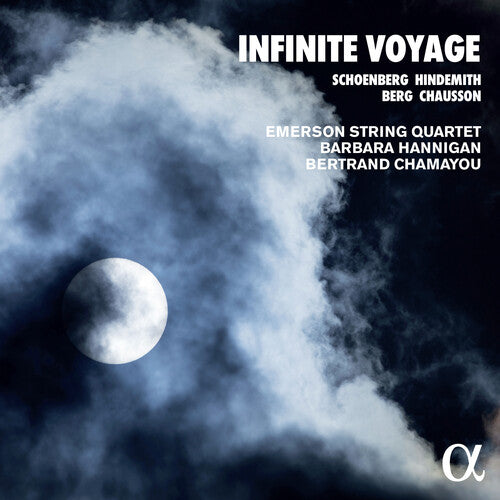
Infinite Voyage / Hannigan, Chamayou, Emerson Quartet
The title of this album evokes not only the life-long journey of all these musicians, but also a lasting friendship between soprano Barbara Hannigan and the Emerson String Quartet. One of the greatest string quartets of the last four decades, the Emersons will disband in October 2023.
Barbara and the Emersons were determined to record Schoenberg's Quartet No. 2 since they started performing the work together in 2015. "The sheer sonic scope of this work takes us on a voyage into previously uncharted territory" say the Emerson musicians. "It's like a tall, gnarly tree to climb (all the way to another planet, it seems), yet one with deep and emotional roots", continues Barbara Hannigan. "The soprano’s fin-de-siècle primal scream at the end of the 3rd movement, begging to be relieved of love, is a heavy hitter."
Melancholie is a rare and intimate work by the young Hindemith, "a gem of a piece" that the Canadian soprano has wanted to explore for many years. The fascinating Quartet Op. 3, composed by Berg in 1909 as he was finishing his apprenticeship with Schoenberg, features the quartet on its own. And to round out the album, pianist Bertrand Chamayou joins Barbara and the Emersons for another deeply moving encounter by way of Chausson's heartbreaking Chanson perpétuelle.
REVIEW:
This is the final release from the legendary Emerson String Quartet, disbanding nearly five decades after it was formed as a student group. Here, the group takes on monuments of 20th century music, mostly works that it has never recorded before. There are thorny works by Berg and Schoenberg, each on the edge of atonality; the Second String Quartet No. 2 of Schoenberg dispensing with a key signature altogether in the finale. The last two movements of this work feature a vocalist, and the precise, tense singing of soprano Barbara Hannigan makes a perfect foil for the Emerson. There are some little-known songs for voice and string quartet by the young Paul Hindemith, and a fascinating Chanson perpétuelle of Ernest Chausson, which fits the Infinite Voyage theme of the album even if it may not at first seem to be appropriate musically. All in all, this release will hang in listeners’ minds for a good long time, which is exactly what is desired from a valedictory release. Infinite, indeed.
-- AllMusic.com (James Manheim)
Haydn 2032, Vol. 9 - L'addio / Antonini, Il Giardino Armonico
This ninth volume of the Haydn 2032 series focuses on the composer’s psychological subtlety in its focus on a central work: his Symphony no.45, known as the ‘Abschieds-Symphonie’ (‘Farewell’ Symphony), composed in 1772. It is said to have got its nickname from a symbolic message Haydn conveyed to Prince Esterházy when he and his orchestra were required to stay longer than planned in the Prince’s summer residence. On the occasion of the symphony’s first performance, Haydn had arranged for the musicians to leave their places one by one during the final Adagio. The day after the concert, all the musicians were able to return to their families and bid farewell to the Prince, who had obviously taken the point of this poetic request for ‘liberation’ expressed in music. The programme is completed by Symphonies nos. 15 and 35 and a cantata sung by Sandrine Piau, the heart-rending ‘Berenice, che fai?’ on a text by Metastasio that was a real ‘hit’ of the eighteenth century, set by some forty composers. This limited and numbered edition contains two vinyl LPs along with an album of photos by Patrick Zachmann (Magnum Photos) and an unpublished text entitled Adieux by the Swiss writer Franz Hohler.
L'imperiale - Haydn 2032, Vol. 14 / Antonini, Basel Chamber Orchestra
The fourteenth volume of the Haydn 2032 edition is entitled L'Imperiale, after the nickname given to Symphony no.53 in the nineteenth century. This was perhaps Haydn's most famous symphony during his lifetime. Premiered in the theatre at Eszterháza Palace in 1778, it was published in London around 1781, and its melodious Andante was arranged more than thirty times for various instruments between 1783 and 1820. It made a decisive contribution to Haydn’s success, opening the way for him to perform in England. Symphony no.54, whose entertaining, theatrical style is a perfectly match for the atmosphere of the legendary court festivities given at Eszterháza around 1775, completes this programme along with no.33, one of his first festive works with trumpets, composed c.1761. In his introductory text, Giovanni Antonini revels in the ‘capricious’, whimsical character of certain passages in the last movement of Symphony No. 53; he also offers an alternative finale of the work at the end of the album.
La Bella Cubana - Mozart y Mambo / Willis, Padrón, Havana Lyceum Orchestra
My dream of recording all four of the Mozart horn concertos has been fulfilled at last. Little did I know that this long-held dream would come true in Cuba of all places and with a Cuban orchestra! I have learned so much about Cuban music and how to dance Mozart along the way and, as a result, feel changed as a person and as a musician", says Sarah Willis. With this album - subtitled La Bella Cubana - the Mozart y Mambo trilogy is complete. After two critically acclaimed albums, three documentary films, two international tours and fundraising to help support classical musicians in Cuba, Sarah concludes this adventure of a lifetime with the Havana Lyceum Orchestra and their conductor, José Antonio Méndez Padrón by recording Mozart's Concerto No. 4 with its famous final Rondo. Also on the album, three of her colleagues from the Berlin Philharmonic Orchestra, Jonathan Kelly, Wenzel Fuchs and Stefan Schweigert, join her for more Mozart, performing the Sinfonia Concertante for four solo wind instruments and orchestra. Of course, no Mozart y Mambo album would be complete without the Sarahbanda ensemble, who once again fuse Mozart with Cuban dance rhythms in Rondo alla Rumba. And what better way to say goodbye than with the most famous Cuban song of all time, Guantanamera! Let the magic of Mozart y Mambo - this music, these musicians, their interpretation, their love for the project and for each other - get you up and dancing one more time!
Bruckner: Symphony No. 8 / Järvi, Tonhalle-Orchester Zürich
Anton Bruckner called his Symphony no.8 in C minor a ‘mystery’; others have seen it as an ‘apocalyptic’ work. For Paavo Järvi, it is the composer’s ‘most unusual symphony’ and the ‘pinnacle’ of his symphonic output. In the history of the Tonhalle-Orchester Zürich, the Eighth Symphony occupies a special place, since it was the first Bruckner the orchestra performed – in 1905, twelve years after the premiere in Vienna of what was then the longest symphony in the history of music, and Bruckner’s only work to call for harps: ‘A harp has no place in a symphony, but I couldn't do otherwise!’, the composer reportedly said.
REVIEW:
This reading of the Eighth is more deliberate overall than an earlier venture of his. This is not a detriment, however, as Järvi and the Zürich orchestra maintain forward motion throughout. Bruckner enthusiasts will likely be happy that Järvi chose the Novak critical edition of the 1890 revised version. As expected, the conductor has this orchestra well-drilled and gets some strong performances from the musicians, especially from the large French horn group. While some will miss (and many prefer) the extra weight of the Berlin or Vienna Philharmonic, this interpretation is worthy of hearing and continues the promise of this ongoing survey. The sound from the orchestra's home hall is ideal, and Alpha does well to capture the full orchestral landscape.
-- AllMusic.com (Keith Finke)
Bach minimaliste / Bestion, La Tempête
J. S. Bach’s Harpsichord Concerto in D minor is the centrepiece of this programme: ‘This music seems absolutely modern to me: a continuous, endlessly developing thread, giving it an almost hypnotic aspect... These adjectives also belong to the vocabulary of today’s music, whether it is “popular”, as in techno, or “art music”, as in the so-called repetitive or minimalist movement’, says Simon-Pierre Bestion. Two hundred and thirty years after Bach, Górecki wrote a harpsichord concerto in the same key, using it ‘as a very rhythmic and extremely stealthy instrument’. John Adams, a leading figure of the American minimalist movement, composed Shaker Loops in 1978: ‘This masterpiece takes on a special interest because we play on instruments with gut strings. That gives the music a very special texture.’ Bach’s Passacaglia (‘a single musical theme heard forty-one times’) and Jehan Alain’s Litanies complete this programme, which brings together the Bestion brothers, with Louis-Noël Bestion de Camboulas as soloist in the concertos.