

Leonard Bernstein
77 products
-
![]()

-
![]()

-
 On Sale
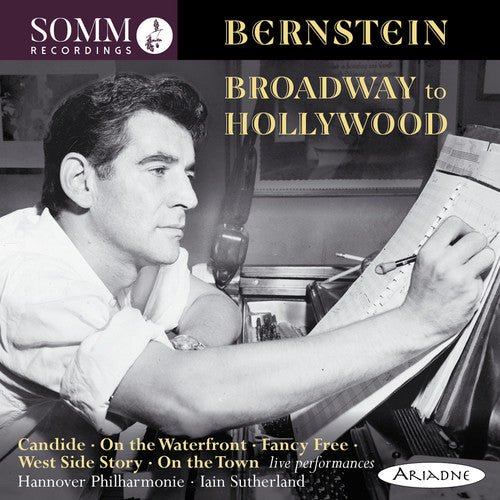
Bernstein: Broadway to Hollywood (Live)
CD$20.99$15.99SOMM Recordings
Aug 17, 2018ARIADNE 5002 -
![]()

-
![]()

-
 On Sale
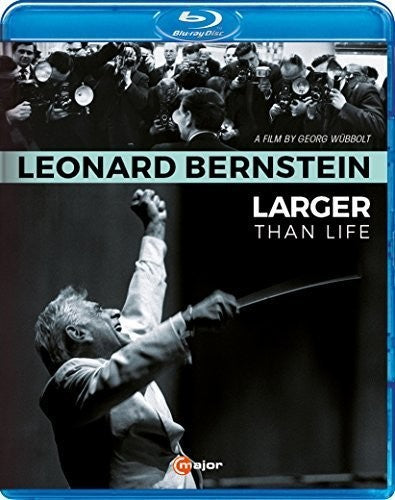
Leonard Bernstein: Larger Than Life
DVD$32.99$16.49C Major Entertainment
May 27, 2016735908 -
![]()

-
![]()

-
 On Sale
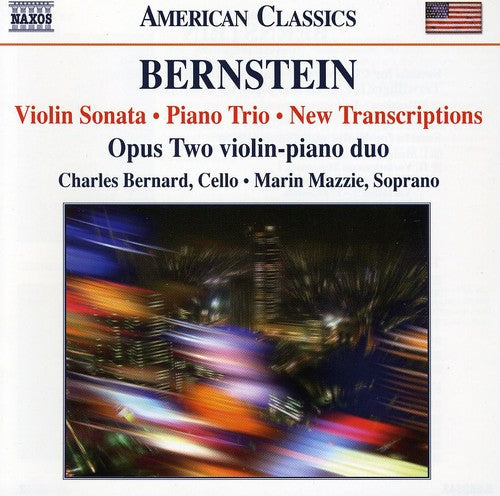
Bernstein: Violin Sonata, Piano Trio, New Transcriptions / Bernard, Mazzie, Opus Two
CD$19.99$12.99Naxos
Nov 16, 20108559643 -
![]()

-
![]()

-
 On Sale
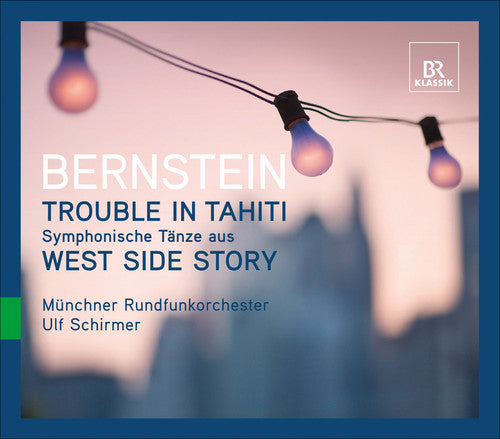
Bernstein: Trouble In Tahiti, Symphonic Dances From West Side Story / Schirmer, Munich Radio Orchestra
CD$19.99$12.99BR Klassik
Sep 29, 2009403571900300 -
![]()

-
![]()

-
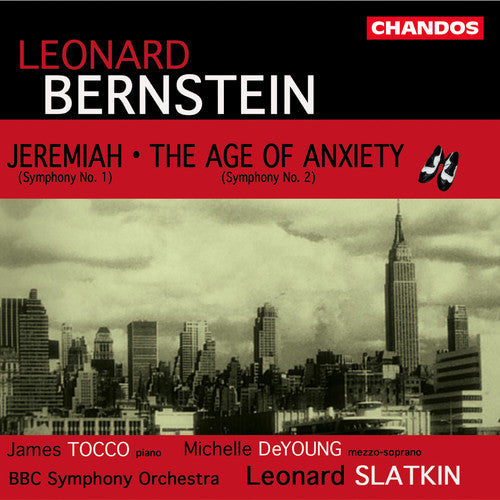 On Sale
Bernstein: Symphonies 1 & 2 / Deyoung, Tocco, Slatkin
CD$21.99$16.99Chandos
Aug 01, 2001CHAN 9889 -
 On Sale
Bernstein: On the Waterfront / Lindberg, Royal Liverpool Philharmonic
SACD$21.99$14.99BIS
Mar 02, 2018BIS-2278 -
![]()

-
![]()

-
 On Sale
Bernstein: Mass / Kristjan Järvi, Randall Scarlata
SACD$43.99$32.99Chandos
Feb 24, 2009CHSA 5070(2) -
![]()

-
![]()

-
 On Sale
Bernstein: Complete Solo Works for Piano / Cooperstock
CD$37.99$28.99Bridge Records
Jun 16, 2017BCD9485A/B -
![]()

-
![]()

-
 On Sale
Bernstein: Anniversaries, Fancy Free Suite, Overture to Candide & Overture to Wonderful Town / Alsop, Sao Paulo Symphony
CD$19.99$9.99Naxos
Oct 12, 20188559814 -
 On Sale
Bernstein: West Side Story / Schermerhorn, Nashville Symphony
CD$19.99$9.99Naxos
Oct 01, 20028559126 -
 On Sale
Bernstein: Dybbuk, Fancy Free / Mogrelia, Nashville Symphony
CD$19.99$9.99Naxos
Nov 21, 20068559280 -
 On Sale
Greatest Hits Of The 1900s / Kapp, Philharmonia Virtuosi
CD$17.99$11.99CBS Masterworks
Jun 25, 2009SONY42125 -
 On Sale
How Now, Dow Jones / Original Broadway Cast
CD$17.99$13.99Sony Masterworks
May 21, 2007RCA63581 -
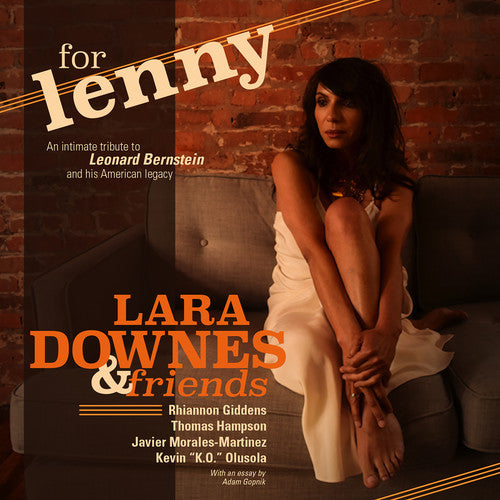 On Sale
For Lenny / Downes
CD$14.98$7.49Sony Worldwide
Feb 09, 201884284011251 -
 On Sale
Bernstein: Symphonies Nos. 1 & 2 / Lindberg, Arctic Philharmonic
SACD$21.99$10.99BIS
Mar 06, 2020BIS-2298 -
![]()

-
![]()

-
 On Sale
Bernstein: 1600 Pennsylvania Avenue Suite, Slava!, CBS Music & A Bernstein Birthday Bouquet / Alsop, Sao Paulo Symphony Orchestra
CD$19.99$9.99Naxos
Oct 12, 20188559813 -
![]()

-
![]()

-
 On Sale
Bernstein: Symphonies Nos. 1 & 2 / Alsop, Baltimore Symphony
CD$19.99$9.99Naxos
Jan 13, 20178559790 -
![]()

-
![]()

-
 On Sale
Bernstein: Complete Solo Piano Music / Tozzetti
CD$21.99$14.99Piano Classics
May 24, 2019PCL10174 -
![]()

-
![]()

-
 On Sale
Bernstein: Symphony No. 3 "Kaddish" / Alsop, Baltimore Symphony
CD$19.99$9.99Naxos
Nov 13, 20158559742 -
 On Sale
Blackwell Sings Bernstein - A Simple Song
CD$17.99$11.99RCA
Aug 05, 2010RCA68321 -
![]()

-
![]()

-
 On Sale
Bernstein: Piano & Chamber Music / Marshall, Kliegel, Nuss, Steger
CD$42.99$27.99CAvi-music
Apr 05, 2019AVI 8553411 -
![]()

-
![]()

-
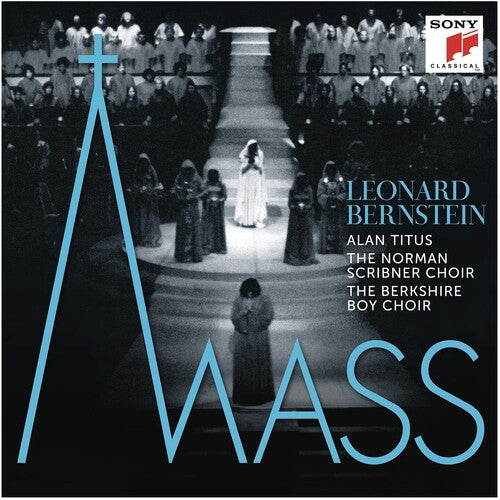 On Sale
Bernstein: Mass / Titus, Norman Scribner Choir, Berkshire Boy Choir
CD$16.98$12.99Sony Masterworks
Oct 08, 202119439890562 -

Bernstein Century - Jeremiah, The Age Of Anxiety, Etc
$11.98CDSony Masterworks
Feb 16, 1999SMK60697 -
 On Sale
American Classics - Bernstein: Serenade, Etc / Alsop, Et Al
CD$19.99$12.99Naxos
Nov 15, 20058559245 -
 On Sale
Bernstein: Symphony No 2, Etc / Judd
CD$19.99$9.99Naxos
Jul 01, 20038559099


Bernstein: Broadway to Hollywood (Live)


Leonard Bernstein: Larger Than Life
The best parts of Georg Wübbolt’s film are probably the interviews, especially those with Bernstein’s children; they emphasize their father’s endless curiosity and his love of teaching. Many of the other friends and colleagues interviewed talk about how they were moved to embrace classical music by watching Bernstein on his Omnibus television shows in the 1950s or by attending the Young People’s Concerts he did with the New York Philharmonic.
The Bernstein footage on this documentary has all been seen before in other documentaries. One of the most memorable sequences depicts Bernstein losing his patience with the Vienna Philharmonic in rehearsal.
– Musical Toronto (Paul E. Robinson)
Picture Format: NTSC 16:9
Sound Format: PCM Stereo
Subtitles: English (Original Language), German, French, Korean
Region Code: 0 (Worldwide)
Total Running Time: 76 mins


Bernstein: Violin Sonata, Piano Trio, New Transcriptions / Bernard, Mazzie, Opus Two
This disc collects three of Leonard Bernstein’s very few examples of chamber music. Although written at the onset of his career, the Piano Trio and the Violin Sonata (both student works) and the Clarinet Sonata (here arranged for violin by William Terwilliger) confirm his prowess in a genre to which he simply never had time to return. Rounding out the disc are songs from three of his theatre works, including ‘My House’ from Peter Pan, ‘Take Care of this House’ from 1600 Pennsylvania Avenue, and four songs from the acclaimed madcap operetta Candide, all idiomatically arranged by Eric Stern.


Bernstein: Trouble In Tahiti, Symphonic Dances From West Side Story / Schirmer, Munich Radio Orchestra
BERNSTEIN West Side Story: Symphonic Dances. Trouble in Tahiti 1 & • Ulf Schirmer, cond; Kim Criswell ( Dinah ); 1 Rodney Gilfry ( Sam ); 1 Marlene Grimson ( Trio sop ); 1 Adrian Dwyer ( Trio ten ); 1 Ronan Collett ( Trio bar ); 1 Munich RO • BR 719003 (77:43 Text and Translation) Live: Munich 10/12/2008
& German interview with Ulf Schirmer
I have not generally been impressed with German orchestral performances of distinctly American scores such as these by Leonard Bernstein—heavily dependent on Latin dance rhythms and jazz inflections, having found too many of them stiff and uncomfortable with the idiom. I rather imagine that Viennese listeners have a similar reaction when an American orchestra and conductor perform Johann Strauss. Like the subtle inflections of language, there are some things one just absorbs from the culture that are hard to master otherwise.
So it proves here, especially in the “Symphonic Dances.” The percussion get the rhythms, and the brass have the feel as well, though the trumpets seem reluctant to wail with sufficient abandon, but generally, the woodwinds just can’t quite bring themselves to let lose in the long stretches of exuberance, and the strings are too polite by half. Add to that Ulf Schirmer’s tendency to relax momentum in the more lyrical sections—something Bernstein never did—and you have a performance that is a little too pokerfaced to take flight. It is not bad by any means—Schirmer often generates a good deal of energy and excitement—but it is simply not competitive with more idiomatic performances by the composer and others.
Some of that same orchestral stiffness infects the performance of Bernstein’s heavily ironic, autobiographical one-act opera, Trouble in Tahiti —the characters almost certainly represent Bernstein’s mismatched parents, Jennie and Sam—but this performance is harder to pass over. First of all, there are not a lot of recordings around, and more important, these singers have the style to make it work. The issue raised by this interpretation is one of genre: is it opera or is it musical theater? While most performances are cast with classically trained singers who can act, this recording straddles the fence by using an operatic baritone and a Broadway mezzo. (They also appeared in Simon Rattle’s 1999 EMI Wonderful Town .) Both are very fine: Gilfry, with his virile, flexible instrument, is a perfect self-absorbed and egotistical Sam, and Criswell, a singer with a vibrant and colorful voice, though rather limited on top for “I was standing in a garden,” is an emotionally fragile and angry Dinah. Their voices never blend, but one has to wonder if the stylistic contrast is an interpretive choice. Certainly, even if the combination gives less aural pleasure than two matched operatic voices might, it makes some sense for the antagonistic characters. And the choice of Criswell, a brilliant actress, is vindicated by an absolutely stunning performance of the show-stopping, musical theater-style “What a movie!” The Greek-chorus jazz vocal trio is classy with a reasonable sense of swing, and though the balance between the voices is not always ideal, they create just the right balance of satire and empathy.
In the end though, effective as this performance is, it must still take second place to the 1973 Bernstein-led performance on Sony 60969: very stylish and expressive, with excellent soloists and a perfect trio. There are other performances on CD: the student-cast performance by the Manhattan School of Music Opera Theater on Newport Classic 85641 is quite good, and the 2006 Calliope recording (9391) in accented English with French performers, is an interesting novelty: urbane and very coolly jazzy. But once you have the Bernstein CD, Gilfry and Criswell make this new release an ideal supplement.
FANFARE: Ronald E. Grames


Bernstein: Symphonies 1 & 2 / Deyoung, Tocco, Slatkin
Recorded in: The Colosseum, Watford 24-25 October 2000 Producer(s) Brian Couzens Sound Engineer(s) Ralph Couzens Christopher Brooke (Assistant)

Bernstein: On the Waterfront / Lindberg, Royal Liverpool Philharmonic
REVIEW:
The Royal Liverpool Philharmonic put on such a good show throughout this disc. The Symphonic Dances from West Side Story find them rounding corners that challenge the very best big bands. The all-dancing aspects of the disc do Bernstein’s struttin’ NYC style proud.
– Gramophone


Bernstein: Mass / Kristjan Järvi, Randall Scarlata
This is a hybrid Super Audio CD playable on both regular and Super Audio CD players.
REVIEWS:
Chutzpah and certainty: could this be the Mass for the new millennium?
For a work that was derided by some as much as it was adored by others upon its premiere, Bernstein’s Mass seems now to be a modern classic. This new recording is likely to be a powerful advocate in its widespread reassessment. Kristjan Järvi conducts his many and varied forces with high-octane energy, while Chandos delivers thrillingly clear and immediate sound.
-- Gramophone [5/2009]
Bravo and thrice-triple bravo! Bernstein’s flower child finally comes of age.
When I first heard Bernstein’s Mass it was less than a decade old, and already it seemed dated. I wasn’t much impressed at the time, although I’m pleased to say Mass and Chichester Psalms are now the Bernstein works I enjoy most; for me both have a naive charm that is unmistakably Lenny. Some listeners are much less charitable, describing Mass as either toe-curling or just plain trash, even though it’s blessed with music of genuine emotional weight and inspiration. These qualities are not necessarily obvious in Bernstein’s own recording for CBS/Sony, recently released as part of the Bernstein Century series (SM2K 63089). Kent Nagano’s Harmonia Mundi set (HM 801840) is certainly most welcome, especially as it is a hybrid SACD, but that isn’t wholly satisfying either.
Commissioned by Jacqueline Kennedy to commemorate the opening of the Kennedy Center for the Performing Arts in Washington DC, Mass is recorded here by Austrian groups under Kristjan Järvi. Rob Barnett was much impressed with this conductor’s set of Schmidt’s Das Buch mit sieben Siegeln – see review – but I was more curious to hear how these non-English-speaking forces would cope with such a quintessentially American score.
The Celebrant in Bernstein’s own recording is the light baritone Alan Titus, whose boyish good looks seemed entirely right for the piece. Järvi’s Celebrant is the darker, more commanding Randall Scarlata, who bears a passing resemblance to the late British actor Donald Pleasence. Not quite the youthful presence one might expect, but his first entry in the Hymn and Psalm dispels any doubts about his suitability for the part. This ‘Simple Song’ with its artless guitar chords has a certain gravitas that’s every bit as appealing as Titus’s more naive approach for Bernstein. In fact, from the very outset one senses that Järvi takes a serious view of this work, the instrumental soloists, singers and orchestral players commendably focused throughout.
The Responsory: Alleluia (tr. 3) is the first of the work’s pre-recorded-tape segments and very effective it is too. The vocalists meld beautifully with the music’s jazzy syncopations, and even if Bernstein’s is the more sprightly reading Järvi’s is much more insightful in terms of detail and texture. Indeed, the latter makes this music sound newly minted, bringing out the many fine qualities of Bernstein’s writing. If anything the composer doesn’t always do justice to his own score; also, the CBS sound is a little rough and variably balanced, the recessed ‘ping-pong stereophony’ of the opening Antiphon sounding very contrived. By comparison the Chandos engineers have come up with a convincing soundstage and a warm, vibrant acoustic that gives the music a lovely inner glow.
Even at this early stage it’s clear that Järvi has transformed Mass from a piece of seventies tat into something much more substantial and less time-bound. Those who cringe at Bernstein’s own reading will surely respond to this more symphonic reading. I certainly found myself revelling in details and rhythms as yet only hinted at, marvelling also at the coherence of Bernstein’s hastily assembled creation. Yes, the Alleluias are heavily accented but goodness, the Ivesian rumty-tumty of the First Introit (tr. 4) has never sounded so uproarious. Perhaps the Austrian oompah-pah tradition is the secret ingredient here, the Company of Music (the Street Chorus) and Tölz boys in fine form as well. Surely even the ever-critical Bernstein would have been captivated by the verve of this performance.
At this point I’d pretty much given up comparing the two recordings, such are the musical virtues and sonic splendours of this Chandos account. Scarlata and the boys’ choir are incisive and alert in the Thrice-Triple Canon: Dominus vobiscum (tr. 5) and the restless bongos of In nomine Patris (another taped segment) are judged to perfection. The Tölz boys and the Chorus sine nomine are particularly affecting in the supplicatory Prayer for the Congregation (tr. 7). One would have to be stony hearted not to be moved by this gentlest of utterances, so feelingly voiced. After the bird-like oboe solo in the Epiphany (tr. 8) the Celebrant’s call to confession (tr. 9) has some strongly rhythmic singing from Chorus sine nomine and a moody electric bass line.
The balance between acoustic and electric instruments is a real challenge in Mass, but here it’s very well managed, the funky trope ‘I Don’t Know’ stylishly sung by ‘rock singers’ Reinwald Kranner and Dave Moskin. This kind of pointedly ‘hip’ interjection is very risky indeed – cue more shudders from the critics – but if anyone can bring it off Lenny can. Meanwhile the bluesy trope ‘Easy’ (tr. 11) reminds me of Hair, another of those iconic shows from the period, albeit with the brazenness and Berlin accents of Cabaret. What a contrast with the symphonic Meditation No. 1 (tr. 12), with its agitated, Shostakovich-like string figures. There is real darkness and doubt in Mass and it lurks here too, although the radiant violin solos do manage to pierce the pervading gloom.
This new optimism is echoed in the vigorous Gloria tibi (tr. 13). Gloria in excelsis (tr. 14) is surely modelled on the spring-loaded rhythms of Poulenc’s Gloria, with a dash of West Side Story added to ‘Half of the People’ (tr. 15). Incredibly for players who aren’t familiar with this music they inject an idiomatic, Jet-like swagger to the start of ‘Thank You’, movingly sung by soprano Ruth Kraus. Again doubts surface in the Mahlerian Meditation No. 2, the cello soloist assailed by menacing interjections from the orchestra. In spite of that the simple solo line outlasts them all, bringing the first disc to a warmly expressive close.
For all its shortcomings Bernstein’s recording will always have a special one. It’s a unique reflection of the prevailing zeitgeist, and for that reason alone it deserves a place on your shelves. Järvi’s reading is altogether more thoughtful, a mature, 21st-century take on the fading flower culture of the early seventies. We readily accept that performing styles change in other genres, so it’s entirely appropriate that we have a new – and refreshing – perspective on Mass as well.
Scarlata opens disc two with an arresting Epistle. Even ‘Dear Mom and Dad’ has added resonance, a new urgency, in an uncertain world, and once again Järvi responds with great sensitivity to the demands of the score. Anyone who doubts the ability of European performers to get to the heart of this piece of Americana should sample the upbeat Gospel-Sermon ‘God Said’ (tr. 2). I was simply astonished by the choruses’ ability to capture the rafter-ringing revivalism of this great number. Järvi and his musicians really seem to believe in this score, and of course belief – in the form of the Credo – lies at the very heart of the Mass. Typically, Bernstein contrasts this pre-recorded segment with its polar opposite, ‘Non Credo‘. André Bauer is the fine baritone soloist here, and the pre-recorded Crucifixus will surely bring back memories of the rock-opera Jesus Christ Superstar. There’s a bit of everything here, but then that’s what Bernstein does best; he is a great assimilator.
The mezzo Heldemaria Gruber makes the most of the trope ‘Hurry’ (tr. 5), although her words aren’t very clear. Ruth Kraus enters the fray in ‘World without End’ (tr. 6), which teeters on the brink of musical anarchy. Then there is a torrent of Janá?ek-like ‘Amens’ at the start of ‘I Believe in God’ (tr. 7), in which Moskin – and just about everybody else – come perilously close to bringing the temple crashing down around them. The Chandos engineers cope admirably with all this controlled chaos; indeed, the recording sounds exceptional in both its CD and two-channel SACD forms. I imagine it would sound even more spectacular in its multi-channel guise.
The Celebrant’s stern invocation ‘Let us pray’ is met with an equally forceful response from the players in Meditation No. 3 (tr. 8) and elicits some transported singing from Chorus sine nomine. Scarlata’s heartfelt prayer ’Remember, O Lord, thou servants and handmaids’ – intoned over a sustained organ note – embraces performers and conductor; it’s a touching moment that can so easily descend into bathos, yet here it’s carried off with great conviction. The Tölz boys and Chorus sine nomine blaze their way through the Orffian Offertory (tr. 9) before we hear The Lord’s Prayer (tr. 10), sung and picked out on the piano by the Celebrant. It’s another of those potentially shudder-inducing moments that actually works very well. Scarlata then tops that with a melting rendition of ‘I Go On’. At this point I admit I was ready to jump up and applaud.
We move into the bright tones of the treble-dominated Sanctus (tr. 12) with its twangy interlude for electric guitar, part for counter-tenor and the usual Orffian ostinati. It’s a truly bizarre confection but, as usual, Bernstein seems to make a decent recipe out of these disparate ingredients. Goodness, these drums would make the Telarc engineers green with envy; and the sheer oomph of the Agnus Dei (tr. 13) will take your breath away; Indeed, I wondered if Järvi and his musicians could wring any more volume or intensity from this wild, wild apotheosis.
The somewhat surreal sprechgesang-like ‘Fraction: Things Get Broken’ (tr. 14) comes as a welcome respite after all that unbridled power. Once again Scarlata impresses with his extraordinary vocal range and colour palette, not to mention his ability to traverse so many different singing styles. In this, one of the longest and most sustained sections of Mass. Bernstein’s melodic gifts are arrayed for all to see; remarkably, though, it’s Järvi, not the composer, who shows them off to best advantage.
Despite all the conductor’s insights it’s Scarlata who makes this performance come alive. By comparison Titus sounds like a lightweight, lacking in character or feeling. Just listen to how Scaralata conveys exhaustion and despair in this penultimate – and very demanding – section. And savour those harps, soft pillows of sound on which the Celebrant can rest his weary head. Hugely theatrical, but as with all such gestures they are highly effective when handled with such sensitivity and good judgment. And the final section, with its treble solo, will surely bring back memories of Chichester Psalms. Boy soprano Georg Drexel is very affecting here – far preferable to the rather winsome soloist in Lenny’s recording – as is the solo flute of Sonja Korak. There is a real sense of repose here, framed by harps and vocalists. Drexel returns at the close, his pure tones entwined with those of the more worldly Celebrant.
As a convert I exhort all those who don’t believe in Mass to buy this recording and recant. I didn’t expect to be as moved and thrilled by this performance as I was; indeed, it sets new standards for this most underrated work, both musically and sonically. Add to all these virtues a chunky, well-written booklet – including texts – and you have the makings of a modern classic.
-- Dan Morgan, MusicWe International [5/2009]


Bernstein: Complete Solo Works for Piano / Cooperstock
-----
REVIEWS:
Superbly played by Andrew Cooperstock and with Bridge’s usual fine production standards this is a very fine collection of rarely heard works by one of the 20th century’s key musical figures.
– MusicWeb International
Bridal Suite (1960) was written to mark the marriage of the lyricist Adolph Green, one of his collaborators on On the Town and Wonderful Town, and the actress Phyllis Newman. The opening Prelude is a hoot, blending Ave Maria with ‘Just in time’ and Bach’s Prelude in C major. The collection is scored for piano four hands, which Cooperstock, brilliant and sensitive throughout the set, manages deftly.
– Gramophone


Bernstein: Anniversaries, Fancy Free Suite, Overture to Candide & Overture to Wonderful Town / Alsop, Sao Paulo Symphony
The sparkling overture to Leonard Bernstein’s 1956 musical Candide immediately found a prominent place in concert programs all over the world and is now one of his most frequently performed pieces. Many of Bernstein’s best loved works drew inspiration from the city of New York, and this is true both of the three sailors pursuing female conquest in the ballet ‘Fancy Free,’ and of the rip-roaring swing rhythm and big tunes from the musical ‘Wonderful Town.’ Bernstein celebrated his friends and family with his ‘Anniversaries’- piano vignettes heard here for the first time in colorfully expanded orchestrations. Marin Alsop is an inspiring and powerful voice in the international music scene who passionately believes that “music has the power to change lives.” She became music director of the Sao Paulo Symphony Orchestra in 2012 and made history in 2013 as the first female conductor of the BBC’s Last Night of the Proms, which she returned to conduct in 2015. As a student of Leonard Bernstein, Alsop is central to his 100th anniversary celebrations, conducting Bernstein’s ‘Mass’ at the Ravina Festival, where she serves as musical curator for 2018 and 2019.


Bernstein: West Side Story / Schermerhorn, Nashville Symphony
This recording utilizes Bernstein's score in its original form, before it underwent the necessary revisions to make it more suitable to the needs of musical theater at the time. Actually, it sounds pretty much the same, the most obvious distinctions being a few missing bars near the end of the Prologue and the different vocal arrangement for "America".
Kenneth Schermerhorn was studying with Bernstein during the creation of West Side Story and briefly was considered as a possible conductor for the premiere. Finally getting his chance nearly 50 years later, Schermerhorn conducts the score with an authority and enthusiasm that reveals his intimate knowledge and personal conviction, even if at times his tempos drag (as in "I feel pretty" and "Gee Officer Krupke"), though not as much as the elderly Bernstein's. Then there's the somewhat obsessive concern with full note values at the expense of rhythmic flow (as in the "Jet Song", and in "Quintet", with its heavy articulation on the word "tonight") that occasionally robs the music of its spontaneity.
Throughout, the Nashville Symphony plays with an ideal blend of symphonic elegance and jazzy swagger that shows why this work is such a wonderful classic. Only the multimiked and obviously studio-bound recording, with its artificially close voices, slightly disappoints. Yet despite this and the above-noted concerns, this production faithfully recreates the magical and enthralling world that is West Side Story, and anyone coming to this piece afresh is in for a rare and special experience. [11/4/2002]
--Victor Carr Jr, ClassicsToday.com


Bernstein: Dybbuk, Fancy Free / Mogrelia, Nashville Symphony
Fancy Free of course is delightful, and often recorded, but this performance holds its own with the best--and I frankly prefer Andrew Mogrelia to the composer in Dybbuk. He's just that much livelier, and the Nashville Symphony sounds as inside the idiom as the New York Philharmonic of several decades' past. This newcomer also is better recorded than Bernstein's performances either on Sony or DG, and the excellent version of "Hot Stuff" that opens Fancy Free also is a plus. If you're a Bernstein fan, you will certainly want this.
--David Hurwitz, ClassicsToday.com


Greatest Hits Of The 1900s / Kapp, Philharmonia Virtuosi
Includes work(s) by Aaron Copland, Maurice Ravel, Joaquín Rodrigo, Sergei Prokofiev, Virgil Thomson, Gabriel Fauré, Jacques Ibert, Percy Aldridge Grainger. Ensemble: Philharmonia Virtuosi. Conductor: Richard Kapp.


How Now, Dow Jones / Original Broadway Cast
Music composed by Elmer Bernstein. Lyrics written by Carolyn Leigh. Principal cast includes: Anthony Roberts, Marilyn Mason, Brenda Vaccaro, Tommy Tune, Barnard Hughes, Hiram Sherman, James Congdon, Joe McGrath, Bob Gorman, Patti Davis, Alexander Orfaly, Jennifer Darling, Rex Everhart. Recorded at Webster Hall, New York, New York on December 17, 1967. Includes liner notes by Peter Marks. Digitally remastered by Harold Hagopian & Hsi-ling Chang (1999, BMG Studios).


For Lenny / Downes
Taking her inspiration from Bernstein’s boundary-breaking approach to music-making, Lara has invited a diverse group of guest artists: opera legend Thomas Hampson, roots singer Rhiannon Giddens, superstar beatboxer Kevin “K.O.” Olusola (a member of the chart-topping a cappella group Pentatonix), and Mexican/American clarinet prodigy Javier Morales-Martinez.
Describing FOR LENNY, Lara says: “Leonard Bernstein reminds me of what a musician can be. Of what music can do in this world – how it can reach and teach and make things happen. Just imagine what American music was before Lenny came along, everything he changed. I’m only here at all, I think, because of the rules he broke and the doors he knocked down. Imagine the thousands of other musicians who feel the same way.”
-----
REVIEW:
In the midst of all of this abundance, pianist Lara Downes seems to have homed in on the sweet spot for giving this hard-working musician with a larger-than-life reputation a tribute recording that manages to be sincere without going over the top with adulation.... Downes’ recording may well have qualities that will endure long after the celebratory shouts of “Bravo!” have evaporated into the ether.
– The Rehearsal Studio (Stephen Smoliar)

Bernstein: Symphonies Nos. 1 & 2 / Lindberg, Arctic Philharmonic
At the age of 21, Leonard Bernstein wrote what he described as a ‘Hebrew song’ using a text from the Lamentations of Jeremiah. Three years later the song became the final movement of his Symphony No. 1 and in January 1944 Bernstein himself conducted the première of the work. What is being lamented is the destruction of Jerusalem in 586 BC, but according to the composer, he primarily wanted to convey the text’s ‘emotional quality’. The first movement thus aims to parallel in feeling the intensity of the prophet’s pleas while the scherzo gives a general sense of the destruction and chaos. Being a setting of the biblical text, the third movement is naturally more literary: the cry of Jeremiah, as he mourns his beloved Jerusalem. During the next few years, Bernstein’s career as a conductor took flight, while the musical On the Town made his name on Broadway. Towards the end of the 1940s he returned to the symphonic genre, however – once more with an extra-musical inspiration. W.H. Auden’s poem The Age of Anxiety is set during the recently concluded war, and falls – like the symphony – into six sections during which four characters express their anxieties, hopes and the quest for meaning and identity. Bernstein chose to portray all four characters via a single instrument, the piano, but he did not want to label the work a piano concerto. The instrument does however come to the fore at various points and in one of the final sections Bernstein supplies what is arguably the most exuberant and rhythmically dazzling display of piano writing in the symphonic literature. For this Christian Lindberg and the Arctic Philharmonic have enlisted the aid of Roland Pöntinen, while Anna Larsson is the soloist in Jeremiah.


Bernstein: 1600 Pennsylvania Avenue Suite, Slava!, CBS Music & A Bernstein Birthday Bouquet / Alsop, Sao Paulo Symphony Orchestra


Bernstein: Symphonies Nos. 1 & 2 / Alsop, Baltimore Symphony
Leonard Bernstein’s legendary 1943 Carnegie Hall conducting début brought his name to national attention, and the event was followed a few months later by the triumphant reception of his Symphony No. 1 ‘Jeremiah.’ This major symphonic statement explores a crisis in faith and employs Jewish liturgical sources, its final movement, Lamentation, being an anguished cry at the destruction of Jerusalem. Sharing the theme of loss of faith, Symphony No. 2 ‘The Age of Anxiety’ takes W.H. Auden’s poem of the same name and follows its four characters in their spiritual journey to hard-won triumph.
REVIEW:
It’s great to see this music being played with such conviction. We all know that Alsop is a superb Bernstein conductor, and Naxos already has a terrific account of the First Symphony from James Judd and the New Zealand Symphony, but this newcomer is, if anything, even finer–certainly sonically–and conducted with even more pizzazz. In the central Profanation movement, Alsop really does outdo Bernstein himself; the playing of the Baltimore Symphony here is sensational, and in the finale Jennifer Johnson Cano sings with great sensitivity and a beautiful tone. The tragic climaxes hit you right in the gut.
In the Second Symphony, Jean-Yves Thibaudet offers a first class account of his solo part. The Masque is especially outstanding–virtuosic but at the same time nicely “cool.” Prior to that, in the opening variation sets, Alsop knits the music together expertly, ensuring that the glum bits never bog down, and that the entire first part builds inexorably to its exciting conclusion. The following Dirge is is a barn-burner, and somehow after all of this the Epilogue never turns hollow. Again, I don’t think that Bernstein could have done better, and as suggested above the engineering is also rock solid and brilliant by turns. A marvelous release by any standard.
– ClassicsToday (David Hurwitz, 10/10)


Bernstein: Complete Solo Piano Music / Tozzetti
The Italian pianist Michele Tozzetti brings out the heartfelt tenderness of most of these tributes, the Jewish elements and the dance rhythms. In the Anniversary dedicated to Aaron Copland (in Seven Anniversaries, 1943), Tozzetti captures the sound and spirit of the man Bernstein called ‘my first friend in New York, my master, my idol, my sage, my shrink, my guide, my counselor, my elder brother, [and] my beloved friend.’ The pianist reveals a delicate sense of sonority along with fine dynamic control in For Paul Bowles, and brings an idiomatic edginess to For Sergei Koussevitzky. He also injects youthful vigor into Bernstein’s Sonata (1937), a probing work rich in counterpoint, written when the composer was still a student. Also on this recording are Non Troppo Presto, a manuscript discovered in the Leonard Bernstein archive at the Library of Congress; and Touches: Chorale, Eight Variations and Coda, commissioned by the Van Cliburn Piano Competition in 1981. Its bluesy chorale is identical to Virgo Blues, written for his daughter, Jamie on her twenty-sixth birthday in 1978. Bernstein dedicated this work ‘to my first love, the keyboard’. In Michele Tozzetti’s hands, that love is beautifully realized.
-----
REVIEW:
When you put it all together, there is a great deal to enjoy in Leonard Bernstein’s piano music. The Sonata, Music for the Dance, and Touches are strikingly stark and crunchy. The Sabras and Anniversaries are more personal and lyrical. The contrast between modernism and Bernstein’s more familiar nostalgic tunefulness is striking. The young pianist Michele Tozzetti plays with a deft touch and sharp articulation. As a bonus, one gets to read the superb program annotation of Stuart Isacoff, author of a wonderful new book on Van Cliburn.
– American Record Guide (Jack Sullivan)


Bernstein: Symphony No. 3 "Kaddish" / Alsop, Baltimore Symphony
Three examples of Leonard Bernstein’s vocal art can be heard in this recording. His Symphony No. 3 ‘Kaddish’ shuns traditional symphonic ideas in favor of an eclectic theatrical and oratorio-like form with a prominent rôle for speaker. For this recording, Marin Alsop has returned to the work’s original narrative text, heard before the 1977 revision. The Lark – heard in a concert version with added narration – derives from Lillian Hellman’s adaptation of L’Alouette on the life of Joan of Arc, and it was this music that Bernstein reworked into his Missa Brevis many years later. Music Director of the Baltimore Symphony since 2007 and Principal Conductor the São Paulo Symphony since 2013, the NYC-born Marin Alsop is recognized across the world for her innovative programming as well as her bold, audience-expanding community and education outreach initiatives.
REVIEWS:
Under Alsop's baton, the Baltimore Symphony realizes Bernstein’s extraordinary orchestral effects in ways that will both scarify you and tug at your heartstrings; and while the text is still the embarrassment it always was, narrator Claire Bloom delivers it as if it were Shakespearian prose. She believes in the part and gives it a powerful reading. Soprano Kelley Nassief will melt your heart in her “Kaddish 2” movement solo, and both the boy and adult choirs are superb. I’m really glad to have this performance, especially since my Columbia LP has disappeared and this is now the only recording I have of the original 1963 work. It’s a fantastic performance and a spectacular recording.
– Fanfare
Kaddish is recorded here in a performance of great conviction from Marin Alsop, with the wonderful Claire Bloom achieving a happy medium between the declamatory and the confidential. There are instances of pure gold - a consoling lullaby at the heart of the piece (featuring limpid soprano Kelley Nassief) which Bernstein called his 'Pietà'.
- Gramophone Magazine


Blackwell Sings Bernstein - A Simple Song


Bernstein: Piano & Chamber Music / Marshall, Kliegel, Nuss, Steger
Leonard Bernstein was certainly not surrounded by an aura of aloofness. He enjoyed his immense popularity, although he never consciously attempted to be “everybody’s darling” and to be hailed as “Lenny” by everyone on the street. His parents had officially named him Louis, but tended to call him Leonard. Serge Koussevitsky, his teacher and elder friend- with whom he not only shared an outstanding musical talent but also an Eastern European Jewish family background- called him Lenyusha. This release is being presented in honor of Bernstein’s 100th birthday. A high caliber artist roster led by Wayne Marshall is playing most of Bernstein’s Piano and chamber music which is not at all known to most connoisseurs of his music. A great part of these short pieces have until now only been available on vintage albums, making this release even more special.


Bernstein: Mass / Titus, Norman Scribner Choir, Berkshire Boy Choir
During his legendary tenure at the New York Philharmonic from 1958 to 1969, Leonard Bernstein composed only two works, Symphony No. 3: Kaddish (1963) and Chichester Psalms (1965). He had dedicated Kaddish to the memory of John F. Kennedy shortly after his assassination, and when Jacqueline Kennedy Onassis asked Bernstein to compose a piece for the 1971 inauguration of the Kennedy Center for the Performing Arts in Washington, D.C., he was eager to honor the occasion with a new, large-scale work because he knew he had always wanted "to compose a service of one sort or another." The son of Russian-Jewish parents, a social liberal, and lifelong activist, Bernstein made a surprising choice: the Roman Catholic Mass. But instead of a straightforward, purely musical setting of the Latin liturgy, he created a broadly eclectic theatrical event by placing the 400-year-old religious rite into a tense, dramatic dialog with music and lyrics of the 20th century vernacular, using this dialectic to explore the crisis in faith and cultural breakdown of the post-Kennedy era.
By the late 1960s, the country had become polarized over U.S. involvement in the Vietnam War. A powerful anti-war movement swept the nation, fueled by outrage at the draft, the massive casualties, atrocities such as the Mai Lai Massacre, incursions into Laos and Cambodia, the imprisonment of conscientious objectors and activists, and in 1970, the Kent State shootings. These turbulent times produced a restless youth culture that hungered for a trustworthy government and for spiritual authority that reflected their values. MASS gave them a voice.
Six months before the scheduled premiere, MASS was far from completion. Needing a collaborator, Bernstein decided to ask the young composer-lyricist Stephen Schwartz to work with him on the text. Schwartz had recently proven his ability to transform religious stories and rituals into contemporary theater with Godspell, his hit musical based on the Gospel of St. Matthew. The two writers hit it off and worked briskly to meet the deadline.
Bernstein and Schwartz envisioned MASS not as a concert piece, but as a fully staged, dramatic pageant. They mixed sacred and secular texts, using the traditional Latin liturgical sequence as the fundamental structure and inserting tropes in contemporary English that question and challenge the prescribed service, as well as meditations that demand time for reflection. They took the Tridentine Mass, a highly-ritualized Catholic rite meant to be recited verbatim, and applied to it a very Jewish practice of debating and arguing with God. The result was a piece that powerfully communicated the confusion and cultural malaise of the early 1970s, questioning authority and advocating for peace.
In MASS, the ceremony is performed by a Celebrant accompanied by a formal choir, a boys' choir, acolytes, and musicians. His congregation of disaffected youth (the "Street Chorus") sings the tropes that challenge the formal ecclesiastic dogma of the Church. As the tension grows and the Celebrant becomes more and more vested, the cynical congregants turn to him as the healer of all their ills, violently demanding peace. In a climactic moment, overwhelmed by the burden of his authority, the Celebrant hurls the sacraments to the floor and has a complete spiritual breakdown. The catharsis creates an opening for a return to the simple, pure faith with which he had begun the ritual (expressed in the sublime "A Simple Song"). Though MASS challenges divine authority, exposing its contradictions and questioning religion's relevance to contemporary life, it ultimately serves as a reaffirmation of faith and hope for universal peace.
The eclecticism of MASS's music reflects the multifaceted nature of Bernstein's career, with blues, rock, gospel, folk, Broadway and jazz idioms appearing side by side with 12-tone serialism, symphonic marches, solemn hymns, Middle Eastern dances, orchestral meditations, and lush chorales, all united in a single dramatic event with recurring musical motifs. Bernstein uses the uninhibitedly tonal rock 'n' roll of the Street Chorus to challenge the dogmatic, atonal music of the Church; ultimately, the musical argument is resolved with a glorious, tonal chorale ("Almighty Father") sung by the entire company.
MASS premiered on September 8, 1971, at the inauguration of the Kennedy Center, directed by Gordon Davidson, conducted by Maurice Peress, and choreographed by Alvin Ailey. The performance was fully staged, with over 200 participants. The pit orchestra contained the strings, percussion, a concert organ, and a "rock" organ; all of the other instrumentalists—brass, woodwinds, rock musicians— were on stage in costume and acted as members of the cast. The Street Chorus was made up of singers and dancers in contemporary dress, a 60-person robed choir filled the stage pews, and a complement of dancers costumed as Acolytes assisted the Celebrant.
During his work on MASS, Bernstein consulted with Father Dan Berrigan, a Catholic priest and anti-war activist who had been on the FBI's "10 Most-Wanted" list before being apprehended and imprisoned. In the summer of 1971, as MASS approached its premiere, the FBI warned the White House that the piece's Latin text might contain coded anti-war messages and that Bernstein was mounting a plot "to embarrass the United States government." President Nixon was strongly advised not to attend and was conspicuously absent at the premiere.
Responses to the premiere of MASS covered the spectrum. The Roman Catholic Church did not approve—some cities cancelled performances under pressure from their local Catholic churches—while other prominent clergy declared their support for the piece. Certain music critics disapproved of the mixing of genres, while others found the work to be inspired. For the most part, the audiences were deeply moved, experiencing firsthand the shared, communal journey of the composition.
Over the years, the ideas and dissent embodied in MASS, which were so threatening to the political and religious establishments in the volatile early-1970s, have become a more accepted part of spiritual and political discourse. MASS came full circle when, in 2000, Pope John Paul II requested a performance at the Vatican. Its radical mixing of musical styles, too, has also become less shocking and more accepted in the musical sphere. Time has revealed MASS to be a visionary piece that continues to be relevant and move audiences as it enjoys performances around the world.

Bernstein Century - Jeremiah, The Age Of Anxiety, Etc
Though this is the work for which he is best known, Bernstein was an accomplished composer and performer as well as orchestra leader and goodwill ambassador for the arts. His 'Jeremiah' Symphony launched his career in 1942, when Bernstein submitted it to a competition. Although it did not win, it was performed in Pittsburgh, Boston and New York City, where it was voted the outstanding new work of the season by the New York Music Critics Circle.
'The Age of Anxiety' is a tribute to the W.H. Auden poem of the same name, and aims to capture the disjointed, anxious, disaffected spirit of the postwar period. "I Hate Music!" and 'La Bonne Cuisine' are more lighthearted affairs, embodying the spirit that connected Bernstein so well with a children's audience. Performed by Bernstein himself, along with mezzo-soprano Jennie Tourel and the New York Philharmonic, this recording is a beautiful memory.
REVIEWS:
New York Times (Publisher) (7/30/00, p.30) - "...These whimsical song cycles occupy just a small portion of this CD but are its real reward. Previously unissued, the recordings feature Tourel at her most charming, with Bernstein at the piano..."


American Classics - Bernstein: Serenade, Etc / Alsop, Et Al
Bernstein?s Serenade for solo violin, strings, harp, and percussion was inspired by Plato?s Symposium and the composer described it as a ?series of related statements in praise of love.? This is the only performance I know which treats it that way, rather than as a snazzy solo concerto. It?s partly to do with conductor Marin Alsop?s measured approach to tempo: the work bounces along, but the syncopated rhythms never race out of control, and moments of excitement are never whipped up in order to generate a buzz. It?s also partly to do with the soloist. Philippe Quint?s smooth-toned violin persuades and cajoles: there are flights of fancy, but there is also reasoned argument. In short, this really does sound like a group of articulate protagonists in intellectual parlay (a situation Bernstein himself loved to be in). Marin Alsop was a protegee of the composer, and here she salutes his memory by taking the program of the Serenade seriously. The aforementioned sections of the Bournemouth orchestra are disciplined and tight.
The ballet score, Facsimile , perhaps needs to be drawn out of its shell a little more; it is the least flashy of Bernstein?s early concert works. Alsop and the orchestra do it justice, but this is one of those rare cases where only the composer (on Sony and Deutsche Grammophon) can bring it to shining life. Jerome Robbins?s ballet was set to a nihilistic scenario of ?post war malaise and the spiritual vacuum of modern man,? to quote the notes. (I thought the post-war era was optimistic! Robbins should have been around now.) The music is, likewise, a little gray, though Bernstein?s natural ebullience peeps through whenever it can. In any case, the playful moments need to be more playful, the dramatic fortes a little more dramatic than they are allowed to be here. The prominent piano part is nicely integrated into the orchestral fabric in this spacious recording.
Facsimile is an exception to my theory (which I?m sticking to) that, generally, Bernstein?s music speaks for itself and it?s musicality suffers when points are over-emphasized or climaxes inflated. The late Divertimento (written for the centenary of the Boston SO) provides a good example. Once more, Alsop reins in the highjinks and as a result, the piece seems more substantial and less ?occasional? than usual. These works are available in the composer?s recordings and many other fine interpretations exist (such as Hilary Hahn?s dazzling Serenade, with David Zinman conducting the Baltimore SO on Sony?if it?s still around) but Naxos gives us more than mere bargain-basement versions. These are smart, sharply realized, well-recorded performances.
FANFARE: Phillip Scott


Bernstein: Symphony No 2, Etc / Judd
"The opening "Candide" Overture is particularly poignant, for it reveals a band full of life and spirit eagerly responding to Mr. Judd's forward-leaning and even accelerating tempo. But perhaps the most valuable item here is Bernstein's Symphony No. 2, "The Age of Anxiety," a strong work -- alternately atmospheric and excitable, and ultimately carefree -- that is not overrecorded. Jean Louis Steuerman is a deft piano soloist, and the orchestra again does itself proud under Mr. Judd's steady hand." - James Oestreich, NEW YORK TIMES
