Manuel de Falla
41 products
-
Im Volkston
$20.99CDGenuin
Jul 04, 2025GEN 25922 -
-
-
-
-
-
-
-
-
-
-
-
-
-
-
-
-
-
-
-
-
-
-
-
Estrellita
Im Volkston
FANTASIA BAETICA
Salut d'amour / Anne Akiko Meyers, Sandra Rivers
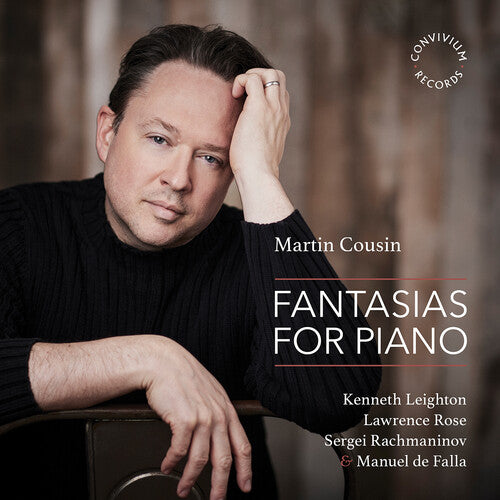
Falla, Leighton, Rachmaninoff & Rose: Fantasias for Piano
Sinding, Paganini, Part, Gershwin / Yoon Kwon
Music Of Spain - Rodrigo, Falla, Albeniz / Williams, Entremont, Ormandy, Stokowski
-- Gramophone [7/1966]
reviewing Concierto de Aranjuez on LP
-------
This is not a record for purists, but never before on disc have I heard a performance of the vividly atmospheric Falla ballet anything like so involving as this. Stokowski may indulge in some souping up of the texture in the haunting "Pantomime", but I confess that that is how I have always wanted to hear it, and the brisk songs and dances (not just the "Ritual Fire Dance") have a dramatic bite that conveys the freshness of excitement that must have attended the first appearance of a ballet which so patently extended from Russia to Spain the new and exotic medium developed by Diaghilev. Diaghilev himself certainly appreciated its potential quickly enough with the ensuing Three Cornered Hat.
Shirley Verrett makes a superb soloist, characteristically rich-toned most of the time but from time to time flinging at us impressive imitations of raucous flamenco chest-tone. The recording, larger than life, dates from the early sixties, but it is still impressive, rich and atmospheric.
-- Edward Greenfield, Gramophone
reviewing El Amor Brujo on LP
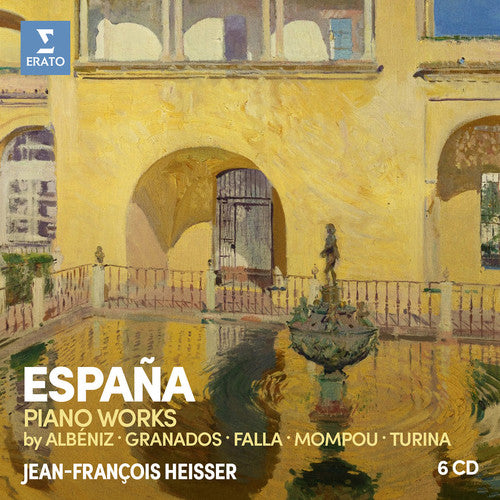
ESPAÑA PIANO WORKS
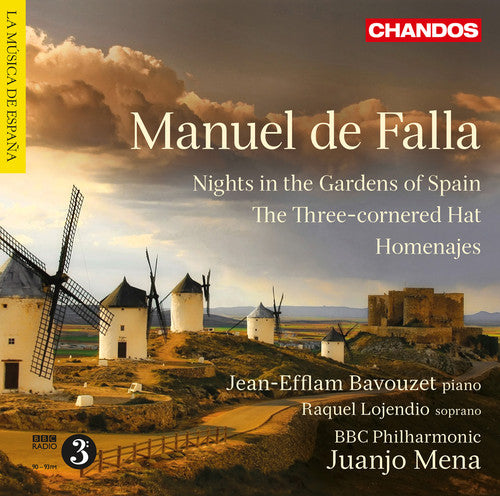
Falla: Nights In The Gardens Of Spain, The Three-Cornered Hat / Mena, Bavouzet, BBC Philharmonic
There’s always room for another terrific Falla collection, though there’s certainly no shortage of them. Indeed, The Three-Cornered Hat has already been very kind to Chandos: Tortelier’s Philharmonia version is excellent (coupled with Albeniz’s Iberia in the Arbos orchestration). This one is just as fine, maybe even better. Juanjo Mena certainly gets the BBC Philharmonic to wake up from its usual bland, business-as-usual attitude and deliver tangy, idiomatic results. Listen to his perfectly judged rhythmic accents in the Dance of the Miller’s Wife, or his riotously brilliant final Jota. These zesty and energetic sections are more than offset by the poetic stillness of Raquel Lojendio’s lovely offstage soprano solo in Part Two. It’s just an excellent performance, about as good as it gets.
This is just as true of the other works on the disc. Homenajes receives a nicely contrasted interpretation that gives the piece a wider expressive range than usual–the tribute to Debussy is particularly atmospheric. Nights in the Gardens of Spain is marvelous. Bavouzet, as has become clear over the past couple of years, is a very major artist, and his performance has an especially noteworthy vitality and sparkle. So many performance of this work wallow in a sort of droopy, soggy “impressionism.” Certainly Mena and Bavouzet capture the music’s many moods, and they don’t stint on its mysterious, nocturnal tints, but they do it with a welcome rhythmic focus and firmness of outline. For a typical example, consider the vibrant Poco più animato at figure 5 in the first movement. This is great stuff, and the sonics are as bold and tactile as the interpretations.
– ClassicsToday.com
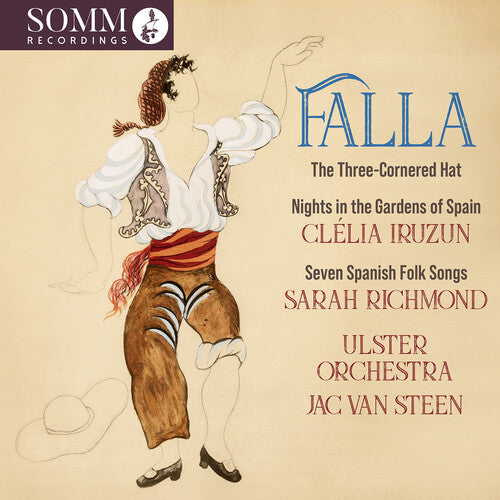
Falla: The Three Cornered Hat; Nights in the Gardens of Spai
Cantos de Espana
Souvenirs
Lorquiana
de Falla, Mussorgsky, Ravel & Scriabin: Intrigues of the Dar
Homenaje: Stefano Grondona plays Manuel de Falla, Miguel Llo
Falla: La vida breve
DE FALLA: Complete Original Works for Piano
FALLA: Popular Spanish Suite / Piano Pieces / Harpsichord C
Falla: Vida Breve (La)
FALLA: Amor Brujo (El) / El Sombrero de Tres Picos
Ravel, M.: Rapsodie Espagnole / Albeniz, I.: Iberia (Arr. E.
Shostakovich, D.: Cello Sonata, Op. 40 / Falla, M. De: 7 Can
Nocturne / Noll, Kiehr, Orea-Sanchez, Wiedmer, Huang, Carillier
This CD recording is the result of a succession of different moments of musical happiness and the encounter between the solo harpist of the Basel Symphony Orchestra, Aurelie Noll, and two exceptional musicians. María Cristina Kiehr and Yolena Orea-Sanchez (violoncello) have put their talent and artistic sensitivity at the service of this wonderful repertoire. The special sound of the harp creates a kind of new relief here and lends this unusual album its special charm. The program includes works by Reynaldo Hahn, Tchaikovsky, Manuel de Falla and Gabriel Faure. One highlight is certainly the new composition for soprano, cello and harp by Swiss composer Silvan Loher, whose delicate and impressionistic musical style fits wonderfully into this project. Soprano María Cristina Kiehr, born in Tandil, Argentina, is a specialist in "early music". The South American cellist Yolena Orea-Sanchez is a permanent member of the Basel Symphony Orchestra, as is the harpist Noll. She can be heard regularly at numerous European music festivals with the Trio Anthilia (violin, cello and piano), which she co-founded.
Falla, Fauré & Sibelius: Songes / Vignon, Czech Virtuosi
For the fourth solo album by pianist Élodie Vignon on Cypres, we have long been dreaming of a recording with orchestra! And so begins this fruitful collaboration with Eric Lederhandler, head of the Czech Virtuosi ensemble, of which he has been guest conductor for the past twenty years. Just as Élodie Vignon's first three albums which weave links between music and poetry, this one presents a unique programme, designed by Élodie and Eric to give pride of place to both orchestra and piano.
Manuel de Falla's Nuits dans les jardins d’Espagne quickly established itself as a masterpiece, combining finesse with the need to translate popular Spanish folklore with wit. They are an evocation of Andalusia, and more particularly of gypsy music. Gabriel Fauré's Ballade pour piano et orchestra adds a touch of French Romanticism to this programme.
Leader of the Finnish national school, Jean Sibelius appears here in two different guises through symphonic pieces, ranging from the most exalted Retour de Lemminkäinen to the most intimate of The Bard.
Falla: El Corregidor y la Molinera; El Sombrero de Tres Picos / Valiente, Malaga Philharmonic
It was Diaghilev who persuaded Falla of the opportunity involved in making a great ballet from the material of "El Corregidor y la Molinera", not being satisfied with that farce which, moreover, delighted the public of his time. However, it should be emphasised, that the pantomime involved a formula particularly favoured by Falla as it was based on a silent performance, both in terms of dialogue and incident. Today we can return to “El corregidor y la molinera” not as a mere attempt at “El sombrero de tres picos”, but, from our own perspective, as a more faithful testimony to Falla’s proverbial wish, still outside the spectacular dimension of Massine and Diaghilev. Falla, on his side later separated “Le Tricorne” from its scenic nature by transforming the score into two orchestral “suites”, which gave birth to “El sombrero de tres picos” as a symphonic creature, without transitions and with a much less relevant vocal contribution. These “suites” are in fact the most widely disseminated and best-known version of the work.