

May Blowout Sale
Over 1,000 titles from top classical labels are on sale now at ArkivMusic!
Titles include recordings from acclaimed artists such as The United States Navy Band, BBC Scottish Symphony, The Sixteen, and so many more!
Shop now before the sale ends at 9:00am ET, Monday, May 25th, 2026.
1144 products
-
![]()

-
![]()

-
 On Sale
Brahms: Cello Sonatas & Songs / Meneses, Wyss
CD$19.99$9.99Avie Records
Jun 03, 2022AV2493 -
![]()

-
![]()

-
 On Sale
Xiaogang Ye: Sichuan Image / Ogawa, Serebrier, RSNO
CD$21.99$15.99BIS
Jun 03, 2022BIS-2303 -
![]()

-
![]()

-
 On Sale
Three Tenors: Voices for Eternity - A Documentary / Domingo, Pavarotti, Carreras, Mehta
DVD$32.99$16.49C Major Entertainment
May 27, 2022760908 -
![]()

-
![]()

-
 On Sale
Piano Music
CD$21.99$10.99DUX
May 20, 2022DUX1775 -
![]()

-
![]()

-
 On Sale
Modern Lullabies
CD$21.99$10.99DUX
May 20, 2022DUX1821 -
![]()

-
![]()

-
 On Sale
1948
CD$21.99$10.99DUX
May 20, 2022DUX1802 -
![]()

-
![]()

-
 On Sale
Schubert: The Fair Maid of the Mill / Glynn, Spence
CD$19.99$9.99Signum Classics
May 20, 2022SIGCD711 -
![]()

-
![]()

-
 On Sale
Perspectives / Third Coast Percussion
CD$19.99$9.99Cedille
May 13, 2022CDR 210 -
![]()

-
![]()

-
 On Sale
Desiderium - Barber, Griffes, Previn, Kander & Weill / Myers, Myra Huang
CD$19.99$9.99Avie Records
May 13, 2022AV2512 -
![]()

-
![]()

-
 On Sale
Ravel: Prix de Rome Cantatas / Rophé, Orchestre National des Pays de la Loire
SACD$34.99$24.99BIS
May 06, 2022BIS-2582 -
![]()

-
![]()

-
 On Sale
Without Borders / Can Cakmur
SACD$21.99$10.99BIS
May 06, 2022BIS-2630 -
![]()

-
![]()

-
 On Sale
Davis: Air / Bateman, Royal Philharmonic Orchestra
CD$19.99$9.99Signum Classics
May 06, 2022SIGCD709 -
![]()

-
![]()

-
 On Sale
Dowland: Lessons - Lute Music / Nordberg
SACD$21.99$10.99BIS
May 06, 2022BIS-2627 -
![]()

-
![]()

-
 On Sale
Vasks: Piano Works / Reinis Zarinš
CD$18.99$9.49Ondine
May 06, 2022ODE 1361-2 -
![]()

-
![]()

-
 On Sale
Howells, Taverner et al.: Eastertide Evensong / Nethsingha, Choir of St. John's College
CD$19.99$14.99Signum Classics
Apr 15, 2022SIGCD707 -
![]()

-
![]()

-
 On Sale
Ullmann: Der Kaiser von Atlantis / Eröd, Hahn, Munich Radio Orchestra
CD$19.99$9.99BR Klassik
Apr 15, 2022BRK900339 -
![]()

-
![]()

-
 On Sale
20th Century Foxtrots: France & Belgium, Vol. 4 / Wallisch
CD$19.99$9.99Grand Piano
Apr 08, 2022GP855 -
![]()

-
![]()

-
 On Sale
Sir Roger Norrington Conducts Berlioz / Stuttgart Radio Symphony Orchestra
CD$33.99$16.99SWR
Apr 08, 2022SWR19531CD -
![]()

-
![]()

-
 On Sale
Tailleferre: Complete Piano Works, Vol. 1 / Horvath
CD$19.99$13.99Grand Piano
Apr 08, 2022GP891 -
![]()

-
![]()

-
 On Sale
Wilbye: Draw On Sweet Night / I Fagiolini
CD$20.99$10.49Coro
Apr 01, 2022COR16190 -
![]()
-
![]()
-
 On Sale
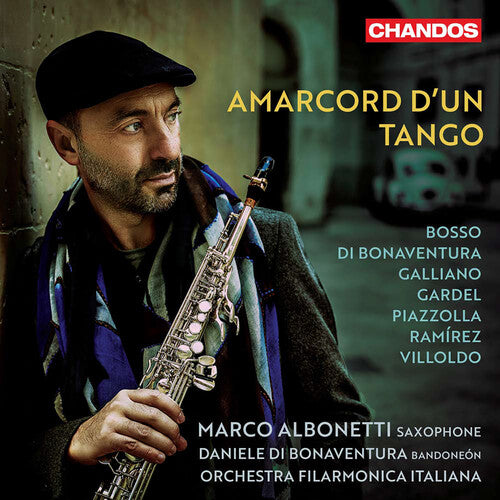
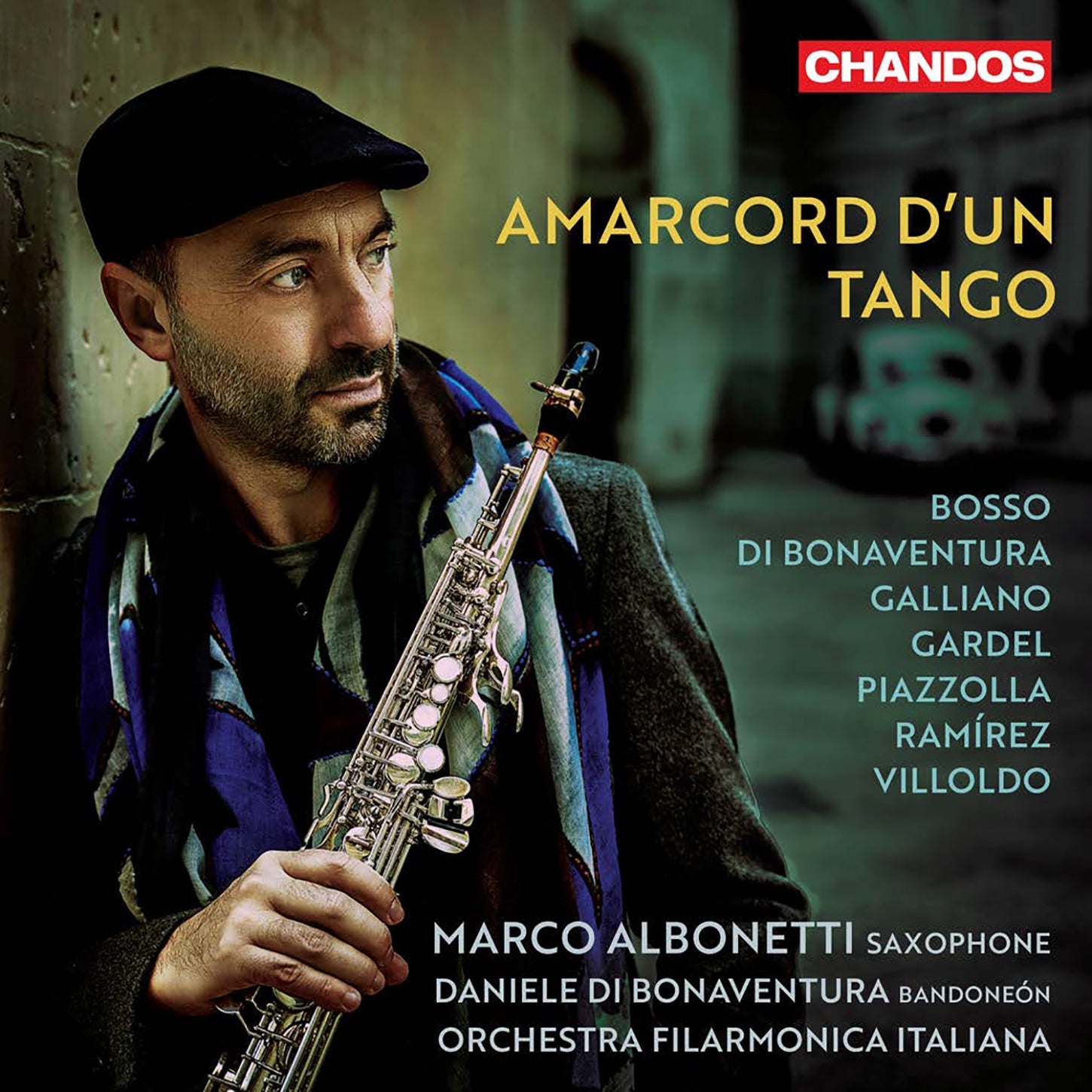
Piazzolla, Gardel, et al.: Amarcord d'un Tango / Albonetti, Bonaventura, Orchestra Filarmonica Italiana
CD$21.99$10.99Chandos
Apr 01, 2022CHAN 20259 -
![]()

-
![]()

-
 On Sale
Felix Mendelssohn & Bruch: Romantic Violin Concertos / Pochekin, Tewinkel, Württemberg Philharmonic Reutlingen
CD$20.99$10.49Haenssler Classic
Apr 01, 2022HC21058 -
![]()

-
![]()

-
 On Sale
Schnebel & Schollhorn: Yes I Will Yes / Sun, Lavoie, Dernbach, Porter, Fischer, West German Radio Symphony Orchestra of Cologne
CD$20.99$10.49Haenssler Classic
Apr 01, 2022HC21063 -
![]()

-
![]()

-
 On Sale
Maria Bach: Piano Quintet & Cello Music / Hülshoff, Canpolat, Karmon, Triendl, Grauman
CD$20.99$10.49Haenssler Classic
Apr 01, 2022HC21051 -
![]()

-
![]()

-
 On Sale
Strauss, Korngold & Schreker: Metamorphosen / Wilson, Sinfonia of London
SACD$21.99$10.99Chandos
Apr 01, 2022CHSA 5292


Brahms: Cello Sonatas & Songs / Meneses, Wyss


Xiaogang Ye: Sichuan Image / Ogawa, Serebrier, RSNO
Born in Shanghai in 1955, Xiaogang Ye is regarded as one of China’s leading contemporary composers. He has written music in a variety of genres, including symphonic and chamber works as well as scores for the stage. Ye has also composed music for films and the two works recorded here are both examples of this. Sichuan Image consists of 29 brief and atmospheric pieces composed to accompany a filmed travelogue of the scenic province in Western China. In preparation for the work, the composer visited mountains, river, villages and ancient historical sites in Sichuan. Lending further color to the large symphony orchestra, four Chinese musicians perform on traditional instruments. The album closes with Concerto of Life, a suite in five movements for piano and orchestra with Noriko Ogawa taking on the solo part. The work is based on the score for a feature film of the same name telling the story of a piano teacher and his students. Ogawa has also appeared on a previous album of Ye’s music alongside the Royal Scottish National Orchestra and conductor José Serebrier – a release named Editor's Choice in the Gramophone, whose reviewer described the performances as 'superb' and Ye's scores as possessing ‘lyrical elegance, searching drama and depth of color…’


Three Tenors: Voices for Eternity - A Documentary / Domingo, Pavarotti, Carreras, Mehta


Piano Music


Modern Lullabies


1948


Schubert: The Fair Maid of the Mill / Glynn, Spence
Christopher Glynn continues his series of Schubert in English releases with a new recording of ‘The Fair Maid of the Mill’ (Die schöne Müllerin) with acclaimed Scottish tenor Nicky Spence. Set to a new translation by writer and director Jeremy Sams, Willhelm Müller’s direct and emotionally-charged poetry became the basis of Schubert’s first cycle to tell a complete story over the course of its 20 songs. Nicky Spence is one of Scotland’s proudest sons and his unique skills as a singing actor and the rare honesty of his musicianship have earned him a place at the top of the classical music profession. Nicky won a record contract with Decca records while still studying at the Guildhall School of Music and Drama and then took a place as an inaugural Harewood Artist at the ENO. Christopher Glynn is a Grammy award-winning pianist, praised for his ‘breathtaking sensitivity’ (Gramophone), ‘irrepressible energy, wit and finesse’ (The Guardian) and ‘perfect fusion of voice and piano’ (BBC Music Magazine). He is also Artistic Director of the Ryedale Festival, where he has been praised as a ‘visionary’ and ‘inspired programmer’ (The Times).
REVIEWS
"The Fair Maid of the Mill [is] extraordinary: For the first time, as a native English speaker, I found myself understanding this song cycle on a more intimate and revelatory level...The meticulousness of word-for-word accuracy is traded for emotional accuracy. Playwright and director Jeremy Sams was commissioned to write this new translation, and his background in both opera and musical theater lends itself well to finding the right words to convey poetic, emotional, and dramatic honesty.
Tenor Nicky Spence’s own sense of crossover theatricality heightens the immediacy and intimacy of the cycle and Sams’s new texts with a verdant tenor that blooms and contracts in emotional fits and starts. (These beats are both offset and at times juxtaposed by pianist Christopher Glynn...) As the journeyman’s dream begins to collapse on itself...Spence spits out his pleas in a fit of jealousy and panic. The clarity with which he delivers the words makes it easy to slip into the language of Schubert’s work and tap into the small details that render the story so devastating at the end—try listening to him sing of how his love 'loves hunting green' without your throat catching a bit. It’s these small details that make this English Müllerin so rich and compulsively listenable.
--Van Magazine (Olivia Giovetti)
This is the third in the Signum label’s sequence of Schubert song cycles using an English version of the texts by Jeremy Sams. His is in no sense a literal translation and is never in the least archly “poetic”, but is instead couched in relatively, plain, direct English which captures the spirit and directness of the original German while jettisoning any faux-Romantic or medieval archaisms such as “fain would I”. The translation is vernacular and quotidian but not modish or vulgar – and Sams does a fine job of reproducing the rhyming, strophic form of some songs, finding workable rhymes which do not sound forced, so in “Mine” we hear “sound, round, resound” and “found”, and “shine, wine, intertwine, combine” and “mine” sequentially to reproduce the effect of the German. The freedom of the English into which some songs are rendered might initially take the listener aback but a moment’s reflection will confirm the aptness and fidelity of Sams’ rendering; hence, the opening song begins “A miller loves to sit and dream of somewhere” rather than “To wander is the miller’s delight, to wander” or some such precious transliteration – and I know which I prefer. Sometimes the translation is both felicitous and amusing, as when in “Impatience” (Ungeduld) Sams picks up on the German: “ich möcht es sän auf jedes frische Beet/ Mit Kressensamen” (I’d like to sow it in every fresh bed with cress seeds) and translates that colloquially as “I want to sow the words in watercress” so that it rhymes with “happiness” in the next line, and in “The Hunter” the miller girl’s cabbage patch (Kohlgarten) is transformed into a “strawberry bed” so that “fruit” rhymes conveniently with “shoot”. Certain lines impress themselves immediately upon the mind of the listener by their memorability, such as the alliterative “The sound of rushing water has mesmerised my mind” in the second song.
Nicky Spence’s diction is so pellucid as to render the provision of the English texts almost superfluous but such thoughtfulness on the part of the label remains a welcome gesture. [Spence's] beautiful, flexible, easily-produced sound...never falters; his tone encompasses both sweetness and power as required and his knack of placing just the right emphasis or applying a momentary pause in the words without unduly disrupting the vocal line is apparent throughout. I particularly like the way he can introduce a desperate sighing note into his timbre without it turning mawkish. Christopher Glynn supports him with some of the most subtle and sensitive pianism I have even heard applied to this work; his playing is by turns as fluid, sparkling and turbulent as rushing water. He and Spence make an ideally matched partnership – fresh and immediate, presenting it in a manner which could easily win new adherents to this miraculous song cycle but, in Glynn’s words, is also capable of 'offering a new perspective to those who know it well.'
--MusicWeb International (Ralph Moore)


Perspectives / Third Coast Percussion
All World Premiere Recordings
Grammy Award-winning Third Coast Percussion, whose artistry blends “creative fearlessness with reverent precision” (BBC Music Magazine), offers an album of enterprising collaborations and world-premiere recordings of works written or arranged expressly for the Chicago-based percussion quartet, representing four different approaches to composing concert music.
Danny Elfman’s Percussion Quartet, structured like a four-movement symphony, shares distinctive traits heard in his Grammy-winning, Oscar-nominated films scores, as well as hints of African balofon, Indonesian gamelan, and Shostakovich. Great admirers of composer Philip Glass, Third Coast arranged Glass’s solo piano Metamorphosis No. 1 for marimba, vibraphone, glockenspiel, and melodica. Rubix emerged from Third Coast Percussion’s improvisational collaboration with virtuosic, cutting-edge flute duo Flutronix, who also perform on the recording. Critically acclaimed electronic musician and composer Jlin (Jerrilynn Patton) composed her seven-movement Perspective as electronic tracks, without music notation. Third Coast transformed this work of “beautiful complexity” into a version they could perform live as a quartet.
REVIEW:
Unlike a lot of academic music for percussion ensembles, Danny Elfman makes his quartet sing sweetly, leaning heavily on the warm sounds of the marimba interlocking with tinkling tubular chimes and pitched metal pipes.
The flute duo Flutronix's piece, Rubix, features punchy flutes dancing over a chilled out vibraphone, and foggy episodes where marimba, whirly tube and bowed flexatone provide an evocative backdrop of light and shadow.
Footwork is the hyper-beat music born in Chicago's underground dance competitions and house parties in the late 1990s. On Third Coast Percussion's album, the style undergoes a mesmerizing transformation in a seven-movement suite called Perspective, by Jerrilynn Patton, who goes by Jlin.
Third Coast Percussion, with albums like Perspectives, continues to push percussion in new directions, blurring musical boundaries and beguiling new listeners.
-- NPR. org (Tom Huizenga)


Desiderium - Barber, Griffes, Previn, Kander & Weill / Myers, Myra Huang
The star of tenor John Matthew Myers is rapidly in the ascendent. His debut album, Desiderium, coincides with his Metropolitan Opera debut in Brett Dean’s Hamlet. Desiderium – “an ardent desire or longing, a feeling of loss or grief for something lost” – beautifully showcases Myers’ mellifluous voice.
His thoughtful program of works by American and American émigré composers opens with Samuel Barber’s yearning Knoxville: Summer of 1915 – rarely heard sung by a tenor – and transitions to Charles Griffes’ similarly searching settings of 3 Poems of Fiona Macleod, and Andre Previn’s 4 Songs for Tenor and Piano. What follows is A Letter from Sullivan Ballou, set to the words of a poignant letter by an American Civil War officer, by John Kander (of Kander and Ebb musical theatre fame). Rounding out the recital are 4 Walt Whitman Songs by German-born composer Kurt Weill, including the classic O Captain! My Captain! John Matthew Myers says, “Call me a big-hearted Romantic. Each song on this album conveys yearning, separation, loneliness or distance but also a sense of intimacy and longing for connection.” It certainly does. Desiderium is an auspicious debut album, and one especially attuned to our times.
REVIEW:
For his debut recital disc John Matthew Myers has chosen songs and groups of songs by five American composers, active during the 20th century. The common denominator is a feeling of loneliness, and it all stemmed from Barber’s Knoxville Summer of 1915, which is the only really well-known work in this album.
It goes without saying that the overriding mood is that of melancholy and gloom, but the texts and the musical expressions differ greatly, which vouches for a varied program. Barber’s Knoxville was composed in 1947 for a high voice and orchestra, and has almost exclusively been soprano territory. Since James Agee’s dream-like prose poem from 1938 is written in the persona of a 5-year-old male child, it’s logical to have it performed by a tenor. John Matthew Myers sings the many lyrical sections with soft beautiful tone, but he is also apt at expressing the desperation and sorrow in the work's crucial lines. It is a deeply felt reading.
Composed in 1918 The three Griffes songs, to poems by Fiona Macleod (William Field), were orchestrated in 1919. Like Barber’s Knoxville the orchestration has an attractive colouring that the piano cannot measure up to, but still it has its own attraction, and since it is the original it’s valid and gives the music a more intimate image, more chamber music like. I am happy to have both versions in so convincing readings.
I must say that André Previn’s 4 Songs for Tenor and Piano is a harder nut to crack. Composed in 2004 they are dressed in a rather knotty harmonic language. The mood is gloomy, also in the up-tempo last song, The Revelation. I believe that repeated listening might open them up, but at present I must content myself with admitting that the singing and playing are of the highest order. As far as I have been able to find out, this is a first recording, even though the liner notes don’t specifically say so.
The setting for John Kander’s A Letter from Sullivan Ballou, a major in the Civil War, is wonderful and gripping. John Kander is known, at least to Broadway musical enthusiasts, for his collaboration with Fred Ebb in Cabaret, Chicago, and other Broadway successes. Here, in a quite different vein, he catches all the shifts and nuances of the letter so sensitively. There are certainly echoes from his musical background, which in no way is a drawback. John Matthew Myers reading is appropriately sensitive.
The Japanese attack on Pearl Harbor in 1941 triggered Kurt Weill to set three of the Walt Whitman poems recorded here. He “structured the original three as a gradual decrescendo of militarism from the bullish opening to the wistful intensity of the final dirge”, as Julian Haylock says in his notes. Five years later he added Come Up from the Fields, Father, which here is placed third in the suite. Weill was a great admirer of Whitman, and said as early as 1926 that he was “the first truly original poetic talent to grow out of American soil.” The music is warlike and sturdy in the first song, reminding me of his style in the 1920s, the second song is a funeral march, and the whole suite – I wouldn’t call it a cycle – is deeply engaging.
John Matthew Myers can feel satisfied with his debut album, and he is excellently supported by Myra Huang’s accompaniment.
-- MusicWeb International (Göran Forsling)


Ravel: Prix de Rome Cantatas / Rophé, Orchestre National des Pays de la Loire
Between 1803 and 1968, the Grand Prix de Rome marked the zenith of composition studies at the Paris Conservatoire. In Maurice Ravel’s time the competition included an elimination round (a fugue and a choral piece) followed by a cantata in the form of an operatic scena. The entries were judged by a jury which generally favoured expertise and conformity more than originality and Ravel’s growing reputation as a member of the avant-garde was therefore hardly to his advantage, and may explain why he never won the coveted Premier Grand Prix, and the three-year stay at Rome’s Villa Medici that went with it.
The present set brings together all the vocal works that Ravel composed for the Prix de Rome – five shorter settings for choir and orchestra and three cantatas, each with three characters taking part in a plot which followed a more or less fixed sequence of introduction, recitative and aria, a duet, a trio and a brief conclusion. First published more than half a century after Ravel’s death, these test pieces for the Prix de Rome have never acquired the popularity of his other early works, such as Pavane pour une infante défunte, Jeux d’eau or the String Quartet. They are worth more than their reputation as academic exercises might suggest, however, and deserve to be better known, especially when performed by Orchestre National des Pays de la Loire and Pascal Rophé and a team of vocal soloists including Véronique Gens and Michael Spyres.
REVIEWS:
This two-disc set brings together all of these rare vocal pieces by the composer: five shorter settings for choir and orchestra, and three cantatas, each with three characters taking part in the plot, which followed a more or less fixed sequence of introduction, recitative and aria, a duet, a trio and a brief conclusion. First published more than half a century after Ravel's death in 1937, these test pieces for the Prix de Rome have never acquired the popularity of his later and more mature works, but they are no mean pieces and are worth more than their reputation as academic exercises might suggest. These are compositions that are deftly crafted, full of attractive melodies, harmonically refined, and very often deeply sensitive. Indeed, they encapsulate all of the future Ravel hallmarks that were to make him one of the twentieth century's leading French composers.
Pascal Rophé draws some convincing performances and, in his hands, the music has an immediacy that keeps it consistently fresh and vivid. More than a collector's item which should attract the interest of all music lovers - Ravel aficionados in particular. Sonics and booklet notes are first-rate.
-- Classical Music Daily


Without Borders / Can Cakmur
Towards the end of the 19th century, ´several composers were taking a new interest in folk music. Folk tunes, or imitations of them, had previously mainly been used in order to provide ‘local colour’ or as a way of catering to nationalist sentiments, but it was now seen as a means to revitalize art music itself, opening up for new possibilities in terms of rhythm and harmony as well as melody. At the forefront of this development was Béla Bartók, who also considered the use of folk elements as a tool to transcend boundaries – to achieve a ‘brotherhood of peoples’. For his new recital disc, Can Çakmur has devised a program which juxtaposes four composers’ different responses to folk music. Bartók’s Piano Sonata is followed by Passacaglia, Intermezzo e Fuga with which Dimitri Mitropoulos made a clean break with earlier works in a more nationalistic vein. Next comes Çakmur’s compatriot, the Turkish composer Ahmed Adnan Saygun, who in 1936 accompanied Bartók on a field trip in Turkey collecting music. His Piano Sonata was composed some fifty years later, however, and refers to folk music primarily on a theoretical level. Closing the disc is George Enescu’s Piano Sonata No.?3 in D major, which Çakmur in his own liner notes describes as ‘radiating a natural affinity for the village, without sacrificing the compositional value of the work.’


Davis: Air / Bateman, Royal Philharmonic Orchestra


Dowland: Lessons - Lute Music / Nordberg


Vasks: Piano Works / Reinis Zarinš
The love for the Latvian landscape is audible in the piano works of Latvia’s greatest living composer, Peteris Vasks (b. 1946), especially in his Seasons, the composer’s most frequently performed piano work. For this album pianist Reinis Zarinš has brought two other piano works alongside The Seasons as first recordings: Vasks’ early piano work Cycle (Zyklus) from the 1970s, and a new piano work, Cuckoo’s Voice. Spring Elegy (2021), written by the composer for Reinis Zarinš during the pandemic.
Ever since his concerto debut at the age of ten, Reinis Zariņš has performed as a concerto soloist, recitalist, and chamber musician throughout Europe and North America. He has participated in prestigious music festivals including the Lucerne Festival, the Bath International Music Festival, and the Scotia Festival of Music. His thoughtful virtuosity has delighted audiences at Amsterdam’s Concertgebouw, London’s Wigmore Hall, New York’s Weill Recital Hall at Carnegie Hall, and the Tchaikovsky Concert Hall in Moscow. Reinis has collaborated with leading orchestras including the London Philharmonic Orchestra, the Moscow Chamber Orchestra, Kremerata Baltica, and the Ostrobothnian Chamber Orchestra, and with conductors Pierre Boulez, Peter Eötvös, Pablo Heras-Casado, and Andris Poga, among others.
REVIEWS:
Alongside the world premiere recording of Vasks’ first-ever piano piece Cycle (1976) and the epic, complete The Seasons — four freestanding works composed between 1980 and 2008 — Cuckoo’s Voice—Spring Elegy (2021) serves to reinforce a sense of the importance to Vasks of his ongoing calling ‘that he must, until his last breath, glorify God’s world and people and his fatherland’, as Zariņš puts it. Yet, while Cycle especially is a welcome reminder of Vasks’ more astringent youthful style, and his writing is never less than intensely felt, there’s little trace here of the outright anguish that has often characterized his better-known string pieces. It’s as if Vasks is writing from inside nature as opposed to merely observing it: there’s an overarching stillness and acceptance within the sometimes dramatic push-pull of growth and decay explored throughout—and the contrasting moods he traverses ultimately nestle within that bigger process, albeit to varying degrees of comfort.
Zariņš’s impeccable pianism is hugely to thank for this, and his capacity to trace cohesive narratives through often lengthy, apparently free-wheeling but rigorously composed, works. Most satisfying is ‘Autumn Music’ (1981) which looks stylistically backwards and forwards even as it rounds The Seasons and the album itself.
-- BBC Music Magazine
This has the premiere recordings of Zyklus (Cycle) from 1976 and Cuckoo’s Voice. Spring Elegy from 2021. Cuckoo’s Voice is improvisatory and generally meditative, though it does have a few clamorous climaxes. Then Cycle bursts in with notes firing as if from a machine gun, taunting and acerbic. Its pauses are foreboding. Zarins brings out some impressive sounds from the insides of the piano: gradations of pizzicato and a pulsing, ringing “wub-wub-wub” from some low frequencies at the end of the ‘Prologue’. Most string-plucking from pianists sounds awkward, but Zarins gets loveliness out of it, even evoking a zither in the ‘Nocturne’. The repetitive rumblings and clattering chords of ‘Drama’ are too close to pompous avant-garde pounding for my taste, though I have to admit that Vasks manages to preserve his own Baltic voice through it all. The ‘Epilogue’ ties the preceding movements together and ends with what sounds like bricks dropping onto the strings.
The Seasons clocks in at 52 minutes. ‘White Scenery’ is a somewhat minimalist reverie, while ‘Spring Music’ goes for nearly 20 minutes, rippling and ringing and shaking the whole world by the collar with vernal urgency. This spring is the opposite of the English pastoral type and more like a tempered, transparent version of one of Messiaen’s bird-song pieces. The harmonies of ‘Green Scenery’ veer closer to England, but the repeated chords soon turn to tedium. Irritation turns to exasperation in ‘Autumn Music’ and its unending strings of repeated notes similar to tremolo on a guitar. It is more bearable when I concentrate on it (rather than, say, listening to it in the car), but rarely has a piece driven me up the wall so quickly.
Zarins’s playing is superb, and any Vasks fan will want this.
-- American Record Guide (Stephen Page)
Pianist Reinis Zarinš impresses with evocative music-making. In coaxing beautiful colors from the piano, he renders well the more subtle as well as the more immediate moods of the music.
-- Pizzicato


Howells, Taverner et al.: Eastertide Evensong / Nethsingha, Choir of St. John's College


Ullmann: Der Kaiser von Atlantis / Eröd, Hahn, Munich Radio Orchestra
Viktor Ullmann's one-act chamber opera Der Kaiser von Atlantis [The Emperor of Atlantis] was written in the Theresienstadt concentration camp and did not see its premiere until December 16, 1975 in Amsterdam, since the performance was banned after its dress rehearsal in 1944. The concert performance of the version by Henning Brauel and Andreas Krause (Schott), which took place on October 10, 2021 at the Prince Regent's Theatre in Munich, was recorded for this CD. Alongside the internationally renowned Austrian Kammersänger Adrian Eröd in the title role, mainly young performers sang, accompanied by the Munich Radio Choir conducted by Patrick Hahn, who made his debut here as the orchestra's principal guest conductor.
Viktor Ullmann, born in 1898 in Teschen, Silesia, studied with Arnold Schönberg and Alois Hába in Vienna. He worked first as a bandmaster and then as a bookseller, and settled in Prague as a freelance artist in 1933. Because he came from a Jewish family, he was deported to the Theresienstadt camp by the Nazis in 1942. In October 1944 he was murdered in Auschwitz-Birkenau, together with composers Pavel Haas and Hans Krása, who were almost the same age. Since the Nazis allowed a lively cultural life in their "showcase camp" of Theresienstadt, Ullmann was also able to be musically active. The intellectual and cultural heritage of that time is reflected in his music – also, and especially, in the "one-act play" that he wrote there entitled “Der Kaiser von Atlantis oder Die Tod-Verweigerung" (The Emperor of Atlantis or the Disobedience of Death), based on a libretto by his fellow prisoner Peter Kien.
REVIEWS:
The confident conducting of the young Austrian Patrick Hahn stands out for a fascinating transparency, as well as an accentuated lightness, which makes the voices all the more haunting. In addition to the striking baritone of Adrian Eröd as the Emperor, the bass Tareq Nazmi is very convincing in the role of the striking Death. Highly expressive and with an impeccably managed mezzo voice, Christel Loetzsch is a most impressive drummer.
Singing very sensitively are tenor Johannes Chum as soldier Harlequin and bass Lars Woldt in the role of the speaker. The soprano Juliana Zara can also please as Bubikopf.
And so this is then a gripping interpretation of Ullmann’s opera, which pleases on the one hand by the refinement of the orchestral performance and on the other hand by excellent voices.
--Pizzicato
It is remarkable how calmly Patrick Hahn, permanent guest conductor of the Munich Radio Orchestra, with his highly concentrated soloists in the Prinzregententheater, keeps a balance between existential commitment and a certain lightness, which the piece also requires.
The lively soprano Juliana Zara brings a ray of hope...Christel Loetzsch, as the drummer, gives the best impression of the theatrical potency of the piece: she announces total war in a mezzo whose timbral beauty extends to all registers of the role's enormous scope.
--Munich Evening Times
This is the version of Viktor Ullmann’s opera, recorded live in October, 2021 in Munich, that features an expanded instrumental score...this [version], edited by Henning Brauel, while retaining much of the instrumental ensemble’s theatre/cabaret aspects, has an overall more polished, softening of the edges quality, thanks to a richer, fuller string sound (helped also by the warm recording ambience).
[The] singers here are all excellent, and the orchestra, members of the Munich Radio Orchestra, is equally, expectedly fine...the notes also include a fascinating discussion...of the many musical and cultural references in the libretto and in the music.
--ClassicsToday.com
The Emperor of Atlantis has achieved a well-deserved reputation as one of the strongest works to have been composed by any of the several important composers who died in the Holocaust. Ullmann’s music is a heady mix of grim and playful, making allusions to hymn tunes and popular-music styles, with instrumental flourishes, propulsive rhythms, and sweet-sour harmonies that evoke, at times, such composers of his era as Hindemith, Weill, and Prokofiev but that, taken together, create a distinctive sound-world like no other.
This latest recording was made during an unstaged (or minimally staged) performance in front of an audience, and it is wonderful[.] The cast members all have steady and healthy-sounding (young?) voices. Often, indeed, they sing with astounding beauty of tone, which helped keep my ear glued to the proceedings, whereas I have sometimes felt that I was being shouted-at in my contacts with the work (on recordings and in live performance). The all-crucial words are rendered clearly and idiomatically by all concerned. I cannot resist praising Tareq Nazmi.
-- Artsfuse (Ralph P. Locke)


20th Century Foxtrots: France & Belgium, Vol. 4 / Wallisch
Gottlieb Wallisch continues his acclaimed survey of jazz-influenced piano literature. In this volume we explore le tumulte noir (‘the Black craze’) for African American music in the French-speaking countries after the First World War, taking us to Paris and Brussels where the mood was hot for dancing. This environment lured writers, composers, intellectuals and artists from all over the world, with American jazz music as the latest rage in the cafes and bistros of the day. The influence of dances from overseas spread like wildfire, taking hold amongst French and Belgian composers eager to free themselves from Germanic Wagnerism while riding the wave of popularity of hit records and cinema.
REVIEW:
Pianist Gottlieb Wallisch’s most enjoyable, ongoing exploration of the early 20th century music and dance craze, the Foxtrot, explores works by composers from France and Belgium. Less familiar names find a place among the famous, including Auric, Ibert, and Dutilleux before the disc moves to Belgium with five ‘World Premiere Recordings’, including a powerful Jazz Fantaisie from August Louis Baeyens.
-- David's Review Corner (David Denton)
His playing throughout is powerfully, emphatically rhythmic, as suits the music.
-- Pizzicato
Praise for prior volumes in this series from The New York Times:
20th Century Foxtrots, Vol. 1: Austria & Czechia / Wallisch
While jazz-inspired music by the likes of Stravinsky and Weill has never been forgotten, the similar efforts of dozens of other composers from the same period have fallen into obscurity. Now some of those experiments are enjoying a fresh hearing. Pianist Gottlieb Wallisch’s revealing and entertaining new recording is mostly made up of world-premiere recordings of these dance-oriented works, in their piano arrangements.
20th Century Foxtrots, Vol. 2: Germany / Wallisch:
In Wallisch’s latest batch of performances there are once again some discoveries from lesser-known artists. (Multi-movement works by Leopold Mittmann and Walter Niemann are a delight to encounter.) The new album kicks off with a spirited performance of a Paul Hindemith fox trot. And this edition also includes the world premiere recording of a piano arrangement of a “Tango” by Kurt Weill.
20th Century Foxtrots, Vol. 3: Central & Eastern Europe
Past editions surprised and delighted in equal measure; this latest album on the Grand Piano label extends the streak. The repertoire is principally devoted to jazz-age classical miniatures crafted in response to the global fascination with then-new dance rhythms. There are some familiar artists in both cases (think Shostakovich and Spoliansky), but also more obscure names: Yevgeny Mravinsky (“Fox-Trot,” 1929) and Alexandre Tansman (“Tempo Americano,” 1931). Who knew? Wallisch did, for one. As did the historian Mauro Piccinini, whose erudite liner notes are another valuable part of this zesty ongoing series.


Sir Roger Norrington Conducts Berlioz / Stuttgart Radio Symphony Orchestra
During his thirteen years as chief conductor of the Stuttgart Radio Symphony Orchestra of SWR Sir Roger Norrington conducted and recorded an important part of Berlioz's core repertoire. The present boxed set brings together on seven CDs the Requiem, the opera Benvenuto Cellini (concert performance), the oratorio L'Enfance du Christ, the overture Les Francs-juges and of course the Symphonie fantastique.
Norrington's style has caused a stir internationally with what has come to be termed ‘The Stuttgart Sound’: a synthesis of historically-informed performance practice with the technical capabilities of a modern orchestra. Whether in Mozart, Haydn, Bruckner, or Berlioz, Norrington seeks to capture the performance experience of the time, adjusting the orchestra’s size and seating plan to create an authentic sound without vibrato.
Hector Berlioz had to surmount a variety of challenges before he was able to pursue his musical vocation. His father, a respected physician in the provincial South of France, was not readily willing to come to terms with his son's intention to quit his medical studies and turn instead to music. He therefore made all further financial support subject to Hector's climbing up the musical ladder at lightning speed. Alas, it didn't work so easily. Berlioz's road to success was tedious and marked by adversity and struggle, his personal life tumultuous. The uniqueness and originality of his musical style are no longer disputed, but this insight came at the end of a decades-long process.


Tailleferre: Complete Piano Works, Vol. 1 / Horvath
Germaine Tailleferre is best known for being a member of the French circle of composers known as Les Six - the only woman in the group. Her stylish combination of neo-Classicism with a ready wit and energy can be compared to Poulenc and Milhaud. From the captivating Romance written while still a student, to her sparkling music for the 1937 Paris international exhibition, all of these pieces show Tailleferre as being very much at the heart of the contemporary French musical scene. This recording, described by the composer’s granddaughter as being ‘as though Tailleferre herself was performing these works’, is the first of three volumes presenting the complete piano music played by Nicolas Horvath.
REVIEW:
The Monaco-born Horvath’s discographical versatility lends itself to the chameleon Tailleferre: she switches from neoclassical to radical, tonal to bitonal, rhythmic and familiar to irregular and dissonant. Horvath is a great advocate.
-- The Guardian


Wilbye: Draw On Sweet Night / I Fagiolini
Winner of a 2022 German Record Critics’ Award!
To welcome the spring, British ensemble I Fagiolini puts aside its beloved Monteverdi to uncover its own national heritage: the best of John Wilbye's classic Golden Age madrigals. Whilst his oeuvre may have been small (just 75 works that we know of and most just a couple of minutes long), time and again, in these exquisite cameos, Wilbye delivers what might be reckoned the ultimate madrigal experience. The plangent dissonance of ‘Draw on, sweet night’ and ‘Weep, weep, mine eyes’ perfectly evoke English melancholy, while ‘Sweet honey-sucking bees’ and ‘Adieu, sweet Amaryllis’ are such sheer pleasure to sing that many listeners will scrabble to unearth old scores. This album is, in a nutshell, 75 minutes of madrigalian bliss! Rediscover or enjoy anew this central part of English choral culture, strangely out of fashion for so long, sung by a group that has matured into the repertoire like a good wine.


Piazzolla, Gardel, et al.: Amarcord d'un Tango / Albonetti, Bonaventura, Orchestra Filarmonica Italiana


Felix Mendelssohn & Bruch: Romantic Violin Concertos / Pochekin, Tewinkel, Württemberg Philharmonic Reutlingen


Schnebel & Schollhorn: Yes I Will Yes / Sun, Lavoie, Dernbach, Porter, Fischer, West German Radio Symphony Orchestra of Cologne


Maria Bach: Piano Quintet & Cello Music / Hülshoff, Canpolat, Karmon, Triendl, Grauman
A MusicWeb International Recording of the Month for July 2022!
All in all Maria Bach left more than 400 works to posterity. Most (about 80%) are Lieder and choral works, followed by smaller-scale piano works; not unlike Edvard Grieg or Hugo Wolff, she was an expert in that field, though she did also compose three ballets, made up of small, orchestral piano pieces. Her most ambitious works then, are the few excursions she made into the realms of chamber music (solo cello sonata, cello sonata, piano quartet and quintet, string quintet and two string quartets), in which she ventured a confrontation with the traditions of the grand, established genres. On the present release, Oliver Triendl, Marina Grauman, Nina Karmon, Öykü Canpolat, and Alexander Hülshoff showcase Maria Bach’s chamber works, including the Piano Quintet “Wolga-Quintet”, the Cello Sonata, and the Suite for Cello Solo.
Review
[Maria Bach's] music is infused with French and Russian elements and one can quite hear why it was so appealing to Roger-Ducasse who ensured that her 31-minute Piano Quintet was performed at the Paris Conservatoire when she visited Paris in 1930-31. Like all good music it’s clearly susceptible to strongly divergent interpretive stances. The Hänssler team is anchored by Oliver Treindl, who in my experience is probably one of the most hard-working and often recorded of players. He’s also an athletic figure who ensures forward-moving tempi.
The eminent cellist Paul Grümmer was a family friend and Bach was fortunate he liked her music and played the Cello Sonata frequently. It’s modestly structured – three movements and 19 minutes in this reading by Alexander Hülshoff and Treindl – and has a ripe Brahmsian rhapsodic feel, with a warmly curvaceous lyricism in the Romanze second movement. As with the Piano Quintet the finale is full of dextrous animation.
The final work in the disc is the Suite for cello, a crisp four-movement affair that looks back to Popper, as the notes indicate, rather than [J.S.] Bach. After a sonorous, chordal Praeludium come the registral leaps of an etude-like Scherzo, an expressive Air and then another of her favoured variations for a finale – including a Tango-like one – which call for supple bowing. It’s a deft work, all the more so in not honouring [J.S.] Bach’s legacy in any obvious fashion.
In terms of amplitude and density of sound this disc is an impressive one. The players sound firmly engaged in what must have been unfamiliar repertoire. They’ve been backed up by some classy notes. For overt expression, choose this[.]
Jonathan Woolf


Strauss, Korngold & Schreker: Metamorphosen / Wilson, Sinfonia of London
One of the New York Times' 5 Classical Albums to Hear Now
Shortlisted for the Gramophone Awards
Perhaps nobody since John Barbirolli has been able to make strings sing like the brilliantly talented John Wilson.
Following their critically acclaimed album of English Music for Strings, Sinfonia of London and John Wilson turn to Germany and three outstanding works for string orchestra. Franz Schreker’s Intermezzo, the oldest piece here, was composed in 1900, before Schreker’s rise to fame in the opera houses of Germany and Austria, but shows strong indications of what was to follow. Korngold composed the Symphonische Serenade following his return to Vienna from Hollywood after the Second World War, and shortly before he wrote his Symphony in F sharp. Korngold effortlessly conjures a vivid range of colors and textures from his large forces (32 violins, 12 violas, 12 cellos, and 8 basses) in a work that explores the virtuosity of the players to the full. Composed in 1945, as a reaction to the horrors of the war, and the desecration of German culture, Richard Strauss’s Metamorphosen for 23 solo strings seems to look backwards to the German Romantic tradition (a trait even more evident in his Four Last Songs, of 1948). The moving final passage, marked ‘In Memoriam’, leaves the listener to contemplate in silence.
"Wilson’s release wins hands down. Part of the victory is due to the conductor and string players’ panache…whatever the mood, the Sinfonia’s tone stays full-blooded and refulgent, just like Chandos’s recording." -Times of London
REVIEW:
What a fine and stimulating recording this is. Perhaps nobody since John Barbirolli has been able to make strings sing like the brilliantly talented John Wilson. Franz Schreker’s “Intermezzo” here has a sheen to it that is intensely delicate one minute and impossibly sumptuous the next. Strauss’s “Metamorphosen” has rarely had such an agonizingly drawn out, lovingly burnished performance as this. Even better is the rarity that accompanies it: Korngold’s Symphonic Serenade, a disfigured, difficult recollection of all that poignantly easygoing light music in the Austrian tradition, written when he returned to Vienna from Hollywood. The hush that Wilson finds for its slow movement is indescribably haunting.
-- The New York Times
