

May Blowout Sale
Over 1,000 titles from top classical labels are on sale now at ArkivMusic!
Titles include recordings from acclaimed artists such as The United States Navy Band, BBC Scottish Symphony, The Sixteen, and so many more!
Shop now before the sale ends at 9:00am ET, Monday, May 25th, 2026.
1144 products
-
![]()

-
![]()

-
 On Sale
Adámek: Follow Me - Where are You? / Kožená, Faust, Rattle, Bavarian Radio Symphony
CD$19.99$9.99BR Klassik
Jan 21, 2022BRK900638 -
![]()
-
![]()
-
 On Sale
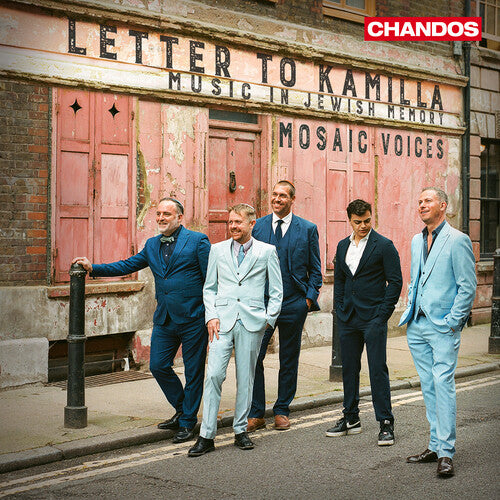
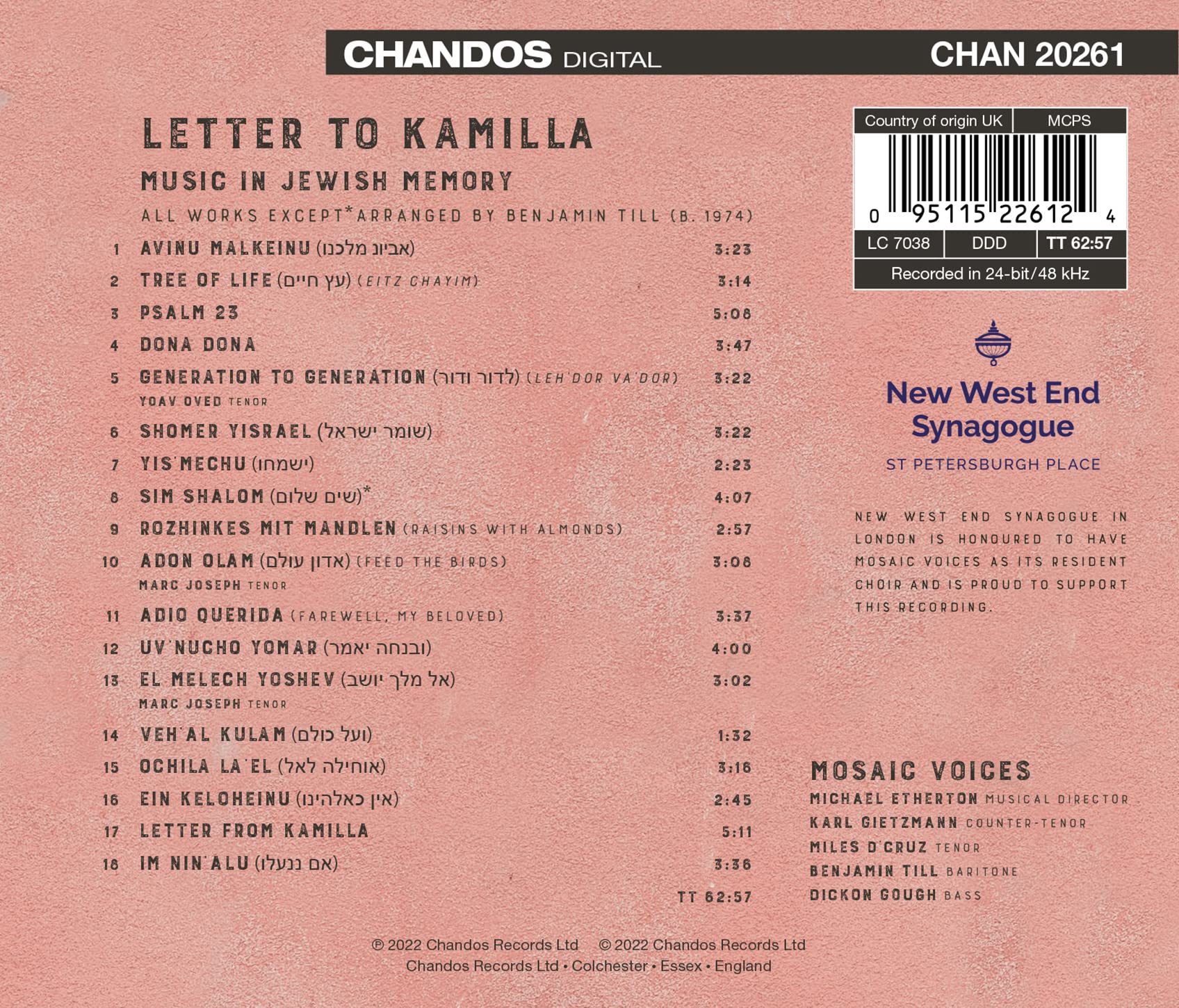
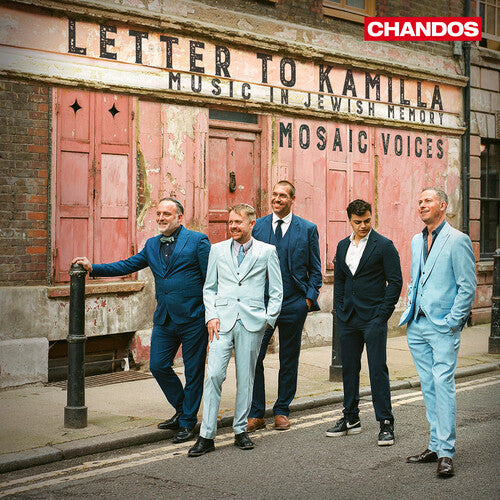
Letter to Kamilla – Music in Jewish Memory / Mosaic Voices
CD$21.99$10.99Chandos
Jan 21, 2022CHAN 20261 -
![]()

-
![]()

-
 On Sale
Bach: Sonatas and Partitas / Biondi
CD$21.99$10.99Naïve
Jan 07, 2022V7261 -
![]()

-
![]()

-
 On Sale
Beethoven: Symphony No. 9 / Furtwängler, Bayreuth Festival Orchestra
SACD$21.99$10.99BIS
Jan 07, 2022BIS-9060 -
![]()

-
![]()

-
 On Sale
Renewal / Hughes, Azkoul, United Strings of Europe
SACD$21.99$10.99BIS
Jan 07, 2022BIS-2549 -
![]()

-
![]()

-
 On Sale
Chopin: Works for Cello and Piano / Désert, Gastinel
CD$18.99$9.49Naïve
Jan 07, 2022V5467 -
![]()

-
![]()

-
 On Sale
Saint-Saëns, Herzog: Works for Violin and Orchestra / Jinjoo Cho, Herzog, Ensemble Appassionato
CD$18.99$9.49Naïve
Jan 07, 2022V7422 -
![]()

-
![]()

-
 On Sale
Shostakovich: Doppeltes Spiel / Jansons, Bavarian Radio Symphony Orchestra
CD$39.99$19.98BR Klassik
Jan 07, 2022BRK900929 -
![]()

-
![]()

-
 On Sale
Brahms: 3 Sonatas / Collins, Hough
SACD$21.99$10.99BIS
Dec 03, 2021BIS-2557 -
![]()

-
![]()

-
 On Sale
Mendelssohn: Symphonies Nos. 1 & 3 / Dausgaard, Swedish Chamber Orchestra
SACD$21.99$10.99BIS
Dec 03, 2021BIS-2469 -
![]()

-
![]()

-
 On Sale
Aho: Double and Triple Concertos / Elts, Antwerp Symphony
SACD$21.99$15.99BIS
Dec 03, 2021BIS-2426 -
![]()

-
![]()

-
 On Sale
Purcell: Fantazias / Chelys Consort of Viols
SACD$21.99$10.99BIS
Dec 03, 2021BIS-2583 -
![]()

-
![]()

-
 On Sale
Larcher: Symphony No. 2, "Kenotaph" - Die Nacht der Verlorenen / Lintu, FRSO
CD$18.99$9.49Ondine
Nov 19, 2021ODE 1393-2 -
![]()

-
![]()

-
 On Sale
Labyrinths / Orchestra of the Swan
CD$19.99$9.99Signum Classics
Nov 19, 2021SIGCD694 -
![]()

-
![]()

-
 On Sale
The Tree
CD$19.99$9.99Signum Classics
Nov 19, 2021SIGCD691 -
![]()

-
![]()

-
 On Sale
Bach: Sonatas for Viola da Gamba / Cunningham, Egarr
CD$19.99$9.99Avie Records
Nov 19, 2021AV2491 -
![]()

-
![]()

-
 On Sale
Musica Sacromontana - Organ music at the Basilica of the Oratorian Fathers of St. Philip Neri in Gostyn / Gembalski
CD$21.99$10.99DUX
Nov 19, 2021DUX1774 -
![]()

-
![]()

-
![Karajan: The New Year's Concerts, 1987-1988 / Battle, Vienna Philharmonic [Blu-ray]](//arkivmusic.com/cdn/shop/files/4018066-2756239.jpg?v=1783690940&width=800) On Sale
On SaleKarajan: The New Year's Concerts, 1987-1988 / Battle, Vienna Philharmonic [Blu-ray]
Blu-Ray$45.99$22.98C Major Entertainment
Nov 19, 2021759704 -
![]()

-
![]()

-
 On Sale
Here With You / A. McGill, Gloria Chien
CD$19.99$9.99Cedille
Nov 12, 2021CDR 207 -
![]()

-
![]()

-
 On Sale
Fiorini: In the Midst of Things - Piano & Chamber Music
CD$19.99$9.99Grand Piano
Nov 12, 2021GP880 -
![]()

-
![]()

-
 On Sale
Scenes from the Kalevala / Slobodeniouk, Lahti Symphony
SACD$21.99$10.99BIS
Nov 05, 2021BIS-2371 -
![]()

-
![]()

-
 On Sale
Seiber: Orchestral Works - Works for Violin & Piano
CD$20.99$10.49Haenssler Classic
Nov 05, 2021HC21043 -
![]()

-
![]()

-
 On Sale
Grechaninov: All-Night Vigil / Kļava, Latvian Radio Choir
CD$18.99$9.49Ondine
Nov 05, 2021ODE 1397-2 -
![]()

-
![]()

-
 On Sale
Britten, Canteloube: Vocal Works / Eriksmoen, Gardner, Bergen Philharmonic
SACD$21.99$10.99Chandos
Nov 05, 2021CHSA 5289 -
![]()

-
![]()

-
 On Sale
Bizet, Farrington, Shostakovich: Evoke / Ferio Saxophone Quartet, End
CD$21.99$10.99Chandos
Nov 05, 2021CHAN 20140


Adámek: Follow Me - Where are You? / Kožená, Faust, Rattle, Bavarian Radio Symphony
Born in Prague in 1979, the composer, conductor and chorus master Ondrej Adámek, who studied in his Czech hometown and in Paris, has already won numerous prestigious awards for his orchestral, chamber, vocal and electro-acoustic music. In his musical language, which also repeatedly incorporates elements of distant cultures, he creates unusual musical narratives. He seeks the authenticity of his interpretations by combining voices and movements, gestures and theatricality, phonetic and semantic aspects, and his own specially developed musical instruments. The premieres of Ondrej Adámek's "Where are You?" and "Follow me" were distinctive for their excellent casts, featuring stars such as Magdalena Kožená, Isabelle Faust and Simon Rattle. In Adámek’s "Follow me", a three-movement concerto for violin and orchestra, the melodies are divided between the soloist and the orchestra along the lines of the late medieval hocket technique, whereby the composer seeks to connect a single individual with a (human) crowd. The first performance of Adámek’s "Where are You?" for mezzo-soprano and orchestra was an outstanding event in Munich's concert programme this year. In the eleven-part, approximately 35-minute-long kaleidoscope of sound, dominated by constant motoric movement – ranging from everyday sounds such as the monotonous ticking of a clock to the sweeping, electrifyingly rhythmic pounding of the orchestra tutti – the composer embarks on a search for the human ("Where do we come from and where are we going?") and the divine.
Review
This is music that grabs the listener by the ears and doesn’t let go. I found it completely exhilarating.
Nothing about either score included on this recording is remotely derivative or even predictable. If I were to say that it is as if Adámek had smashed up all previous music into tiny pieces and then reconstructed them into something marvellous and new, that might give the impression that he is some kind of arch post modernist. He is nothing of the sort. Almost miraculously he manages to be both uncompromisingly modernist and yet intensely communicative. Try his setting of what, in effect amounts to St Theresa’s ecstatic, religious orgasm in the seventh song of Where Are You? and what you’ll get is music that verges on the demented but which manages to be deeply spiritual and very sexy! Both scores are full of such wild, rude, exultant moments.
Follow Me is simultaneously a violin concerto and someone having a lot of fun with what a violin concerto might mean. I am not aware of another concerto that concludes with what amounts to a musical lynching of the soloist by the orchestra. One of the characteristics of Adámek’s writing is his absolute command of even the most outré material. Every note delivers an aural punch. He is of course capable of writing music of great delicacy, as in the concerto’s Bach derived slow movement but even here every note makes its point.
The opening movement features orchestral soloists echoing the opening phrases by the solo violin (the ‘follow me’ of the work’s title), phrases the composer explains in his joyous, quixotic note that were inspired by the exaggerated vibrato of a singer in Japanese Noh theatre. The orchestra, in a sense, gathers round the soloist, repeating her phrases. Isabelle Faust is at her imperious best here. This then subsides into silence before the soloist starts again with more seductive phrases. As Adámek puts it, these phrases provoke the orchestra “eventually driving them mad”. This builds and builds as the various motifs combine and recombine. The tension generated by the gradually gathering of tempo and volume is quite ferocious before Adámek pulls the rug from under the expected eruption and the movement ends with weird whistlings and scrapings out of which the slow movement evolves. A great strength of Adámek’s music is to unsettle the listener whilst keeping them on the edge of their seat.
One of the unifying techniques across all three movements of this concerto is what Adámek likens to a kind of musical ping pong where melodies are split, in alternate notes, between soloist and members of the orchestra. This effect plus an extreme elongation of material taken from Bach is most noticeable in this slow movement. It is a strange and mysterious movement that subsides into the uneasy calm from it emerged.
On a purely technical level, the finale combines all the elements of the previous two movements but that scarcely does justice to the effect it has on the listener. The shadowing of the soloist which gives the work its title is allowed finally to work its way from a hushed, fugitive opening all the way to the mighty climax that the opening movement was robbed of. As in that movement, the following of the soloist by the orchestra becomes more combative- a wry nod I think to the lion taming tradition of the 19th century virtuoso concerto – and the music, dominated by a rogue trombone, constantly threatens to swamp the soloist whose final phrases are delivered off stage before a final thrilling orchestral stampede rounds things off. Is that a tongue in cheek reference to the final sacrificial dance of the Rite of Spring I hear in this final passage? What this description may not capture is that this is all immensely diverting and colossal fun. The world of Adámek’s music may be capable of great seriousness but it never takes itself too seriously.
Follow Me is, in many ways, the curtain raiser for the even more remarkable Where Are You? My earlier comments have probably already given some indication of what it is like. Written for mezzo soprano and orchestra, it is a song cycle on spiritual themes with texts from the Bible, the Gita and the autobiography of St Theresa. None of this is handled in a conventional manner. The opening section revels in the vowel sounds of the opening line of the Lord’s Prayer in Aramaic. A later movement sets possible Czech translations of those Aramaic words. It’s that sort of piece! The theme that unites these disparate elements is the way in which the spiritual quest for the divine however how high it can raise us comes down to earth with the question ‘Where are you?’ left unanswered. It has to be said that the piece celebrates the quest as much as it illustrates its ultimate failure and it does so with affection and good humour as well as profundity and anguish.
The vocalist is required to adopt a huge range of singing styles from breaths and rolled r’s to folk singing to outrageous coloratura. As in most of his other scores that I’ve heard, Adámek can find music in almost anything and make no mistake – this is a musical event above all else. The composer isn’t advancing some obscure musicological idea but making maddening, frenzied, bewildering, exuberant music. Ultimately, like the spiritual quest it describes, words fail to do justice to this piece. You are just going to have to listen to it.
--MusicWeb International (David McDade)


Letter to Kamilla – Music in Jewish Memory / Mosaic Voices


Bach: Sonatas and Partitas / Biondi


Beethoven: Symphony No. 9 / Furtwängler, Bayreuth Festival Orchestra
Seventy years ago, on the 29th July 1951, Wilhelm Furtwängler conducted Beethoven’s Symphony No. 9 at a concert marking the reopening of the Bayreuth Festival after seven years of silence following the Second World War. It was a momentous occasion, and the concert was broadcast by Bavarian Radio and transmitted across the world, for instance by Swedish Radio. Using the analogue mono tape as digitized by Swedish Radio, the present disc reproduces the broadcast as it would have been heard by listeners in Sweden: we have chosen to not change anything, not to ‘brush up’ the sound, not to clean and shorten the pauses or omit audience noises within the music, but to keep the original as it was. In this way we hope to recreate the feeling of actually sitting in front of an old radio in 1951, listening to this concert – a true historical document.
REVIEW:
Nothing else in the realms of recorded music is quite like it and I would urge you to share the experience...I’m not claiming that this performance will suit every mood or even every taste, but if and when it does hit target it will leave you changed for ever.
-- Gramophone (Editor's Choice, March 2022)


Renewal / Hughes, Azkoul, United Strings of Europe


Chopin: Works for Cello and Piano / Désert, Gastinel


Saint-Saëns, Herzog: Works for Violin and Orchestra / Jinjoo Cho, Herzog, Ensemble Appassionato


Shostakovich: Doppeltes Spiel / Jansons, Bavarian Radio Symphony Orchestra


Brahms: 3 Sonatas / Collins, Hough
Friends of long standing as well as regular partners in chamber music, Michael Collins and Stephen Hough bring their combined musical insights and expertise to bear on Johannes Brahms’s sonatas for clarinet and piano. Together with the composer’s trio for clarinet, cello and piano and clarinet quintet, the sonatas are among the most treasured works in the repertoire of the instrument – but it is partly down to good luck that we have them at all. When Brahms in 1891 heard the clarinetist Richard Mühlfeld, principal clarinet of the Meiningen Court Orchestra, he had already announced his retirement. He was enraptured by Mühlfeld’s playing and its vocal qualities, however, and made a ‘comeback’: during the following couple of years he composed all four of his clarinet works. These were written especially for Mühlfeld, whose spirit does seem to pervade the two sonatas – we hear an unusually sunny and lyrical Brahms, with plenty of opportunity to sing for both instruments. When the sonatas were published, they appeared with alternative viola parts to replace the clarinet, and soon violin versions prepared by the composer were also brought out. For the opening work on the disc, Michael Collins has therefore taken a leaf out of Brahms’s book, by adapting the composer’s Violin Sonata No. 2, another late work. The amount of adaptation needed is small: a lot of the violin writing fits the clarinet well, and the sonata share much of the songlike quality of the two ‘real’ clarinet sonatas.
REVIEW:
Clarinetist Michael Collins must have lived with the two Op. 120 sonatas for all his professional career. That seems abundantly clear from his superb playing in both of those sonatas. His Brahmsian experience is also evidenced by his highly persuasive and idiomatic adaptation of Op 110. As for Stephen Hough, his Brahms credentials are well known, not least for his splendid recordings of the piano concertos (review) and, more recently, of the late piano pieces (review). It was a great idea to bring these two fine musicians together for this project and the idea has paid off handsomely.
The production values are high. The recorded balance is ideal and the instruments are reproduced truthfully. I listened to the stereo layer of this SACD and was very satisfied with the results. As I’ve already indicated, Stephen Johnson’s essay is excellent.
This is a disc which will grace any Brahms collection.
-- MusicWeb International


Mendelssohn: Symphonies Nos. 1 & 3 / Dausgaard, Swedish Chamber Orchestra
Having begun their collaboration in 1997, the Swedish Chamber Orchestra and its conductor laureate Thomas Dausgaard have developed an unusually tight partnership. Nowhere is this demonstrated more clearly than in their cycles of the symphonies of Schumann, Schubert and, most recently, Brahms – performances which have been characterized by reviewers as variously ‘fresh’, ‘vivid’, ‘transparent’ and ‘invigorating’. Of Mendelssohn the team has previously recorded the incidental music to A Midsummer Night’s Dream, a release described as ‘capturing Mendelssohn’s inimitable spirit’ on the website Crescendo. The same disc included The Hebrides, and now the SCO and Dausgaard return to Scotland, with Mendelssohn’s ‘Scottish’ Symphony. This was begun in 1829, after a stay in London during which the composer conducted his Symphony No. 1, also included on this disc. Mendelssohn’s imagination was often fired by impressions from nature, and Scotland was the Romantic landscape par excellence, celebrated for its rugged Highland scenery and melancholy tunes. ‘I think that today I found the beginning of my ‘Scottish’ Symphony’, he wrote to his parents after a visit to the ruined chapel at Holyrood Palace in Edinburgh. It took more than a decade for him to complete the symphony – but ever since its first performance, in 1842, it has been a staple of the symphonic repertoire.
REVIEW:
With the 38-member Swedish Chamber Orchestra, conductor Thomas Dausgaard here offers an ensemble probably quite similar in size to that which played Mendelssohn's Symphony No. 3 in A minor, Op. 56. The size fits Dausgaard well, for his readings are crisp and restrained, without a lot of vibrato (as is his trademark with this group) or big emotional climaxes. Dausgaard's quick, high-tension approach works well here. BIS contributes fine engineering from the Örebro Concert House in this fresh Mendelssohn release.
-- AllMusic.com (James Manheim)


Aho: Double and Triple Concertos / Elts, Antwerp Symphony
Concertos for cor anglais are few and far between, and harp concertos aren’t very common either. In combining the two, Kalevi Aho has come up with a true rarity – possibly the only double concerto in existence for these two instruments. Composed in 2014, the work was commissioned by the Antwerp Symphony Orchestra for two of its solo players: Anneleen Lenaerts and Dimitri Mestdag, who also perform it here. The work is characteristically eclectic, making the most of the sonic possibilities of the solo instruments, but also of the orchestral palette. The Antwerp Symphony Orchestra is no newcomer to Aho’s music, having previously recorded his concertos for trombone and trumpet. On the present disc, it also provides support for the Storioni Trio, in the Triple Concerto for violin, cello, piano and chamber orchestra, a joint commission by the trio and the orchestra. In 2017, as Aho started work on the concerto, his granddaughter was born. Having written a lullaby for her, he decided to use that as the core melodic material of the piece. The lullaby is heard several times in the first movement, which is quite tonal and very dreamlike. It also features in the movements that follow, while the harmonic language becomes more complex. Aho himself describes the work as having ‘a general atmosphere full of joy and positive (sometimes quite virtuosic) energy.’
REVIEW:
The Finnish composer Kalevi Aho is amazingly prolific. Not only are there, so far, seventeen symphonies and five operas, but also no fewer than thirty-seven concertos. Here we have two of them.
The Double Concerto for cor anglais and harp begins very quietly, so quietly in fact that at first I thought there was something wrong with my player while sounds like background noises started emerging. However, the two solo instruments do enter and gradually the work gathers definition and then rhythmic bite. There is a cadenza for the two instruments before the music subsides. This first movement is as long as the remaining three together. The second movement is a short cadenza for the harp alone, a most attractive passage, which leads into a brisk and exciting allegro. The finale is again short and quiet and we return to something like the mood of the beginning.
The Triple Concerto for violin, cello and piano is a more traditional combination, and the listener will at once think of Beethoven’s concerto for the same combination. Aho is obviously aware of this and does something quite different. For a start he uses a chamber orchestra, with strings and just two wind instruments. He rarely employs his soloists as a group together, but writes more in the concerto grosso kind of idiom, with a good deal of interplay between the soloists and the orchestra. If this sounds rather like Martinů, this is deliberate, and I was several times reminded of the Czech master in hearing this work. It is based on a lullaby he wrote for his granddaughter Matilda, which used the musical letters in her name. This comes several times in the dreamy and atmospheric first movement. This is followed by an energetic Presto, then another mysterious slow movement and a finale which starts slowly but soon speeds up.
The performers here are a mainly Belgian team, and they were all involved in the premieres apart from the conductor, who on those occasions was Martyn Brabbins, who has had quite a close association with Aho’s music. For whatever reason, he is not the conductor here, and that role is taken by the Estonian Olari Elts. He does a good job and secures confident performances. The sleevenote, in four languages is helpful. This is a SACD but I was listening in ordinary two channel stereo, in which the sound was immaculate. BIS has been supporting Aho for a long time and this latest issue is a worthy addition to their series. Aho’s fans need not hesitate, and those curious about trying this composer could well dip a toe in here.
-- MusicWeb International (Stephen Barber)


Purcell: Fantazias / Chelys Consort of Viols
At the age of 20, Henry Purcell entered his 14 Fantasias and two In Nomines into an autograph bearing the title ‘The Works of Hen; Purcell, A.D. 1680’. Despite his youth Purcell was already making his mark as a composer, writing music for the London theatres and holding posts at Westminster Abbey and at court. But unlike his works for the theatre and the church, which were intended for specific occasions, very little is known about the impulse behind fantasias. Composed for between three and seven parts they are a consciously anachronistic distillation of an old style at a time when the reigning taste was for more modern sounds – for dance-based music with lively rhythms and hummable tunes. It isn’t even clear what kind of ensemble they were intended for: given the association with older music, one might assume that Purcell had viols in mind, but the distribution of the parts is not always in keeping with the standard sizes of the viol consort – nor for that matter those of the violin consort.
Were the fantasias in fact ever performed? None of these questions has a satisfactory answer, and in this respect the Purcell Fantasias resemble Bach’s The Art of the Fugue, because of their quality and inventiveness but also owing to the mysteries that surround them. The collection is here performed by Chelys Consort of Viols, following up on three previous and acclaimed releases on BIS featuring the music of Michael East, John Dowland, and Christopher Simpson.
REVIEW:
The Chelys readings, clean and rather circumspect, merit strong consideration for those interested in these youthful and intellectual Purcell works. Nicely recorded by BIS at Girton College Chapel, Cambridge, they don't overdo the mystery: the sound is clean and the polyphony clear. The pungent dissonances scattered through these works, which were a feature of the tradition (not just of Purcell's pieces), emerge with the proper emphasis, but the Consort does not lean into them unnecessarily.
-- AllMusic.com (James Manheim)


Larcher: Symphony No. 2, "Kenotaph" - Die Nacht der Verlorenen / Lintu, FRSO
Austrian composer Thomas Larcher (b. 1963) is one of the great symphonists of our era. This album by the Finnish Radio Symphony Orchestra and conductor Hannu Lintu includes the first recording of his 2nd Symphony, ‘Kenotaph’, and the song cycle ‘Die Nacht der Verlorenen’ performed by the world-known baritone Andrè Schuen. Larcher’s symphony was written in 2015–2016 to a commission from the National Bank of Austria for its bicentenary. The premiere was given by the Vienna Philharmonic under Semyon Bychkov at the Musikverein in Vienna in June 2016. Larcher’s work, originally intended as a concerto for orchestra, engages with tradition as a fertile background, while still embodying the sound and consciousness of our time. The subtitle to Larcher’s work was motivated by the painful awareness of the thousands of refugees who have drowned in the Mediterranean. The work can also be understood as a more general meditation on human tragedy and an exploration of profound existential issues. Larcher ties the material of the work together with a strong sense of dramaturgy, intense emotional expression and a feeling for musical narrative. The song cycle ‘Die Nacht der Verlorenen’ for baritone and large ensemble sets fragments by Ingeborg Bachmann (1926–1973) that were posthumously published. Bachmann’s dark texts inspired Larcher to write intense and compelling music that is entirely in tune with the mood of the poems. Overall, the work is dominated by slow, meditative and often dreamlike and unreal moods, effectively underpinned by delicate and carefully designed scoring that conjures up a multitude of colors and shades.


Labyrinths / Orchestra of the Swan
Shortlisted for the Gramophone Awards!
Following the success of their last album, Timelapse, this new album from Orchestra of the Swan is a collection of extraordinary works connected by ideas of pilgrimage, contemplation, exploration and enlightenment through the works of composers such as Richter, Respighi, Britten, Piazzolla, Brian Eno, Nico Muhly, Joy Division and more. As with Timelapse, the joy is to be found in discovering the surprising and delightful connections between culturally disparate and musically contrasting time periods. Labyrinths have been an important part of humanity’s cultural landscape for thousands of years; from the Ancient Greek myth of Theseus and the Minotaur to the intriguing stories of Jorge Luis Borges and Umberto Eco. Our overwhelming desire to find patterns and ‘the hidden truth’ is perhaps nowhere more evident than in the subversive and complex vistas of music. Formed in 1995, Orchestra of the Swan is a British chamber orchestra which, under the artistic direction of David Le Page, is passionate about audience inclusivity and blurring the lines between genres, through its adventurous and accessible programming.


The Tree
Andrew Nethsingha and The Choir of St John’s, Cambridge present a tribute album to two former directors, Christopher Robinson and David Hill, who celebrate their 85th and 65th birthdays respectively. Taking the idea of new growth as a starting point, the album develops from the seed of a single treble line, gradually adding organ, then lower voices, a second choir (Yale Schola Cantorum), 150 additional singers, and eventually combining nearly 500 voices together (former members and friends of the college choir). The programme spans Hildegard of Bingen to a new commission by James Long (b.1987) and also includes works by three ex-St Johnians: Herbert Howells, Johnathan Harvey and Christopher Robinson. The Choir of St John’s College, Cambridge is one of the finest collegiate choirs in the world, known and loved by millions from its broadcasts, concert tours and recordings. Founded in the 1670s, the Choir is known for its distinctive rich, warm sound, its expressive interpretations and its breadth of repertoire.


Bach: Sonatas for Viola da Gamba / Cunningham, Egarr
Legends of the period-performance community Sarah Cunningham and Richard Egarr need little introduction, with their contributions to recorded music garnering critical acclaim from early music afficionados across the decades. They join forces for their AVIE Records debut recording of J.S. Bach’s celebrated Sonatas for Viola da Gamba and Harpsichord, together with Cunningham’s dazzling arrangements of the composer's Organ Trio Sonata and Flute Partita to conclude the programme. The Gamba Sonatas have long since established themselves as a staple in the cello and gamba repertoires, notably extending their fame into popular culture through film and television features.


Musica Sacromontana - Organ music at the Basilica of the Oratorian Fathers of St. Philip Neri in Gostyn / Gembalski
| The church used by members of the Oratory of St. Philip Neri upon their arrival on the Holy Mount in Gostyń most probably contained an organ made in the local workshop of Wojciech Libowicz, who around 1670 is known to have built the instruments in various nearby localities. Regarding the new organ for the basilica of the Oratorian Fathers, historical sources speak of an instrument from the workshop of Jan Bernard Zitner from Głogów. It was installed in the church choir in the years 1766–1768 and remained there until it was replaced in 1855 by an organ made by Konstanty Kamiński from Opalenica. The present -day organ case, with its Classicist prospect, probably dates from that time. In 1958, the Biernacki workshop installed a new instrument inside it, using some of the old pipes. With the passing of time, it ceased to be used and eventually was dismantled in 2016. A new organ was built in 2016–2017 as part of a major project to revitalize the church’s Baroque interior. It has a mechanical action and a timbral aesthetic modelled on the Baroque-Classicist pattern. The historic case has been restored to its former shape and colors. The organ was built by Marek Cepka from Popowo, near Wronki. The works featured in this recording demonstrate the richness of sound of the organ of the Gostyń basilica, while drawing upon the musical tradition of the sanctuary and the two-centuries old musical community at the monastery of St. Philip Neri. These works were written by composers who were known on the Holy Mount from their vocal-instrumental music, as well as by those who participated in the spiritual life of the Oratory of St. Philip Neri. |


Karajan: The New Year's Concerts, 1987-1988 / Battle, Vienna Philharmonic [Blu-ray]
The New Year´s Eve Concert 1988 was one of the last concerts that Herbert von Karajan gave with the Berliner Philharmoniker in Berlin. For this concert he invited the 17 year old Evgeny Kissin to his debut with the orchestra. After the concert the press did raving reviews about Kissin´s musicality and technical skills and he proves till today that he is one of the best pianists of our time. The New Year´s Concert from the Golden Hall of the Musikverein Vienna with the Wiener Philharmoniker is always one of the best-selling classical albums each year. In 1987 Herbert von Karajan conducted his only performance of the New Year´s Concert performing famous pieces from Johann Strauss I, Johann Strauss II and Josef Strauss. As soloist in one piece you can hear the legendary soprano Kathleen Battle.
![Karajan: The New Year's Concerts, 1987-1988 / Battle, Vienna Philharmonic [Blu-ray]](http://arkivmusic.com/cdn/shop/files/4018066-2756239.jpg?v=1783690940&width=800)


Here With You / A. McGill, Gloria Chien
Anthony McGill, principal clarinet of the New York Philharmonic, and pianist Gloria Chien, a frequent performer with the Chamber Music Society of Lincoln Center, make their commercial recording debut as a duo on Here with You, an album of early and late German Romantic masterworks they’ve treasured throughout their 15 years of mutual admiration and musical collaboration. It’s a project that embodies, in the artists’ words, a “shared expression of beauty and friendship.” Johannes Brahms and Carl Maria von Weber were accomplished pianists who wrote for — and performed with — the leading clarinetists of their day. Brahms’ Sonata No. 1, Opus 120, spotlights fast-paced, intense dialogues between the two players, while his Sonata No. 2 explores the clarinet’s entire tonal range. Weber’s Grand Duo Concertant has been described as “a double concerto without orchestra” showcasing sheer virtuosity for both instruments. The Chicago Symphony Orchestra’s newest Mead Composer-in-Residence, Jessie Montgomery wrote Peace in 2020 as a response to the global pandemic. McGill and Chien offer the world-premiere recording of the clarinet and piano version.


Fiorini: In the Midst of Things - Piano & Chamber Music
Maltese composer Karl Fiorini is a European without frontiers – the compositions in this album reflect his early detachment from a Mediterranean identity towards a more varied and intense sound world. Trio Lamina features elements of Bartók’s ‘night music’ in its complex sub-sections, whereas Fiorini’s two piano studies, which predate his move to Paris, already exude a Gallic ambience. Influenced by North African folk music, the Piano Trio expands his global reach, and the Piano Sonata, a gritty virtuoso concert piece, shifts geographical influence towards Eastern Europe to powerful effect. All of these world première recordings were recorded in the presence of the composer.
REVIEWS:
This program is a shining example of a 21st-century composer who has stepped back from the extremist styles of the mid-late 20th century to re-embrace communication with an audience, but has taken elements from those styles into his own armory.
Karl Fiorini (b. 1979) references Minimalism alongside Lisztian bravura in the first of his Piano Études (2007–08), Middle Eastern syncopation in his 2017 Piano Sonata, and Neoclassical momentum plus Webernian fragmentation in the Trio Lamina (2002).
He draws on the characteristics of recent schools without adhering to their strict rules or specific aims. He knows his instruments, and his chamber music on this showing is bracingly virtuosic. Like other contemporary composers such as Francisco Coll, he has created a strong voice by synthesizing disparate elements so they emerge as subtle flavors, to use a cooking metaphor. (Much 21st-century music resembles modern fusion cuisine.)
The latest work on this program is a quartet, In the Midst of Things (2019), utilizing the same instrumental combination as Messiaen’s Quartet for the End of Time. I think Fiorini deliberately echoes that seminal work in the first movement, which begins with a languorous cello melody accompanied by full, stately chords from the piano, but he soon turns away from it. By the time we reach the closing Presto movement we are in a bustling world of earthy joie de vivre of a type Messiaen never attempted. Again, Eastern rhythms feature.
I greatly enjoyed these examples of Fiorini’s work. He may be an instinctive composer as he claims, but his instinct is clearly based in a solid grounding of acquired knowledge and continual exploration. The sound and performances are excellent. For those interested in new music, this disc is an exciting and not overly demanding example.
-- Fanfare
The early Trio Lamina (2002) for violin, clarinet, and piano sports an arch form and a spooky atmosphere reminiscent of Bartok. The Two Piano Etudes (2008) have a Gallic neo-Impressionism; and the Piano Trio (2005) has echoes of North African folk music in the use of hexachords and modes in retrograde and inversion. The Piano Sonata (2017) is a dense and demanding concert piece inspired by the music of Eastern Europe.
In the Midst of Things (2019) is a four-movement work for clarinet and piano trio that takes a Beethoven-like approach to structure, balancing intricate theory with carefully timed emotion. The performers bring out the best in the scores, rendering them all with marvelous skill, vigor, transparency, and commitment[.]
-- American Record Guide


Scenes from the Kalevala / Slobodeniouk, Lahti Symphony
The Kalevala is a compilation of mostly original folk poetry, arranged into fifty extensive runos (‘poems’) by the Finnish physician and folklorist Elias Lönnrot. Beginning with the creation of the world, it develops into a series of separate episodes which nevertheless form a rich whole, introducing epic characters such as Väinämöinen, Lemminkäinen and Kullervo. The collection first appeared in 1835, with a final, extended version being published in 1849, and was soon hailed as Finland’s ‘national epos’ – a sensitive matter given that the country had been subjected to Russian rule since 1809. It came to play a major part in Finland’s national awakening and had a massive influence on Finnish art in the late 19th century, but its role in the national consciousness remains important even today. The present album, from the Lahti Symphony Orchestra and Dima Slobodeniouk, brings together Kalevala-related works spanning the period between 1897 and 1943. No such collection could overlook Sibelius, who composed several works inspired by the epos. Included here is a rarity – the first recording of the 1897 version of Lemminkäinen in Tuonela, from the Lemminkäinen Suite. Finnish composers from later generations all had to find a way out from under Sibelius’s shadow – especially so when composing works based on the Kalevala. The portraits of Kullervo which bookend the disc, by Leevi Madetoja and Tauno Pylkkänen, are both compact works in contrast to Sibelius’s large-scale ‘choral symphony’ on the same theme, and when Uuno Klami used bold and primitive colors in his five-movement Kalevala Suite, he was looking towards Stravinsky rather than his countryman.


Seiber: Orchestral Works - Works for Violin & Piano
The friendship between Mátyás Seiber and Antal Doráti dates back to their youth, when they were the two youngest students in Zoltán Kodály's composition class in Budapest in the 1920s. Doráti was one year younger than Seiber and held him in high esteem from the beginning. In the memoirs, Így láttuk Kodályt [‘Thus We Saw Kodály’], he writes the following: "The two 'best' were Mátyás Seiber and Lajos Bárdos. Matyi [Mátyás] wrote a great string quartet at the time, which has survived. One of our tasks was to write variations on a Handel theme. In response to one of Seiber's slow-tempo variations, Mr Kodály said: 'That's nice'. In our eyes - at least in my eyes - that was the canonization of Matyi."


Grechaninov: All-Night Vigil / Kļava, Latvian Radio Choir
With this new album the award-winning Latvian Radio Choir conducted by Sigvards Kļava is turning its attention to the music of Alexander Grechaninov (1864–1956), one of the masters of Russian liturgic music. Grechaninov’s All-Night Vigil is a fitting continuation to the choir’s albums of sacred music by Sergey Rachmaninov and Pyotr Tchaikovsky. Together with the two latter names, Grechaninov’s All-Night Vigil, completed in 1912, belongs to the central repertoire of Russian liturgic music. Unlike the Vigils by Rachmaninov and Tchaikovsky, Grechaninov’s work was written primarily for concert use. Grechaninov’s All-Night Vigilis a bright, optimistic work full of light. Grechaninov used old traditional Slavic chants as the basis of this work and selected the uplifting, solemnly glorious chants to emphasize the character of joy, exultation and jubilance.
The Latvian Radio Choir (LRC) ranks among the top professional chamber choirs in Europe and its refined taste for musical material, fineness of expression and vocal of unbelievably immense compass have charted it as a noted brand on the world map. The repertoire of LRC ranges from the Renaissance music to the most sophisticated scores by modern composers; and it could be described as a sound laboratory –the singers explore their skills by turning to the mysteries of traditional singing, as well as to the art of quartertone and overtone singing and other sound production techniques.
REVIEW:
While there is no mistaking the urgency of the composer’s calls for mercy in his ‘Great Doxology’, or the joy unleashed in the final hymn to the “Victorious Leader”, the overall tone of the work is gentle, soothing, and altogether loving. As the composer told us, his aim was “to create a harmonic dress for our simple church songs”. For Slavic fire and brimstone, then, you’ll have to look elsewhere.
The Latvian Radio is one of the world’s finest choirs and sounds it here. Informative notes, texts, and an English translation round out an offering that any choral aficionado would be proud to claim.
-- American Record Guide


Britten, Canteloube: Vocal Works / Eriksmoen, Gardner, Bergen Philharmonic
Norwegian soprano Mari Eriksmoen is undoubtedly a rising star at the moment, following successful appearances at the Opéra-Comique in Paris, Grand Théâtre de Genève, Oper Frankfurt, Komische Oper Berlin, and Teatro alla Scala in Milan. On the concert stage she has made recent important appearances with the Orchestre de Paris, Berliner Philharmoniker, Oslo Philharmonic, and Münchner Philharmoniker among others. Here she joins the Bergen Philharmonic and Edward Gardner for a powerful album of orchestral songs, coupling Britten’s Les Illuminations and Four French Songs with a selection of Cantaloube’s inimitable Songs of the Auvergne. Eriksmoen spent a year studying in Paris, and proves an effective and natural singer of the French language. As she mentions in her program note: ‘It is highly demanding to sing in French when it is not one’s native tongue, but I have always felt at home when singing in French and nurture an emotional attachment to the French language.’
REVIEWS:
One cannot can’t praise Eriksmoen enough for the accuracy of her singing, its tonal beauty, and her absorption in the text. There are running passages, exposed intervals, and those chromatic steps to contend with. She faces every challenge with ease.
-- Fanfare
In Britten’s Les illuminations, the generally belllike accuracy of Norwegian soprano Mari Eriksmoen’s singing is more than matched by the expressive truth of her interpretations. She is most beguiling when floating her voice weightlessly and with a serene joie de vivre in ‘Antique’, perfectly partnered by the lovely violin playing of the Bergen Philharmonic leader Melina Mandozzi.
-- BBC Music Magazine


Bizet, Farrington, Shostakovich: Evoke / Ferio Saxophone Quartet, End
| Evoke is the Ferio Saxophone Quartet’s third album, following their previous critically acclaimed releases Flux and Revive. For this recording they are joined by pianist Timothy End for a program of original works and arrangements for piano and saxophone quartet. Shostakovich’s Jazz Suite opens the proceedings, followed by Iain Farrington’s extremely descriptive Animal Parade. This is followed by a virtuosic arrangement of Bizet’s Carmen Suite, before the program closes with the quintet Memorias by Spanish composer Pedro Iturralde Ochoa. All of the arrangements are by Iain Farrington, and are all premier recordings. |
