Outlet CDs
3357 products
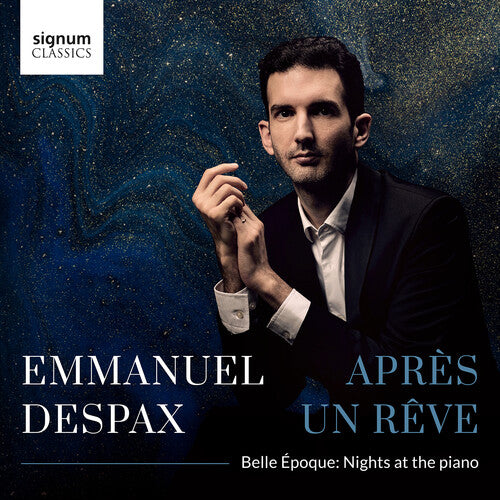
Après un rêve - Belle epoque: Nights at the Piano / Emmanuel Despax
“Après un rêve” is an ode to the French Belle Époque repertoire, depicting the beauty of dreams and the night. The album is an opportunity to hear and perhaps discover rarely played / rarely recorded wonderful works (Chaminade Nocturne, Duparc Aux étoiles, Poulenc Les soirées de Nazelles), alongside central pillars of the repertoire, and includes a world premiere of Despax’s arrangement of Après un rêve. The album is attributed to his grandfather, Jacques Charpentreau, a French poet who adored this repertoire and frequently drew inspiration from the night in his works. Despax has curated some of his poetry, as well as works by other poets he admired to complement this music, taking the listener on an immersive poetic and musical journey through this noctur- nal landscape.
REVIEW:
Despax has recorded Bach, Brahms, Chopin, but the works here particularly suit his sensibility. In Maurice Ravel’s haunting masterpiece Gaspard de la Nuit, he masters the ferocious challenges with ease, delicacy, strength.
-- The Guardian (UK)
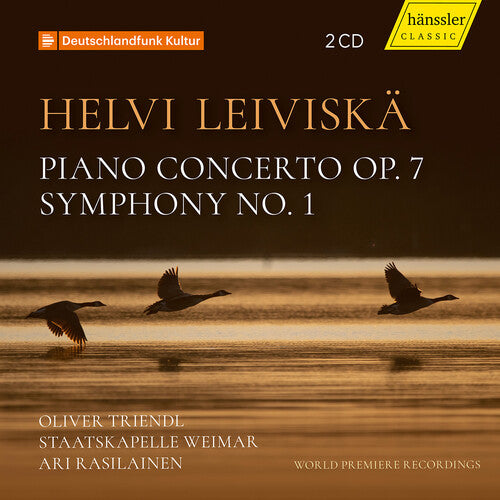
Leiviskä: Piano Concerto; Symphony No. 1 / Triendl, Rasilainen, Staatskapelle Weimar
The piano concerto in D minor was composed between 1931–1935 and premiered on November 23, 1935, by the Helsinki Philharmonic Orchestra conducted by Toivo Haapanen, with Ernst Linko as the soloist. The concerto is preserved only as a piano reduction and instrument parts, but the original score is lost. The piano part contains several cuts and facilitations by the 1935 soloist, while the instrument parts show no omissions. The most probable result was that the orchestra played some passages without the soloist.
For this recording, Leiviskä’s original solo part was restored. Several reviews, mostly under pseudonyms, discussed the symphony after its first performance. The reviews were mostly favorable. It was both praised and criticized for its structure and the inclusion of the waltz motive, and comments of the themes and melodies were also ambiguous. After 1948, the symphony was performed three more times until 1951. After 70 years of silence, the symphony was resurrected in 2022.
Champagne! The Original Sound of Lumbye & His Idols
With the establishment of Copenhagen’s Tivoli Gardens in 1843, the Danish composer and conductor Hans Christian Lumbye (1810–1874) swiftly rose to fame as the city’s internationally acclaimed king of waltzes and galops, leading his orchestra from the violin. For this recording, Lars Ulrik Mortensen and Concerto Copenhagen – Scandinavia’s leading period instruments ensemble – studied Lumbye’s original scores and used instruments from the era to recreate an authentic sound. This collection showcases Lumbye’s enchanting music, along with popular pieces by Bellman, Lanner and Strauss I.
Between Breaths / Third Coast Percussion
Grammy Award-winning Chicago-based percussion quartet Third Coast Percussion (Sean Connors, Robert Dillon, Peter Martin, David Skidmore) presents Between Breaths, an album of world premieres of works by four contemporary composers, plus a work by the quartet itself.
Known for their captivating performances and innovative approach to modern classical music, TCP has been praised for “commandingly elegant” (New York Times) performances and the “rare power” (Washington Post) of their recordings. Between Breaths, a follow up to TCP’s widely praised album, Perspectives, “continues to push percussion in new directions, blurring musical boundaries and beguiling new listeners” (NPR).
The works on Between Breaths explore aspects of meditation in sound, incorporate unconventional timbres and tones, and invite listeners to lose themselves within a captivating sonic landscape. Missy Mazzoli’s five-movement Millennium Canticles transports listeners into a vivid realm where a group of people strive to recreate the rituals and stories of human life after an apocalypse. Mazzoli skillfully crafts an evocative soundscape using diverse elements such as wooden planks, resonant metal pipes, tone chimes, drums, discordant metallic tones, a resounding lion's roar, and an array of vocal expressions.
In Practice, a collaborative composition by TCP, began as a sound meditation drawing upon the personal rituals of the quartet’s members, from a warm-up routine to using sounds created with everyday objects. This source material laid the foundation for the work, which developed its own sense of direction and purpose, with an atmosphere of meditation and balance.
Tyondai Braxton's Sunny X juxtaposes otherworldly acoustic and electronic timbres against a steady rhythmic drive. Within this sonic tapestry, resonant wooden planks, metallic pipes and plates, and an array of gongs and woodblocks contribute to a distinctive and immersive experience.
Chicagoan Ayanna Woods’ Triple Point refers to the unique state where a substance simultaneously exists as a gas, liquid, and solid due to temperature and pressure conditions, which results in liquids bubbling into gas, rapidly freezing, exploding, and melting into liquid again. Woods’ composition mirrors this phenomenon, as it encapsulates moments of dynamic energy and musical elements that rise to the surface and dissolve again.
Gemma Peacocke’s Death Wish, composed in tribute to Hinewirangi Kohu-Morgan, a Maori artist, poet, and activist, has become a staple of TCP’s repertoire. Performed by four players on two marimbas, the music creates a powerful landscape of melancholy, personal devastation, and hope.
REVIEW:
Third Coast Percussion’s Between Breaths is another fresh and thought-provoking album in what has been a steady stream of recordings from the Grammy-award winning quartet over the past seven years. Released Sept. 8 on Cedille Records, Between Breaths returns to many themes explored on the ensemble’s debut EP, Ritual Music (2006): relationships between individuals, communities, and ritualistic acts. The highly programmatic and hypnotic new album showcases the quartet’s vision for commissioning works by living composers and features world premiere recordings of works by Missy Mazzoli, Tyondai Braxton, Ayanna Woods, and Gemma Peacocke, and by Third Coast Percussion itself.
-- I Care If You Listen (Forrest Howell)
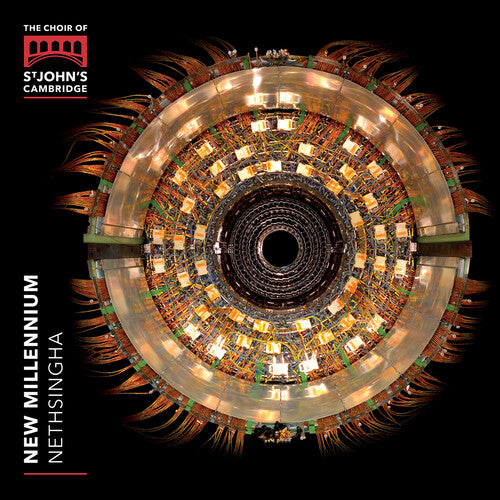
New Millennium / Nethsingha, Choir of St John's College Cambridge
About the album; Andrew Nethsingha says: “Contemporary music and Commissioning have been central features of the last fifteen years at St John’s. It’s been a joy to work with talented student composers; singers and instrumental- ists; my own musicianship has been greatly enriched by their creativity and energy... After a 30-month break from sessions during the pandemic; we were very pleased to be able to record again in 2022. The material on this album comes from various times of year; whilst we were also continuing our Magnificat series. For the final sessions in December the outdoor temperature was forty degrees colder than it had been for the previous recording in July! The personnel of the lower voices had also largely changed; but I hope you will hear a successful continuity of sound- world. All the composers are alive today but; at the suggestion of one of them; we have omitted dates of birth so as not to intrude on their privacy. I’ve curated a sequence of music which aims to celebrate some of the broad range of styles in 21st-century choral writing. The premiere of Iain Farrington’s Nova Nova was the final piece in my last St John’s broadcast - I have often enjoyed pushing the boundaries of the Anglican choral tradition!”
Wonderland / The King's Singers
Wonderland is full of magic and myth. Containing exclusively works commissioned by The King’s Singers across their 55 years, the album celebrates their trademark musical storytelling, with no shortage of comedy. György Ligeti’s six Nonsense Madrigals, each setting playful children’s poetry or extracts from Lewis Carroll’s Alice’s Adventures in Wonderland, provide a musical spine to the album, commemorating 100 years since the composer’s birth in 1923. From just over 50 years ago, the fairytale The Musicians of Bremen (1972) – set to music by the Australian composer and Master of the Queen’s Music Malcolm Williamson – sits alongside Time Piece (1972) by Paul Patterson, which tells an eccentric alternative creation story. These myth-based works have recent companions such as Judith Bingham’s extended work Tricksters (2019), which unearths what could happen if miscreants from different world mythologies could come together for the first time, and Ola Gjeilo’s A Dream within a Dream which questions the very nature of perception and reality. The album also features the legendary Japanese film and game composer Joe Hisaishi’s first ever choral work, I was there (2022), focussing on the cultural memory of tragic events such as 9/11 and the 2011 Japan Earthquake. Themes of hope and positivity, centred on the natural world, emerge in Makiko Kinoshita’s Ashita no uta (Song for tomorrow) (2020) and Francesca Amewudah-Rivers’ Alive (2022).
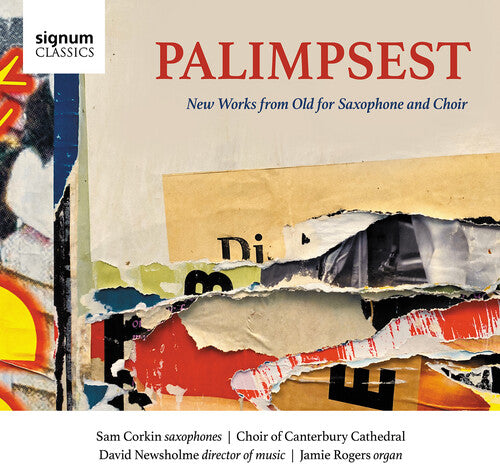
Palimpsest - New Works from Old for Saxophone & Choir
This album marks the culmination of a landmark project to re-imagine new works from old for saxophone; choir and organ. Each work has been specially commissioned and boasts compositions by leading composers including Gabriel Jackson; Errollyn Wallen and Roderick Williams. Celebrated saxophonist Sam Corkin is joined by Canterbury Cathedral choir to bring a fresh perspective to some well-loved repertoire; recorded within the iconic surroundings of Canterbury Cathedral.
On Byrd's Wings / Mields, Boreas Quartet Bremen, Hathor Consort
The heyday of English consort music coincides with the exciting change in style from musical Renaissance to early Baroque between 1580 and 1630. William Byrd and his successors played a decisive role in shaping it with sacred and secular songs, fantasies and dances. This production on the 400th anniversary of William Byrd's death shows how diverse and colourful the repertoire of consort music is. On the one hand, the English composers impress with sophisticated compositional art, on the other hand, they take up popular music of their time. The result is musical atmospheres that reflect the deep melancholy, pious confidence and plump joie de vivre of Shakespeare's time.
Soul of Brazil / Clarice Assad, Delgani String Quartet
Hailed as Oregon’s “finest chamber ensemble” (ArtsWatch) the Delgani String Quartet’s first AVIE appearance was on Icarus, an album of chamber works by award-winning composer Elena Ruehr. A leading musical light of the Pacific Northwest, the Delganis devote their new release to music from south of the border. Soul of Brazil epitomises the adventurous, vibrant and passionate qualities of the South American country, blending classical and popular styles – the suave sounds of Grammy-nominated Clarice Assad’s vocals, piano and electronics, new music and arrangements of songs by Antônio Carlos Jobim, alongside the Sixth String Quartet of Heitor Villa-Lobos.
I Wanna Be Free / Wally B. Seck
Wally B. Seck, Senegalese superstar with more than 5M subscribers, has established himself as one of his homeland's major artists over the years; alongside the likes of Youssou NDour. He now presents "I Wanna Be Free", a powerful, unifying album that will undoubtedly become a landmark of international pop music. He's the enfant terrible of contemporary Senegalese music. Wally B. Seck has nearly 400 million views on his Youtube channel, 5 million subscribers on his various social networks, and is making a name for himself as a favorite in the hearts of the Senegalese people.
The son of Senegalese singer Thione Ballago Seck, the young artist is appealing not only to his father's fans, but to the new generation, who knew little of the patriarch. Born on April 27, 1985 in Dakar, Senegal, Wally initially envisaged a career in soccer in France, London and Italy. Although this career never really took off, Wally started out in music with the Raam Daan group in Senegal. After that, everything went very fast for the young man trained by his father, who is also his mentor. He's not afraid of anything and never stops provoking. For Fatim O', a culture journalist with Groupe Futur Médias, Wally Ballago Seck is the "Justin Bieber of Senegal".
He owes his success to his notoriety and showman status, in the image of the American stars with whom he constantly identifies. In February 2011, Wally was one of 5 artists nominated for the Sunu Music Awards, alongside Viviane N'Dour and Didier Awadi. On September 4, 2012, Wally released his second album entitled Louné (Tout). A confirmation album featuring 8 tracks, this enabled him to reach out to new audiences. In the record, he generally tackles themes of love and promotes Senegalese griots, a caste from which he himself hails. Since then, Wally B. Seck has established himself as one of his country's leading artists, alongside the likes of Youssou NDour, and is aiming for international success with his forthcoming album "I Wanna Be Free", due for release in 2023.
Ispiciwin: Music of Canadian Composers / Luminous Voices
Introducing "ISPICIWIN," the new album by Luminous Voices. The title track captures a collaboration spanning months and years, representing both a personal and collective journey. Andrew's compositions, infused with Cree text, evoke a range of emotions – yearning, hope, fear, and spiritual longing. The album features remarkable artists: Jessica McMann on bass flute and Walter MacDonald White Bear on Native American courting flute and guitar.
Alongside Antognini's "I am the Rose of Sharon," it includes works by Canadian composers from Turtle Island. Luminous Voices' exceptional performances and commissioned premieres enrich the collection. Andrew Balfour is an innovative composer/conductor/singer / sound designer with a large body of choral, instrumental, electro-acoustic, and orchestral works. Jessica McMann, member of Cowessess First Nation in Saskatchewan, is an Alberta-based, multidisciplinary Cree artist. She interweaves land, Indigenous identity, history, and language throughout her dance and music creation/performance practice.
Walter MacDonald White Bear’s music reflects his personal journey as a First Nations person in Canada. Luminous Voices, known for illuminating choral music, continues to captivate audiences through performances, recordings, and workshops. ISPICIWIN marks the fifth commercial recording for Luminous Voices and the third that the choir has released through Leaf Music. Join this odyssey where the music reflects an incredible array of talent from composers closely connected to Luminous Voices both in geography and in creative collaboration.
Pickard: Mass in Troubled Times / Brabbins, BBC Singers
Previous BIS releases of works by John Pickard have mainly featured instrumental compositions. This recording presents another facet of the British composer’s work, with compositions for choir under the expert direction of Martyn Brabbins as well as two instrumental pieces.
The five short Latin motets as well as Ozymandias, Pickard’s opus 1, can be described as ‘occasional pieces’ composed during the composer’s student years or for the choir he conducts at the University of Bristol. They display solid tonal grounding and mainly homophonic writing and provide a stepping-stone to some of the more dissonant style found in the latter works. Written for the BBC Singers, whose reputation is well established, the Mass in Troubled Times is an ambitious work bearing witness to a context of global uncertainty. The Mass is a collaboration with the writer Gavin D’Costa, who conceived a complex text based on multiple sources in five languages, combining Western and Middle Eastern religious texts with poetry evoking the plight of refugees. Orion for trumpet and organ, which is partly programmatic, evoking the most splendid constellation and allowing trumpeter Chloë Abbott to shine, and Tesserae for solo organ, with its dazzling virtuosity, played here by the work’s first performer, David Goode, complete this disc.
Schubert: Waltzes, Landler, & Ecossaises / Castell-Jacomin
Featuring more than a hundred pieces, this album showcases the charming dances Schubert composed for the many fashionable salons in Vienna between 1815 and 1823. It joins other Naxos albums dedicated to Schubert’s piano dances and miniatures by Yang Liu (8.573941) and Daniel Lebhardt (8.574145, 8.574277). French pianist Didier Castell-Jacomin is a Steinway Artist.
Promise of Peace: St. Olaf Christmas Festival 2022
Promise of Peace is the audio recording of the full-length 2022 St. Olaf Christmas Festival, held in Minneapolis on December 2-3; 2022. Recorded live in Orchestra Hall, this album features performances from the St. Olaf Choir; St. Olaf Orchestra; St. Olaf Chapel Choir; St. Olaf Cantorei; Manitou Singers; and Viking Chorus.
Beethoven: String Quartets, Vol. 1 / Doric String Quartet
The Doric String Quartet is firmly established as one of the leading quartets of its generation, receiving enthusiastic responses from audiences and critics around the globe. Celebrating their 25th anniversary, the Quartet here embarks on a significant new recording project – the complete string quartets by Beethoven. This first volume combines works from Beethoven’s early, middle, and late period.
The six quartets Op. 18 were the first he composed, in 1799 and 1800, encouraged by Prince Franz Joseph Maximilian von Lobkowitz, a significant patron of the arts. Once he had completed the set, Beethoven heavily revised the first three quartets, writing to a friend: ‘I have changed it considerably; for I have only now learned to write quartets correctly, as you will see when you receive them.’
Andrey Kirillovich Razumovsky was the Russian ambassador to the Vieneese court, and the dedicatee of the three quartets Op. 59. The last of the middle-period quartets, Op. 95 (Serioso) was dedicated to Beethoven’s close friend and accomplished cellist Nikolaus Zmeskall and is regarded as showing a glimpse of what would come: Beethoven’s late quartets.
Extremely complex and largely misunderstood by musicians and audiences in Beethoven's day, these quartets are now widely considered to be among the greatest musical compositions of all time, and have inspired many later composers. Op. 127, featured in this volume, is the first of these monumental works.
Fung: Insects & Machines / Jasper String Quartet
Vivian Fung has long been a friend and admired composer of the Jasper String Quartet. The Quartet first performed one of her works in 2019, and we were immediately captivated by the visceral energy and impeccable craft of her writing. Vivian’s String Quartets Nos. 1–4 span 18 years of her career and reflect a remarkable journey of absorbing, integrating, and synthesizing a unique spectrum of influences into her compositional voice. Unwavering in all of the works is a fierce heart, instrumental fearlessness, and an amazing instinct for texture. We are incredibly grateful to have recorded these works with Vivian in the studio and for the growth we experienced in the process. – Jasper String Quartet
This album is a testimonial to my lifelong adoration of strings, dating back to my beginning cello studies as a middle school student. My cello teacher introduced me to a wide-ranging repertoire and opened up my sonic world with the sound of string quartets, concerti, and Baroque instruments. The string quartet format, in particular, has gripped my imagination since writing Pizzicato, which I originally wrote as a standalone work and later incorporated as the third movement of String Quartet No. 1 and continues to be one of my most performed pieces. Many thank yous to the Jasper String Quartet for their dedication to this CD project; to my husband, son, and parents for their support; and to everyone at Sono Luminus for producing this wonderful album. – Vivian Fung
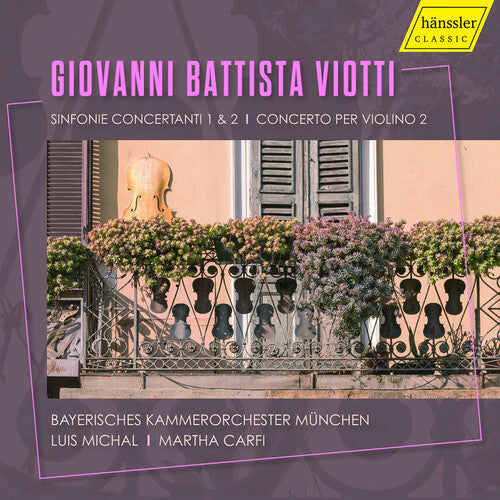
Viotti: Sinfonie concertanti 1 & 2; Violin Concerto no. 2 / Carfi, Michal, Bayerisches Kammerorchester Munchen
In June 1878 Johannes Brahms wrote to Clara Schumann: "The A minor Concerto by Viotti is my very special passion. It is a splendid piece with a remarkable freedom of invention: it sounds as if he were fantasizing, and everything has been designed and executed with such mastery …" Already during his lifetime Viotti was regarded as one of the most brilliant violin virtuosos, and his violin concertos also enjoyed special renown. As a composer Viotti brings in the schemes of the Italian School but also weaves in romantic motifs far ahaead of their times.
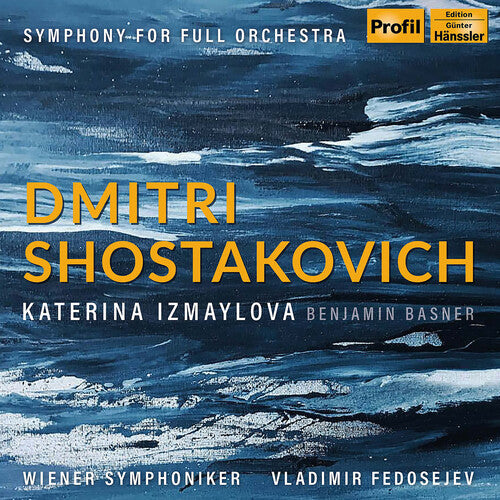
Shostakovich: Katerina Izmaylova - Symphony for Full Orchestra / Fedosejev, Vienna Symphony
Katerina Izmaylova - Symphony for full Orchestra after the opera “Lady Macbeth of Mtsensk“ by Shostakovich, arranged by Benjamin Basner.
"The Katerina Izmaylova symphony is much more than an opera arrangement. It intensifies opera music to instrumental music, to a symphony exposing the perversion of power in a very direct and therefore highly penetrating way." Franzpeter Messmer
Smyth: Der Wald / Andrews, BBC SIngers, BBC Symphony Orchestra
For over 100 years the only opera by a woman to have been performed at the Metropolitan Opera, Der Wald is a taut, brooding drama where the simplicity of village life comes under threat from the uncontrollable desires unleashed by the darkness of the forest. Richly orchestrated, harmonically daring, and demanding a huge expressive range from the cast, the narrative drives relentlessly forward from wedding to tragedy in a single act, observed pitilessly by the eternal spirits of the forest. John Andrews conducts the BBC Singers, the BBC Symphony Orchestra and an international cast in the first ever recording of this work, using Smyth’s English version of the libretto.
Bach, Corelli, Handel & Telemann: Corellimania / Perl, Petri, Esfahani
As the progenitor of a style whose influence more or less came to define the instrumental music of the High Baroque, Arcangelo Corelli (1653 - 1713) occupies a position in music history as unenviable as it is to his great credit. Just what made Corelli’s style seem strikingly novel to his contemporaries is a tricky question. To be sure, his standardization and popularization of certain formal tropes – most notably the succession of movement types in Sonate da Camera and Sonate da Chiesa – was a significant part of what his followers considered the ‘Corellian’ manner.
But Corelli’s actual compositional style, his way of organizing musical thoughts into phrases and motives, is fundamentally derived from the expressive capabilities of his chosen instrument, the violin. Certain melodic patterns used to modulate and to effect sequences (e.g., chains of sevenths and fifths) basically derive from specificities of violin technique that amplify an instrument with origins primarily in dance music into one that in Corelli’s hands, could imitate the rise and fall of the sung and spoken human voice. This tension between idiomatically instrumental techniques and the evocation of the voice is the defining characteristic of Corelli’s style throughout all his surviving works and would establish the “Roman School” as the supreme measure of musical taste for generations.
For this exploration of the 18th century’s Corelli Craze, the dynamic star trio of Mahan Esfahani, Hille Perl and Michala Petri unite to trace the Roman’s influence, (sometimes in name only...) on the musical legacies of Bach, Händel and Telemann, and of course two works from the pen of the celebrated Italian Master, himself. Gramophone about the Petri/Perl/Esfahani Trio’s Bach recording: “While the tonal and expressive range of the recorder, viol and harpsichord may appear constrained in comparison to, say, flute, cello and piano, in the hands of foremost players such as these, even a relatively lightweight work such as the C major Sonata, BWV1033, comes over as the ideal demonstration of a particular facet of the composer’s style and the performers’ abilities.”
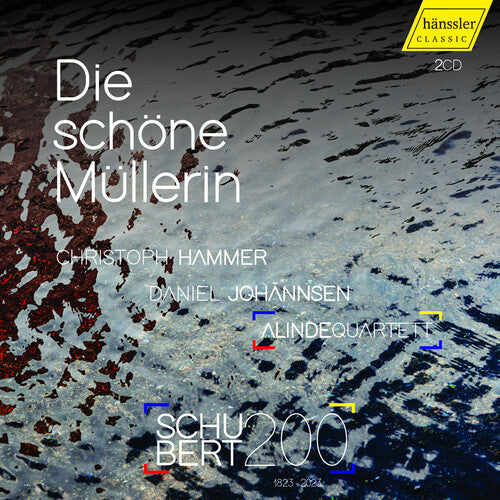
Schubert: Die schone Mullerin / Hammer, Johannsen, Alinde Quartet
With his song cycle, Die schöne Müllerin op. 25, published in Vienna in August 1824, Franz Schubert created one of the first song cycles in music history. It is a real cycle, not just a loose collection, because all the poems united in it hang firmly on a narrative thread: a narrated story, presented in 20 individual songs. It is clear that the most appropriate instrument for Die Schöne Müllerin is not the modern concert grand piano, but rather the fortepiano of Schubert's time, with its delicate, transparent sound and enormous richness of color. This makes for a completely different listening experience. But the arrangement that Tom Randle wrote for the ALINDE Quartet in 2022 can also open one's ears in a completely new way.
Grieg, Strauss & Fauré: 1883 - Music for Cello & Piano / Croisé, Shevchenko
1883 was a fruitful year for cello composition as Christoph Croisé’s new recording reveals. That year marked Edvard Grieg’s return to composition after a period of conducting the Bergen Philharmonic Orchestra, with the Sonata in A minor, his only work for cello and piano. Also that year, Richard Strauss was writing for the same combination at the age of just 19, producing his Sonata in F. Gabriel Fauré embarked on a cello sonata in 1880; only the slow movement transpired and was published and premiered as the stand-alone piece Élégie in 1883. Christoph’s regular performing partner, Oxana Shevchenko, joins him in this beautifully balanced recording of works for cello and piano.
Sea Interludes / Walden, United States Navy Band
Embark on a musical journey celebrating humanity's relentless pursuit of innovation and exploration. This recording, a tribute to pioneers like Amelia Earhart and Neil Armstrong, showcases new compositions and transcriptions, some crafted exclusively for the Navy Band. Immerse yourself in monumental pieces reimagined for winds, created by composers and arrangers with strong ties to the Navy Band. Join us in navigating uncharted waters and be the first to experience the thrilling intersection of tradition and innovation!
Shostakovich: Symphony No. 8 / Haitink, Bavarian Radio Symphony Orchestra
The Dutch conductor Bernard Haitink and the Bavarian Radio Symphony Orchestra enjoyed a long and intensive artistic collaboration, which was brought to an abrupt end by his death in October 2021. BR-KLASSIK is now presenting outstanding live recordings of concerts from the past years that have not yet been released. This recording of Shostakovich's Eighth Symphony documents a concert given in September 2006 at Munich’s Philharmonie im Gasteig.
For Shostakovich's contemporaries, educated in the spirit of Socialist Realism, it was clear that the Eighth Symphony had to have a programme and, even more specifically, a topical reference to current events. And at the time, there could hardly have been anything more topical than the recent, decisive turning point in the war in the form of the battle for Stalingrad. It is therefore hardly surprising that the Eighth Symphony, composed in less than nine weeks between July 2 and September 9, 1943, was also referred to as the "Stalingrad". Under the pressure of circumstance, Shostakovich was obliged to develop an aesthetic of ambiguity, secret hidden meanings and abysmal irony that was almost without parallel in cultural history. This work also expresses the sheer compulsion under which a musical language in conformity with the system had to be created.
Haitink first conducted a Munich subscription concert in 1958, and from then on was a regular guest with the Bavarian Radio Symphony Orchestra – either at the Herkulessaal of the Residenz or at the Philharmonie im Gasteig. This congenial collaboration lasted more than six decades. The orchestral musicians and singers enjoyed working with him just as much as the BR sound engineers. As an interpreter of the symphonic repertoire, and especially that of the German-Austrian Late Romantic period, Haitink was held in high esteem throughout the world. With him, Dmitri Shostakovich's symphonies were also always in the best of hands. Haitink’s driving principle was to make the sound architecture of a musical composition, with its complex interweaving, transparently audible; extreme sensitivity of sound was combined with a clearly structured interpretation of the score.
Kreisler, Strauss & Waxman: Love Music
Following her lyrical and witty complete recording of Mozart’s Keyboard Sonatas, issued by naïve in March 2023, Yeol Eum Son invites Svetlin Roussev to join her in enfolding himself in the enticingly subtle harmonic intricacies of Germanic post- Romanticism.
For their second recital as a duo, the Bulgarian violinist and the Korean pianist follow the course taken by works written over a period of slightly more than half a century by composers or famous performers upon whom Richard Wagner exercised crucial influence. They take on almost every genre – cinema, opera, chamber music, transcription – treating it in the lyrical, large-scale manner of the Bayreuth master. During their unexpected, fascinating journey, Svetlin Roussev and Yeol Eum Son chart a variety of pathways, from Waxman to Strauss.
So many different worlds! To begin, two figures who made their indelible mark on the music written for Hollywood. Of German-Polish origins, in 1946 Franz Waxman (Rebecca, Sunset Boulevard, A Place in the Sun, Prince Valiant) wrote, at Jascha Heifetz’s request, a paraphrase on themes from Wagner’s Tristan et Isolde, actually an adaptation of a section of the score he composed for the film Humoresque (Warner Brothers, 1947). In summary, a manifesto in music of an impossible love – to which, at the end of the disc, an extremely rare transcription one of the better known Wesendonck-Lieder, credited to the great virtuoso Leopold Auer, forms a response.
The programme continues with Erich Wolfgang Korngold, a child prodigy in Vienna during the 1910s. The famed Mariettas Lied – the best-known moment in his opera Die tote Stadt – and the sublime nocturne from his incidental music for Shakespeare’s Much Ado About Nothing (the Scene in the Garden) remain as much moments of lyric intensity as truly cinematographic, deliciously intoxicating love scenes. But lovers also know how to frolic, and if already in Korngold they readily do so, the three more light-hearted pieces by Fritz Kreisler will place them in everyday, commonplace scenarios, where laughing reigns.
The keystone of the programme is unarguably the magnificent Sonata for Violin and Piano that Richard Strauss composed in 1887. He was 23 years old, and still heavily influenced by Schumann and Brahms, even Grieg. Svetlin Roussev and Yeol Eum Son make its case with radiant commitment, sensitive to the spirit stirring in the young Richard, then already in love with the soprano Pauline de Ahna, who would become his wife.
Beyond Wagner, this highly original album above all celebrates that moment of falling in love when, overwhelmed, the heart quivers, to the point of being transformed.