

Outlet CDs
3357 products
-
 On Sale
Ives: Piano Sonata No. 2 "Concord" / Berman
CD$19.99$9.99Avie Records
May 03, 2024AV2678 -
![]()

-
![]()

-
 On Sale
O Rosa Bella
CD$13.99$6.99Brilliant Classics
Aug 02, 2019BRI95529 -
![]()

-
![]()

-
 On Sale
Seasons Interrupted / Trey Lee, ECO
CD$19.99$9.99Signum Classics
May 17, 2024SIGCD791 -
![]()

-
![]()

-
 On Sale
Elgar: Cello Concerto / Arlia, Sollima, Orchestra Filarmonica della Calabria
CD$13.99$6.99Brilliant Classics
Oct 22, 2021BRI96039 -
![]()

-
![]()

-
 On Sale
Bach: 6 Suites for Cello Solo BWV 1007-1012 / Kloeckner
CD$22.99$11.49Brilliant Classics
Oct 22, 2021BRI96403 -
![]()

-
![]()

-
![Adriana: Her Portrait, Her Life, Her Music [CD + Book]](//arkivmusic.com/cdn/shop/files/4281842-3124970.jpg?v=1778238792&width=800) On Sale
On SaleAdriana: Her Portrait, Her Life, Her Music [CD + Book]
CD$37.99$18.99Brilliant Classics
Jan 19, 2024BRI97188 -
![]()

-
![]()

-
 On Sale
Bach: Johannes- Passion
CD$17.99$8.99Brilliant Classics
Mar 31, 2015BRI95108 -
![]()

-
![]()

-
 On Sale
Roussel: Violin Sonatas Nos. 1 & 2; String Trio / Bowlin, Docter, Kouzov, Tony Cho
CD$19.99$9.99Naxos
May 24, 20248574577 -
![]()

-
![]()

-
 On Sale
Antonioni: My River - Music for Strings / I Solisti Aquilani
CD$16.99$8.49Brilliant Classics
Feb 16, 2024BRI97086 -
![]()

-
![]()

-
 On Sale
Portrait of Sardinia / Porqueddu
CD$33.99$16.99Brilliant Classics
Sep 24, 2021BRI96203 -
![]()

-
![]()

-
 On Sale
Mozart: Symphonies Nos. 34-36 / Collins, Philharmonia Orchestra
SACD$21.99$10.99BIS
May 24, 2024BIS-2757 -
![]()
-
![]()
-
 On Sale
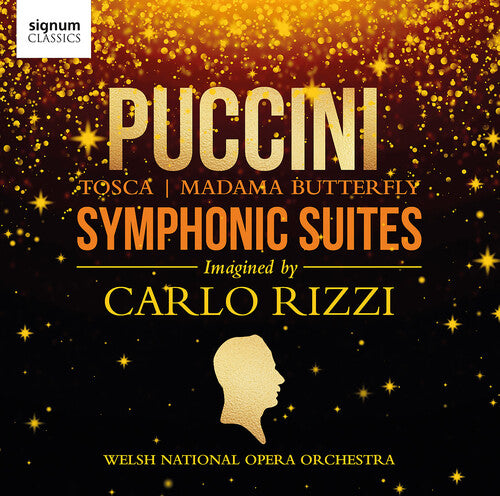
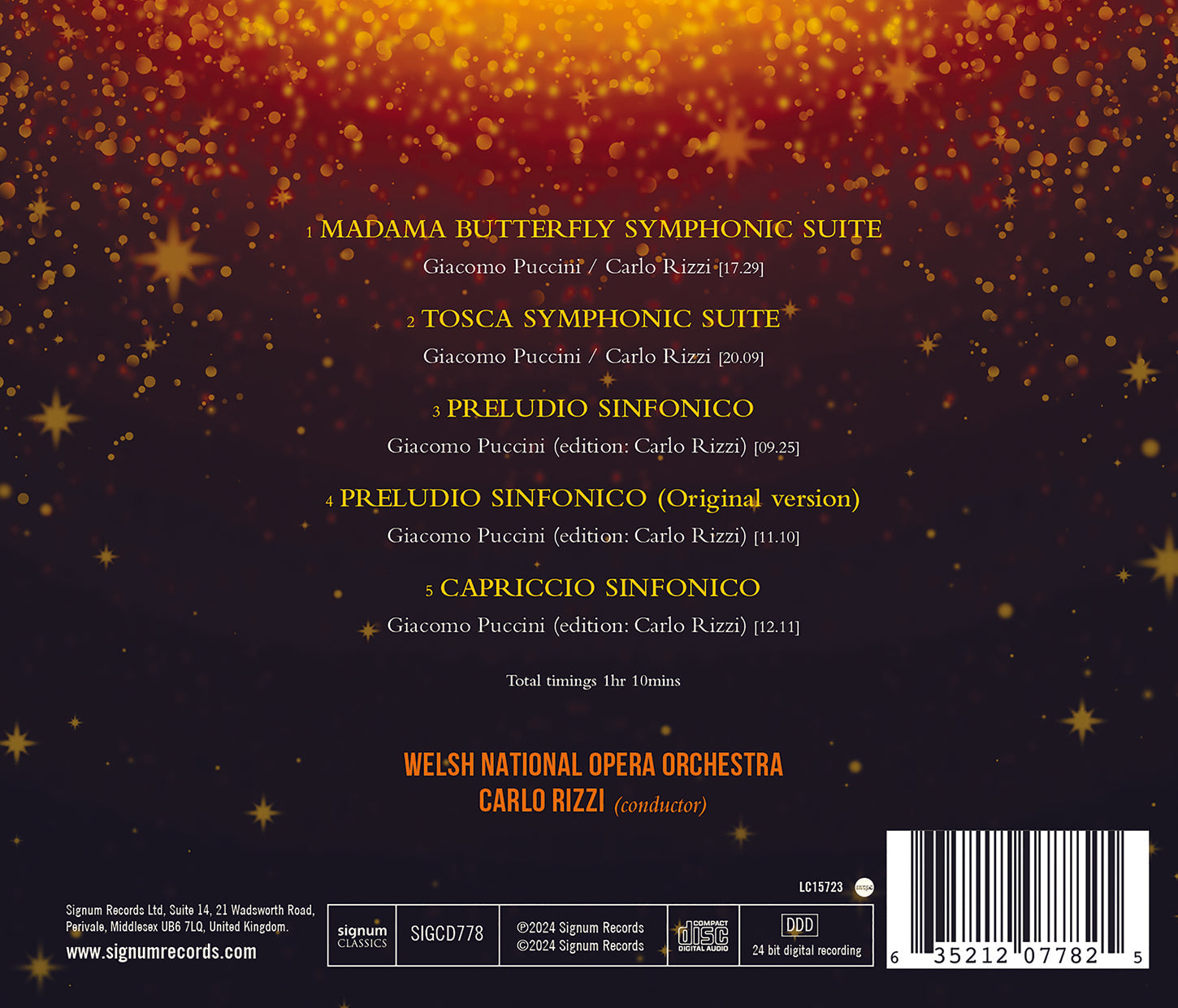
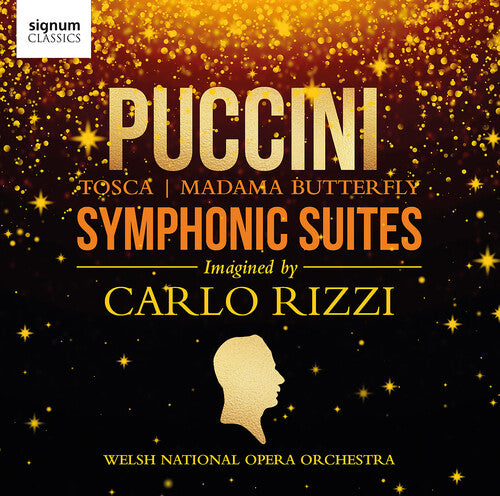
Puccini: Symphonic Suites / Rizzi, Welsh National Opera Orchestra
CD$20.99$10.49Signum Classics
Feb 16, 2024SIGCD778 -
![]()

-
![]()

-
 On Sale
Andriessen: Miroir de Peine / Alexander, Porcelijn, Fischer, Netherlands Radio Chamber Orchestra
CD$17.99$8.99Brilliant Classics
Jul 23, 2021BRI96105 -
![]()

-
![]()

- Monteverdi: Il primo libro de madrigali, 1587
- Monteverdi: Il secondo libro de madrigali, 1590
- Monteverdi: Il terzo libro de madrigali, 1592
- Monteverdi: Il quarto libro de madrigali, 1603
- Monteverdi: Il quinto libro de madrigali, 1605
- Monteverdi: Il sesto libro de madrigali, 1614
- Monteverdi: Il settimo libro de madrigali, 1619 'Concerto'
- Monteverdi: Il ottavo libro de madrigali, 1638 'Madrigali guerrieri et amorosi'
- Monteverdi: Il nono libro de madrigali, 1651
- Monteverdi: O ciechi il tanto affaticar, SV 252
- Monteverdi: Voi ch'ascoltate
- Monteverdi: È questa vita un lampo
- Monteverdi: Spuntava il dì, SV 255
- Monteverdi: Chi vol che m’innamori
- Monteverdi: Confitebor tibi III alla francese, SV267
- Monteverdi: Gloria a 7, SV 258
- Monteverdi: Crucifixus, SV 259
- Monteverdi: Pianto della Madonna 'Iam moriar, mi fili' (sopra il Lamento dell'Arianna), SV 288
- Monteverdi: Et resurrexit, a quattro
- Monteverdi: Et iterum
- Monteverdi: Laudate Dominum in sancta Eius
- Monteverdi: Salve Regina, SV 285
- Monteverdi: Laudate Dominum
- Monteverdi: Beatus vir (from Selva Morale e Spirituali)
- Monteverdi: Sanctorum meritis (Primo)
- Monteverdi: Dixit [Dominus] Primo
- Monteverdi: Ab aeternum, SV 262
- Monteverdi: Confitebor tibi Domine, SV266
- Monteverdi: Memento Domine David
- Monteverdi: Laudate pueri Primo
- Monteverdi: Salve Regina, SV 284
- Monteverdi: Laudate Dominum omnes gentes II
- Monteverdi: Magnificat Primo
- Monteverdi: Gloria (1641)
- Monteverdi: Dixit Dominus secondo a8 SV 192
- Monteverdi: Deus tuorum militum sors et corona
- Monteverdi: Confitebor tibi, Domine
- Monteverdi: Iste confessor
- Monteverdi: Beatus vir (second setting)
- Monteverdi: Ut queant laxis, hymnus sancti Joannis
- Monteverdi: Laudate pueri (Secondo)
- Monteverdi: Deus tuorum militum sors et corona
- Monteverdi: Credidi propter quod locutus sum, SV 275
- Monteverdi: Jubilet a voce sola in dialogo
- Monteverdi: Magnificat (Secondo)
- Monteverdi: Salve Regina
- Monteverdi: Laudate Dominum
- Monteverdi: Canzonette
- Monteverdi: Vespro della beata Vergine (1610)
- Monteverdi: Cantate Domino
- Monteverdi: O beatae viae
- Monteverdi: Currite populi
- Monteverdi: Ego flos campi
- Monteverdi: Venite, venite
- Monteverdi: Christe, adoramus te
- Monteverdi: O quam pulchra es
- Monteverdi: Salve Regina
- Monteverdi: Fuge, anima mea
- Monteverdi: Sancta Maria
- Monteverdi: Domine, ne il furore
- Monteverdi: Ego dormio
- Monteverdi: Ecce sacrum paratum
- Monteverdi: Salve Regina
- Monteverdi: O bone Jesu, o piissime Jesu
- Monteverdi: En gratulemur hodie, SV 302
- Monteverdi: Laudate Dominum omnes gentes
- Monteverdi: Adoramus te, Christe
- Monteverdi: Messa a 4 voci da Cappella (1650)
- Monteverdi: Dixit [Dominus] Primo
- Monteverdi: Confitebor tibi, Domine
- Monteverdi: Nisi Dominus a 6, SV201
- Monteverdi: Laudate pueri
- Monteverdi: Laetatus sum
- Monteverdi: Lauda Jerusalem a 3, SV202
- Monteverdi: Beatus vir (from Selva Morale e Spirituali)
- Monteverdi: Magnificat Primo
- Monteverdi: Missa 'In illo tempore' (1610)
- Monteverdi: Dixit Dominus II
- Monteverdi: Confitebor tibi Domine II, SV194
- Monteverdi: Nisi Dominus a 6, SV201
- Monteverdi: Laudate Dominum, SV197a
- Monteverdi: Laetatus sum
- Monteverdi: Laetaniae della Beata Vergine a 6 voci
- Monteverdi: Lauda Jerusalem a 5, SV203
- Monteverdi: L'Orfeo
- Monteverdi: Il ritorno d'Ulisse in patria
- Monteverdi: L'incoronazione di Poppea
-
 On Sale
Monteverdi Edition
CD$87.99$43.97Brilliant Classics
Nov 17, 2023BRI96910 -
![]()

-
![]()

-
 On Sale
Debussy: Reveries de Bilitis - Music for Two Harps & Voice / Duo Bilitis
CD$13.99$6.99Brilliant Classics
May 25, 2018BRI95657 -
![]()

-
![]()

-
 On Sale
Ruppe: Christmas Cantata - Easter Cantata / Wentz, Ensemble Bouzignac
CD$13.99$6.99Brilliant Classics
Oct 16, 2020BRI96108 -
 On Sale
Loves Me Not - Piano Music / Marinova
CD$16.99$8.49Navona
Jul 07, 2023NV6526 -
![]()

-
![]()

-
 On Sale
Couperin Dynasty
CD$64.99$32.48Brilliant Classics
Jan 19, 2024BRI97051 -
![]()

-
![]()

-
 On Sale
Britten: Complete Music with Guitar & Voice / Meucci, Nardis
CD$17.99$8.99Brilliant Classics
Oct 22, 2021BRI95737 -
![]()

-
![]()

-
 On Sale
Beethoven: Complete Piano Sonatas, Vol. 1
CD$21.99$10.99Brilliant Classics
Jul 21, 2017BRI95103 -
![]()

-
![]()

-
 On Sale
Apollo & Dionysus / Danae & Kiveli Dorken
CD$21.99$10.99Berlin Classics
Aug 25, 20230302969BC -
![]()

-
![]()

-
 On Sale
Duarte: Works for Solo Guitar / Nati
CD$16.99$8.49Brilliant Classics
Feb 16, 2024BRI96658 -
![]()

-
![]()

-
 On Sale
Meta - Schubert: Piano Sonatas Nos. 18-21; Lieder / Huangci
CD$26.99$13.49Berlin Classics
Oct 20, 20230302967BC -
![]()

-
![]()

-
 On Sale
Comes: O Pretiosum - Music For The Blessed Sacrament
CD$13.99$6.99Brilliant Classics
Jul 29, 2016BRI95231 -
![]()

-
![]()

-
 On Sale
Ries: Clarinet Trio & Sonatas / Weverbergh, Gasparovic, Ilisavsky
CD$13.99$6.99Brilliant Classics
Aug 25, 2023BRI96903

Ives: Piano Sonata No. 2 "Concord" / Berman
Celebrating the sesquicentenary of Charles Ives’ birth, New England-based pianist and Ives scholar nonpareil Donald Berman releases a recording of the composer’s “Concord Sonata” using his own newly prepared edition which reveals fresh insights into the iconic work. Berman’s immersion into Ives’ sound world began under the tutelage of pianist John Kirkpatrick who gave the New York premiere of the “Concord Sonata” in 1939. Throughout many years of study and reflection, Berman discovered numerous notes and alterations that Ives made within the Concord’s manuscript pages, each one “a step toward realising his vision for a three-dimensional auditory experience.” Berman concluded that the first movement of the Concord, as Ives imagined it, is quite different than today’s commonly accepted version; his new edition includes two pages worth of material, masterfully recorded here for the first time.
The album opens with the elegiac “The St. Gaudens (Black March)”, referring to the eponymous sculpture in the Boston Common that depicts the Massachusetts 54th, the first Union army regiment of African American soldiers, that is known widely in its orchestral version as the first movement of Ives’ Three Places in New England.


O Rosa Bella


Seasons Interrupted / Trey Lee, ECO
An album combining works by Schubert, Piazzolla, and Lintinen, cellist Trey Lee is joined by the English Chamber Orchestra to perform compositions exploring the effects and impacts of climate change on both the environment and society. The album has two world premiere recordings of new arrangements for both cello and piano, and cello and orchestra by Trey Lee. “With the cello as a platform, I seek a sober yet trenchant means to tell the story of our seasons, and concurrently, create a musical narrative to account for how this crisis unfolds. This album is a journey across our world from the past to the present, and finally, to an increasingly plausible future through the prism of works by three composers from three eras.” – Trey Lee


Elgar: Cello Concerto / Arlia, Sollima, Orchestra Filarmonica della Calabria
From Arturo Toscanini and Sir John Barbirolli to Riccardo Muti and Antonio Pappano in our own time, Italian-heritage performers have often brought special qualities of sympathy and understanding to Edward Elgar’s (1857-1934) music. Now comes a new recording made in the ‘boot’ of southern Italy, lending Mediterranean warmth and passion to a trio of Elgarian masterpieces. The Sicilian-born cellist Giovanni Sollima has made well-received albums for Brilliant Classics of music by Offenbach (94475) and by his father Eliodoro Sollima (96287). His latest recording, made at the Teatro Politeama in the one-time ‘lace capital’ of Europe, Catanzaro, illuminates one of the core works of the cello literature with an affecting sense of line and sensitivity to the melancholy introversion which colors every bar of the Concerto composed by Elgar in the wake of the First World War. Twenty years earlier, Elgar’s reputation was secured with audiences across Europe and America through the whirlwind success of his “Enigma” Variations. The stoic beauty of ‘Nimrod’, the gentle wit of ‘Dorabella’ and the nervous excitement and pride of the autobiographical finale spoke directly to listeners who would never know the composer or his ‘friends pictured within’. The agitated, impassioned voice of Elgar in the Variations belonged to its end-of-Empire time and place, orchestrated with a mastery which would soon draw the admiration of Richard Strauss and many more musicians on the other side of the English Channel. Even that quintessential expression of Englishness, the first of five marches which Elgar collected under the Shakesperean banner of “Pomp and Circumstance” and later repurposed to set ‘Land of Hope and Glory’ for the finale of his Coronation Ode, won the composer standing ovations when he conducted it in concerts across mainland Europe. Under the affectionate baton of their music director Filippo Arlia, the Orchestra Filarmonica della Calabria interpret Elgar’s music with a sensitivity and extroversion worthy of the composer.


Bach: 6 Suites for Cello Solo BWV 1007-1012 / Kloeckner
A highly regarded representative of the new generation of cellists, Benedict Kloeckner has been championed by such maestros as Daniel Barenboim and Sir Simon Rattle. With a discography including an acclaimed recording of the Schumann Cello Concerto nominated for the German Record Critics prize, Kloeckner also demonstrates a great interest in new music. He plays an Italian Cello by Francesco Rugeri (Cremona 1690), formerly played by Maurice Gendron. In this three-album set he tackles the sacred summit of the solo cello repertoire, rightly pointing out that the lack of original manuscripts for the Six Suites leaves them especially open to individual interpretation. Yet he takes a further step in making this recording his own, interpolating between each of the suites miniature compositions for solo cello that he commissioned from composers on six different continents under the motto “Sounds of Light”, thereby placing Bach’s Western European masterworks in dialogue with music from across the globe in our own time.


Adriana: Her Portrait, Her Life, Her Music [CD + Book]
The forgotten figure of a 17th-century Dutch recorder virtuoso, illuminated by a unique synthesis of art history, scholarship and modern musicianship.
Der Fluyten Lust-hof (The Flute's Pleasure Garden, or Garden of Delights) is the largest collection of music for a single wind instrument ever published by a single composer, and has supplied recorder players, amateurs and professionals, with music for reflection and entertainment ever since the publication of its initial volume in 1644.
An overlooked detail is the dedication of the first volume, to one Adriana vanden Bergh. Who was she? This book and CD tells the full and fascinating story, shedding light along the way on many aspects of culture, religion and everyday life in Amsterdam during the 17th century. As both a musicologist and art historian, Thiemo Wind is uniquely placed to tell this story. He has identified Adriana as the subject of a famous painting by Jacob Adriaensz Backer (1608/09–1651), hitherto anonymous but considered one of the most beautiful portraits of the Dutch Golden Age.
Through original research, Thiemo Wind has assembled an eventful biography, which moves in short and lively chapters, each of them illustrated with a telling image, from her family background to her birth in 1631, her complex religious inheritance of both Protestant and Catholic observance, her apparently rapid mastery of the recorder, her participation in Amsterdam’s lively performing culture and her status as a musical celebrity even as a teenager, to her marriage in 1650, which probably occasioned the commission of Backer’s portrait. Thereafter the story turns darker, with a tale of bankruptcy, child-birth and -death, family splits and reconciliations, obscurity and ultimately Adriana’s death in 1668, having given birth to her ninth child.
The accompanying CD takes its cue from Der Fluyten Lust-hof, and from the music publications featured in Backer’s portrait, to present new recordings of music with which Adriana would have delighted audiences in her time. Performed by the internationally renowned virtuoso Erik Bosgraaf, in company with his Cordevento ensemble, the recording complements Thiemo Wind’s scholarship to present Adriana’s life and music in the round."
![Adriana: Her Portrait, Her Life, Her Music [CD + Book]](http://arkivmusic.com/cdn/shop/files/4281842-3124970.jpg?v=1778238792&width=800)


Bach: Johannes- Passion


Roussel: Violin Sonatas Nos. 1 & 2; String Trio / Bowlin, Docter, Kouzov, Tony Cho
Albert Roussel’s chamber works are relatively unknown, yet he composed a significant body of masterful works. The majestic Violin Sonata No. 1 and the dynamic neo-Classical Violin Sonata No. 2 are coupled with the String Trio, Roussel’s last completed work. Violinist David Bowlin and pianist Tony Cho are both highly regarded soloists and faculty members of Oberlin Conservatory of Music in Ohio, where the album was recorded.
REVIEW:
All three chamber music works are characterized by skillful craftsmanship. The First Sonata is the most extensive of all Roussel's chamber music works and is markedly serious. The Second Violin Sonata is only about half as long, but just as determined. The String Trio, his last completed work, is a striking example of his late style.
The musicians offer the works with an extremely positive commitment that immediately engages the listener. Each of the three pieces has its own character that makes it unmistakable and the performers bring this out skillfully. They form lively narratives in tones that breathe life into the largely unknown in a delightful way. In terms of design, they explore the music in all directions and know how to integrate the details into the overall picture, creating a cohesive form from the first to the last note. We can be grateful that they have taken on the works in such a convincing way.
-- Pizzicato


Antonioni: My River - Music for Strings / I Solisti Aquilani
The legendary pianist and conductor joins his clarinettist son and Italian musicians in music by one of Italy’s most powerfully individual living composers. Born in 1971, Francesco Antonioni studied in Rome with Azio Corghi and then in London with Julian Anderson and George Benjamin: a formidable pedigree of teachers testifying to the strength of both his technique and his creative voice, which became internationally known in 2001 with a string quartet written for the Venice Biennale. Since then, Antonioni has gone on to assemble a substantial catalogue of fastidiously crafted works for both the stage and the concert hall.
This collection features two pieces for string orchestra, Ballata and Sull’ombra, alongside his concerto for clarinet and viola, Lights after the Thaw. Premiered in 2009, Ballata arose from a commission of the Birmingham Contemporary Music Group, to be conducted by Benjamin, and takes its initial inspiration from an anonymous lullaby, and a ballad by the 14th-century composer Francesco Landini. These are songs about love, seen from two opposite points, near the beginning and the end of life, and their meeting-point in this modern Ballata is bittersweet and charged with tension.
The origins of Sull’Ombra are no less distinguished. Yuri Bashmet conducted the Moscow Soloists in the premiere in 2014. Antonioni found himself moved to write it by lines of John Donne, which themselves reminded him of poetry by Eugenio Montale. The shadows here are dark indeed, though always lit with imagination, and harmony that leads the listener on, just as the concertante Lights after the Thaw draws out the intrinsically songful character of both solo instruments, in search of a point of reference amid a pervasive melancholia. There is a refined ear for harmony and texture evident in all three works, which reward attentive listening by anyone interested in the music of today.


Portrait of Sardinia / Porqueddu
| ‘Cristiano Porqueddu is a master guitarist,’ says the Cuban composer Leo Brouwer, ‘and one of the foremost representatives of the new generation of soloists. He brings sound to life, and then turns it into art.’ Like many of the other composers in this remarkable collection, he has composed more than one piece for Porqueddu and now pays tribute with a piece which draws inspiration from the guitarist’s homeland of Sardinia. Diálogo del Olivo y el Nuraga (‘Dialogue of the Olive Trees and the Nuraghe’) imagines a wordless exchange between two ancient features of the Sardinian landscape, the trees which have provided food and fuel and money for its people for centuries, and the Stone-Age towers which dot the island. Each of the works here tells a vivid story: Porqueddu’s own Sonata III is subtitled ‘The Rite of Fire’ after an ancient Sardinian legend which imagines Saint Anthony and his piglet descending to Hell in order to procure some firelight. Angelo Gilardino draws on his personal memories of sights and sounds experienced when visiting the island in his Sardegna Suite (including another piece evoking the nuraghe). Francesco Morittu is a native-born Sardinian guitarist-composer, whereas Mark Delpriora is an American guitarist who heads the guitar faculty at the Manhattan School of Music; both have contributed intensely atmospheric pieces, which capture the island’s wildness as well as its sense of isolation. Born in 1988 in the Italian province of Velletria, Kevin Swierkosz-Lenart is the youngest composer featured in the collection with a suite inspired by three works of the Sardinian painter Giuseppe Biasi, who also contributes the artwork for the collection’s cover. |


Mozart: Symphonies Nos. 34-36 / Collins, Philharmonia Orchestra
Although Mozart composed them in his early twenties, the three symphonies presented here can in no way be regarded as early works. Written around the time of his departure from Salzburg for Vienna, these symphonies show that Mozart could deliver attractive, varied, orchestrally colourful and characterful music to suit a variety of public tastes. They also show a young and ambitious composer seeking to forge an impregnable reputation in Europe’s musical capital city. These symphonies truly opened a new chapter in Mozart’s symphonic output, as he demonstrated his absolute mastery of orchestral writing. In addition to the three symphonies as we know them, this recording also includes a minuet that may have been intended to form part of Symphony No. 34.
These three symphonies are performed here by the Philharmonia Orchestra, an ensemble that has performed them with the greatest conductors throughout its almost 80-year history. Here the conductor is the eminent Mozartian Michael Collins, whose recordings, notably that devoted to the Austrian composer’s clarinet concerto and quintet, have earned him the highest praise.
REVIEWS:
As a poetic exponent of Mozart’s music for clarinet, Michael Collins, unsurprisingly, shapes all three slow movements with a natural feeling for Mozartian line. His flowing tempos sound spot on.
— GramophoneThere is always room in the Mozart discography for new recordings of this stature.
— BBC Music Magazine


Puccini: Symphonic Suites / Rizzi, Welsh National Opera Orchestra
In Puccini’s anniversary year, Chief Conductor of Welsh National Opera Carlo Rizzi has created new, purely orchestral versions of some of his most well-known and beloved works. Staying pure and faithful to Puccini’s original orchestration without anything added to ‘cover’ any perceivable lack of vocal line the brilliance of Puccini’s Madama Butterfly, Tosca and other works shine through in this album of world premiere recordings.
REVIEW:
This fabulous album of world premiere recordings is just exhilarating from start to finish. I do hope that by the end of the year Maestro Rizzi will give us other orchestral suites, say, from La bohème or Turandot. I am sure they will be welcomed most enthusiastically.
This is an irresistible programme full of shimmering melodies that help us to really discover Puccini’s orchestral mastery which is often overshadowed by the singing and heartwrenching drama of the stories. This exceptionally innovative music that strongly enhances the total mastery of Puccini’s art is not to be missed.
-- Classical Music Daily


Andriessen: Miroir de Peine / Alexander, Porcelijn, Fischer, Netherlands Radio Chamber Orchestra
The opulent soundworld of a Dutch late-Romantic master, still too little known outside his native country. Rarefied spirituality and refined sensuousness are the hallmarks of Hendrik Andriessen's (1892-1981) idiom, which offers an ethereal synthesis of Franckian chromaticism with an individual interpretation of classical forms and church modes. Though he trained as an organist, his writing for other solo instruments is fluent and idiomatic. The concertos for violin, cello and oboe share the silken textures of his better-known orchestral music, and this album won glowing reviews when first released in 2000. The album’s headline work is Miroir de peine, a languorous song-cycle to Henri Vangeon’s poems of religious ecstasy describing the suffering of Christ from the perspective of the Virgin Mary. It has attracted the advocacy of great sopranos from Elly Ameling to Christiane Stotijn. This 1991 recording by Roberta Alexander won an enthusiastic welcome from the critics for the poise and beauty of her performance and the richness of the engineering. Andriessen esteemed Franck as ‘a musical philosopher in the truest sense of the word,’ who drew ‘intense sentiments from the intuitive side of his genius into an orderly gestalt.’ Much the same could be said of Andriessen’s own idiom throughout his career, as this half-century retrospective over his career confirms, from the solemn lushness of Magna res est amor of 1919 to the Chromatic Variations and Cello Concertino of 1970. The Violin Concerto (1968-9) is still essentially couched in a Romantic vein, but shaded with more 20th-century accents of tonal anxiety, akin to Vaughan Williams and Casella in the 1930s. Any listener for whom conservatism is not a dirty word will relish becoming acquainted with Andriessen’s powerful expressive voice in these beautifully prepared and engineered performances.


Monteverdi Edition
This substantial set dedicated to the vocal music of Claudio Monteverdi (1567–1643) features the great cycle undertaken (to date) by Krijn Koetsveld and the singers of Le Nuove Musiche: all nine books of madrigals, the music in Monteverdi collections such as the Selva Morale e Spirituale (1641), the posthumous Messa a quattro voci ed salmi (1650), and the individual works by Monteverdi compiled in the collections of others, the so-called Fragments. To this is joined the cycle of operas directed by Sergio Vartolo and sung by casts of Italian early music specialists, including the first recording of the five-act version of Il ritorno d’Ulisse in patria.
These thoroughly researched, historically informed interpretations demonstrate Monteverdi’s pioneering and transformative role in the emergence and development of staged, dramatic vocal music. Also featured are the grand Vespers – sacred music in the Gregorian plainchant tradition but on an operatic scale – in a fantastic recording with fine Italian soloists and authentic period instruments including the early brass of La Pifarescha. Federico Bardazzi and Ensemble Felice make scrupulous interpretative decisions about the order of movements, interpolating the choral motets within the prescribed sequence of psalms to great effect. Finally, there are Monteverdi’s youthful three-part canzonettas, written when the composer was 17. They are rather simpler than the madrigals, both to sing and to appreciate, but their musical worth is amply demonstrated by the largely female voices of Armoniosoincanto joined by a mixed period-instrument ensemble of flutes, violas, theorbo and harpsichord. They impart just the right light-hearted mood and dramatic impact to the playful, folkloric secular strophic poetry.
CONTENTS:


Debussy: Reveries de Bilitis - Music for Two Harps & Voice / Duo Bilitis
Harpists Eva Tebbe and Ekaterina Levental remark that Debussy makes the invisible visible and turns the unspeakable into a musical world full of mysticism, layers of ambiguity and evocative meanings. A century after his death, he is being celebrated across the world in 2018, and this album promises to make a special contribution on record with arrangements of works, most of them relatively unfamiliar, which particularly lend themselves to the ethereal and exquisite combination of voice and harps. Much of the music here was written while Debussy was composing his only opera Pelléas et Mélisande, a Symbolist drama based on the play by Maurice Maeterlinck, who recognized that in many ways Debussy had not only set his play to music but even outstripped and further enriched his original. There is the early and peaceful Ballade from 1890, then the Proses lyriques from 1892-3 and the seductive Trois Chansons de Bilitis (1897), from which this musical partnership takes its name. Bilitis is the fictional poet of Classical antiquity invented by Pierre Louÿs, writing in an erotic, symbolist vein after the fashion of Sappho: and when in 1900 Debussy came to use the texts of Louÿs again for the Musique de Scène pour les chansons de Bilitis, the music accompanied a tableau vivant in pre-Raphaelite style of winsome and scantily clothed young women. The recital is completed by the Danse sacrée et danse profane – originally composed for harp and orchestra in 1904, here with the orchestral parts arranged for a second harp – and the six Epigraphes Antiques from 1914, which return to the musical material of the Bilitis works but in the composer’s more allusive late style which would lead to his final masterpiece written for Serge Diaghilev, Jeux.


Ruppe: Christmas Cantata - Easter Cantata / Wentz, Ensemble Bouzignac
The German-born Christian Friedrich Ruppe (1753-1826) made his career in the Dutch city of Leiden, where he had originally arrived in 1773 as a student of mathematics and literature. In 1784 he married Christina Chalon (1748-1808), the daughter of the lead violinist the of the Nederlands Theater in Amsterdam. In 1890 he was appointed as music director of the city’s renowned and ancient university, and from 1802 he taught theory of music there, having in 1788 become organist of the city’s principal Lutheran Church. In 1796 an orphanage choir was founded in Leiden on Ruppe’s initiative, consisting of girls and boys from the Holy Spirit or Poor Orphanage and Children's Home near the church. During the following church year he then composed a pair of cantatas on anonymous Dutch texts, designed for the orphanage choir. Despite their musical richness and evident beauties, the scores remained in the archives of the orphanage, only to be rediscovered in 1987. Two centuries after their first performance, they received the recordings reissued here by an accomplished team of experienced Dutch early-music performers. While comparing the cantatas to the music written by Handel for the Foundling Hospital would not flatter Ruppe, his music nonetheless exhibits many charms of its own: unfailingly graceful phrasing, for one, fresh melodic charm and sympathetic writing for voices. There appears to be a clear Haydnesque imprint to both works, but operatic models are more evident in the sinfonia that opens the Christmas Cantata as well as the style of the dramatic recitatives which move along each development of the familiar story. The work concludes with a trumpet-and-drum chorus in the style of oratorios such as Messiah and The Creation, rising to the grand harmonization of an Easter chorale designed for singing by the choir and entire congregation.


Loves Me Not - Piano Music / Marinova
Bulgarian-born pianist Kristina Marinova harnesses the healing powers of emotional melodies on LOVES ME NOT, a curated selection of soulful classical piano pieces spanning three centuries, from Bach to Rachmaninoff. Within the album’s tracklist lies an impressive range of works and composers: Gluck, Schubert, Chopin, Liszt, Debussy, Scriabin, Tarrega and Satie, to name a few. The compositions are united by their melancholic themes (often sparked by biographical calamity), but like an acorn that falls from the crown of a tree, they bear within themselves a seed of hope, a new beginning.


Couperin Dynasty
Admiration for the French composer, harpsichordist and organist, Louis Couperin continues to grow steadily today, but it was not so during his lifetime. The first important edition of his work in modern times, in its latest revision by Thurston Dart (used for this set), catalogues 129 pieces as authentic. Collectively, they help to place Couperin among the greatest composers of the 17th century alongside Frescobaldi, Chambonnieres, Froberger, and D’Anglebert.
Though he wrote religious works as well as chamber music, harpsichord music forms the lion’s share of Louis’s nephew François Couperin’s output: 235 pieces in all, most of them published in the four volumes (or Livres) of Pièces de Clavecin, divided into 27 ordres.
Like the better-known Jacques Duphly and Claude Balbastre, Armand-Louis Couperin belongs to the last generation of French harpsichord composers. The modesty and success which profited Armand-Louis handsomely during his lifetime rather dimmed the light of his creative legacy. He published little during his own lifetime. One of only a few opuses, the magnificent volume of Pièces de clavecin deserves consideration alongside the viol fantazias of Purcell and the Lachrymae of Dowland, examples of lateness in music, where the fruit has ripened beyond high summer, yet there is much of interest in these pieces, beyond their historical value at the end of a distinguished family line.
Armand-Louis’s son, Gervais-François Couperin, studied with his father then replaced him at the Sainte-Chapelle organ. His keyboard compositions reveal a profound understanding of the delicate nuances and expressive capabilities of the harpsichord, characterized by elegance, refinement and meticulous attention to ornamentation. Yet Gervais-François was also a virtuoso on the new instrument of his day, the fortepiano, and this set features his music performed on that keyboard of greatly expanded expressivity.
REVIEW:
Brilliant Classics’ Couperin Dynasty collection usefully gathers together François’s four dazzling books of harpsichord pieces (Michael Borgstede), Massimo Berghella playing harpsichord suites by Louis (historically the first important member of the Couperin family), harpsichord pieces by Armand-Louis (cousin of François) played by Yago Mahugo and catchy, vivacious fortepiano music by Gervais-François (a son of Armand-Louis and a contemporary of Beethoven) adeptly performed by Simone Pierini. The range of music on offer stretches from Gervais-François’s feisty variations to François’s majestic Passacaille, one of the finest masterpieces in the genre. It’s a musical feast to relish, more varied than you might expect. Excellent sound, too, and informative notes by Michael Borgstede, Peter Quantrill, Brigida Cristallo and Massimo Berghella.— Gramophone


Britten: Complete Music with Guitar & Voice / Meucci, Nardis
| The “Songs from the Chinese”, a cycle of six songs on poems translated from the original Chinese by Arthur Waley (1889–1966), were written in 1957 and premiered the following year by the duo of Pears and Bream. By the late 50s Bream was a lutenist and guitarist of great renown and had accompanied Pears in works by Dowland and other early music of the British Isles, concerts that inspired Britten to write for the duo some music of his own. His cycle naturally invited comparison with another great set of songs from the Chinese, Mahler’s “Das Lied von der Erde”, and the reception at the time was favourable: “as a whole, they make a statement about life (and particularly the transience of youth and beauty) as poignant and personal as Mahler’s” (critic Jeremy Noble in Tempo,1959). The sixth instalment of Britten’s lifelong project of folksong arrangements was published in November of 1961 in a second wave along with volumes four and five, which followed some 12 years after the first three volumes were issued in the 1940s. Volume Six contains six English folksongs and is the only one of the sets that he scored for voice and guitar. These folksong arrangements are as much a product of Britten’s admiration for Bream as are the “Songs from the Chinese”. In fact, when Pears and Bream premiered Britten’s song cycle at the Aldeburgh Festival (17 June 1958), they performed three of these folksongs on the same concert. Britten wrote the guitar solo “Nocturnal” after John Dowland in 1963 for Bream, who premiered it the following year (12 June 1964). The nine movements of the work are a “variations & theme”, progressing opposite to the usual order of a theme and variations. The model, “Come, Heavy Sleep” from the First Book of Songs by John Dowland (1563–1626), is only revealed at the end, with the variations leading up to it hinting at the song with treatments of various thematic fragments. Marcello Nardis and Duilio Meucci complete this album with three additional works by Dowland including the original “Come, Heavy Sleep” on which Britten based his Nocturnal, another well-known song, “Flow my tears”, and the lute solo “A Dream”. |


Beethoven: Complete Piano Sonatas, Vol. 1


Apollo & Dionysus / Danae & Kiveli Dorken
After the successful release of "Odyssey," pianist Danae Dörken presents her second album on Berlin Classics. Together with her sister - Kiveli Dörken - she invites the listener to embark on an emotional and psychological journey through a very personal selection of music that characterizes the Greek gods Apollo and Dionysus. This unique journey aims to become aware of the characteristics represented in each of us and create a balance between them. The technical brilliance present in their playing and the insightful, sensitive interpretations already make this album a highlight. Their deep personal connection and the decades of playing together at the piano are audible in every moment of these recordings and set this album apart.


Duarte: Works for Solo Guitar / Nati
Duarte’s Partita was completed in 1974. It’s a substantial work in four movements, using all original material. As in the Variations on a Theme of Štepan Rak he adopts a four-note motif, which may be heard forwards, backwards, inverted and stretched. Variations on an Italian Folk Song Op. 139 was written in 2000. It draws on the second movement, “Canzona”, of Duarte’s prior Suite piemontese, which was based on a combination of two tunes: Il testamento dell’avvelenato and Re Gilardin. This gentle theme is characterised by simple movements of a step or a fourth. The six variations all begin with this stepwise movement but they quickly gain individual characters. Valse lyrique (2000) is one of the three short dances Duarte wrote late in his career. The second theme, clearly derived from the first, includes some hemiolas as well as combined harmonics and natural notes. The central section features the melody in the bass. Valse en rondeau was written in 1997 for the American guitarist David Starobin. Duarte stated: “I decided to make reference to my origin as a jazz musician and to my interest in early music (the Rondeau form) and to exercise my unshakeable belief in melody.” The origin of the Variations on a Theme of Štepan Rak Op. 100 is unique. In 1984, Rak was staying with Duarte when Vladimir Mikulka performed a lunchtime concert in London. At the end of the concert, Mikulka announced that he was going to perform an unusual encore – a theme, but without variations that had yet to be written. Afterwards he announced that Rak, Koshkin and Duarte should exchange themes with each other to create six new variation works, and he presented Duarte with Rak’s theme on a piece of manuscript paper. Andres Segovia, a supreme Anglophile, married his third wife in Gibraltar (“under the British flag, on Spanish soil”), and their son was born in London. Duarte’s 3 Songs without Words for Carlos Andres were a present to the happy couple. Danza eccentrica (2000) was dedicated to the Italian guitarist Domenico Lafasciano with the note, “Here is your dance. It may not be what you expected, but it’s what I’ve written – not another ‘cloned’ rumba, tango, waltz or whatever, but something with more individual character.” The unexpected aspects include dissonant harmonies, bass notes which move in ¾ against the treble in 6/8 and sections more reminiscent of a hurdy-gurdy. The Italian guitarist Angelo Gilardino wrote to Duarte about his Fantasia and Fugue on Torre Bermeja Op. 30: “…the melodic and rhythmic feeling is of the sort to easily produce the fascination of the public”. The Torre Bermeja in question is the piano piece by Isaac Albeniz, Op. 92 No. 12. Although it carries Op. 62 (1974) on its cover, the little Prelude en arpèges was written in 1954/5 and intended as the first movement of a Harp Suite Op. 18 that was never completed.


Meta - Schubert: Piano Sonatas Nos. 18-21; Lieder / Huangci
For her 10th anniversary with Berlin Classics, the US pianist Claire Huangci presents herself and her label with a weighty recording project, Schubert's late sonatas D 894, D 958, D 959, and D 960, as well as the Three Piano Pieces D 946 and a selection of songs from Schwanengesang. She accompanies the baritone Thomas E. Bauer in four of the songs and plays two in an arrangement by Franz Liszt. To be heard in a box with three albums under the title META.
META stands for the importance of Schubert's music in Claire Huangci's personal and musical life. Schubert's compositions, which she has played since her earliest youth, "show my development, that reflects unconscious emotions," as she writes in the booklet. Schubert's music is "the music I would like to take with me to a desert island...Schubert has accompanied me through all times", especially the late sonatas, which are at the center of the META box.


Comes: O Pretiosum - Music For The Blessed Sacrament


Ries: Clarinet Trio & Sonatas / Weverbergh, Gasparovic, Ilisavsky
Ferdinand Ries may still be known almost exclusively to the musical world as Beethoven’s friend, pupil, secretary and first biographer, but Brilliant Classics have done much to broaden our understanding of this significant figure in the Vienna of the early 19th century with albums of his own compositions, notably his sonatas for violin, cello and flute and his Piano Quintet.
The Op. 28 Clarinet Trio is one of Ries’s best-known pieces, as well it might be for the mellifluous appeal of its writing for all three instruments. The two sonatas for clarinet and piano are much more Romantic-sounding, atmospherically evocative and forward-looking pieces. The Op. 29 work begins with a passionately pleading slow introduction, which segues masterfully into a main Allegro of positively Schubertian vitality. After a brief but deeply felt slow movement, the finale mirrors the first movement’s form and intensifies the tempestuous, troubled expression of the sonata as a whole. The E flat major Sonata Op. 129 is all sunshine compared to Op. 29’s storm and thunder: a delight from start to finish, inflected by the kind of Italianate drama and cantabile that began to make its mark on German and Austrian composers in the 1810s and 20s,
As one of Belgium’s foremost clarinettists, Vlad Weverbergh has his own big band and klezmer group, but he is also a member of I Solisti del Vento, the wind ensemble uniting the finest Belgian wind players. He has made a specialty of reviving, performing, and recording lesser-known treasures of the clarinet repertoire, as well as collecting and playing instruments from the rich history of the clarinet, such as the unusual clarinetto d’amore which he uses on this recording.
