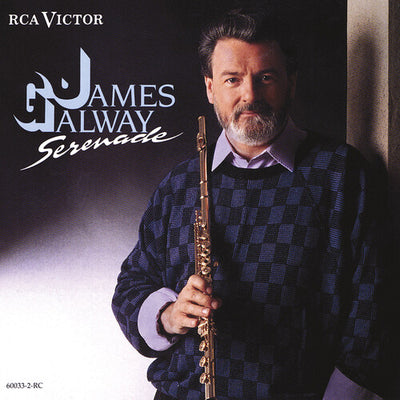
Ingrid Matthews plays a baroque violin on this recording. REVIEWS: American Record Guide (7-8/00, pp. 83-84 - "...Matthews...has excellent taste, does a wonderful job of characterizing each movement, and is very good at bringing out all the voices in the fugues....This superb recording is...my top recommendation....A very auspicious debut...a major talent..."
Bach: The Ascension Oratorio, Festive Cantatas / Funfgeld, Bach Festival Orchestra
Sono Luminus
CD
$18.99Jun 30, 1998
"The opening and closing choruses of the Ascension oratiorio contain some of Bach’s most irresistible, catchy music, and this chorus and orchestra really give it their all, from the brilliant trumpets and insistent syncopated rhythms to the invigorating choral singing...once you get into this Bethlehem Bach Choir production, it’s impossible not to like it."
Nunkomm, der Heiden Heiland (Now come, Saviour of the Heathen) appears in three versions. The chorale on which it is based is Martin Luther's adaptation of the original Ambrosian hymn Veni Redemptor gentium. The first of these, for two manuals and pedals, opens with the first measures of the chorale theme in the tenor, imitated at once in the alto register, over a constantly moving pedal bass. The melody is then elaborated in the upper part to form an ornamented line. The second treatment of the chorale is in the form of a Trio, three melodic lines, one for each hand and one for the pedals. Here a contrapuntal imitative opening by the two lower parts is followed by the appearance of the ornamented chorale theme, to which the two lower parts provide a postlude in conclusion. The third version of Nun komm, der Heiden Heiland is described as in organo pleno, il canto fermo nel pedale (for full organ, with the chorale melody in the pedal part). An introductory contrapuntal passage derived from the chorale leads to the solemn appearance of the chorale itself in the lowest register, successive pedal entries preceded by similar prefatory passages. The canonic variations on Vom Himmel hoch (From Heaven on high) were apparently written in 1747 and offered by Bach when he was admitted to the polymath Lorenz Christoph Mizler von Kolof's Correspondierenden Societät der Musicalischen Wissenschaften (Corresponding Society of the Musical Sciences). Bach was the fourteenth of a membership limited to twenty scholars and musicians, including, among those now better remembered, Telemann and Handel. The Christmas chorale by Martin Luther first appears in the pedal part of a Canon at the Octave that involves the two upper parts in such canonic imitation. The cantus firmus is again heard in the pedals, in the second Canon at the Fifth, followed by the chorale melody itself in canon at the sixth and in inversion in the lower voice, accompanied by a moving pedal part. Once the chorale has been heard in this form, Bachadds a canon at the third, with the upper part entering first with an inversion of the melody. A canon at the second follows, between the pedal bass and tenor in inversion, and then, at the ninth, between a pedal inversion and the top voice. This varied treatment of the cantus firmus itself leads to a Canon at the Seventh between the pedals and tenor. A Canon in Augmentation sets an augmented tenor part in canon with a more rapid upper part, with the steadier chorale melody introduced by the pedals. The Canonic Variations constitute a remarkable technical and musical tour de force.
The Leipzig Autograph opens with a Fantasia on Komm, Heiliger Geist (Come, Holy Ghost), in organo pleno, il canto fermo nel pedale (for full organ, the chorale melody in the pedal part). The chorale itself is a German version of the antiphon Veni, Sancte Spiritus, devised by Martin Luther for congregational use. An imitative contrapuntal introduction, in which three upper voices enter in turn over a sustained pedal-note, leads to the chorale melody itself, in the lowest register, chorale phrases separated with passages of varying length for the manuals. A second treatment of the same chorale, for two manuals and pedals, is in triple metre, with a fugal subject derived from the chorale, the manuals preceding the pedal entry in each section. This extended composition ends with a particularly splendid coda. An Wasserflüssen Babylon (By the waters of Babylon), for two manuals and pedals, uses a fifteenth century chorale melody from Strasburg. .Here the chorale melody is first heard in the top part, imitated in the tenor, which itself introduces the continuation of the chorale theme. This is followed by Schmücke, dich, o liebe Seele (Deck thyself, beloved soul), much admired by Schumann and based on a mid-seventeenth century chorale, first suggested in the alto part in a contrapuntal introduction, before appearing in the soprano in augmentation, its notes prolonged. The Trio on Herr Jesu Christ, dich zu uns wend (Lord Jesus Christ, turn to us) is again based on a mid-seventeenth century chorale. Here the three contrapuntal parts interweave, the left hand entering in canonic imitation of the right over a pedal-part derived from the opening notes of the chorale. This opening figure brings, in conclusion, a pedal statement of the melody, accompanied by the continuing counterpoint of the two upper parts. O Lamm Gottes, unschuldig (O Lamb of God, guiltless, slaughtered on the Cross) is based on a Lutheran version of the Agnus Dei, O Lam Gades unschüldig, by Nikolaus Decius, an early follower of Luther. This, one of the earliest chorales, is itself derived from plainchant. The three sections of the Agnus Dei allow three different treatments of the cantus firmus, which appears first in the top part, then in the middle part and finally in the pedals. Nun danket alle Gott (Now thank we all our God) is based on a seventeenth century chorale. Counterpoint based on the melody precedes the entry of the chorale itself in the upper part, a procedure that is followed throughout, in the manner associated particularly with Bach's elder brother's teacher, Pachelbel. Von Gott will ich nicht lassen (From God I will not part) treats a sixteenth century chorale dating from 1572 in Erfurt. Here again each section of the melody, played on the pedals, is introduced by a preceding contrapuntal section derived from the hymn itself. The C major Toccata, Adagio and Fugue, striking not least in the distinctive nature of the three sections into which it falls, in form the counterpart of the three movement Italian concerto of the period. The work opens with a brilliant improvisatory prelude, display on the manuals followed by a passage for pedal solo, before more elaborate counterpoint involving manuals and pedals. There follows an Adagio aria, slowing in a concluding recitative, before a capricious fugue subject, interrupted by abrupt rests, a characteristic that naturally recurs, as the four parts enter, in descending order.
Sony Classical is pleased to announce the second solo album by exceptional young American organist, Cameron Carpenter, All You Need is Bach. Bach’s great keyboard masterpieces provide an ideal platform for Carpenter’s formidable creative gifts and the seemingly limitless possibilities of his dream instrument – his signature International Touring Organ. The album takes is cue from The Beatles’ classic “All You Need is Love”, where Bach’s Invention No. 8 in F major proudly rises out of the coda’s collage-like texture. Works include Contrapunctus IX from The Art of Fugue, Organ Sonatas in D minor and E-flat major, Prelude and Fugue in B minor, Invention No. 8 and, as the centerpiece, the great Passacaglia and Fugue in C minor. The latter holds a special place in Carpenter’s affections. “It is undoubtedly one of the Top 10 masterworks of all music, no matter how you evaluate it.”
A virtuoso composer-performer unique among organists, Cameron Carpenter’s approach is to smash the stereotypes of organists and organ music. Described as “extravagantly talented” (New York Times), and “smasher of cultural and classical music taboos,” (The New Yorker), Cameron is the first organist ever nominated for a Grammy Award® for his debut album, Revolutionary. All You Need is Bach is the second recording made on Cameron’s new International Touring Organ. The organ, designed by Cameron himself, is a mobile digital organ that is artistically and sonically equal to any of the world’s great organs and will challenge the way the world thinks about organs.
Issued complete for the first time, including several albums new to CD, is the Philips catalogue of the Netherlands Wind Ensemble - an ensemble that made a defining contribution to Dutch musical life in the 1970s. The Netherlands Wind Ensemble began life in 1959 as a wind quintet, but soon expanded to play Classical-era serenades and divertimenti which were hardly known at the time but have since been recognised and enjoyed as masterpieces of entertainment music, notably the Gran Partita of Mozart, the late Octet by Beethoven and the wonderful Octet-Partitas by his Viennese contemporary, Franz Krommer. Starting to record for Philips in 1968, the Netherlands Wind Ensemble immediately won critical praise for the technical precision of it's playing as well as the brilliance and wit of it's interpretations, whether led by it's regular conductor Edo de Waart (himself a former oboist and member of the ensemble) or played as true chamber music. The ensemble made one of the first comprehensive recordings of Mozart's wind music, including miniatures, no less delightful for their brevity and rarity, and a precious but little-known collaboration with the much-loved Dutch soprano Elly Ameling. The youthful, funky vibe of the Netherlands Wind Ensemble was captured by Philips both in exceptionally vivid recordings as well as kooky cover designs, which are reproduced on the sleeves of the issues. A booklet essay by Peter Quantrill outlines the history and character of the ensemble, drawing on a new interview with Edo de Waart. The repertoire extends into the nineteenth century with a classic account of the Wind Serenade by Dvorak - the ensemble's debut on disc - as well as ingenious arrangements of overtures and arias by Rossini, and a unique collection of 'little marches by great masters'. The Netherland Wind Ensemble's long-standing commitment to modern music is represented by the wind music of Richard Strauss and Stravinsky, and the pioneering Jazz Symphony by the Franco-American 'bad boy' of classical music in the 1920s and 30s, Georges Antheil, recorded live at the 1976 Holland Festival.
African American Voices II - Bonds, Kay & Perkinson / Gray, RSNO
Linn Records
CD
$20.99Oct 20, 2023
Kellen Gray has reunited with the Royal Scottish National Orchestra for a second instalment of African American Voices. Though representing differing schools of thought regarding African American classical music, the composers here are united by their roots in black history, culture and its rich musical heritage. Drawing upon jazz and spirituals – ‘I Want Jesus to Walk with Me’ serving as the source material – Margaret Bonds’ Montgomery Variations engages with African American history, namely the Montgomery bus boycott and the 1963 Birmingham church bombing. In this work, re-discovered in 2017, Bonds tackles the themes of strength, resistance, determination and faith. Bonds’ contemporary, the prolific composer Ulysses Kay cultivated a neoclassical voice, as his Concerto for Orchestra exemplifies, very much in line with William Grant Still and his teacher Paul Hindemith. A versatile musician, Coleridge-Taylor Perkinson comes a generation later. In his Worship: A Concert Overture, we can hear a blend of Baroque counterpoint, elements of the blues, spirituals and black folk music.
REVIEW:
Margaret Bond (1913–1972) wrote her 1964 Montgomery Variations as a seven-movement theme-and-variations on the spiritual “I Want Jesus to Walk with Me.” Bond’s impassioned cri de coeur bypasses the constraints of academic cd’s and don’ts as it chronicles in boldly theatrical music the beginnings of the Civil Rights Movement, from the Montgomery bus boycott through the tragic 1963 Sixteenth Street Baptist Church bombing. Bond dedicated the piece to Dr. Martin Luther King, Jr., though sadly never heard it performed during her brief lifetime.
Ulysses Kay (1917–1995) reflects in his 1948 Concerto for Orchestra the influence of several of his mentors – including Paul Hindemith – as a thoroughly tonal work conceived in mid-20th century, in a moment in which the music of the followers of the Second Viennese School reigned supreme in the classical music worlds of both Europe and America. Kay’s classically structured, richly orchestrated, harmonically dense, and contrapuntally complex composition remains at its core a consonantly melodic, post-Romantic work.
In his 2001 Worship: A Concert Overture Coleridge-Taylor Perkinson (1932–2004) successfully amalgamates sacred and secular music, incorporating blues in his nobly elegant treatment of Praise God from Whom All Blessings Flow.
To celebrate the 75th anniversary of the Bavarian Radio Symphony Orchestra (BRSO) in 2024, the BR-KLASSIK label is releasing previously unreleased recordings of concerts worth listening to, available on CD and as a stream.
Gustav Mahler's Third Symphony remains today one of the greatest and most powerful creations of the Late Romantic period. The immense symphony, longer and more monumental than others, incorporates texts from the collection of poems by Clemens Brentano and Achim von Arnim entitled “Des Knaben Wunderhorn”. Composed over a period of four years from 1892 to 1896, with particular focus during the summers of 1895 and 1896 spent at the Attersee in Austria, it was premiered in its entirety on June 9, 1902, at the 38th “Tonkünstler Festival” in Krefeld. Mahler conducted the Städtische Kapelle Krefeld and Cologne’s Gürzenich Orchestra at this momentous event, which garnered great acclaim from his contemporaries. Between 1902 and 1907, the composer conducted his Third Symphony a further 15 times.
Among the symphony's six powerful movements, the slow fourth movement necessitates not only a large orchestra but also a mezzo-soprano solo for a setting of the “Midnight Song” (“O Man! Take heed!”) from Friedrich Nietzsche's poetical-philosophical work "Thus Spoke Zarathustra." In the cheerful fifth movement, the mezzo-soprano soloist is joined by a children’s choir and a female chorus for the song "Es sungen drei Engel" from "Des Knaben Wunderhorn." The symphony presents a significant challenge for all its performers, and this concert recording from December 2010 features a prestigious lineup: Mariss Jansons conducting the Chor and Symphonieorchester des Bayerischen Rundfunks, with the Tölzer Knabenchor, and solo parts sung by Nathalie Stutzmann.
What happens when the illustrious brass sections of the Berlin and Vienna Philharmonic come together? The answer: The Philharmonic Brass Making it's debut in Vienna's Musikverein in April 2023 the group will come together for recording, tours and education work. Comprising some of the best-known faces in the brass world from Berlin, Vienna and their friends, the group includes Sarah Willis, horn and Paul Halwax, tuba. Their Debut album 'Overture!' was conducted by Tugan Sokhiev and released through Decca Classics. Now it's time for the following up album through the new label Supreme Classics: Italiana! Conducted by Maestro Riccardo Muti includes virtuoso arrangements of some of the best-known music including Verdi's Sinfonia di Nabucco, Rossini: Guillaume Tell - Overture and many more.
A genuine masterpiece inspires musicians to adopt, adapt, or transcribe it without losing any of it's greatness. Nevermind's four baroque aces, Anna Besson, Louis Creac'h, Robin Pharo and Jean Rondeau, have taken a creative look at Bach's famous Goldberg Variations and have made their own stylishly insightful 'variations' on the work. As they themselves explain: 'We needed only an informal rehearsal to grasp the incredible potential of a transcription for our ensemble. There have been other arrangements, but nobody has ever attempted this one before now, even though our instruments are among those most typically used in J.S. Bach's chamber music, in his many solo sonatas for flute, violin or gamba with bass continuo and obbligato harpsichord - and they also frequently feature in the arias of his cantatas and Passions.'
Having completed the entire trilogy of Handel's Concerti grossi, the Akademie Fur Alte Musik Berlin presents a recording of the first six Concerti grossi, Op. 6 by the composer, ensemble leader and violin virtuoso Arcangelo Corelli, who received the almost cult-like reverence during his lifetime. The composer had been experimenting with this one of the most distinctive forms of instrumental music of the Baroque era since the late 1670s, but it was only towards the end of his life that he sought to publish these compositions and selected only twelve exemplary pieces from what was probably a much larger collection. He laid the foundations of this instrumental form for future composers such as the aforementioned Georg Frederic Handel, who paid tribute to the Italian Baroque master with his two opuses. The Akademie Fur Alte Musik Berlin and it's two concertmasters, Mayumi Hirasaki and Georg Kallweit, who demonstrate their extraordinary virtuosity, only prove why they are regarded as one of the most influential period-instrument ensembles of today. The Akademie Fur Alte Musik Berlin has a substantial PENTATONE discography, including the Diapason d'Or awarded CANTATA with Bejun Mehta (2018), Handel's Concerti grossi Op. 3 and 6 (released in 2019 and 2020), Telemann's Miriways (2020), Handel's Messiah (2020), Haydn's L'isola disabitata (2021), La Passione with Christina Landshamer (2022), a recording of Mozart's Paris and Haffner symphonies and the Oboe Concerto with Xenia Loffler (2023), Telemann's Ino (2024), and a recording with Mozart's symphonies Nos. 29 & 33 and the Clarinet Concerto with Ernst Schlader (2024).
Sacred Music: From Bach to Bruckner / Herreweghe, Collegium Vocale Gent
PHI
CD
$53.99Oct 06, 2023
Philippe Herreweghe and Collegium Vocale Gent have made a lasting impression on the Bach discography with their many recordings devoted to the Kantor. They have also explored other sacred repertoires by Beethoven, Haydn, Dvorák and Bruckner, to which they have brought all their excellence and sensitivity. Here they are together for the first time in a boxed set of 11 CDs.
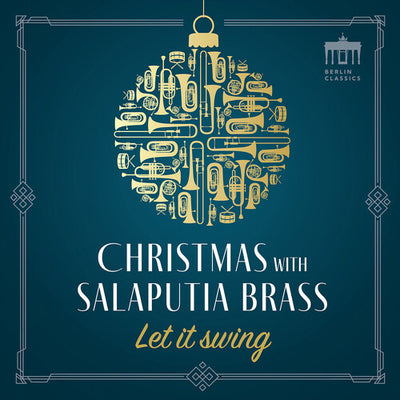
The currently hottest German brass ensemble with great concept albums presents Christmas classics in completely new arrangements for the first time?. All-time classics like "Driving Home for Christmas", "It's beginning to look like Christmas", "Santa Claus is coming to town", "All I want for Christmas", "Let it snow", "White Christmas", "Frosty the Snowman" give this Christmas album a unique sound?
Tabakova: Orchestral Works & Concerti / Lazarova, Johnston, Rysanov, The Hallé
Halle
CD
$20.99Oct 06, 2023
This album marks the culmination of two special Hallé collaborations and includes four major pieces from one of the most distinctive of current British compositional voices. Delyana Lazarova (Hallé Assistant Conductor 2020-23) and composer Dobrinka Tabakova (Hallé Artist in Residence 2022-23) were both born in the historic city of Plovdiv, Bulgaria. Working together for the first time during their time with the orchestra they formed a strong musical connection in which the Hallé musicians displayed a close understanding of the intricacies and dialect of Tabakova’s musical language. This album contains two of Tabakova’s major orchestral works. The three-part Earth Suite, which the composer says was inspired by ‘the overwhelming force of Nature’, recently drew ‘exquisite playing’ from the Hallé (Bachtrack, April 2023).
Orpheus Comet features fast rhythmic material combined with atmospheric transparent orchestrations and a glorious climax featuring quotations from Monteverdi. The two significant concertos for strings and soloists included on this album solidified Tabakova’s reputation as an outstanding contemporary voice and display the composer’s close affinity with string instruments. Ukrainian-British Maxim Rysanov, is one of Tabakova’s longest collaborators who premiered the Concerto for Viola and Strings in 2004, a piece described as being ’saturated with an inner, captivating and natural energy’ (Culture Magazine, Nov 2004). The Concerto for Cello and Strings (whose score was described as ‘gorgeous’ by the Daily Telegraph, Australia) is here performed by Guy Johnson, one of the most exciting British cellists of his generation.
The Concerto Koln goes on a journey of discovery and contrasts the famous Johann Sebastian Bach with the now unknown Johann Adolf Scheibe?. The ensemble is accompanied by the excellent soprano Marie Sophie Pollak. Together they present the two rivaling composers in a way, where instrumental and vocal composition by Bach and Scheibe alternate on the album?.
Learn more about this recording on the Naxos Classical Spotlight podcast!
Mandolinist Alon Sariel continues his series of Bach transcriptions with Plucked Bach II. On his first Plucked Bach album, Sariel played the Cello Suites on a wide range of plucked instruments. Yet in this new recording, he performs works for the lute, organ and violin - all performed on 'only' two types of mandolins. By offering a distinctive and groundbreaking interpretation of his own transcriptions and arrangements, Sariel manages to breathe new life into some very well-known works by Johann Sebastian Bach.
The iconoclast Toccata and Fugue in D Minor (BWV 565) for the organ receives a contemplative and intimate character on the mandolin. Excerpts of the Lute Suite (BWV 998) and the Violin Partita No. 3 in E Major (BWV 1006) are drawn in a whole new palette of colors. For Bach's Violin Sonata No. 2 in A Minor (BWV 1003), Alon Sariel shows the in-credible suitability of the mandolin for Bach's music. And as an encore, you will hear his rendition of Ysaÿe's dazzling Obsession. Alon Sariel is one of today's most versatile performers, known as a multi-instrumentalist in the realm of plucked strings with a growing reputation as a fascinating Bach interpreter.
Since 2017, violinist Emmanuelle Dauvin plays whilst accompanying herself on the organ pedalboard - recalling the musical technique of Nicolaus Bruhns at the end of the seventeenth century. This is OVNI Baroque : a spectacular yet forgotten musical practice. Alongside soprano Heather Newhouse, she created Cantata a 2 : a concert programme of arias and instrumental pieces, for soprano, violin and bass, by J.S. Bach, presented here in an innovative arrangement. The arias bring a consolidating balance to the sonata trio in which the text unfolds from the vocal line. From the purity of the trio by two, emerges a bounteous expression.
For nearly 20 years, Seraphic Fire’s Christmas concerts have heralded the change of seasons for our audiences in South Florida, and there is no piece more associated with these yearly musical celebrations than Jesus Christ the Apple Tree. Written by Elizabeth Poston, English composer and purported World War II spy for the Allies, Jesus Christ the Apple Tree takes a Federal-era American text and clothes it in music so simple, that it could easily be an 18th-century colonial hymn. With its elegant treble-voice verse and luxurious ending canon, Jesus Christ the Apple Tree has become an indispensable part of Christmastide for thousands of our friends in our hometown of Miami, FL, and beyond.
With Poston’s masterpiece as our polestar, this new holiday recording by Seraphic Fire celebrates the simple and the authentic. From Praetorious’s double choir setting of In dulci jubilo and Gottfried Wolter’s spine-tingling Maria durch ein Dornwald ging, to familiar American carols arranged by composer contemporaries of Seraphic Fire (including Susan LaBarr, Edwin Fissinger, Timothy Takach, and Seraphic Fire’s founder Patrick Dupre Quigley), this new recording hopes to introduce new settings of old melodies that will hopefully become instant classics in your Christmas soundscape. Each Seraphic Fire Christmas program is special, and we hope that The Apple Tree: Christmas with Seraphic Fire will continue our tradition of bringing peaceful, tuneful contemplation to our beloved audiences, near and far. – James K. Bass
A rarely heard, fascinating solo instrument and an internationally multi-award-winning performer: on the new GENUIN album "From Keys to Strings", we are presented with an exciting combination! For her prizewinner production from the 2023 ARD Music Competition, harpist Tjasha Gafner has put together an unusual program in which she arranged works for her instrument. These are pieces that Joseph Haydn and Wolfgang Amadeus Mozart originally wrote for keyboard - or, in the case of Johann Sebastian Bach, for lute (or a lute-harpsichord?). The clarity and transparency of both transcription and interpretation by this outstanding young harpist provide surprising insights and new listening experiences!
Bach on Nine Strings - Suite, Partita and Sonata for Two Pic
Arcana
CD
$20.99Feb 27, 2026
Two violoncellos piccoli, one with four strings, the other with five, making a total of nine strings: it is as if a new instrument were born, an organ with strings instead of pipes, to perform virtuoso polyphonic masterpieces with a larger, enriched sound palette. Taking Gustav Leonhardt's keyboard transcriptions of the Suites, Sonatas and Partitas as his point of departure, Mario Brunello adds a new sonic dimension to three of Bach's solo pieces for unaccompanied violin and cello, making the polyphony previously confined to only four strings audible. He is partnered by his longstanding friend the specialist Mauro Valli, who has already appeared on Arcana with his personal reinterpretation of the Cello Suites (Bach in Bologna A459, 2019).
In the discussion on women and classical music, perhaps no other instrument draws such a strong association with feminine stereotypes as the harp. Once the instrument of choice for respectable young ladies, it was considered suitable for the domestic sphere and the world of private salons. And yet, as the harp made it's way out of the home and into the concert hall, it's publicity was championed by male performers, playing the music of male composers. Often overlooked are the women-performers and composers alike-who revolutionized the instrument and gave it a solo voice. Birds of Paradise celebrates the artistic voices of women as both performers and creators. This album showcases living composers Reena Esmail and Angelica Negron and legendary harpist and composer Henriette Renie. Featured works include Renie's Trio, the first major work written for this combination of instruments, alongside the world premiere recording of Negron's Ave del paraiso and the first recording of Esmail's Saans as arranged for harp, violin, and cello. Listeners are invited to experience this dynamic sound world, full of color and warmth, created and performed by women.
The final volume in a new groundbreaking and much-praised complete symphony cycle of Ferdinand Ries' (1784-1838) symphonies by the Tapiola Sinfonietta and conductor Janne Nisonen includes the composer's two final statements in the symphony genre. Like most of his symphonies, also Ries' Symphony No. 6 was premiered in London in 1822. His 7th Symphony, written a decade later, remained in the shadows and was published only in 2004. Both works, however, are full of discoveries.
In 1700, Corelli published his 12 violin sonatas, Opus 5, in Rome. A veritable revolution in violin technique, they won the admiration of eminent composers (Bach, Dandrieu, Couperin) and greatly influenced the French (Francoeur, Leclair, Senaillé, Quentin), who were to try their hand at this virtuoso and brilliant Italian style. At the end of the 1730s, the first six sonatas of opus 5 were"adapted to the transverse flute with the bass" by a Parisian publisher. The level of virtuosity they demanded was quite innovative at the time. This display of virtuosity is also to be found in the compositions of Jean-Baptiste Quentin, known as Le Jeune. We have very little biographical information on Quentin himself, but all his work is greatly inspired by Italian music and is heavily influenced by Corelli. Anna Besson has made the world's first recording of his sonatas, with the help of two other eminent performers of the new Baroque generation, Myriam Rignol on viola da gamba and Jean Rondeau on harpsichord…
- "Passionately played by the Tapiola Sinfonietta, under Janne Nisonen's direction, these skillfully-crafted works emerge as noble rediscoveries," wrote the BBC Music Magazine on the second volume in the ongoing Ferdinand Ries (1784-1838) complete symphony cycle by the Tapiola Sinfonietta and conductor Janne Nisonen. This Vol. 3 includes two delightful symphonies written at the height of the composer's creative period when the influence of his composition teacher Beethoven was less evident in the composer's symphonic writing.
J.S. Bach: Concertos, Inventions & Motets for Recorder Ensem
Brilliant Classics
CD
$12.99Feb 27, 2026
Bach's music is often described as indestructible, in the sense that no matter how it is performed or in whichever arrangement, it's essential spirit survives. In the Baroque period the practice of arranging one's own music or that of other composers was common place, and Bach himself was an indefatigable transcriber and arranger, using his own music to multiple purposes. Besides saving time and creative energy it gave the opportunity to other instrumentalists to play music of such high quality and universal value. This highly original and enjoyable new recording presents works by Bach transcribed for recorder ensemble. The recorder consort is based on a great tradition of polyphonic practice, which began in the Renaissance period and continued throughout the Baroque era. The recorder is one of those instruments with great "mix appeal", which in consort can produce a perfectly blended sound of rare beauty, with ancestral echoes. In this recording by Collegium Pro Musica, the sound of the flute consort, which normally resembles that of an organ, is surpassed by a vision that tends to identify the different sounds and personalities of the individual performers, all committed to conveying an idea of vibrant vitality. The album includes Motets, Concertos and Inventions. A wonderful, refreshing and fascinating recording by the Fiati del Collegium Pro Musica Recorder Ensemble, led by Stefano Bagliano, one of the foremost flute players of today.
Florence Price had worked for some years as a silent film organist before she won admiration in 1932 for her Symphony No. 1 in E minor. Works for organ form one of the largest parts of her output; the Sonata attests to her virtuosic command, as does the Passacaglia and Fugue which, while clearly indebted to Bach, reveals personal ideas of her own. Price's gift for writing miniatures is also obvious - Adoration has heartfelt melodic beauty, and the dainty Caprice exemplifies light music at it's best. Variations on a Folksong is a tour-de-force and her only organ work to be based on a pre-existing melody, a spiritual. A digital EP featuring four additional miniatures for organ is also available for streaming and download (9.70389).
Around the central work of the CD, the "Friedenskonzert" by Daan Manneke, Gudrun Sidonie Otto, soprano, and the cathedral organist of the Basel Minster, Andreas Liebig, present a very multifaceted and expressive programme. The "Friedenskonzert" is part of the Baseler Psalms, which were commissioned for the millennium celebrations of the Basel Minster. In the programme, it is framed by two chorale arrangements on the Lutheran chorale "Aus tiefer Not schrei ich zu dir", one by Johann Sebastian Bach, the other by Max Reger. Furthermore, Gudrun Sidonie Otto sings two extremely demanding works, "Aus den Visionen der Hildegard von Bingen" by Sofia Gubaidulina and "Djamila Boupachà" by Luigi Nono. The whole programme is framed by two of the most important works of organ music, Bach's Fantasia et Fuga g-minor, BWV 542 and the organ sonata "Der 94. Psalm" by Julius Reubke, both masterly played at the organ of the Basel Minster by Andreas Liebig.
Price: Violin Concertos Nos. 1 & 2, Piano Concerto in One Mo
Naxos
CD
$19.99Jun 27, 2025
Florence Price reached her musical maturity in Chicago during the 1930s - the decade in which she made a famous debut with the city's orchestra and produced two substantial concertos. The Piano Concerto in One Movement contains some of her most beautiful music set alongside moments of Romantic bravura. Violin Concerto No. 1 seems never to have been performed during her lifetime but is the most expansive of her concertos and is richly orchestrated. The later Violin Concerto No. 2 is a much more compact work, cast in one expressive movement. Dances in the Canebrakes, originally for piano, evokes 19th-century African American life, heard here in William Grant Still's orchestration.