One-Day Sale
Our One-Day Sale is back and better than ever — over 250 hand-picked titles are 50% OFF now at ArkivMusic!
Shop from iconic labels such as Delos, Analekta, ICA Classics, Alpha and more!
While supplies last — no backorders at these prices!
Shop the sale before it ends at 9:00am ET, Wednesday, April 16th, 2026.
273 products
-
Grosz & Gund: Be Still My Heart
CD$20.99$18.89Alpha
Mar 28, 2025ALPHA1117 -
-
-
-
-
-
-
-
-
-
-
-
-
-
-
-
-
-
-
-
-
-
-
-
-
-
-
-
-
-
Grosz & Gund: Be Still My Heart
Molecule: Symphonie No. 1 "Quantique"
Sibelius: Symphonies Nos. 6 & 7; The Tempest
Chopin, Granados & Albeniz: Echos
Hagerty: United Sounds of America
Yellow Butterfly - Latin American Favourites
Brahms, Schumann & Schubert: Original Transcriptions for Tru
Orlando, A Melancholic Portrait
Kyr: Earth Vigil / Johnson, Conspirare
Massenet: Werther (Baritone Version)
Messiaen, Schubert, Schumann & Stravinsky: Fantasy / Baeva, Kholodenko
Violinist Alena Baeva joins Alpha Classics for several recordings, starting with an album of chamber music with pianist Vadym Kholodenko, her favourite partner. Together they offer an eclectic and unusual programme of Schubert's fearsome and magnificent Fantasy for violin and piano, composed a year before his death… This is followed by Stravinsky's joyous and boisterous miniatures in a collection entitled Divertimento, proposed as an abridgement of the ballet Le Baiser de la fee (The Fairy's Kiss). Olivier Messiaen composed a Fantaisie for his first wife, the violinist Claire Delbos, but the work was not published until 2007. Die Marchenbilder by Schumann complete the programme. Initially a pupil at the Moscow Conservatory, Alena Baeva later left Russia and was taught by Shlomo Mintz, Mstislav Rostropovich, Boris Garlitsky and Seiji Ozawa. At just 16, she won the Grand Prize in the Henryk Wieniawski International Competition, and many other prizes followed. Alena Baeva plays the Guarneri del Gesù "ex-William Kroll" of 1738. Ukrainian pianist Vadym Kholodenko was awarded the Van Cliburn Gold Medal in 2013.
Mozart: Requiem / Nelson, Lausanne Chamber Orchestra
This is the first recording of a new edition of the Mozart Requiem prepared by Michael Ostrzyga (Barenreiter). The performance features an international line-up of soloists from France, Germany, Switzerland and the UK. The inclusion of Mozart’s Ave verum corpus and the Exsultate, jubilate represents excellent value.
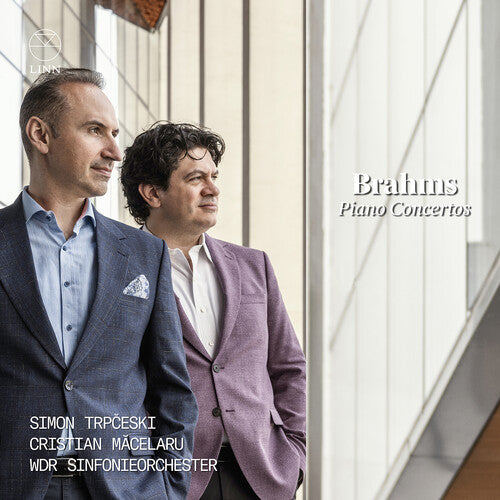
Brahms: Piano Concertos / Măcelaru, Trpceski, WDR Sinfonieorchester
This eagerly-awaited new release sees Simon Trpceski reunite with conductor Cristian Măcelaru to record Brahms Piano Concertos. Their unrivalled chemistry, paramount in Brahms’s chamber-like concertos, is on full display in these new performances which puts the two artists’ musical affinity in the spotlight. These two contrasting concertos, one beginning in darkness, the other in light, mark Brahms’s major contribution to the genre. With Trpceski’s flawless technique and sensitive playing, pianophiles are in for a treat. Macelaru’s orchestra, WDR Sinfonieorchester, joins the pair to complete the line-up; a perfect companion to their previous album, Shostakovich Piano Concertos, which garnered numerous accolades (BBC Music Magazine Concerto Choice, Le Choix de France Musique, among others).
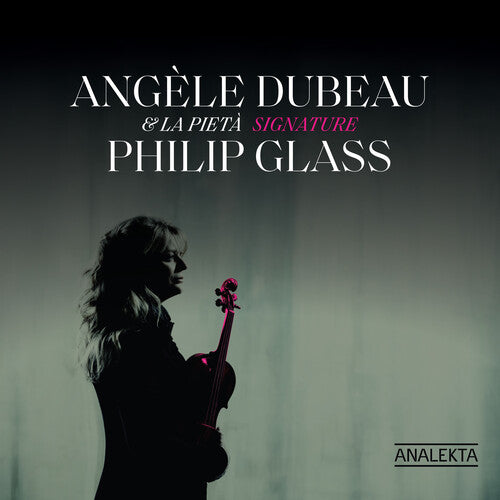
Signature - Philip Glass / Dubeau, La Pietà
"After releasing my album Portrait: Philip Glass in 2008, I wanted to take a deeper dive into the vast œuvre of this composer, an icon of our era and one whose work has and will long continue to have impact. For many years now his fascinating and captivating music has been nourishing me intellectually and musically. Glass being one of the most prolific of composers, there was no shortage of works to include on this my 48th album. My selection approach remains the same; I choose those works I find significant and compelling. Like Glass’ work as a whole, the content of this album is very diverse: music for theatre and for cinema, for chamber and for symphony orchestra, and recent works as well as some written almost 50 years ago! Thank you for giving me carte blanche to revisit these works with my ensemble." (Angèle Dubeau)
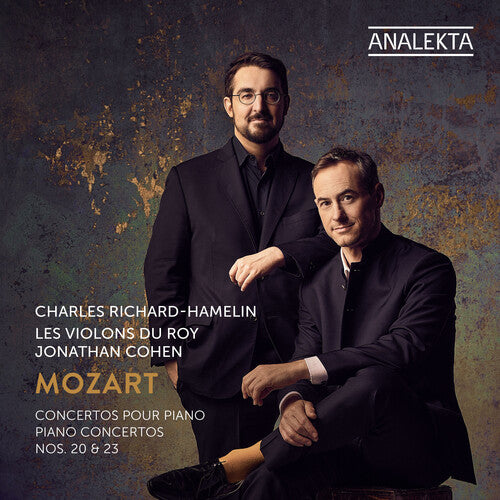
Mozart: Piano Concertos Nos. 20 & 23 / Richard-Hamelin, Cohen, Les Violons du Roy
Following a fruitful first collaboration for Mozart’s Piano Concertos Nos. 22 and 24, Charles Richard-Hamelin, Les Violons du Roy and Jonathan Cohen return this time with Piano Concertos Nos. 20 and 23. The works on this recording were composed by Mozart between 1783 and 1786, when the musician was approaching an important personal and professional turning point. First, the Concerto in A major, K. 488, was completed on March 2, 1786, two months before the premiere of The Marriage of Figaro, a work that marks Mozart's return to opera. While Concerto K. 466 is, with Concerto No. 24, the only one by Mozart in the minor mode, that also coincides with the arrival of his son Karl. The performance of the soloist and of the orchestra complement each other marvellously in these two masterpieces whose contrasts respond to each other magnificently.
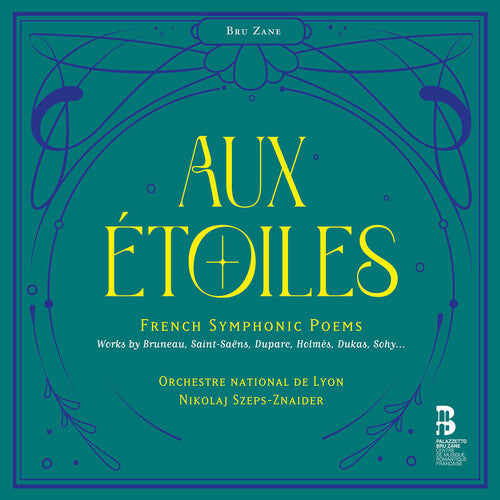
Aux étoiles - French Symphonic Poems / Szeps-Znaider, Orchestre National de Lyon
Many Romantic composers owe their fame to one of their symphonic poems. Alongside acknowledged French masterpieces in the genre, the fifteen tracks presented here include four previously unrecorded works and several rarities by women composers. The Orchestre National de Lyon, a great champion of French Romantic music, offers a palette of shimmering colours under the baton of Nikolaj Szeps-Znaider as it relates in music the legend of Merlin the Magician, the fairytale of Sleeping Beauty and the misadventures of the Sorcerer’s Apprentice.
Morricone: Cinema Rarities / Serino, Orchestra di Padova e del Veneto
The idea for this album came about during the recording of its predecessor Cinema Suites (BBC Music Magazine’s “Screen Choice”, Album of the Week on WDR3 etc.), when the Morricone family sent Marco Serino a number of rarities that they hoped could also be recorded, particularly “Dedicated to Maria” (from the film The Sleeping Wife) that the composer had dedicated to his wife. These works, along with others that Serino rediscovered in his own archives, make up the backbone of Cinema Rarities, an ideal sequel to the previous recording.
After twenty years as Ennio Morricone’s chosen violinist, Serino continues his exploration of the compositions for violin and orchestra, but this time with a particular focus on pieces that, besides being less well known to the wider public, all share a degree of “Italianness”.
The main nucleus of the program consists of three suites named after three Italian film directors (Silvano Agosti, Mauro Bolognini and the Taviani brothers), with whom Morricone worked closely. Although the respective films did not achieve the international acclaim of those directed by Sergio Leone or Giuseppe Tornatore, which featured in the previous recording, they inspired the composer to come up with new and distinctive solutions, such as “Love Remembered” from The Inheritance, considered by Marco Serino to be one of the most beautiful.
Equally quintessentially Italian are the two extracts from the scores for The Lady Caliph directed by Alberto Bevilacqua, including the lovely “Nocturne” and the brief “Quasi un Vivaldi” (from Sergio Sollima’s film Revolver), which herald by almost a decade remakes like Gian Piero Reverberi’s Rondò Veneziano. A unique place is occupied by Four Adagios, a collection of four pieces chosen by the composer himself (including the iconic “Whoever” and “Deborah’s Theme”), which in this arrangement for violin cites the main theme of the first movement of the Beethoven Concerto. Dedicated to Serino and performed worldwide under the baton of Morricone, Four Adagios speaks to the artistic partnership between composer and violinist, their mutual professional respect and deep friendship.
Where Is My Beloved? / Siurina, Orbelian, Kaunas City Symphony
One of the leading sopranos of her generation, Ekaterina Siurina enjoys an international career that takes her to the top opera houses in Europe and America. Siurina’s thrilling renditions of famous arias on this recording bring new life to operatic favorites such as “Un bel di, vedremo” from Madama Butterfly, “In quelle trine morbide” from Manon Lescaut, and “Tatiana’s Letter Scene” from Eugene Onegin.
REVIEW:
She can surmount the vocal challenges of Madama Butterfly’s hopeful Un bel di, vedremo and the anguished Tu? Tu? Piccolo iddio! and she can also spin out a legato line to die for and she can cap the end of Senza Mamma with an ethereal pianissimo.
Ms. Siurina can do it all when it comes to the lyric soprano repertoire, be it the other-worldly Rusalka or the girlish Tatiana or the intact Amelia of Verdi’s Simon Boccanegra or the distraught Marguerita of Boito’s Mefistofele
It has been three years since I first heard Ekaterina Siurina in Amour Eternelle, her first album for DELOS. In this, her second album for DELOS, Siurina reinforces her great reputation, accompanied by the superb American conductor Constantine Orbelian, who leads the Kaunas City Symphony Orchestra offering minute by minute support to the soloist.
-- All About the Arts
House of Belonging / Conspirare
Conspirare, the nonpareil and Grammy-winning choral ensemble from Austin, Texas, presents an emotionally rich and wide-ranging program.
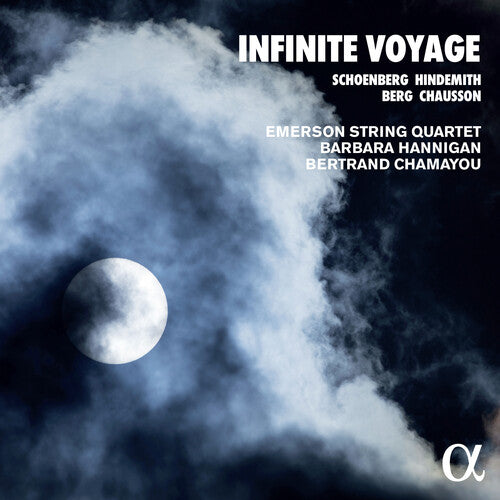
Infinite Voyage / Hannigan, Chamayou, Emerson Quartet
The title of this album evokes not only the life-long journey of all these musicians, but also a lasting friendship between soprano Barbara Hannigan and the Emerson String Quartet. One of the greatest string quartets of the last four decades, the Emersons will disband in October 2023.
Barbara and the Emersons were determined to record Schoenberg's Quartet No. 2 since they started performing the work together in 2015. "The sheer sonic scope of this work takes us on a voyage into previously uncharted territory" say the Emerson musicians. "It's like a tall, gnarly tree to climb (all the way to another planet, it seems), yet one with deep and emotional roots", continues Barbara Hannigan. "The soprano’s fin-de-siècle primal scream at the end of the 3rd movement, begging to be relieved of love, is a heavy hitter."
Melancholie is a rare and intimate work by the young Hindemith, "a gem of a piece" that the Canadian soprano has wanted to explore for many years. The fascinating Quartet Op. 3, composed by Berg in 1909 as he was finishing his apprenticeship with Schoenberg, features the quartet on its own. And to round out the album, pianist Bertrand Chamayou joins Barbara and the Emersons for another deeply moving encounter by way of Chausson's heartbreaking Chanson perpétuelle.
REVIEW:
This is the final release from the legendary Emerson String Quartet, disbanding nearly five decades after it was formed as a student group. Here, the group takes on monuments of 20th century music, mostly works that it has never recorded before. There are thorny works by Berg and Schoenberg, each on the edge of atonality; the Second String Quartet No. 2 of Schoenberg dispensing with a key signature altogether in the finale. The last two movements of this work feature a vocalist, and the precise, tense singing of soprano Barbara Hannigan makes a perfect foil for the Emerson. There are some little-known songs for voice and string quartet by the young Paul Hindemith, and a fascinating Chanson perpétuelle of Ernest Chausson, which fits the Infinite Voyage theme of the album even if it may not at first seem to be appropriate musically. All in all, this release will hang in listeners’ minds for a good long time, which is exactly what is desired from a valedictory release. Infinite, indeed.
-- AllMusic.com (James Manheim)
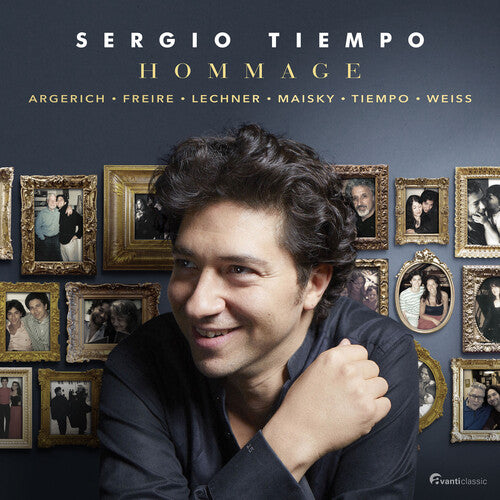
Hommage - Music of Chopin, Ravel & More / Tiempo
Sergio Tiempo, the electrifyingly brilliant pianist hailed by The Sunday Times, has brought together an exceptional cast of mentors for his latest album. These individuals have all played a pivotal role in shaping Tiempo's artistry: Lyl Tiempo, a world-renowned music pedagogue and Sergio's mother, the iconic Martha Argerich -who is recording for this album Schubert's Fantasy in F minor D. 940 for the first time in studio-, legendary pianist Nelson Freire, Alan Weiss, one of the most sought-after professors and pianists, incomparable cellist Mischa Maisky and Karin Lechner, Sergio's sibling and lifelong musical partner. The album is a tribute to the cooperative efforts of some of the most renowned musicians of our time and is a showcase of Tiempo's exceptional artistry.
L'imperiale - Haydn 2032, Vol. 14 / Antonini, Basel Chamber Orchestra
The fourteenth volume of the Haydn 2032 edition is entitled L'Imperiale, after the nickname given to Symphony no.53 in the nineteenth century. This was perhaps Haydn's most famous symphony during his lifetime. Premiered in the theatre at Eszterháza Palace in 1778, it was published in London around 1781, and its melodious Andante was arranged more than thirty times for various instruments between 1783 and 1820. It made a decisive contribution to Haydn’s success, opening the way for him to perform in England. Symphony no.54, whose entertaining, theatrical style is a perfectly match for the atmosphere of the legendary court festivities given at Eszterháza around 1775, completes this programme along with no.33, one of his first festive works with trumpets, composed c.1761. In his introductory text, Giovanni Antonini revels in the ‘capricious’, whimsical character of certain passages in the last movement of Symphony No. 53; he also offers an alternative finale of the work at the end of the album.
La Bella Cubana - Mozart y Mambo / Willis, Padrón, Havana Lyceum Orchestra
My dream of recording all four of the Mozart horn concertos has been fulfilled at last. Little did I know that this long-held dream would come true in Cuba of all places and with a Cuban orchestra! I have learned so much about Cuban music and how to dance Mozart along the way and, as a result, feel changed as a person and as a musician", says Sarah Willis. With this album - subtitled La Bella Cubana - the Mozart y Mambo trilogy is complete. After two critically acclaimed albums, three documentary films, two international tours and fundraising to help support classical musicians in Cuba, Sarah concludes this adventure of a lifetime with the Havana Lyceum Orchestra and their conductor, José Antonio Méndez Padrón by recording Mozart's Concerto No. 4 with its famous final Rondo. Also on the album, three of her colleagues from the Berlin Philharmonic Orchestra, Jonathan Kelly, Wenzel Fuchs and Stefan Schweigert, join her for more Mozart, performing the Sinfonia Concertante for four solo wind instruments and orchestra. Of course, no Mozart y Mambo album would be complete without the Sarahbanda ensemble, who once again fuse Mozart with Cuban dance rhythms in Rondo alla Rumba. And what better way to say goodbye than with the most famous Cuban song of all time, Guantanamera! Let the magic of Mozart y Mambo - this music, these musicians, their interpretation, their love for the project and for each other - get you up and dancing one more time!
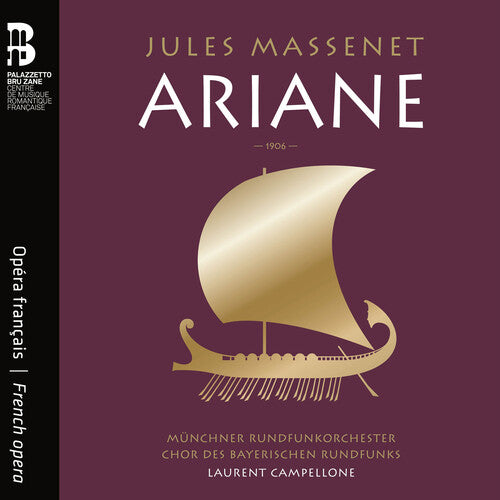
Massenet: Ariane / Campellone, Munich Radio Orchestra
‘It would be difficult to find a simpler and more poignant subject’, Massenet remarked during the composition of Ariane, a vast score in five acts premiered at the Paris Opéra in October 1906. The libretto by Catulle Mendès is part ancient drama, part symbolist poem, and sets Phaedra and Ariadne, two sisters in love with Theseus, in violent conflict with each other. This epic work does not shrink from relating the combat against the Minotaur, from showing a ship tossed by the raging billows, nor even from transporting the audience to the Underworld where Persephone reigns. Despite its flamboyant orchestration, its grandiose scenography and its triumphant premiere, Ariane remains one of the few Massenet operas never recorded until now. The young Egyptian soprano Amina Edris takes the title role with ardour and passion, surrounded by a cast well versed in the specificities of the French style. The Bavarian Radio Chorus provides dedicated support in the epic scenes, under the baton of Laurent Campellone, a great champion of Massenet.
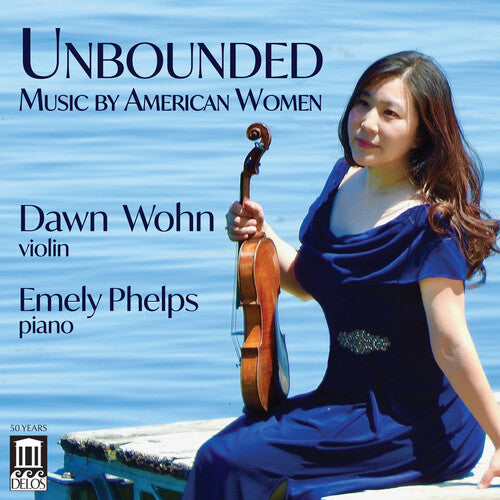
Unbounded - Music by American Women / Wohn, Phelps
As a second generation Korean-American woman, violinist Dawn Wohn notes that it has not always been easy to relate to the world of classical music, which is still largely Euro- and male-centric. Since delving into the diverse world of female composers, I have felt much joy, connection, and ownership to the music that I perform. To be able to champion this repertoire feels unbounded— joyful and limitless. I am particularly excited to share this album, which celebrates the music of American women, as performed by two American women.
There is no denying that historically, female composers have faced challenges. Amy Beach was unable to take composition lessons or have a performing career for most of her life, as it was deemed improper for a married woman. The two Black composers on this album, Dorothy Rudd Moore and Irene Britton Smith, faced further struggles for widespread recognition during their lifetimes, due to the classical world’s long reluctance to admit works by minority composers into the performing canon.
In an ideal world, there would be no need to call attention to the race or gender of these composers. In doing so, my concern is that the composers or their works will be overshadowed or grouped together by those labels. Just as Moore cautioned against typecasting, stating that “there are many Black artists in all disciplines and each is an individual with his or her unique experiences,” it is important to listen to and recognize each composer as an individual.
However, an all-male composer program would not raise questions on how to present it without diminishing the music or pigeon- holing the music or the composers. So, with this album, I choose to amplify and celebrate music by these four composers and all they have created through adversity. I relate deeply to the optimism, humor and beauty in these works, and hope that it inspires the listener.
REVIEW:
The two artists play with passion and elegantly the music of four composers defined not by gender or ethnicity but by the kind of tenacity that helped them achieve the often seemingly unreachable acceptance of the music establishment. Highly recommended!
-- All About the Arts (Rafael de Acha)