The Mozart Sale - Spring 2026
Over 1,300 titles featuring works by Mozart are on sale now at ArkivMusic!
Discover the music of Wolfgang Amadeus Mozart — one of the greatest composers in the western canon — with releases from the Orchestre de l'Opera Royal, Jennifer Lim, SWR Symphonieorchester and more.
Shop The Mozart Sale now before it ends at 9:00am ET, Tuesday, May 12, 2026.
1326 products
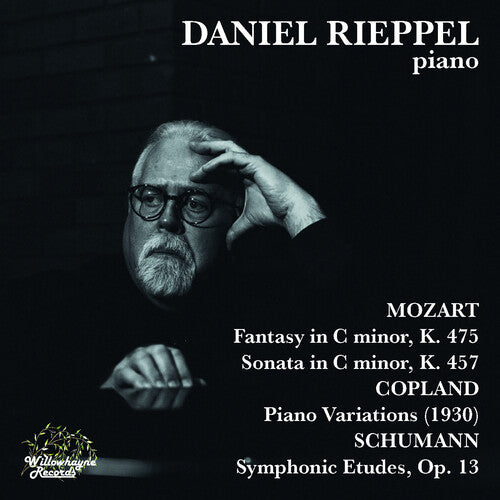
Daniel Rieppel Plays Mozart, Copland & Schumann
Daniel Rieppel, a native of Minnesota of Austro-Hungarian descent, performs Mozart’s Fantasy and Sonata in C minor, the Piano Variations of Aaron Copland and Symphonic Etudes by Robert Schumann. Dr. Rieppel performs widely in North and South America and Europe (most recently in Iceland) and has been Professor of Music at Southwest Minnesota State University for over a quarter century. He has international recognition for his research into Schubert’s incomplete sonatas, finishing several that will be the subject of his next recording.
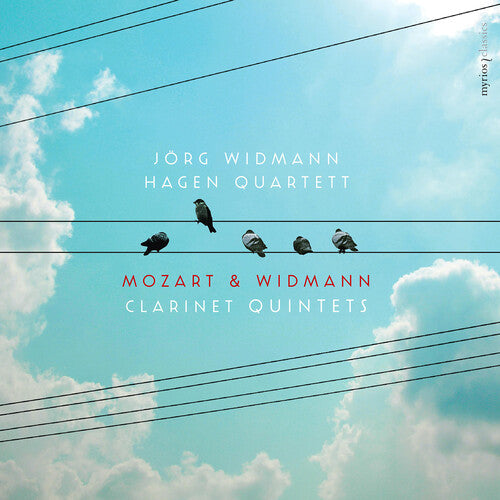
Mozart & Widmann: Clarinet Quintets / Hagen Quartett
Hardly any combination of instruments is more appealing than a string quartet and a clarinet; together they make a magical melange. The Hagen Quartet and Jörg Widmann have recorded Mozart's Clarinet Quintet, a 'work among friends', in this irresistible blend. Jörg Widmann, clarinettist and composer in equal measure, picks up on the omnipresent themes of 'floating, love, and chant' in Mozart's notes and creates a weighty counterpart to Mozart's popular work with his own clarinet quintet, which is available here in a world premiere recording.
Mozart: Overtures / Willens, Kölner Akademie
From the mid-seventeenth century onwards, the overture became an orchestral piece intended to precede a large-scale dramatic work. This recording brings together twelve overtures from Mozart’s operas. They foreshadow the action, sometimes stylistically, sometimes by quoting themes that will appear later, to create a dramatic impression before we even see anything on stage – think of the memorable overtures to Don Giovanni and Die Zauberflöte.
The twelve overtures brought together here cover 21 years of Mozart’s career: from Mithridate, composed when he was just 14, which testifies to the young composer’s familiarity with the galant style then in vogue, to La Clemenza di Tito (1791), the high point of his work in the opera seria genre that was to disappear with him, not forgetting masterpieces such as Die Entführung aus dem Serail, Le nozze di Figaro and Così fan tutte.
The Kölner Akademie, playing on period instruments, and its conductor Michael Alexander Willens demonstrate Mozart’s unrivalled ability to capture the audience’s attention with these brilliant overtures, some of which are among his most famous works, both on stage and in concert.
REVIEW:
The interpretations are very fresh, the playing virtuosic. The historical instruments provide a clear, crisp, and transparent sound, which is reproduced by the sound engineers with good spatiality and balance, with a clean and beautifully present bass.
-- Pizzicato
Mozart: Sonatas for Piano Four Hands, K. 521 & 497
In a unique collaboration, Kirill Gerstein teams up with his mentor and inspiration, the great Hungarian pianist Ferenc Rados, for an album of four-hand duets by Mozart. An icon for generations of musicians but one who has mostly avoided making recordings, this fascinating disc reveals Rados’s distinctively characterful art at its captivating best and finds both partners in a stimulating musical conversation.
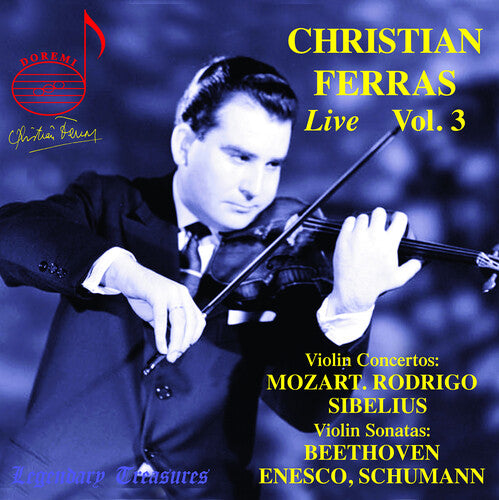
Christian Ferras Live, Vol. 3
When Christian Ferras died at age 49. his friend and colleague Yehudi Menuhin wrote that Ferras was"possessed by music, immensely talented, and of both a generous and intense temperament."
Christian Ferras was one of the greatest violinists of the 20th century. Born in 1933, he was a guest soloist of the Nice Symphony orchestra in1942. In 1948 he won the First Prize at the International Scheveningen (Holland) Violin Competition and in 1949 won the top prize at the International Long-Thibaud Competition. Thereafter, he pursued a successful career as soloist with many of the world’s leading orchestras and in recitals with his long time accompanist, pianist Pierre Barbizet. He recorded for EMI and from 1964 for DG where he recorded the four main repertoire violin concertos, Brahms, Sibelius, Beethoven and Tchaikovsky, with Herbert von Karajan and the Berlin Philharmonic Orchestra.
Fortunately, Christian Ferras left behind a rich recorded legacy, that enable us to continue to enjoy his great artistry.
Brahms, Chopin & Mozart: Spatlese
The pianist Andreas Eggertsberger, who studied in Austria and the USA with Karl Heinz Kämmerling and Oleg Maisenberg, among others, deals with the late works of three composers on his new album “Spätlese” (Late Harvest): Wolfgang Amadeus Mozart, Johannes Brahms and Frédéric Chopin. Whether a work is considered a late work has less to do with the composer’s age and more to do with where the breaking points and further developments are in a composer’s oeuvre. Some of the three selected masters were still young when they entered their late phase: Mozart was in his late twenties when he composed his Fantasia K. 475 and Sonata in C minor K. 457, Chopin was thirty-four when he composed his third and final Sonata in B minor, and Brahms was fifty-nine when he composed his Three Intermezzi Op. 117. Many a future is anticipated. Mozart, for example, builds a bridge to Beethoven with his Fantasy and Sonata in C minor. Chopin, on the other hand, takes a look at late Romanticism and beyond with his increasingly bold harmonies, and Brahms foreshadows musical developments that would only become influential in the 20th century.
Mozart: Concertos for Violin & Orchestra Nos. 3-5
The Salzburg violinist Benjamin Schmid’s preoccupation with the violin works of W.A. Mozart has now lasted for more than four decades, was initially influenced by the then Mozarteum professors Sándor Végh and Nikolaus Harnoncourt, and received numerous awards as his style of interpretation became increasingly personalised. His first CD recording in 1990 with Mozart’s Violin Concertos Nos. 1 and 2 with the Mozarteum Orchestra Salzburg led by Hans Graf was also celebrated by reviewers as a discovery. 32 years and hundreds of performances later, Benjamin Schmid now completes his recordings of the violin concertos with the Sweden based Musica Vitae, of which he has been the musical director since last year, and describes his journey as follows: “As a violinist who grew up in Vienna and Salzburg, Mozart was ultimately always the most important composer for me; I defined this preference as early as elementary school age, and the interest grew with the discovery of the complete works of this probably at least most gifted of all composers. For me, the key to Mozart interpretation lies in the duality of singing and speaking; singing as immediate emotion and phrasing and articulation as form-giving grammar.”
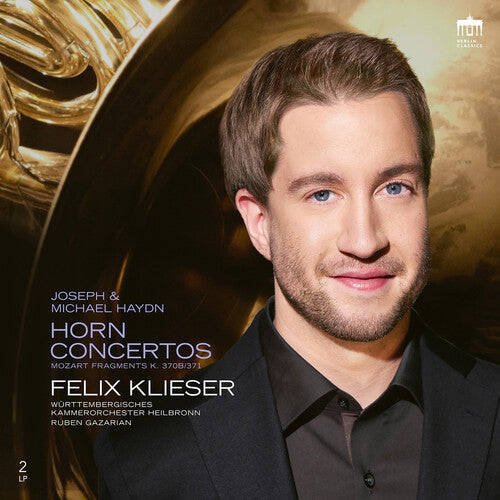
J. & M. Haydn: Horn Concertos / Klieser, Württemberg CO Heilbronn
The popular album"Horn Concertos" by Felix Klieser is being released as a 180g Vinyl Reissue. The talented and unique horn player masters the technically demanding Horn Concertos by Joseph Haydn and his lesser known brother Michael Haydn. He is accomapnied by the Württembergisches Kammerorchester Heilbronn under the baton of Ruben Gazarian. Together, they display these innovative compositions and their masterful orchestration with brilliance and unrivaled brilliance. The reconstructed 'Horn Concerto No. 0' by W. A. Mozart offers glimpses into the maestro's early Viennese years.
Apotheosis, Vol. 3 - Mozart String Quintets / Yarbrough, Alexander String Quartet
Mozart: Requiem / Nelson, Lausanne Chamber Orchestra
This is the first recording of a new edition of the Mozart Requiem prepared by Michael Ostrzyga (Barenreiter). The performance features an international line-up of soloists from France, Germany, Switzerland and the UK. The inclusion of Mozart’s Ave verum corpus and the Exsultate, jubilate represents excellent value.
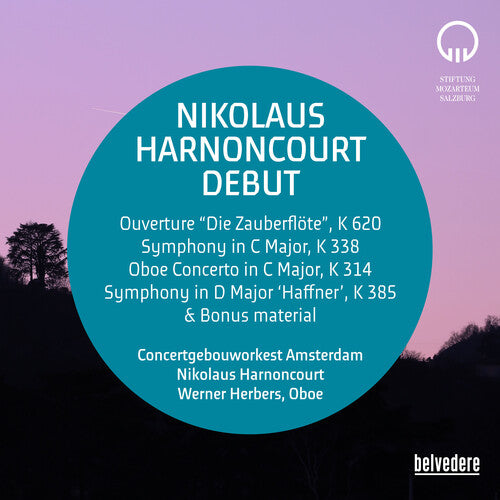
The Nikolaus Harnoncourt Debut - Live in Salzburg, 1980
Nikolaus Harnoncourt is credited with making historical performance practice respectable in Salzburg as well. The memorable debut concert of 1980 was the prelude to a long success story that culminated in the Mozart Week 2006, when Nikolaus Harnoncourt was Artist in Residence and gave his acclaimed ceremonial address on 27 January on the occasion of the 250th birthday of Wolfgang Amadé Mozart. The inaugural concert and rehearsals from 2006 can be heard on this album.This 3-CD edition covers the era of Nikolaus Harnoncourt and his influence on the interpretation of the music of Wolfgang Amadeus Mozart. Between 1980 and 2006, the conductor succeeded in sensitising both musicians and audiences to new playing and listening habits and evolved from a pioneer of historical performance practice to an acclaimed maestro.
When Nikolaus Harnoncourt made his debut at the Mozart Week Salzburg on 27 January 1980, concert audiences were at the feet of conductors like Karl Böhm. In those days, beautiful sound and melody were the central themes of an interpretation. Following instructions in the original scores, Harnoncourt had articulation, tempi, melodies and accompanying parts played with a new style and emphasis. The reactions to the concert in Salzburg at that time were varied. In addition to strong slurs, there were also effusive hymns of praise. 20 years later, Nikolaus Harnoncourt became Artist in Residence at the Mozart Week 2006 and was the keynote speaker on the occasion of the 250th birthday of Wolfgang Amadeus Mozart. In the meantime, his ideas of historical performance practice had spread worldwide and developed into the basis of a new generation of concerts and musicians. In this CD edition, his inaugural concert of 1980 is juxtaposed with rehearsal recordings from 2006. Both recordings provide fascinating insights into the intentions of the famous conductor.
Songs of the Heart / Rawls, De Chiaro
There is nothing more pleasing to the human ear than the soothing and sweet sound of a velvety smooth soprano voice along with the gentle and soulful sound of the classical guitar. This unique recording features a collection of vocal masterpieces by Schubert, Mozart, Giuliani and several 19th century ballads songs that will gladden the heart and calm the soul.
Mozart: Concertos; Andante for Flute
Abel, Hammer, Lidl & Mozart: Exquisite Delight / Topelmann, Darmstadt
Exquisite Delight awaits the listener on Viktor Töpelmann’s new solo album with viol music by Carl Friedrich Abel, Franz Xaver Hammer und Andreas Lidl. Virtuoso Allegros, sentimental Adagios and dancing Minuets come to life in Viktor Töpelmann’s interpretation of sonatas and solo music from this last bloom of viol music in the late 18th century. He plays an original bass viol by Barak Norman (London 1722) and he is accompanied by the cellist Gerhart Darmstadt.
Mozart: Piano Concertos Nos. 7 & 10 / Levin, Ya-Fei Chuang, Academy of Ancient Music
Academy of Ancient Music (AAM) continues an acclaimed project to record Mozart’s complete works for keyboard and orchestra, with this eleventh volume of the series. Renowned pianists Robert Levin and Ya-Fei Chuang join Laurence Cummings and AAM to present Mozart’s Concertos Nos. 7 and 10, the former of which is recorded here in Mozart’s own arrangement for two pianos. Also included is the Concerto Movement for Piano, Violin, and Orchestra, completed by Robert Levin. This hardback CD package is accompanied by comprehensive notes commissioned specially for the album.
Hélène Grimaud at the Hamburg Elbphilharmonie
Find Grimaud's previous DVD release from the Elbphilharmonie on Arkiv as well!
Hélène Grimaud headlines a spectacular evening with the illustrious Camerata Salzburg, directed from the front desk by concertmaster Giovanni Guzzo, at one of the world's most famous contemporary concert halls, the Elbphilharmonie in Hamburg. She selected pieces that are all in minor keys, yet composed during intensely creative periods in both Mozart’s and Robert Schumann’s careers.
Mozart did not write many works in minor tonalities but Grimaud chose to emphasize the minor mode because it “provides a glimpse behind the mask of jollity that surrounds many of his famous works.“ As an encore: a work by a living Ukrainian composer whose music has accompanied Grimaud through much of her career, Valentin Silvestrov.
“Hélène Grimaud and the Salzburg Camerata hypnotise the audience in Hamburg’s Elbphilharmonie on this unforgettable evening, with piano concertos of the early Romantic era of Mozart and Schumann that are unique in sound.“ (operaversum.de)
Mozart: Piano Concertos Nos. 23 & 14 / Lazić, de Vriend, Bergen Philharmonic
A new, great project by Challenge Classics and Jan Willem de Vriend. A new, inspiring collaboration with a first-rate pianist, Dejan Lazić, and one of European best orchestras, the Bergen Philharmonic. This is the first of three CDs devoted to Mozart’s Piano Concertos. The project aims to display Mozart’s different styles and technique. All Cadenzas and Lead-Ins are composed by Dejan Lazic himself.
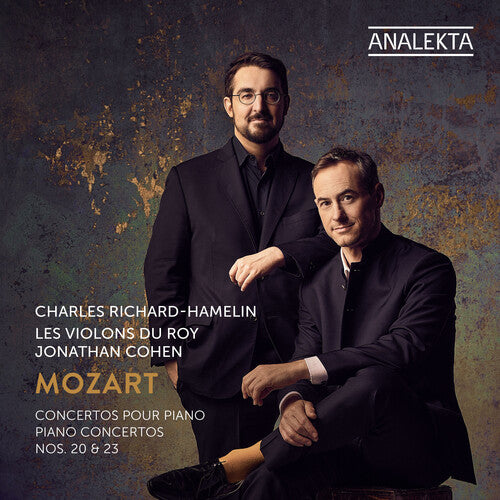
Mozart: Piano Concertos Nos. 20 & 23 / Richard-Hamelin, Cohen, Les Violons du Roy
Following a fruitful first collaboration for Mozart’s Piano Concertos Nos. 22 and 24, Charles Richard-Hamelin, Les Violons du Roy and Jonathan Cohen return this time with Piano Concertos Nos. 20 and 23. The works on this recording were composed by Mozart between 1783 and 1786, when the musician was approaching an important personal and professional turning point. First, the Concerto in A major, K. 488, was completed on March 2, 1786, two months before the premiere of The Marriage of Figaro, a work that marks Mozart's return to opera. While Concerto K. 466 is, with Concerto No. 24, the only one by Mozart in the minor mode, that also coincides with the arrival of his son Karl. The performance of the soloist and of the orchestra complement each other marvellously in these two masterpieces whose contrasts respond to each other magnificently.
Mit Hut / Mister Montelli
Mister Montelli - Flutes, viola, clarinets: three instruments, three musicians, three voices – only one surviving piece for this combination from a composer who wrote under the pseudonym ‘Mr. Montelli´. Three women, who chose this pseudonym as their trio name, drawing inspiration and ideas from the multifaceted instrumentation, their musical versatility, and the narrative threads of music history.
Sophie Katharina Schollum (flutes, vocals, composition), Anna Magdalena Siakala (viola, vocals, arrangement) and Theresa Dinkhauser (clarinets, voice) recount their stories in original compositions, improvisations and arrangements: nights in tents on steep rocky coasts, experimental tones in smokey cellars in the early hours of the morning, colorful markets in searing heat, and elegant windows behind which pseudonymous women in corsets pour their dreams into sounds. They travel to snow-covered mountain peaks, enjoy the freedom of solitude, celebrate exuberant feasts in watery meadows under starry skies. They philosophise about structures and systems in harmonies, words and movement, tell tales of intoxication of time out, lost wishes, new dreams, and wide spaces which, playing and singing, they fill with their innermost voices.
A tightly woven carpet of collected experiences and cherished sounds, blended into fresh realities of connection, vibrancy and perspective.
Sonic Alchemy - Mozart, Part, & Vasks
How do we even measure time? It is sometimes said that time is as old as humankind, but of course it isn’t. It’s just something we created out of a need for... what exactly? Earliest known evidence suggests we were measuring time already 5000 years ago. That way we could create predictability, for example concerning planting and harvesting. From there on we could more easily schedule and organize, which then helped us building a more sustainable life. When we had found a mutual understanding of what we would call time then other systems could be developed, kind of like a third-party software.
Music notation works as a fine example. Today our life is synchronized “to the beat.” Not only is every single footstep kept track of by our telephones or every breath by our smart wrist watches – even our thoughts are as good as monitored as we scroll casually through advertisements on social media. Without us even realizing, the idea of time and synchronicity is apparently encrypted so deep in our consciousness that the thought of viewing the world without it is beyond our comprehension. That doesn’t change the fact that time as we understand it has not always been the same. Our ideas on time have changed throughout the centuries and will most probably continue to do so. The works on Sonic Alchemy are of composers who offer a new perspective on how we can perceive time, each in their own way. - Páll Ragnar Pálsson
Sturm und Drang, Vol. 3 / Page, The Mozartists
Like the first two releases in The Mozartists’ ongoing ‘Sturm und Drang’ series, this record- ing comprises three highly dramatic and turbulent orchestral works interspersed with similarly highly-charged vocal items. The repertoire dates from between 1771 and 1788, and again includes one of Haydn’s great minor-key symphonies – this time arguably the greatest of them all, the ‘Trauer’. For the first time in the series Mozart is also represented, in the form of his extraordinarily visceral and darkly chromatic Adagio and Fugue in C minor, and the disc opens with an outstanding G minor symphony by the Czech com- poser Leopold Kozeluch, whose quality, sweep and lyricism will surprise many listeners. The two vocal works are genuine rarities. Schweitzer’s Alceste was one of the earliest attempts to create German tragic opera in the vernacular, and it launches with an aria of searing intensity. The scene from Paisiello’s Annibale in Torino – the twenty-third of his eighty-seven operas –features an exquisite but brief arioso before leading into a stormy G minor aria. The soloist is the exciting young American soprano Emily Pogorelc, and Ian Page again conducts his award-winning period-instrument ensemble.
Mozart: Mass in C Minor; C.P.E. Bach: Heilig ist Gott / Butt, Dunedin Consort
Following a highly anticipated televised performance at the 2023 BBC Proms, Dunedin Consort and its director John Butt now release Mozart’s ‘Great’ Mass in C minor and Carl Phillip Emmanuel Bach’s Heilig ist Gott on Linn. Devised to celebrate his marriage to Constanze, but left unfinished at the composer’s death, Mozart’s Mass can clearly be traced back to the choral writing of Johann Sebastian Bach and his son, Carl Phillip Emmanuel. This musical genealogy is displayed here in a lavish double-chorus, double-orchestra feast where both works echo each other. No stranger to Mozart – the ensemble’s recording of the Requiem was a Gramophone Award Winner and Grammy-nominated – Dunedin Consort puts its stamp on these most spectacular contributions to church music.
Mozart: Violin Concertos, Vol. 2 / Nosky, Handel & Haydn Society
Mozart’s Violin Concertos need little introduction and are some of his most well-known and best-loved works. Despite being written when the composer was just 19 years old, they feature Mozart at his elegant, witty and beguilingly changeable best. Handel and Haydn Society with their inspirational Concertmaster, Aisslinn Nosky, bring Mozart’s musical magic to life in these live recordings from Boston’s glorious Symphony Hall.
Mozart: Symphonies Nos. 31 & 35; Oboe Concerto / Löffler, Forck, AAM Berlin
The Akademie für Alte Musik Berlin launches a series of Mozart symphonies to appear on Pentatone, starting with the composer’s “Paris” and “Haffner” symphonies. On this first album, the works are coupled with his enchanting Oboe Concerto – performed by the ensemble’s first oboist Xenia Löffler - and the bold overture to Die Entführung aus dem Serail in Mozart’s own woodwind arrangement. Taken together, these pieces demonstrate the rich palette and expressive power of Mozart’s music in the period between 1777 and 1783, during which he finally managed to spread his wings and leave his hometown of Salzburg.
The Akademie für Alte Musik is generally seen as one of the best period-instruments ensembles of today, and has a substantial Pentatone discography, including CANTATA with Bejun Mehta (2018), Handel’s Concerti grossi Op. 3 and 6 (released in 2019 and 2020), Telemann’s Miriways (2020), Handel’s Messiah (2020), Haydn’s L’isola disabitata (2021) and La Passione with Christina Landshamer (2022).
From Partita to Visions - Piano Recital / Voltchok
Since her orchestral debut at the age of 8 with the Haydn Piano Concerto, Anastasia Voltchok has performed throughout Europe and the United States to widespread critical acclaim. She resides in Switzerland, and is music director of the festival "Stars at the Rhine, which she founded in 2016.