The Mozart Sale - Spring 2026
Over 1,300 titles featuring works by Mozart are on sale now at ArkivMusic!
Discover the music of Wolfgang Amadeus Mozart — one of the greatest composers in the western canon — with releases from the Orchestre de l'Opera Royal, Jennifer Lim, SWR Symphonieorchester and more.
Shop The Mozart Sale now before it ends at 9:00am ET, Tuesday, May 12, 2026.
1326 products
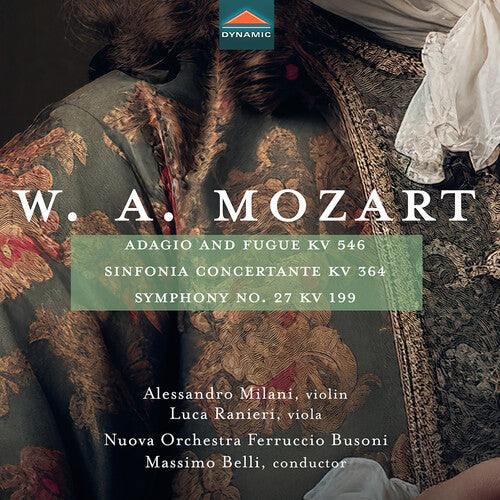
Mozart: Adagio & Fugue, KV 546; Sinfonia Concertante, KV 364
Mozart: Sinfonia Concertante, KV 364; Horn Concerto No. 2; 2 Rondos
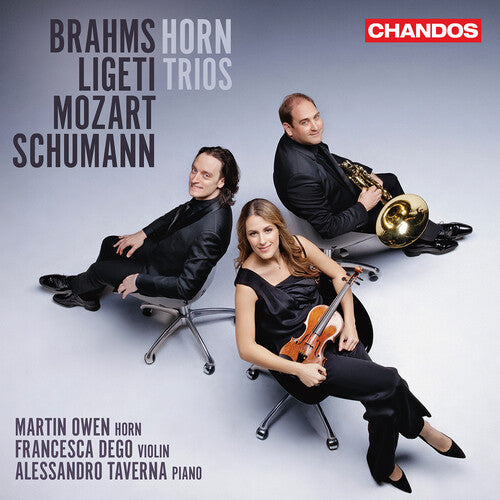
Brahms, Ligeti, Mozart, Schumann: Horn Trios
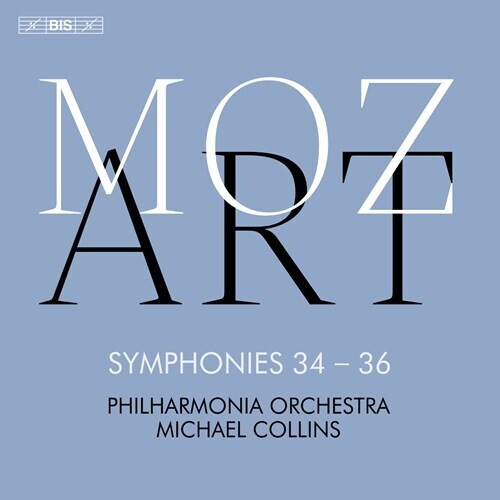
Mozart: Symphonies Nos. 34-36 / Collins, Philharmonia Orchestra
Although Mozart composed them in his early twenties, the three symphonies presented here can in no way be regarded as early works. Written around the time of his departure from Salzburg for Vienna, these symphonies show that Mozart could deliver attractive, varied, orchestrally colourful and characterful music to suit a variety of public tastes. They also show a young and ambitious composer seeking to forge an impregnable reputation in Europe’s musical capital city. These symphonies truly opened a new chapter in Mozart’s symphonic output, as he demonstrated his absolute mastery of orchestral writing. In addition to the three symphonies as we know them, this recording also includes a minuet that may have been intended to form part of Symphony No. 34.
These three symphonies are performed here by the Philharmonia Orchestra, an ensemble that has performed them with the greatest conductors throughout its almost 80-year history. Here the conductor is the eminent Mozartian Michael Collins, whose recordings, notably that devoted to the Austrian composer’s clarinet concerto and quintet, have earned him the highest praise.
REVIEWS:
As a poetic exponent of Mozart’s music for clarinet, Michael Collins, unsurprisingly, shapes all three slow movements with a natural feeling for Mozartian line. His flowing tempos sound spot on.
— GramophoneThere is always room in the Mozart discography for new recordings of this stature.
— BBC Music Magazine
Mozart: Piano Concertos No. 15 & 21
Hailed for his “Apollonian virtuosity and sensitive tone” (Online Merker, Germany), multi-award-winning pianist-composer Zhen Chen has performed as a soloist and chamber music artist at prominent music venues in the USA, Europe, and China. These venues include Stern Auditorium and Weill Recital Hall of Carnegie Hall, David Geffen Hall of Lincoln Center, Preston Bradley Hall of the Chicago Cultural Center, and China National Centre for Performing Arts.
Since its founding in 1952, the Chamber Orchestra Mannheim has been particularly committed to the rediscovery of and care for the Mannheim School, thus acting as a direct descendant of the famous Mannheim Hofkapelle during the times of Prince Elector Carl Theodor (1724–1799). Thanks to Carl Theodor's modern and enlightened thinking, Mannheim and the Palatine Electorate developed into one of the most innovative and forward-thinking regions in Germany and Europe in the realms of science and art during his reign. It was particularly in the area of music that he succeeded in setting new standards by attracting the best composers and instrumentalists of their time – among them Johann Stamitz and his sons, Anton and Carl, Franz Xaver Richter, Ignaz Holzbauer, or Christian Cannabich – to the Mannheim court, who were to pave the way for a new orchestra culture with their work.
Viennese-born Thomas Rösner is in high demand as a conductor for symphonic repertoire as well as opera since he made his debut with the Orchestre de la Suisse Romande in Geneva.
Mozart: Requiem / Jansons, BRSO
It is difficult to say anything about Mozart's famous Requiem – the masterpiece having been described and analysed all too often. It is known to almost everyone in the world, either in its entirety or in large parts, or is familiar to them at the very least from its title. Almost everybody has come into contact with the Requiem’s music, whether from the concert hall or merely from watching Miloš Forman's 1984 film drama "Amadeus". What breathes new life into this work and this music time and again are congenial performances with outstanding casts. A true highlight in the performance history of the Requiem was Mariss Jansons' interpretation of it in May 2017, which absolutely delighted the Munich concert audience and was also highly acclaimed by the trade press. Under Jansons' direction, the Bavarian Radio Chorus and the Symphonieorchester des Bayerischen Rundfunks gave of their best, with an excellent quartet of vocal soloists rounding off the outstanding ensemble. This made the performances of Mozart's Requiem in the popular completed version by his student Süßmayr a truly memorable experience.
The live recording from the Herkulessaal of the Munich Residenz was made on May 11 and 12, 2017 and has now been released on a single CD by BR-KLASSIK.
Classical Accordion Revealed - Masterpieces by Mozart, Clementi, & Haydn
This album features major works by Mozart, Clementi, and Haydn, arranged for and played by virtuoso accordionist William Popp.
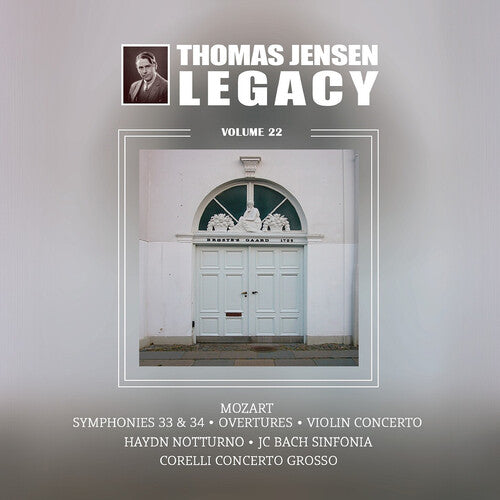
Thomas Jensen Legacy, Vol. 22
Previously unreleased broadcast recordings capture Thomas Jensen in Baroque and Classical-era repertoire new to his discography. Jensen makes a stylish Mozartian in these rhythmically sprung and cultivated concert performances, given by the DRSO in Copenhagen and on tour. They are joined by the Danish violinist Tutter Givskov for one of Mozart’s earliest masterpieces, the Violin Concerto No. 3 K216.
Mozart & Poulenc: Double & Triple Concertos / The Kodama-Nagano Family
Mari Kodama, Momo Kodama, Karin Kei Nagano, and Kent Nagano present Double and Triple Concertos by Mozart and Poulenc, together with the Orchestre de la Suisse Romande. This unique project highlights the musicality and congeniality of this extraordinary family of performers. On this album, the husband (Kent Nagano) conducts his wife (Mari Kodama), daughter (Karin Kei Nagano), and sister-in-law (Momo Kodama). The collective performance on this album resonates with Mozart’s own practice of playing his music together with his father and sister. Despite belonging to different ages in music history, Mozart and Poulenc share a combination of playfulness and seriousness, and the latter composer manages to integrate touches of Mozartian neoclassicism into his genuinely French and twentieth-century double concerto. Sharing the stage on this recording is a dream come true for the Kodama-Nagano family.
Mari Kodama, Momo Kodama, and Kent Nagano have appeared on Pentatone frequently, including recordings of Tchaikovsky Ballet Duos (2016) and Martinu Double Concertos (2018) featuring the two sisters. Karin Kei Nagano makes her Pentatone debut.
Mozart: Piano Sonatas, Vol. 2
His 18 piano sonatas can be described as the secret stars of Wolfgang Amadeus Mozart's extensive oeuvre. They were often important areas of experimentation, which in Mozart's short biography describe a development from early rococo to classical maturity, in which he explored new compositional techniques and then later transferred these to the larger genres. This is exemplified by the three works now recorded by Amy Lin in her familiar sensitive manner: the Sonata K. 333 emphasizes the lyrical and pastoral. In K. 284, the 18-year-old composer establishes the alternation between 'quasi-tutti' based on the orchestral writing and soloistic passages in dialogue-like interplay. The famous C minor Sonata K. 457, which Beethoven admired so much, shows a completely different, darkly dramatic tone and thus Mozart's fascinating stylistic diversity in this genre as well.
Mozart, You Drive Me Crazy! / Schultz, Manacorda, Potsdam Chamber Academy
‘Mozart, You Drive Me Crazy!’ This is the title that the South African soprano Golda Schultz has decided to give to her new album, devoted to the female heroines of Don Giovanni, Così fan tutte and Le nozze di Figaro, roles that have marked her career from Berlin to The Metropolitan Opera: ‘Why does Mozart drive me crazy? First of all, because his music, which sounds so easy when you listen to it, is extremely difficult to perform… And when I immerse myself in the world of Da Ponte and Mozart, I realise that there’s a deep complexity to their female characters: they endure the toughest trials, but they also display great strength. In fact, these operas explore humanity from the feminine perspective: every single one of these women is constantly evolving. They show how human beings transcend trauma and how grief and pain can be overcome.’ The programme is conducted by another eminent Mozartian, Antonello Manacorda, with the Kammerakademie Potsdam.
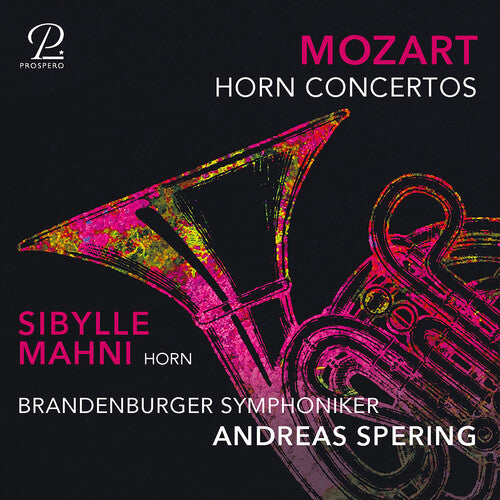
Mozart: Horn Concertos Nos. 1-4
All horn concertos by Wolfgang Amadeus Mozart, performed historically informed by Sibylle Mahni and the Brandenburger Symphoniker.
Mozart: The First Vienna Concertos - nos. 11, 12 & 13 / Ben Kim, Concertgebouw Chamber Orchestra
Third volume of Mozart Concertos with Ben Kim and Concertgebouw Chamber Orchestra. Concertos No. 11, 12, and 13 were Mozart’s first Concertos written upon moving to Vienna from Salzburg. In a letter addressed to his father Leopold, he described them as “a happy medium between too easy and too difficult; very brilliant, pleasing to the ear, and natural, without being vapid.” Once more Kim gives us a thoroughly personal and deep insight into the famous triptych. Kim stylishly extols the intimate as well as the majestic moments.
Mozart: Horn Concertos on Natural Horn / Angerer, Brunner, Salzburger Hofmusik
The horn concertos by Wolfgang Amadeus Mozart have always been part of the standard repertoire of every horn player. Tyrolean hornist Hansjörg Angerer presents the four horn concertos with the Ensemble Salzburger Hofmusik under the direction of Wolfgang Brunner on an original instrument by an unknown Bohemian master from around 1800. The natural horn originated from the hunting horn by combining the windings, whereby the natural tone series could be played in all common keys by placing different tuning bows on it and, in addition, the intermediate tones of the natural tone series could be obtained, and the sharp or flat tones could be regulated by inserting the right hand into the falls by “plugging” and “damping”. The complex playing techniques as well as the characteristic sound differ fundamentally from a modern valve instrument and allow a deep dive into the great variety of colors in the music of this era.
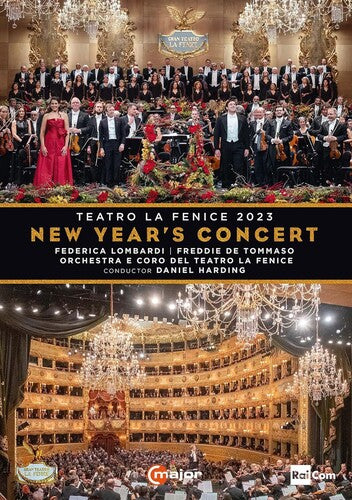
Teatro la Fenice New Year‘s Concert 2023 / Harding, Teatro la Fenice Orchestra & Chorus
The Teatro La Fenice opened in 1792 and is one of the most renowned and most beautiful theaters in the world. Since nearly 20 years it has celebrated the traditional New Year‘s concert every year, which became immediately vast popularity in Italy and abroad making it one of the best-known and desired New Year's events. The orchestra of Teatro La Fenice, conducted by Daniel Harding, presents a colourful array of arias and orchestral pieces. As soloists soprano Federica Lombardi and tenor Freddie De Tommaso sing famous arias as Casta Diva and Nessun dorma among others from the operas Carmen, La traviata, La bohème, Turandot, William Tell and La clemenza di Tito. On top Jacopo Tissi, now principal of the Dutch National Ballet, is dancing a scene from Tchaikovsky´s ballet The Sleeping Beauty in this thrilling and exhilarating concert.
Mozart: Piano Concertos Nos. 6-8 / Cummings, Levin, Academy of Ancient Music
Academy of Ancient Music (AAM) releases the penultimate volume of an acclaimed project to record Mozart’s complete works for keyboard and orchestra.
This volume includes Mozart’s Concerto No. 7 for Three Pianos and Orchestra, performed here uniquely on three different types of keyboard instruments: by Robert Levin (tangent piano), Ya-Fei Chuang (fortepiano) and Laurence Cummings (harpsichord).
It follows the release of the same concerto in Mozart’s own arrangement for two keyboards (Vol. 11) and is joined on this album by two other Piano Concertos composed in Salzburg in the early months of 1776.
The hardback CD package is accompanied by comprehensive notes commissioned specially for the album.
Mozart: Piano Concertos, Vol. 9 / Bavouzet, Takács-Nagy, Manchester Camerata
The three concertos featured on this album were composed together in 1782 / 83 – shortly after Mozart had left his patron and position in Salzburg to establish himself as a freelance composer and performer in Vienna. The concertos were all performed by the composer in a series of subscription concerts that he gave in the city. All share the same form – opening movement in sonata form, slow movement in ternary form, and a bright rondo finale. Despite these similarities, though, each piece has its own distinct character and identity; such was the extent of Mozart’s genius for invention. Although formally scored for strings with wind, horns, trumpets, and timpani, Mozart also offered them to his publisher to be performed ‘a quatro’ – for strings only. These would be the last concertos he wrote in which this would be possible, and it is certainly likely that it reflected a need to earn greater income as opposed to being a purely artistic decision. As in the rest of this series, Jean-Efflam Bavouzet is joined by the Manchester Camerata and Gábor Takács-Nagy, who open the album with a dazzling performance of the Overture to Die Entführung aus dem Serail, which dates from the same period.
Mozart: Piano Concertos Nos. 18 & 21 / Fournel, Griffiths, Mozarteum Orchestra Salzburg
Bravo Mozart! exclaimed Emperor Joseph II as he stood up and tipped his hat at the end of the first performance of Piano Concerto No. 18 KV 456, played by Mozart himself on 30 September 1784. Less than a year later, the composer pens his iconic 21st concerto, which is performed here by the Mozarteumorchester Salzburg conducted by Howard Griffiths, and pianist Jonathan Fournel. Winner of the prestigious Queen Elisabeth Competition in 2021, the French pianist has already made a Brahms recording for Alpha (ALPHA851). At the age of 30, he is developing a highly promising career, impressing audiences at every one of his concerts.
Debussy, Mozart, Schachtner & Zimmermann: Dialogues across Time / Neeb Piano Duo
With Bernd Alois Zimmermann's Monologues, the piano duo Vincent and Sophie Neeb place a rarely performed masterpiece at the centre of their debut recording. The composer describes his work, first performed in 1965, as "dialogues across the ages of dreamers, lovers, sufferers and praying people", which offers a journey through music history with sophisticated collages.
Following this inspiration, the programme is completed with a contrasting selection of compositions quoted there: Works by Bach and Debussy, creatively arranged for two pianos and percussion by Johannes Xaver Schachtner, and a Mozart arrangement by the piano duo Neeb enter into a unique dialogue via this inner context?
Together with percussionists Christian Benning and Patrick Stapleton, the piano duo Neeb explores surreal dream worlds - playfully light and enigmatically profound at the same time.
Mozart: Symphonies, Vol. 3 - Nos. 9, 14, 20 & 24 / Klumpp, Folkwang Kammerorchester Essen
As a rising star, Wolfgang was just 13 years old when he wrote the first of the brilliant symphonies that the Folkwang Chamber Orchestra Essen is presenting on its new GENUIN CD under the direction of Johannes Klumpp. The outstanding ensemble enters the third round of its Mozart recordings with four early symphonies from 1769 to 1773 – the period in which the young composer wrote most of his symphonic oeuvre. With a slender sound and historically informed means of expression, the top-class ensemble interprets the works of a teenager that still leave you amazed even after 250 years!
Goethe-Lieder / Antonelou, Gandilyan
He is probably the most famous German "prince of poets" - but music also accompanied Goethe throughout his life: His parents played music and he himself learnt to play several instruments. Naturally, he was interested in having his poems set to music - although he was strict in his requirements. Carl Friedrich Zelter set the poetry to music very "carefully"; in his songs, the rhythm of speech takes centre stage. This obviously corresponded to Goethe's ideas, as he wrote to him in a letter: "I immediately feel that your compositions are identical to my songs, the music only takes the balloon up with it, like an inflowing gas. With other composers, I first have to realise how they took the song, what they made of it." Fortunately, not all of them adhered to Goethe's ideas and thought more independently in terms of composition. This creates a fascinating field of tension between the very different approaches of contemporaries.
Mozart: Requiem, Piano Version for 4 Hands / Strassburg, Appell
The supreme work of the most extraordinary man: this is what the composer Johann Adam Hiller called Wolfgang Amadeus Mozart's "Requiem", which is now being released by GENUIN in an unusual arrangement. The piano duo Kerstin Straßburg and Jurgen Appell have recorded for the first time the astonishing four-hand piano version of the Mozart Requiem by Carl Czerny, a pupil of Beethoven and teacher of Liszt. The choral parts, vocal solos, and all the orchestral parts have been incorporated into the piano part, allowing the polyphonic beauty of Mozart's work to emerge in a kind of concentration with unimaginable clarity. The world premiere recording of this version on CD also contains the moving Amen fugue to the "Lacrymosa", which the New York pianist Robert D. Levin reconstructed from fourteen bars of Mozart's handwriting discovered several years ago.
Reflections - Works for Solo Piano / Kluser
I have always been fascinated by musical settings of literature. This is the background to this project. Transcriptions of literary or musical models are also a favourite topic of discussion with my concert audiences.
C.P.E. Bach, Haydn & Mozart: The Art of Transformation / Miller
Music of the classical and pre-classical periods is the language of ideas and gestures. Musical gesture becomes intelligible by recurrence and recognition. Turning an idea on one’s tongue, trying it out in slightly different wording, with a new intonation and in a changed voice creates the musical discourse — the story told, or the argument held. This is the definition of variation, and variation lies at the heart of musical expression.
The sonata form is sometimes considered nowadays as the greatest achievement of musical thought of that period, but composers of the 18th century were happy to turn to more humble forms. Of these, Variations and Fantasias are probably those with the most distinguished histories. In Variations, an idea is confined to the simplest frame of a musical period, unable to break its own formal boundaries, but free to mutate in all possible ways inside them; in the Fantasia, a musical thought is born, develops and flourishes with no seeming restraint, but for the free will of the composer to structure this flow, and yet, they have in common this constant tension between the urge to repeat an idea and the necessity of altering, transforming it. This hidden conflict feeds creativity and the imagination: it generates, ultimately, the classical style.
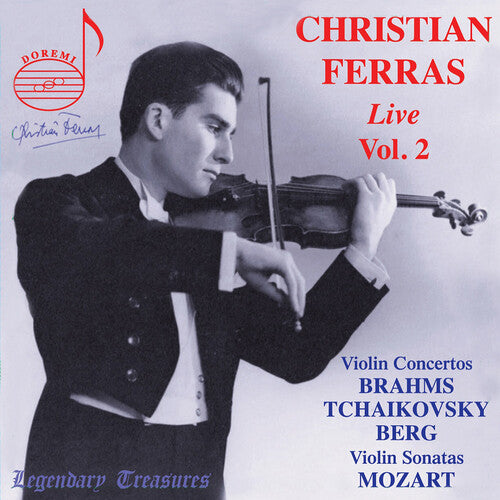
Christian Ferras Live, Vol. 2
When Christian Ferras died at age 49. his friend and colleague Yehudi Menuhin wrote that Ferras was"possessed by music, immensely talented, and of both a generous and intense temperament."
Christian Ferras was one of the greatest violinists of the 20th century. Born in 1933, he was a guest soloist of the Nice Symphony orchestra in1942. In 1948 he won the First Prize at the International Scheveningen (Holland) Violin Competition and in 1949 won the top prize at the International Long-Thibaud Competition. Thereafter, he pursued a successful career as soloist with many of the world’s leading orchestras and in recitals with his long time accompanist, pianist Pierre Barbizet. He recorded for EMI and from 1964 for DG where he recorded the four main repertoire violin concertos, Brahms, Sibelius, Beethoven and Tchaikovsky, with Herbert von Karajan and the Berlin Philharmonic Orchestra.
Fortunately, Christian Ferras left behind a rich recorded legacy, that enable us to continue to enjoy his great artistry.