Philharmonia Hungarica

Orchestra

1956–2001. German orchestra.

Hungarian orchestra founded by refugees after 1956 uprising; closely associated with conductor Antal Doráti, notably for the complete Haydn symphonies cycle on Decca.
    Bella Musica

    VIOLIN CONCERTOS

    CD · 1 disc

    $20.99
    Composer
    ACKER LEITERMEYER
    Artist
    Kiss, Philharmonia Hungarica, Caridis, Deutsche Staatsphilharmonie Rheinland-Pfalz, Eschenbach
    Released
    Apr 06, 2018
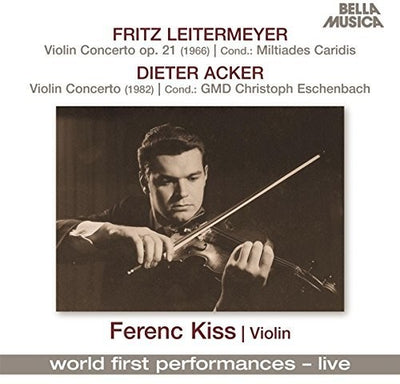
    Ferenc Kiss was born in Budapest in 1943. He studied first with his father, a concertmaster of the Hungarian Radio Orchestra, then at the Ferenc Liszt Academy of Music in Budapest before finishing his studies with Sandor Vegh in Dusseldorf. His many appearances in concert venues all over the world as well as the variety of albums he has produced further attest to his successful career as an acclaimed soloist. On this release, he presents violin concertos by Fritz Leitermeyer and Dieter Acker. Fritz Leitermeyer’s Concerto for Violin and 21 Wind Instruments had its first performance in January 1964 with the concertmaster of the Vienna Philharmonic, Walter Weller, performing the solo part. The scoring is unusual, but the result is dazzling. Dieter Acker composed over 100 works during his life, including two solo concertos for violin, the first of which is included here. H. Leuchtmann wrote of Acker: “Never committed to a specific avant-garde style, Acker developed a very unique style of composition, which is conceived for clarity and comprehensibility, without getting into popular idioms… intensity touches and transmits itself directly.”
    View full page
  • VIOLIN CONCERTOS

    VIOLIN CONCERTOS

    Bella Musica Apr 2018
    1 disc
    CD
    $20.99
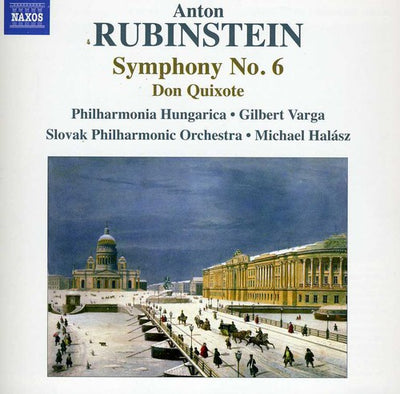
  • Rubinstein: Symphony No. 6; Don Quixote / Varga, Halasz
    Naxos

    Rubinstein: Symphony No. 6; Don Quixote / Varga, Halasz

    CD · 1 disc

    $19.99
    Composer
    RUBINSTEIN, A.
    Artist
    Michael Halász, Slovak Po, Gilbert Varga, Philharmonia Hungarica
    Released
    Dec 10, 2013

    Few Russian musicians in the second half of the nineteenth century could match the eminence of Anton Rubinstein. As a piano virtuoso he was internationally admired, as a progressive educator he had profound influence, and as a composer he was both significant and successful. The Symphony No 6 in A minor, Op 111 was his last symphony, composed in 1866, and fully revealing those qualities of grace and energy, as well as clever scoring, that make his works so appealing. Don Quixote, described by Tchaikovsky as “very interesting, and perfect in places”, is an inventive and charming musical portrait of Cervantes’ fictional knight. This release completes the reissue of all six Symphonies previously available on Marco Polo.

    View full page
  • Rubinstein: Symphony No. 6; Don Quixote / Varga, Halasz

    Rubinstein: Symphony No. 6; Don Quixote / Varga, Halasz

    Naxos Dec 2013
    1 disc
    CD
    $19.99
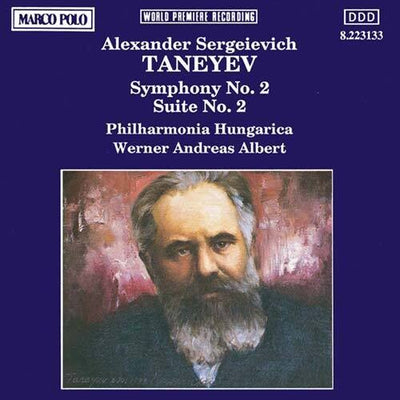
  • Taneyev: Symphony No 2, Etc / Albert, Philharmonia Hungarica

    Taneyev: Symphony No 2, Etc / Albert, Philharmonia Hungarica

    Marco Polo May 1991
    1 disc
    CD
    $19.99
  • The Mercury Masters - Antal Doráti and the Philharmonia Hungarica
    ELOQUENCE AUSTRALIA

    The Mercury Masters - Antal Doráti and the Philharmonia Hungarica

    CD · 8 discs

    $59.70
    Artist
    DORATI, ANTAL
    Released
    Feb 14, 2025

    Driving intensity, rhythmic flair, and demonstration-quality sound are brought to the fore in a new anthology of Antal Doráti's early recordings with the Philharmonia Hungarica on Mercury and Philips. Founded in 1956, the Philharmonia Hungarica emerged from turbulent post-war times as a crack ensemble of émigré Hungarian musicians who had fled Communism for the West. While they gave concerts in Europe and the US, it was through these seven albums on Mercury and Philips that they became famous, and synonymous with the name of the conductor Antal Doráti. Together, Doráti and the Philharmonia Hungarica would go on to make a celebrated cycle of Haydn symphonies for Decca in the early 1970s. But these early recordings already demonstrate what a potent artistic combination they were, as forerunners both to that monument of gramophone history, and to the modern-day Budapest Festival Orchestra. As reviewers at the time remarked, the strings play with a particular unanimity and attack which sounds uniquely 'Hungarian'.

    A booklet essay by the music historian David Patmore tells the story of the Philharmonia Hungarica and their debut on record. All six Mercury albums were recorded at sessions in June 1958, held in the Vienna Konzerthaus: a spacious but analytical acoustic, well suited to the label's trademark high-impact sound. The repertoire played to the strengths of both label and musicians: mostly Hungarian music from the last half century, vividly colored and coursing with rhythmic energy.

    There is an early taste of the ensemble's feeling for Haydn, in the 'Surprise' and 'Drum Roll' Symphonies. Doráti's established reputation as a masterful conductor of ballet brings a sweeping sense of line to a collection of Viennese waltzes. The ace in the pack of the Mercury/Philharmonia Hungarica albums was Respighi's suites of Ancient Airs and Dances, which soon became a demonstration disc for audiophiles worldwide. Never previously collected together, this Mercury legacy is complemented by the two albums which the Philharmonia Hungarica and Doráti recorded for Philips. The ensemble's first-ever recording, made in October 1957, appeared on the Fontana imprint, coupling Bartók's Divertimento with Leo Weiner's Hungarian Dances. From 1974, the second Philips album returns to Bartók, with gripping interpretations of the Music for Strings, Percussion and Celesta and Dance Suite.

    View full page
  • The Mercury Masters - Antal Doráti and the Philharmonia Hungarica

    The Mercury Masters - Antal Doráti and the Philharmonia Hungarica

    ELOQUENCE AUSTRALIA Feb 2025
    8 discs
    CD
    $59.70