
Weekend Spotlight: Romantic Suimmer

Weekend Spotlight: Romantic Suimmer

This Weekend Spotlight features THREE beautiful new releases each evoking the warmth and romance of summer through expressive piano, lyrical viola, and breathtaking instrumental performances. Then, continue the journey with a curated collection of 200+ Romantic-era and instrumental recordings in our Outlet, featuring timeless masterpieces and unforgettable performances at 50% OFF.

Discover outstanding new performances from Chamber Ensemble of London, Wurttembergische Philharmonie Reutlingen, Luca Sanzo, and Maurizio Paciariello; bringing fresh interpretations of works by Elgar, Woyrsch, and Rubinstein. Then explore an expanded selection of romantic instrumental recordings—all at half price for a limited time!

Shop these great deals before they end on Monday, July 27th at 9:00am ET.
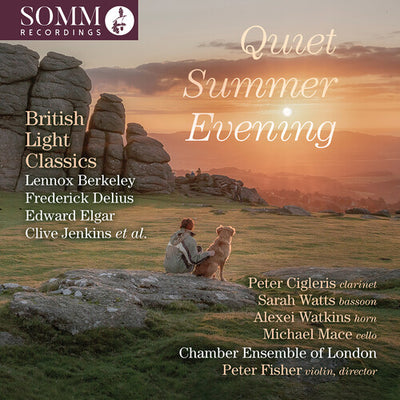
    Quiet Summer Evening
    SOMM Recordings

    Quiet Summer Evening

    CD · 1 disc

    $20.99
    Composer
    Lennox Berkeley, Nigel Brooks, Geoffrey Bush, Frederick Delius, Edward Elgar, Terence Higgins, Gordo
    Artist
    Peter Cigleris, Sarah Watts, Alexei Watkins, Michael Mace, Chamber Ensemble of London
    Released
    Jul 17, 2026
    SOMM Recordings is pleased to release their second recording with the Chamber Ensemble of London, a virtuoso group of hand-picked string players directed by violinist Peter Fisher, whom The Times counts amongst "a handful of the world's finest musicians." Following the ensemble's 2022 SOMM release, Eclogue - British Chamber Music, which Gramophone praised for it's "unfailingly sympathetic music-making throughout," this new release is Quiet Summer Evening - British Concertante Music, drawing on the rich tradition of light classical music. The programme opens with Rhapsody for Clarinet & Strings by Geoffrey Bush. He was initially taught by John Ireland and, on his advice, studied composition and classics at Balliol College, Oxford, emerging with degrees in both subjects in 1946. Bush's hauntingly beautiful rhapsody features the sought-after clarinettist Peter Cigleris, whose growing discography includes three previous releases with SOMM. He is also the soloist in 5 Pieces for Clarinet & String Orchestra by Clive Jenkins, CEOL's associate composer. Jenkins was born in Plymouth, and he shows his roots in many of his compositions-including these pieces, each of which has a name connected with Plymouth. Another work by Jenkins included here is Fantasy for Horn & Strings, featuring Alexei Watkins, a graduate of the Royal Academy of Music, where he was awarded the Dennis Brain Prize. Watkins is also featured in Orion (Serenade for Horn & Strings) by prize-winning conductor-composer Andy Meyers, as well as Lullaby, an expressive and programmatic piece by composer and BBC Radio 3 producer Luke Whitlock. Bassoonist Sarah Watts is a multi-instrumentalist who has become well known worldwide as a prolific composer of colourful and inspiring music. Here, she performs her composition Everywhere Is Somewhere Else. Additionally, she is the soloist for the contemplative Sunday Afternoon by notable arranger, conductor, and composer Nigel Brooks, excerpted from the broadcast series Stars on Sunday, and also A Little Waltz by the prolific mid-twentieth-century composer, arranger, and master orchestrator Gordon Jacob. Other pieces by composers from former generations include Canto popolare, extracted from Edward Elgar's concert overture In the South; Lennox Berkeley's single-movement Andantino, which he adapted from his Festival Anthem; and one of Frederick Delius's earliest surviving compositions, Romance. The soloist for Berkeley's Andantino and Delius's Romance is cellist Michael Mace, who pursues a wide and varied musical career as performer and teacher. Peter Fisher is the violinist for Elgar's Canto popolare and the appealing Vers le Sud (Towards the South) by Terence Higgins who, notwithstanding his early promise, decided against a full-time professional musical career and-like composers Wilfrid Josephs and Alan Rawsthorne-qualified as a dentist. Fisher also plays the CD's title piece, Quiet Summer Evening, a contemplative piece by composer-pianist Don Shearman, who enjoyed a long and distinguished career in light music.
    View full page
  • Quiet Summer Evening

    Quiet Summer Evening

    SOMM Recordings Jul 2026
    1 disc
    CD
    $20.99
  • Rubinstein & Winkler: Sonatas for Viola and Piano
    Brilliant Classics

    Rubinstein & Winkler: Sonatas for Viola and Piano

    CD · 1 disc

    $14.99
    Composer
    Anton Rubinstein, Alexander Winkler
    Artist
    Luca Sanzo, Maurizio Paciariello
    Released
    Jul 17, 2026
    Anton Rubinstein and Alexander Adolfovich Winkler represent two generations of Russian Romanticism, and their sonatas for viola and piano reveal contrasting yet complementary approaches to chamber music and to the expressive potential of the viola. Anton Rubinstein (1829-1894), one of the founders of the Russian conservatory system and a towering figure as pianist, conductor, and composer, approached chamber music with a distinctly European Romantic sensibility. His Sonata for Viola and Piano is notable for it's lyrical breadth and dramatic contrasts. Rubinstein treats the viola not merely as an accompanying voice but as a fully expressive partner to the piano, exploiting it's warm, dark timbre and vocal qualities. The sonata's sweeping melodies, rich harmonic language, and expansive formal design reflect Rubinstein's admiration for composers such as Mendelssohn, Schumann, and Brahms. At the same time, moments of intense lyricism and emotional weight highlight his belief in music as a direct vehicle for personal expression. Alexander Adolfovich Winkler (1865-1935), a student of Sergei Taneyev and a representative of a later Russian school, brings a more refined and introspective character to his Sonata for Viola and Piano. Winkler's writing is marked by structural clarity, contrapuntal skill, and subtle harmonic color. His sonata emphasizes the viola's expressive nuance, often favoring intimate dialogue between the instruments rather than virtuosic display. The work blends Romantic warmth with Classical balance, revealing Winkler's interest in formal discipline and textural transparency. Luca Sanzò is a pupil of Bruno Giuranna. His concert career has taken him to the world's major concert halls, both as a soloist and in collaboration with leading musicians. He has collaborated as principal viola soloist with various orchestras, including those of the Teatro dell'Opera di Roma, the Teatro Lirico di Cagliari, and the early music orchestra Concerto Italiano. He teaches viola at the Conservatorio di S. Cecilia in Rome. He has recorded for Nuova Era, Bottega Discantica, BMG Ricordi, Opus 111, Tactus, Edi Pan, Stradivarius, Naïve, Chandos, and Naxos. Italian pianist Maurizio Paciariello, schooled by Aldo Ciccolini and Paul Badura-Skoda and prizewinner of the ARD Competition, is a champion of rare repertoire and a specialist on period instruments.
    View full page
  • Rubinstein & Winkler: Sonatas for Viola and Piano

    Rubinstein & Winkler: Sonatas for Viola and Piano

    Brilliant Classics Jul 2026
    1 disc
    CD
    $14.99
  • Godowsky: Piano Music Vol 12 / Konstantin Scherbakov
    Marco Polo

    Godowsky: Piano Music Vol 12 / Konstantin Scherbakov

    CD · 1 disc

    $9.99 $19.99 Save 50%
    Composer
    GODOWSKY, LEOPOLD
    Artist
    Konstantin Scherbakov
    Released
    Sep 09, 2014
    The 12th volume of Konstantin Scherbakov’s ongoing Leopold Godowsky cycle primarily features shorter original works and transcriptions of German art songs. Compared to his elaborate Chopin Etudes paraphrases, Godowsky’s reworkings of songs by Schumann, Brahms, Schubert, and Böhm are relatively restrained and technically manageable, although the Strauss/Godowsky Ständchen’s intricate filigree requires, shall we say, a little practice to master it well.

    As always, Scherbakov is in complete command, technically and musically. His sense of textural foreground and background particularly shines in the Six Waltz-Poems for left hand alone, while his firm articulation and rhythmic drive in the Op. 11 No. 1 Concert Study prove more interesting than the actual music. These qualities also describe Scherbakov’s bravura performance of the Weber Perpetuum Mobile, where Godowsky piles more technical hurdles on top of that composer’s already challenging First Sonata Rondo finale. In Godowsky’s hands, Weber’s Invitation to the Dance gets swallowed up into a huge contrapuntal paraphrase, packed with chromatic reharmonizations and garish inner voices. Somehow Scherbakov’s straightforward elegance and stylish poise prevent the music from sounding overloaded. Marco Polo’s engineering has measurably improved over the course of this cycle, and piano mavens will appreciate Keith Anderson’s informative booklet notes.

    -- Jed Distler, ClassicsToday.com
    View full page
  • Godowsky: Piano Music Vol 12 / Konstantin Scherbakov
    Sale

    Godowsky: Piano Music Vol 12 / Konstantin Scherbakov

    Marco Polo Sep 2014
    1 disc
    CD
    $19.99 $9.99Save 50%
  • American Classics -  A Sampler
    Naxos

    American Classics - A Sampler

    CD · 1 disc

    $9.99 $19.99 Save 50%
    Composer
    VARIOUS
    Artist
    Boris, Adele, Berman, Eteri, Anthony, Marin, Andjaparidze, Alsop
    Released
    Jun 01, 2001
    American music is culturally diverse and exciting, mirroring all the best America has to offer. The last two centuries have seen an extraordinary flowering of musical life in the United States. In recognition of the many gifted American men and women of music, Naxos is pleased to present the American Classic Series.

    When complete, this series will consist of over 200 titles, exploring the full spectrum of American concert music. All the familiar names are there: Copland, Ives, Grofé, Barber, and Sousa but so are many others such as: Bennett, Dédé, Foote, McKay, and Siegmeister all of whom have contributed to the rich musical tapestry that is American.

    All of us at Naxos invite you to journey with us as we set out to discover America.


    Click Here for the complete Naxos American Classic Series

    View full page
  • American Classics -  A Sampler
    Sale

    American Classics - A Sampler

    Naxos Jun 2001
    1 disc
    CD
    $19.99 $9.99Save 50%
    Naxos

    Elliott Carter – 100th Anniversary Release / Aitken, NMCA

    CD + DVD · 2 discs

    $9.99 $19.99 Save 50%
    Composer
    CARTER, ELLIOTT
    Artist
    AITKEN NEW MUSIC CONCERTS ENSEMBLE
    Released
    Nov 18, 2008
    More spare, yielding chamber music is found on the new Naxos disc. The 2005 Mosaic is Carter at his most inviting, in a program showing how even his minor works have a strong reason for existence. That disc comes with a bonus DVD documentary on the composer, not the best ever made, but at least providing face time with a composer who is as congenial as he is great.
    View full page
  • Elliott Carter – 100th Anniversary Release / Aitken, NMCA
    Sale

    Elliott Carter – 100th Anniversary Release / Aitken, NMCA

    Naxos Nov 2008
    2 discs
    CD + DVD
    $19.99 $9.99Save 50%
    Naxos

    Fairouz: Native Informant / Pine, Imani Winds

    CD · 1 disc

    $9.99 $19.99 Save 50%
    Composer
    FAIROUZ, MOHAMMED
    Artist
    Steven Spo, Christopher Thompson, Rachel Barton Pine, Mellissa Hughes, David Kravitz, David Krakauer
    Released
    Mar 26, 2013


    FAIROUZ Tahwidah. 4 Chorale Fantasy. 2 Native Informant: Sonata for Solo Violin 3. Posh. 4 For Victims. 2,5 Jebel Lebnan 6 • 1 Mellissa Hughes (sop); 1 David Krakauer (cl); 2 Borromeo Str Qrt; 3 Rachel Barton Pine (vn); 4 Christopher Thompson (baritenor); 4 Steven Spooner (pn); 5 David Kravitz (bar); 6 Imani Winds • NAXOS 8.559744 (78:22 Text and Translation)


    This exceptionally varied and complex album features five first recordings of works by young American-Arabic composer Mohammed Fairouz (b. 1985), whose Piano Sonata impressed me when I reviewed the DVD by pianist Steven Spooner. I bristled, as I always do, to read the dreaded and hackneyed words on the CD insert that Fairouz “is one of the most frequently performed, commissioned, and recorded composers of his generation ” (italics mine). Well, what the heck generation could he possibly be part of but his own? Did you expect him to be the most frequently performed and recorded composers of his father’s generation?


    But promotional semantics aside, Fairouz is a remarkably talented and highly original composer—no more so than some others nowadays who, living in America, combine the music of their ethnic cultures with European and/or American classical structures, but certainly one of the most interesting and communicative of such composers, which I suppose is what moves him to the top of his profession. Certainly, any CD that displays the combined talents of such well-known and/or outstanding talents as the Borromeo Quartet, Rachel Barton Pine, Steven Spooner, and the Imani Winds—all of whom, incidentally, are on my short list of favorite performers whose recordings I try to seek out for review—is testimony enough to the high quality of Fairouz’s music.


    We begin this journey with Tahwidah, the setting of a poem by Mahmoud Darwish for soprano and clarinet. The text—which, surprisingly, is actually included in the booklet (along with all the other sung texts on this disc)—concerns the lullaby of a mother to her son, only to discover at the end that she is singing this at his funeral. The music is thus lyrical but strangely dissonant, beginning with exotic and difficult runs and trills on the clarinet, into which the soprano voice intermixes in a surprising and interesting fashion. Thank heavens, Mellissa Hughes has a pure, radiant voice, devoid of unsteadiness or wobble, and her singing is extraordinarily well phrased and emotionally moving. As in the case of so many modern-day sopranos, however, her English diction is exceedingly poor. Without the text to follow, you won’t be able to make out a single word. A small but important criticism, not meant in a mean-spirited way, but Mellissa, please work on your diction!


    This is followed by Chorale Fantasy, which the composer describes as a song that combines the Arabic mode maqam “with gentle counterpoint,” leading from a songlike melody to a whirling dance. It was commissioned by the Borromeo Quartet, which plays it here. Perhaps not so curiously, the Solo Violin Sonata—commissioned by and played by Rachel Barton Pine—almost sounds, in its first movement, like an extension of the quartet, so lyrical and songlike is its melodic structure.


    I was stunned here by the extraordinary range of colors that Pine extracts from her instrument, ranging from bright, sharply pointed passages reminiscent of Heifetz to warm, rich playing in the mid and lower ranges that sounded like Oistrakh. The second movement, “Rounds,” is a vigorous Arabic round dance (as per the composer’s notes), played with tremendous passion and energy, following which is a lament for the civilian victims of the Egyptian Revolution. This movement, which begins and ends very high up in the violin’s range, moves down to mid-range chordal passages which later incorporate microtonal slides (probably Arabic influenced) and, as in so much of Fairouz’s music, an exceptional singing quality that I feel is related to the song tradition of such composers as Ned Rorem. The composer describes the fourth movement as “just plain fun,” based on “the retro spirit of New York’s cabaret music,” supposedly emulating Gershwin and Porter, but I heard this music as oddly related to Eastern European folk-dance music and Eastern European-American forms, yet with an Arabic accent. At one point, Pine is required to play pizzicato counterpoint to her own top line on the violin. The final movement, which combines the feeling of both a lullaby and a lament, is titled “Lullaby of the ex-Soldat.” Fairouz says that he also conceived this movement as a tribute to Pine’s baby daughter Sylvia Michelle as a “celebration of birth and renewal.” With the possible exception of the first movement, I’d say that Fairouz has accomplished a Herculean task here, writing a sonata for unaccompanied violin that doesn’t owe much to the solo violin sonatas and partitas of Bach. I can only hope that it becomes a staple of the violin repertoire. This is, by the way, also the longest work on this disc.


    Following this is Posh, a short song cycle (three pieces totaling 8:22) based on poems by Wayne Koestenbaum. These poems are not intended to “tell a story,” but merely to give an indication of a life: one song (poem) of a baby and his inability to cope with life without help, of “deadbeat dads” and dreams of the future; the second of a hapless adolescent searching for Ned Rorem songs; and third of an adult whose father “brings to mind the self-slaughtered Walter Benjamin.” This cycle is sung by “baritenor” Christopher Thompson, who has an unusual velvety timbre and, yes, qualities of both baritone and tenor. His diction is also superb, in sharp contrast to Hughes, and in the second song he makes one smile with his unusual way of bringing humor out when he sings. As usual, Spooner’s playing is also excellent, albeit subdued in this particular role as accompanist. Fairouz’s scoring for the piano here is primarily that of gently rocking notes and/or soft chime chords.


    For Victims is described as “a dramatic scene for baritone and string quartet” based on two poems of David Shapiro, but although there are two movements only the second includes the sung poems. Here the Borromeo Quartet plays with a sense of sadness combined with drama, the music in the first movement vacillating between Eastern and Western modes, occasionally juxtaposing themes rather than engaging in actual development. As it turns out Shapiro’s poems, like many similar works, are about the Holocaust, the first a memorial to its victims and the second a personal memory of his grandfather emerging “in a synagogue” with his “sweet tenor coloratura” while he wonders if the dead are “permitted to sing.” Here the quartet’s role is more subdued and subservient to the vocal line. Baritone David Kravitz, unfortunately, has a woofy and tremulous voice, and his diction is only occasionally clear, which is very unfortunate as the music is exceptionally interesting and well written.


    The last work, Jebel Lebnan, translates as Mount Lebanon, and is a lament for the lives lost at the massacres at the Sabra and Shatilla Refugee Camps caused by Phalange Party chief Bashir Gemayel. An interlude for flute is followed by a funeral march entitled “Ariel’s Song,” then a “reawakening” musically described by a celebratory dance to the resilience of the Lebanese people. The final movement, “Mar Charbel’s Dabkeh,” is yet another Arabic round dance. Since I am a huge fan of the Imani Winds, perhaps I am prejudiced in favor of nearly all their performances, which I always find to be rhythmically incisive, colorful in their manipulation of timbre and accent, and emotionally involved in every respect, thus I was immediately rapt by their extraordinary treatment of the opening passage, described by the composer as “a wild scream” for clarinet and piccolo. The music here, punctuated by interjections from the horn and clarinet, is continually underscored by a staccato ostinato figure played by the bassoon. The solo flute interlude is lyrical, yet with telling pauses in the musical line possibly indicating thought or meditation on the part of the flutist. It has a particularly forlorn sound that, to me, indicates such emotions. Interestingly, the solo bassoon line which opens “Ariel’s Song” sounds like a continuation of the flute lament. The other instruments of the quintet enter and exit, either singly or in pairs, but the bassoon generally dominates this lament. (I would also like to point out, for the benefit of those who don’t know, that the Imani Winds are four-fifths women musicians, which I believe is somewhat unique in the classical world.) The dance movement, surprisingly, also starts out slowly, only gradually increasing the tempo within the first dozen or so bars. It’s a cheerful little piece but not terribly uptempo—more of a relaxed dance than a frenetic one. After a short pause in the middle, Fairouz switches gears to his “little song,” which is more meditative and reflective than celebratory. This, in turn, leads into the “Dabkeh” or round dance, which begins with meditative passages played by the flute but then moves into a very sprightly dance rhythm. An Arabic round dance this may indeed be, but to my ears it has a great similarity to a horah!


    Despite my small reservations on the diction of two of the singers and the singing voice of a third, I consider this one of the most interesting, varied, and engaging classical albums of the year so far, and one I shall undoubtedly be putting on my Want List.


    FANFARE: Lynn René Bayley
    View full page
  • Fairouz: Native Informant / Pine, Imani Winds
    Sale

    Fairouz: Native Informant / Pine, Imani Winds

    Naxos Mar 2013
    1 disc
    CD
    $19.99 $9.99Save 50%
  • Takako Nishizaki Plays Suzuki Evergreens, Vol. 4
    Sale

    Takako Nishizaki Plays Suzuki Evergreens, Vol. 4

    Naxos May 2010
    1 disc
    CD
    $19.99 $9.99Save 50%
  • Babadjanian: Complete Works for Piano Solo
    Sale

    Babadjanian: Complete Works for Piano Solo

    Grand Piano Feb 2014
    1 disc
    CD
    $19.99 $9.99Save 50%
  • Jill Crossland - Live at Restoration House
    Sale

    Jill Crossland - Live at Restoration House

    Divine Art Jun 2006
    1 disc
    CD
    $19.99 $9.99Save 50%
    Azica Records

    Escualdo: Masters of Tango Violin / Fernando & Leonardo Suarez Paz

    CD · 1 disc

    $9.49 $18.99 Save 50%
    Composer
    PIAZZOLLA VILLANUEVA COBIAN
    Artist
    F.S. Paz, L.S. Paz, Zarate, Piazzolla, Greco, Falasca, Tormo
    Released
    Jul 29, 2016

    Fernando Suarez Paz joined the Quinteto Nuevo Tango at the request of Astor Piazzolla in 1978, and he toured with the ensemble until their disbandment in 1988. In his decade of performing alongside Piazzolla, Paz recorded 18 albums all over the world. The first track on this album, Escualo by Piazzolla, is dedicated to Fernando Suarez Paz. The New York Times gave Paz a 7-star rating after his performances alongside vibraphonist Gary Burton at various jazz festivals across Europe, Japan, and the United States. Fernando’s son, Leonardo Suarez Paz is featured on this release. Leonardo grew up alongside Astor Piazzolla and was mentored by both Piazzolla and his father. He directs tango projects all over the globe, and his productions have appeared in such venues as the Lincoln Center in New York, and the Teatro Colon Opera House in Buenos Aires.

    View full page
  • Escualdo: Masters of Tango Violin / Fernando & Leonardo Suarez Paz
    Sale

    Escualdo: Masters of Tango Violin / Fernando & Leonardo Suarez Paz

    Azica Records Jul 2016
    1 disc
    CD
    $18.99 $9.49Save 50%
    Naxos

    Bowles: Complete Piano Works, Vol. 2 / Invencia Piano Duo

    CD · 1 disc

    $9.99 $19.99 Save 50%
    Composer
    BOWLES, PAUL
    Artist
    Kasparov, Lutsyshyn
    Released
    Jun 10, 2016
    This CD contains Bowles' most performed score, Night Waltz, the first of the Three Pieces for Two Pianos, which opens the CD. Rhythmically, this is a complex work of polyrhythms. It's the sort of thing he may have heard in the Tangiers streets and was written in the same year as the novel. The middle Nocturne was composed fourteen years earlier but the finale with its jazzy exoticism dates from 1976.

    Bowles had been an inveterate traveller even before 1947 as the Four Piano Pieces demonstrate. The first, the rather neo-classical Impasse de Tombouchtou also refers to a dingy street in Thiviers in Southern France. Café sin Nombre and Carretera de Estapona refers to Southern Spain. Estapona, now a glamorous seaside town can almost be seen from Tangiers, and is, I recall, a pleasant boat trip away. Surrounded by a dry and desert landscape it was much more basic and village-like in Bowles’ day. The opening, with its massive chords, reminds us that it is surrounded by those startlingly blue, imposing mountains. In between these pieces is an elegant and tonally ambiguous Theseus and Maldoror inspired by Greek legend.

    Bowles’ travel diaries continue with the Three Latin American Pieces. It’s Mexico which is celebrated in movement 1 with its lively rhythms (El Bejuco) and Costa Rica in 3 (Sayula). Despite their brevity these pieces attract immediately. Movement 2 (Orosi) is delicate and is succeeded by a dance-like episode reminding me of Mompou’s Canço i dansa which was also composed during the mid-1940s.

    In the detailed and helpful booklet notes Andrey Kasparov describes the Sonatina Fragmentaria as having “crystalline sonorities”. The tiny middle movement is somewhat Spanish in flavor while the outer ones are more thoughtful and enigmatic. All in all, this amounts to a series of attractive mosaics.

    South of Morocco, in the Atlas Mountains, is Tamanar. Views from this village inspired this austere, striking and unusually dissonant mini-tone poem. Bowles went there with Aaron Copland who had just completed his equally austere Piano Variations. Bowles discovers some intriguing sonorities. It's a great shame that he did not pursue this style very often.

    The Four Miniatures are practically polytonal and pointillistic but are in Bowles’ usual light-hearted manner with Reverie having a touch of Spain about it again. The Sonatina is neo-classical, almost Poulencian. There is no sense of classical development; in other words the Germanic influence Bowles so disliked is disregarded in favour of the interconnection of fragments. The middle movement is a lyrical Andante Cantabile with a long line which reaches a strong climax.

    The last seven tracks are devoted to arrangements for piano duet of miscellaneous Bowles pieces. Kasparov selected four songs, apparently quite popular, originally from 1946, all in a light jazz style and called them Blue Mountain Ballades. Gold and Fizdale took three miscellaneous pieces. The first, Colloquy Sentimental is the only surviving material from a lost Bowles ballet score. The next, Caminata again betrays a Spanish influence and is part of a ballet set in Mexico. The last, Turkey Trot is a sort of wild Scott Joplin essay and brings the CD to a zany conclusion.

    This disc proved more attractive and interesting than I had expected. Although Bowles may be a better writer than a composer he certainly deserves his place in the Naxos American Classics series.

    – MusicWeb International (Gary Higginson)

    The performances are beautifully idiomatic, capturing the brittle character, whimsicality and subtle power of the music.

    – Gapplegate Classical/Modern Music Review
    View full page
  • Bowles: Complete Piano Works, Vol. 2 / Invencia Piano Duo
    Sale

    Bowles: Complete Piano Works, Vol. 2 / Invencia Piano Duo

    Naxos Jun 2016
    1 disc
    CD
    $19.99 $9.99Save 50%
    Grand Piano

    Glass - Glassworlds Vol 1 / Horvath

    CD · 1 disc

    $9.99 $19.99 Save 50%
    Composer
    GLASS, PHILIP
    Artist
    Nicolas Horvath
    Released
    Mar 10, 2015
    Philip Glass has made an immense and stylistically wide-ranging contribution to piano repertoire. The Orphée Suite, a transcription of excerpts from the first opera in Glass’ Cocteau Trilogy, is one of his most distinctive piano pieces, blending virtuosity and melodic richness. In contrast, the hypnotic How Now is structurally influenced by Indian ragas and gamelan music, whilst Dreaming Awake contains one of the most powerful climaxes in all Glass’ works. Performed by Nicolas Horvath, a Scriabin Competition first prizewinner, this is the first release in the complete Glass solo piano edition which will include many premières.

    -----

    Reviews:

    This disc is important because it demonstrates that Glass’s music works quite nicely alongside other composers of the past and alongside quite traditional approaches to performance generally.

    – American Record Guide

    Somehow, the objectivity of the sound of a piano suits the music of Philip Glass perfectly. Certainly that’s how it seems in Nicolas Horvath’s expert performances.

    – International Piano
    View full page
  • Glass - Glassworlds Vol 1 / Horvath
    Sale

    Glass - Glassworlds Vol 1 / Horvath

    Grand Piano Mar 2015
    1 disc
    CD
    $19.99 $9.99Save 50%
    Naxos

    Easy-Listening Piano Classics: Beethoven

    CD · 2 discs

    $14.99 $29.99 Save 50%
    Composer
    BEETHOVEN, LUDWIG VAN
    Artist
    Jandó, Szokolay
    Released
    Feb 23, 2010
    Ludwig van Beethoven (1770-1827) was born in the city of Bonn, but moved in 1792 to Vienna, where he spent the rest of his relatively short (he died aged 56) yet highly productive life. While best known, perhaps, for popular large-scale orchestral works such as his concertos and symphonies, he also composed string quartets and other chamber music, songs and, of course, a large amount of music for his 'own' instrument, the piano. In each genre, Beethoven was to some extent a path breaker, transforming the models he inherited from his predecessors or the approach taken by his contemporaries into something radically unique and bequeathing to posterity music that pushed the bounds of politely regulated Classicism towards the highly personal drama of Romanticism. When the young Beethoven arrived in Vienna, he quickly established himself as a virtuoso pianist-contemporaries had quite simply never heard anything like him before-and though deafness ended his career as a pianist, he continued to compose, ultimately publishing 32 piano sonatas (some early sonatas remained unpublished), several sets of piano variations, bagatelles and dances between 1793 and 1822, a representative selection of which are featured on Easy-Listening Piano Classics. Many of Beethoven's piano sonatas have names that describe their character, though not all of these originated with the composer. For instance, 'Pathétique' is an abbreviation of Beethoven's full title 'Grande sonate pathétique' (that is, 'passionate' rather than 'pitiful'); the 'Moonlight' was so named by a music critic who thought of moonlight shimmering upon Lake Lucerne when he heard the first movement (Beethoven simply gave it the sub-title Quasi una fantasia, 'Like a fantasy'); the 'Kurfürstensonaten' are pre-Viennese sonatas dedicated to the Elector (Kurfürst) of Cologne; 'The Tempest' comes from Anton Schindler's claim that the sonata was inspired by Shakespeare's play; 'Pastoral' was provided by one of Beethoven's publishers. In addition, Beethoven composed many shorter piano pieces, which he referred to as 'Kleinigkeiten (Small Things) or Bagatelles', though these should not be underestimated: while some are popular in style and suitable for amateur performers (such as the famous, and probably misnamed 'Für Elise') others are highly characterful miniatures that one writer has described as 'lapidary, fragmentary, yes, even ironic'-true harbingers of Romanticism. Many of his dances (Minuets, Ländler, Ecossaises and so forth) also combine charm and sophistication. Whether composing large-scale serious works for the enjoyment of connoisseurs or smaller popular pieces primarily designed to entertain, Beethoven was very interested in the piano, maintaining close contact with leading piano manufacturers in Vienna and London. The demands he made on both performers and the instrument itself contributed to the development of the modern concert grand. One observer wrote that when Beethoven played the piano 'the music of the man's soul passed over his countenance. He seems to feel the bold, the commanding, and the impetuous, more than what is soothing or gentle. The muscles of the face swell, and it's veins start out; the wild eye rolls doubly wild, the mouth quivers, and Beethoven looks like a wizard, overpowered by the demons whom he himself has called up.' Yet, whether seeking the sublime or appealing to the lighter sentiments, Beethoven's music always communicates 'From the heart... to the heart'.
    View full page
  • Easy-Listening Piano Classics: Beethoven
    Sale

    Easy-Listening Piano Classics: Beethoven

    Naxos Feb 2010
    2 discs
    CD
    $29.99 $14.99Save 50%
    Toccata

    Couperin: Music For Two Harpsichords, Vol. 1

    CD · 1 disc

    $10.49 $20.99 Save 50%
    Composer
    COUPERIN, FRANCOIS
    Artist
    Schwarz, Buckley
    Released
    Jul 08, 2014

    Franois Couperin’s Concerts Royaux (1722) and Les Nations (1726) use open scoring, indicating that they could be performed by whatever instruments were at hand. + He later confessed that he himself preferred to perform them on two harpsichords. + This suggestion had to wait for these two CDs to be taken up in a recording (the second CD is being readied for future release). + Also presented are a number of his Pices de clavecin, also in rarely heard realizations for two harpsichords.

    View full page
  • Couperin: Music For Two Harpsichords, Vol. 1
    Sale

    Couperin: Music For Two Harpsichords, Vol. 1

    Toccata Jul 2014
    1 disc
    CD
    $20.99 $10.49Save 50%
  • Oppel: Piano Music, Vol. 1
    Sale

    Oppel: Piano Music, Vol. 1

    Toccata Aug 2011
    1 disc
    CD
    $20.99 $10.49Save 50%
    Oehms Classics

    Freu dich sehr, o meine Seele

    CD · 1 disc

    $7.49 $14.99 Save 50%
    Composer
    CORELLI BACH, J.S. KREBS KA
    Artist
    Christian Brembeck
    Released
    Apr 24, 2012
    The present CD is dedicated to one of the most beautiful new organs in Austria, the instrument from the Lenter workshop built in early 2010 in the parish church "Unserer lieben Frau Geburt" in Maishofen with 25 sounding stops. Thanks to it's soft, sustainable and very natural sound, this organ is ideally suited for the adequate presentation of organ music of all significant epochs; combined with the warm acoustics, this organ is inspiring to an exceptional degree for players and listeners alike.
    View full page
  • Freu dich sehr, o meine Seele
    Sale

    Freu dich sehr, o meine Seele

    Oehms Classics Apr 2012
    1 disc
    CD
    $14.99 $7.49Save 50%
    IDIS

    Claudio Arrau Plays Beethoven, Schumann & Liszt (Live)

    CD · 1 disc

    $8.49 $16.99 Save 50%
    Composer
    BEETHOVEN SCHUMANN LIZT
    Artist
    Claudio Arruau
    Released
    May 12, 2015
    The great piano virtuoso Claudio Arrau (1903-91) joined a transcendental technique with the gift of intellectual analysis, making him a superb Liszt performer as well as one of the most admired 20th c. performers of classical and romantic repertoire. "His" Beethoven had no comparison for clarity of musical logic. Arrau's Schumann perfectly joined strong passionate intensity with a sense of rigor regarding musical structure. All these elements are present on this CD that gathers two live Swiss recitals, captured by Italian Swiss Radio, from 1959 and 1963 during the apex of his career.
    View full page
  • Claudio Arrau Plays Beethoven, Schumann & Liszt (Live)
    Sale

    Claudio Arrau Plays Beethoven, Schumann & Liszt (Live)

    IDIS May 2015
    1 disc
    CD
    $16.99 $8.49Save 50%
    Toccata

    Süda: Complete Organ Music / Maidre

    CD · 1 disc

    $10.49 $20.99 Save 50%
    Composer
    SUDA, PEETER
    Artist
    Ines Maidre
    Released
    Oct 30, 2012
    The music of Estonian organist-composer Süda (1883–1920) combines contrapuntal mastery with virtuosic command of the Romantic organ. Süda’s brief life and his perfectionism meant that his output – exclusively for the organ – remained small, but it is beautifully crafted and highly expressive.
    View full page
  • Süda: Complete Organ Music / Maidre
    Sale

    Süda: Complete Organ Music / Maidre

    Toccata Oct 2012
    1 disc
    CD
    $20.99 $10.49Save 50%
  • Voríšek: Complete Works for Piano, Vol. 1
    Sale

    Voríšek: Complete Works for Piano, Vol. 1

    Grand Piano Sep 2014
    1 disc
    CD
    $19.99 $9.99Save 50%
    New Focus Recordings

    Scott Miller: Tipping Point

    CD · 1 disc

    $20.99
    Composer
    MILLER, SCOTT
    Artist
    Scott Miller
    Released
    May 12, 2015
    Scott Miller's Tipping Point chronicles a long collaborative relationship between him and Minneapolis based new music ensemble, Zeitgeist. The members of Zeitgeist have regularly acted as a musical proving ground for Miller's explorations, particularly those combining acoustic instruments with interactive-electronic effects. From the opening measures of the title track, Miller's approach to integrating acoustic instruments into an electroacoustic environment is apparent. The tipping point Miller refers to may well be the edge at which we can no longer identify where the acoustic instruments end and the electronics begin. Funhouse dives immediately into this ambiguity, as snarling bass clarinet multiphonics mimic and later become absorbed into the carefully crafted noise world of the electronics. Pure Pleasure's percussive rhythms are manipulated timbrally as well as sent swirling around the stereo field in passages of spatialized virtuosity. Featuring soprano Carrie Henneman Shaw, Forth and Back's haunting minimalism suggests the slow evolution of a mind at work as it gains understanding over a puzzling paradigm: none other than time itself and our ability to transcend it through union with another. Mr. Miller is currently the President of the Society for Electro-Acoustic Music in the United States (SEAMUS).
    View full page
  • Scott Miller: Tipping Point

    Scott Miller: Tipping Point

    New Focus Recordings May 2015
    1 disc
    CD
    $20.99