Search results: Search results

130 results

Products

    Naxos

    Glazunov: Les Ruses D'amour / Andreescu, Romanian State Orchestra

    CD · 1 disc

    $19.99
    Composer
    GLAZUNOV, ALEXANDER
    Artist
    Andreescu
    Released
    Jan 26, 2010
    The Naxos series of Glazunov orchestral works reaches volume 19 with this disc. Composed by Glazunov in 1898 Ruses is also known as The Trial of Damis. This disc is a reissue originally released on Marco Polo 8.220485.

    Glazunov was a precocious student of Rimsky-Korsakov during the artistic ferment of the revival of Russian musical nationalism. Composed when he was a sixteen year old Glazunov gained sudden acclaim with the success of his Symphony No. 1. The audience would have been shocked when Glazunov took his bow at the premiere wearing his school uniform. International recognition was established with his symphonies, the tone poem Stenka Razin, the ballets The Seasons and Raymonda, and the ever popular Violin Concerto. He was still composing music in the manner of Rimsky, Anton Rubinstein and Tchaikovsky. His works soon became marginalised having failed to compete with the growing enthusiasm for progressive composers such as Schoenberg, Berg, Stravinsky and his own pupils Prokofiev and Shostakovich. After a century or so we should now be able to reassess Glazunov’s music for its innate qualities rather than be reference to the dynamic of the era in which it was written.

    The première of the ballet Les Ruses d'amour was given in the small hall of the Hermitage Theatre, St. Petersburg in 1900. Marius Petipa provided the choreography. The leading dancers were the Italian prima ballerina assoluta Pierina Legnani and her Russian partner Pavel Gerdt. Briefly the story of Les Ruses d'amour centres on the role Isabella who is the daughter of a titled Lady. Isabella pretends to be a maid in a bid to test that the love of her fiancé the Marquis Damis is true and not driven simply by her wealth and status.

    The popularity of Les Ruses d'amour has certainly not endured to the same degree as The Seasons and the longer Raymonda ballets that have remained on the fringes of the repertoire. Reasonably appealing, the music of Ruses d'amour is not as recognisable as Glazunov’s other ballets. The composer has not managed to achieve the same melodically memorable quality.

    Showing a convincing enthusiasm the Romanian State Orchestra under Horia Andreescu provide creditable playing. I enjoyed the gentle and swaying lyricism of the Introduction and Scene I and in the Recitatif mimique the woodwind-infused music has a distinct bucolic feel. Melody after melody is released in the Sarabanda but the themes are typically unremarkable. One notices the childlike lyricism of the Danse des marionettes and Scenes IV and V are gentle and romantic. The movement Ballabile des paysans et des paysannes is infectious and energetic. I was struck by the soft and tender love music of Grand pas des fiancés which is sugar-coated with a gorgeous line for solo violin and cello. The engaging La Fricassée brings the score to an exciting and energetic conclusion.

    Michael Cookson, MusicWeb International
    View full page
  • Glazunov: Symphonies; Orchestral Works / Otaka, BBC National Orchestra of Wales
    BIS

    Glazunov: Symphonies; Orchestral Works / Otaka, BBC National Orchestra of Wales

    CD · 5 discs

    $49.99
    Composer
    GLAZUNOV, ALEXANDER
    Artist
    Otaka
    Released
    Apr 01, 2007

    The recordings included in this set were released separately between 2002 and 2004, and met with very positive reviews at the time. Thus the BBC Music Magazine considered Tadaaki Otaka's recording of Symphony No. 3 'a necessary instalment if you're out to collect a first-rate Glazunov cycle', elected his interpretation of the Fifth 'Benchmark recording', and called the Eighth 'the most handsome ... currently in the catalogue'. Other reviewers agreed, describing the contribution made by the BBC National Orchestra of Wales as 'lively, clear-textured, and radiantly coloured' while also underlining the importance of 'the broad, deep sound picture' and the 'euphonious recording' for the success of this cycle.

    View full page
  • Borodin: Symphony No 2, Etc / Rozhdestvensky, Stockholm Po
    Sold Out

    Borodin: Symphony No 2, Etc / Rozhdestvensky, Stockholm Po

    Chandos Aug 1995
    1 disc
    CD
    $21.99
    BelAir Classiques

    Les Ballets Trockadero Vol 2

    DVD · 1 disc

    $24.99
    Composer
    TCHAIKOVSKY SAINT-SAENS BA
    Artist
    LES BALLETS TROCKADERO
    Released
    Oct 27, 2009

    Founded in 1974 by a group of ballet enthusiasts for the purpose of presenting a playful, entertaining view of traditional, classical ballet in parody form and en travesti, LES BALLETS TROCKADERO DE MONTE CARLO first performed in the late-late shows in Off-Off Broadway lofts. The TROCKS, as they are affectionately known, quickly garnered a major critical essay by Arlene Croce in The New Yorker, and combined with reviews in The New York Times and The Village Voice, established the Company as an artistic and popular success. By mid 1975, the TROCKS' inspired blend of their loving knowledge of dance, their comic approach, and the astounding fact that men can, indeed, dance en pointe without falling flat on their faces, was being noted beyond New York. Articles and notices in publications such as Variety, Oui, The London Daily Telegraph, as well as a Richard Avedon photo essay in Vogue, made the Company nationally and internationally known. The original concept of LES BALLETS TROCKADERO DE MONTE CARLO has not changed. It is a Company of professional male dancers performing the full range of the ballet and modern dance repertoire, including classical and original works in faithful renditions of the manners and conceits of those dance styles. The comedy is achieved by incorporating and exaggerating the foibles, accidents, and underlying incongruities of serious dance. The fact that men dance all the parts--heavy bodies delicately balancing on toes as swans, sylphs, water sprites, romantic princesses, angst-ridden Victorian ladies--enhances rather than mocks the spirit of dance as an art form, delighting and amusing the most knowledgeable, as well as novices, in the audiences. For the future, there are plans for new works in the repertoire: new cities, states and countries to perform in; and for the continuation of the TROCKS' original purpose: to bring the pleasure of dance to the widest possible audience. They will, as they have done for thirty four years, 'Keep on Trockin'.' Bonus: interview with Tory Dobrin Artistic Director Format: 16/9 Sound: PCM stereo, Dolby Digital 5.0 DTS 5.0

    View full page
  • Les Ballets Trockadero Vol 2
    Sold Out

    Les Ballets Trockadero Vol 2

    BelAir Classiques Oct 2009
    1 disc
    DVD
    $24.99
    Haenssler Classic

    Salut D'amour - R. Strauss: Violin Sonata, Etc / Chuanyun Li

    CD · 1 disc

    $5.99
    Composer
    VARIOUS
    Artist
    Koenig, Li, Various
    Released
    Feb 12, 2007


    SALUT D’AMOUR • Chuanyun Li (vn); Robert Koenig (pn) • HÄNSSLER 98.278 (67:08)


    DVO?ÁK Slavonic Dance, op. 72/2. KROLL Banjo and Fiddle. ELGAR Salut d’amour. BAZZINI La ronde des lutins. GLAZUNOV Raymonda: Intermezzo. SARASATE Zapateado. GLUCK Orfeo ed Euridice: Melody. PAGANINI Introduction and Variations on “Nel cor più non mi sento.” GERSHWIN (arr. Heifetz) It Ain’t Necessarily So. R. STRAUSS Violin Sonata


    In how many programs does the obligatory sonata follow the encores (the jewel box lists the sonata first)? Chuanyun Li mixes simple and expressive numbers like Elgar’s Salut d’amour with virtuoso showstoppers like Paganini’s Variations on “Nel cor più non mi sento,” Bazzini’s Dance of the Goblins , and Sarasate’s Zapateado as an appetizer for the main course, Strauss’s concerto-like Violin Sonata. Those not familiar with Li from his playing on the soundtrack for the Chinese-produced movie, Together (and his appearance in the movie as a student emerging into the professional world playing Vieuxtemps’s Fifth Concerto), or from his video recordings produced by Bein and Fushi (both in a Ruggiero Ricci lesson and as a participant in a festival of Chinese violin music), should be struck in Hänssler’s issue of a 1999 recording he made at the Cincinnati Conservatory, by his soaring tone, his brilliant technical command, and his grasp of the many styles he’s assembled in his program. Idiomatic Elgar rubs shoulders with Slavonic Dvo?ák, darkly glowing Glazunov, and steamy Gershwin. Bazzini’s Ronde des lutins might as well have been retired for decades after Heifetz’s first recording of it in 1917; later recordings may have included all the notes but not the sizzle. Some, even as recent as Gil Shaham’s (24:3), seemed almost somber in comparison to the young Heifetz’s. Those who might not have heard that earlier recording might come to the end of Li’s with a very similar impression of overwhelming virtuosity coupled with heroic dash and élan. For example, at the section of notes repeated on each of four strings, some violinists simply struggle to play solidly, while Li manages to add tangy nuances. Glazunov’s Intermezzo offers many opportunities for portamentos, and violinists of earlier generations would have taken them with relish. So does Li, but never to the detriment of the music’s lyrical flow, which he builds in waves to a powerful climax. When the music settles to its quiet conclusion, he draws a pure tone from both strings in the final double-stops, a feat perhaps as difficult as the left-hand pizzicato in Bazzini’s Ronde . Li introduces stronger accents than Sarasate did into the Zapateado , and he adds some twangy timbral graces of his own. His performance goes beyond the heavier Russian style that became common in readings of the mercurial Sarasate; but, taken on its own terms, it’s a heady sprint to the finish. Heifetz and Milstein both played Gluck’s Melody, which Fritz Kreisler had arranged for violin and piano. Li’s performance matches theirs in elegance and warmth, and his special personal touches make it his own rather than a copy of theirs. Paganini’s Variations fare well in Li’s reading, sweetly lyrical in the manner of Rossini as devilish in the style of Locatelli. His gift for sumptuous melody alternates in this violinist’s compendium with his knack for brash pyrotechnics (which he fires off with surprising sweetness), and those mount to the conclusion in an unstoppable juggernaut.


    Strauss’s early Sonata has been taken almost as a Concerto for Violin and Piano, and Heifetz (who reputedly tried to commission such a Concerto from Prokofiev) seemed always on the lookout for pieces he could play that way, like this one, Saint-Saëns’s First Sonata in D Minor, and Respighi’s. Memory of Heifetz remains strong, but Li manages to create his own forceful identity from the bold first movement. Arguably the slow movement of the Sonata makes a more glowing musical statement than does the slow movement of the (also youthful) Violin Concerto, and Li warms not only to its initial sentiment but also to its more agitated central section. He also seems comfortably at home in the finale’s broad rhetoric.


    Here’s an old-fashioned violin recital with a Sonata thrown in to please everyone (the reverse of the usual procedure), and only those with almost unreasonably strong preferences should complain. It’s individual, brilliant, and musically both protean and probing—a substantial accomplishment for anyone, and certainly so for a 19-year-old. As Mischa Elman supposedly remarked to his accompanist, Joseph Seiger, when he heard Michael Rabin’s recording of Wieniawski’s First Concerto, that’s the way the violin should be played. Robert Koenig remains an insightful supporter through the many changes in style, and the lifelike recorded sound makes both players almost bodily present. Strongly recommended.


    FANFARE: Robert Maxham
    View full page
  • Salut D'amour - R. Strauss: Violin Sonata, Etc / Chuanyun Li
    Sold Out

    Salut D'amour - R. Strauss: Violin Sonata, Etc / Chuanyun Li

    Haenssler Classic Feb 2007
    1 disc
    CD
    $5.99
  • MacMillan: Concerto - Ashton: Enigma Variations - Nureyev: Raymonda, Act III / Sorokin, Royal Opera House Orchestra [Blu-ray]
    Opus Arte

    MacMillan: Concerto - Ashton: Enigma Variations - Nureyev: Raymonda, Act III / Sorokin, Royal Opera House Orchestra [Blu-ray]

    Blu-Ray · 1 disc

    $39.99
    Composer
    SHOSTAKOVICH ELGAR
    Artist
    Sorokin
    Released
    Jul 24, 2020
    This Blu-ray Disc is only playable on Blu-ray Disc players and not compatible with standard DVD players.

    Also available on standard DVD

    From The Royal Ballet’s classical origins in the works of Petipa, to the home-grown choreographers who put British Ballet on the world stage, this mixed programme highlights the versatility of the Company. Petipa’s Raymonda Act III is Russian classical ballet summarized in one act, full of sparkle and precise technique, while Ashton’s Enigma Variations is quintessentially British in every way – from its score by Elgar and period designs by Julia Trevelyan Oman, to Ashton’s signature style, the essence of British ballet. Concerto, MacMillan’s fusion of classical technique with a contemporary mind, completes a programme that shows the breadth of the Company’s heritage. “The Royal Ballet is at the top of its game in a new triple bill of MacMillan, Ashton, and a pinch of Petipa…” (The Guardian) “O’Sullivan dances with a sunbeam brightness and zest to match her tangerine-colored costume… The ‘Nimrod’ variation is a memorable evocation of mature friendship; catching at the shifting currents of conversation and companionship with a finespun physicality… Princely Vadim Muntagirov follows suit with pantherine leaps and there’s strong support from the soloists and fluffy-hatted corps.”
    View full page
    Naxos

    Great Violin Concertos

    CD · 10 discs

    $74.99
    Composer
    VIVALDI BACH MOZART SPOHR
    Artist
    Various
    Released
    Apr 24, 2012
    GREAT VIOLIN CONCERTOS (10-CD Box Set)

    The essence of a concerto is the contrast and combination of a solo instrument with a larger instrumental ensemble. Having developed out of the Baroque concept of concerto grosso, the concerto genre was fully established in the eighteenth century, and many works dating from this period are still a key part of the repertoire today. The opportunity for virtuosic display from the soloist has resulted in the concerto becoming a vital musical force on the concert platform.

    The violin concerto owes a great deal of its development to the technical achievement of performers, and to this day many works are renowned for their fierce technical demands. Indeed, many composers who have written for the instrument were superlative players themselves—Wieniawski and Paganini among them. The fascinating history and capabilities of the instrument can be traced through the compositions contained herein; from the gossamer threads of Vivaldi to the exhilarating fireworks of Prokofiev, via the lilting swagger of Lalo and Saint-Saëns and nationalistic panache of Sibelius and Glazunov.

    Reviews of some of the original recordings that make up this set:

    Spohr: Concerto no 8
    "Louis Spohr, once considered to hold a place among the greatest composers of his era, subsequently fell into a gray oblivion, only to be resurrected several times during the 20th century. Although his compositional output might have been more encompassing than those of many of his fellow violinist-composers, he may for practical purposes remain in contention principally for the honor of being one of the greatest of them rather than one of the greatest of composers in general.

    The Eighth Concerto, written for Italian audiences, depends more heavily on Italianate forms and procedures. It’s soaring aria-like slow movement, its showy finale, and, most of all, its extended first movement recitative—all three encrusted with breathtaking ornamentation—provide a violinist with an ideal showcase. Heifetz, like Ethel Merman, could belt a tune in a way that defied audiences not to listen, and he played this Concerto, cutting down the tuttis, as he often did, with irresistible authority. Spohr denigrated Paganini’s manner of producing staccato off the string, and though Heifetz’s flying staccato, which he claimed to have had difficulty mastering, became one of his trademarks, he could electrify audiences with Spohr’s more solid staccatos on the string, so many passages of which adorn this Concerto. Albert Spalding’s recording of the work appealed to many who may have considered Heifetz’s a bit over the top, but it’s hardly as visceral; and, more recently, neither Uto Ughi (Dynamic 522, 31:1) nor Hilary Hahn (Deutsche Grammophon 000718802, 30:3) could recreate that magic. Though not nearly as confident as Heifetz, Lamsma still generates high voltage in, for example, the slow movement’s fast episode, and she plays with congenial sensitivity in the Adagio’s main sections. And unlike Heifetz, who succumbed to the temptation to add thirds to the last movement’s passages (as his teacher, Auer, did in Tchaikovsky’s cadenza to his Violin Concerto), she makes a case for it even while playing it straight. The Sixth Concerto’s misterioso returns enhanced in the 11th, which begins with an Adagio introduction that, if it’s not the Wolf’s Glen scene, may be the closest thing violinists have, and that introduces a main theme that postures squarely but stylishly as do some of Schumann’s melodic ideas. Warsop suggests that this Concerto might profitably be revived; it’s lucky that a sympathetic violinist like Lamsma has done so. Here’s a worthy counterpart to Bruch’s concertos (listeners might notice a similarity between the style of writing for the violin in Spohr’s concertos and in the first movement of Bruch’s Third) and a worthy champion. Listeners and would-be aficionados of Spohr may still find it a sort of stumbling block to full admiration that so many of Spohr’s harmonic turns and violinistic passages sound all too familiar—the 11th Concerto’s finale, for example, suggests, however obliquely, the Duo, op. 67/2. Violinist-composers have a notoriously hard time not following their fingers’ lead. Naxos’s program of Spohr concertos deserves a hearing for the young soloist’s’ bravado tempered with sensibility as well as for the orchestra’s generally sympathetic and competent accompaniment. But above all, it stands out for its version of the once famous Gesangszene, as it’s often called, perhaps the best after Heifetz’s—and, with Lamsma’s personal approach, a creditable alternative. Many violinists don’t have a sufficiently strong personality to project Spohr’s; Lamsma already does."

    Paganini: Concerto no 1
    "lya Kaler is a Russian virtuoso (born in Moscow in 1963), a pupil of Leonid Kogan and a very good player, too. Paganini's once fiendish pyrotechnics hold no terrors for him, not even the whistling harmonics, and how nicely he can turn an Italianate lyrical phrase, as in the secondary theme of the first movement of the First Concerto. Then he can set off with panache into a flying staccato, bouncing his bow neatly on the strings when articulating the delicious spiccato finales of both works. Stephen Gunzenhauser launches into the opening movements with plenty of energy and aplomb and is a sympathetic accompanist throughout—he is never heavy in orchestral writing that can easily sound vapid or stodgy...Kaler's intonation is above suspicion and he is naturally balanced: there is none of the scratchiness that can ruin one's pleasure in Paganinian pyrotechnics."

    -- I.M., Gramophone

    Dvorak and Glazunov Concertos
    "Kaler’s playing of these Romantic, sweetly-tuned works is excellent. His technique copes more than adequately with the technical demands of the Glazunov, a composer considered bourgeois in post-1917 Russia and dealt an uncharitable blow here by a critic who said he led Russian music in a comfortable decline into ignominious mediocrity. Not so, his work deserves as high a profile as Dvorák’s whose concerto is sympathetically presented."

    -- Christopher Fifield , BBC Music Magazine

    Vieuxtemps: Concerto no 5
    "Keylin...plays the concerto as a grand dramatic statement, with a largeness of conception that may not be altogether fashionable—but then, neither is the concerto, and there’s really no better way to play it if you’re going to play it at all. He takes advantage, as he does in all the concertos, of Vieuxtemps’s singing passages on all four strings, finding the appropriate individuality for each on the 1715 Baron Knoop Stradivari, lent to him for the performances. If his passagework lacks Heifetz’s or Kogan’s effortlessness, his sense of the pieces’ perfect adaptation to their medium, together with his big sound and serious approach to works all too often dismissed as trivial, make adequate amends."

    -- Robert Maxham, Fanfare

    View full page
  • Great Violin Concertos
    Sold Out

    Great Violin Concertos

    Naxos Apr 2012
    10 discs
    CD
    $74.99
    Naxos

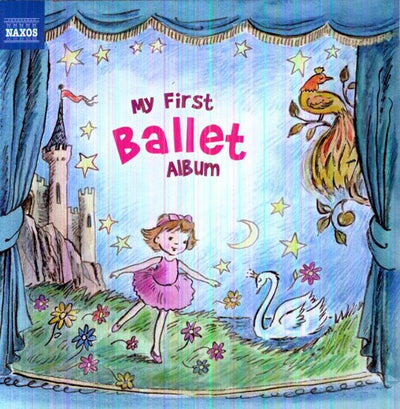
    My First Ballet Album

    CD · 1 disc

    $19.99
    Composer
    TCHAIKOVSKY STRAVINSKY SCHUB
    Artist
    Halász, Rahbari, Mogrelia, Gunzenhauser
    Released
    Mar 27, 2012

    A bird dancing, an ox on a roof, flowers doing a waltz, a swan twirling about…what world is this? This is the magical world of ballet. The stage is full of people in colourful costumes, but nobody speaks. All the stories are told by music and dancing. Composers have written such exciting pieces for ballet: listen to this collection and see which ones you like best!

    View full page
  • My First Ballet Album
    Sold Out

    My First Ballet Album

    Naxos Mar 2012
    1 disc
    CD
    $19.99
  • Jascha Heifetz plays Great Violin Concertos
    Sold Out

    Jascha Heifetz plays Great Violin Concertos

    Sony Masterworks Jan 2014
    6 discs
    CD
    $24.98
  • ART OF ERICA MORINI
    Sold Out

    ART OF ERICA MORINI

    DEUTSCHE GRAMMOPHON Aug 2023
    13 discs
    CD
    $57.75