Search results: Search results

9 results

Products

    Gaspard Le Roux: Complete Suites
    Avie Records

    Gaspard Le Roux: Complete Suites

    CD · 2 discs

    $24.99
    Composer
    Gaspard Le Roux
    Artist
    Daniel-Ben Pienaar
    Released
    Sep 19, 2025
    For his tenth Avie release, Daniel-Ben Pienaar advocates for the little-known French composer Gaspard Le Roux, by re-imagining his exquisite "Piece de clavessin" from 1705 (his only publication) for it's first ever recording on the modern piano. By turns pleasing, witty, brilliant and affecting, the complete collection makes for a diverting and balanced recital. For his tenth Avie release, Daniel-Ben Pienaar advocates for the little-known French composer Gaspard Le Roux, by re-imagining his exquisite "Piece de clavessin" from 1705 (his only publication) for it's first ever recording on the modern piano. By turns pleasing, witty, brilliant and affecting, the complete collection makes for a diverting and balanced recital.
    View full page
  • Gaspard Le Roux: Complete Suites

    Gaspard Le Roux: Complete Suites

    Avie Records Sep 2025
    2 discs
    CD
    $24.99
    HARMONIA MUNDI

    Conversation - Gaspard Le Roux: Suites for 2 Harpsichords / Taylor, Christie

    CD · 1 disc

    $22.00 $22.01
    Artist
    CHRISTIE, WILLIAM / TAYLOR, JUSTIN
    Released
    Jun 28, 2024
    An outlier in the French harpsichord world, Gaspard Le Roux composed music of unique inventiveness and richness at the end of the reign of Louis XIV. Juxtaposing his pieces with others by Lully, Marais and Francois Couperin, William Christie and Justin Taylor have found the ideal alchemy to do full justice to the myriad colors of these Suites, as virtuosic as they are rich in new emotions.
    View full page
  • Conversation - Gaspard Le Roux: Suites for 2 Harpsichords / Taylor, Christie
    Sale

    Conversation - Gaspard Le Roux: Suites for 2 Harpsichords / Taylor, Christie

    HARMONIA MUNDI Jun 2024
    1 disc
    CD
    $22.01 $22.00
  • The Trio Sonata - Lully, Couperin, Etc / London Baroque
    BIS

    The Trio Sonata - Lully, Couperin, Etc / London Baroque

    CD · 1 disc

    $21.99
    Composer
    CLERAMBAULT, LOUIS-NICOLAS CO
    Artist
    London Baroque
    Released
    Apr 01, 2005


    This is the second of a planned series of eight discs promising to trace the development of the trio sonata, the archetypal Baroque chamber form. The first, devoted to music from London Baroque’s home country, was reviewed in Fanfare 28:3 with considerable enthusiasm by Laura Rónai, and by myself elsewhere in a review that largely mirrored my colleague’s findings. Now London Baroque has turned its attention to what was happening during the same period across the English Channel, with equally commendable results.


    The ambivalent French attitude to the sonata, an Italian invention, was famously and sardonically expressed in the words of playwright Fontenelle: “Sonate, que me veux-tu” (literally “Sonata, what do you want from me?”). A more balanced view came from the theorist François Raguenet who, although a stern critic of Italian opera, declared that he had “never met with a master in France but what agreed that the Italians knew much better how to turn and vary a trio than the French.” A number of French masters, indeed, sought to integrate the spirit of the Italian sonata, specifically the Corellian sonata, into their own style, among whom François Couperin attempted a fusion that reached a climax in the two sets of L’apothéoses , dedicated respectively to Corelli (1724) and Lully (1725). (Both have already been recorded by London Baroque on BIS CD1275, not reviewed in Fanfare. )


    The selection made by London Baroque provides a representative cross section of writing in trio style, taking us chronologically from Lully to Clérambault (one assumes the series will include a second French disc devoted to the 18th century), and managing to include at least one unfamiliar name in the shape of Jean Nicolas Geoffroy (?–1694), a shadowy figure whose obscurity is not helped by the fact that there was more than one composer of that name working in Paris at the time. According to gambist Charles Medlam’s note, his Dialogues were probably originally intended for organ, but they work well enough in this form, if too diffuse to lay any claim to the structural balance of the true trio sonata. Much the same can be said of the little pieces by Louis Couperin, which provide no indication as to instrumentation. Lully’s trios for the ceremony of Le coucher du Roi , performed daily at Versailles by the petits violons , do achieve true equality between the two violins, but, true to form, the Italian-born Lully firmly implanted French style on the music. Although Marais’s Pièces en trio (1692) were the first works to be published in France in trio form, they are in fact a collection of mostly dance movements that following tradition could be arranged in suites. As such, they too bear little relationship to the true trio sonata, preferring to explore the French love of varying sonorities rather than the symmetrical balance of the Italian sonata, an observation that applies equally to the Suite by Gaspard le Roux (1660–1707).


    It is only with the next generation that an awareness of the Italian model emerges. François Couperin’s La Superbe is well named, being a majestic work that pays overt homage to Corelli in the suspensions of its opening movement, and the fugal writing of the second, while Jean-Féry Rebel’s tombeau in honor of Lully largely remains loyal to native style, but also betrays Italian leanings in some dazzling solo violin-writing and furious tremolandos in its fourth movement. Most Italianate of all is the work by Louis-Nicolas Clérambault, significantly the only one included here to bear the name “sonata.”


    With the proviso that, as with the disc of English works, London Baroque’s style of playing manifestly owes more to the 18th than the 17th century, these performances can be thoroughly recommended. The technical expertise, splendid sense of balance between the players, finesse, and spirited approach are by now all familiar assets, while the music is of generally high quality and well worth hearing. The engineering occasionally imparts a glassiness to the violins’s upper register, but is otherwise fine. I look forward to further issues in this interesting series.


    FANFARE: Brian Robins
    View full page
    Genuin

    En sol: Musique pour le Roi-Soleil

    CD · 1 disc

    $20.99
    Composer
    D'ANGLEBERT COUPERIN LULLY
    Artist
    Rebecca Maurer
    Released
    Sep 11, 2015
    The Sun King Louis XIV, who, in the truest sense of the word, had all of France and the court of Versailles dancing around him, died exactly 300 years ago, in 1715, a time when dance, music and theater all experienced an unprecedented flourishing. On her new Genuin label CD, harpsichordist Rebecca Maurer, playing a historical Ruckers harpsichord from Neuchâtel, weaves pieces by d’Anglebert, F. Couperin, Le Roux, and others from the most brilliant epoch of the harpsichord to form a musical tapestry rich in allusions and cross-references. A true musical journey into a golden age...
    View full page
  • En sol: Musique pour le Roi-Soleil

    En sol: Musique pour le Roi-Soleil

    Genuin Sep 2015
    1 disc
    CD
    $20.99
  • Preludes & Dances for a French Harpsichord

    Preludes & Dances for a French Harpsichord

    Doremi Aug 2008
    1 disc
    CD
    $20.99
    BIS

    The Trio Sonata Through Two Centuries / London Baroque

    CD · 8 discs

    $79.99
    Composer
    VARIOUS
    Artist
    London Baroque
    Released
    Oct 05, 2018
    Formed in 1978, London Baroque enjoys the position of being one of the most experienced and long-lived baroque chamber groups. Combining 8 albums originally released between 2003 and 2013, the present set of trio sonatas can be seen as the fruit of all those years of research, experiment and discovery. The trio sonata was the primary vehicle for chamber music in the seventeenth and at least half of the eighteenth centuries. Its history mirrors other developments throughout the whole of the baroque era. This set is chiefly concerned with those for two violins and continuo, with occasional digressions into those for violin, bass viol and continuo, and one with viola replacing the second violin. Like the string quartet in later ages, most composers (with some notable and regrettable exceptions) tried their hand in the form. The customary addition of a figured bass part played on a harpsichord or organ around 1600 meant that middle parts of the old contrapuntal style could be excluded and chamber music soon began to favor the trio sonata texture. 150 years later, with the string quartet, the process was reversed as the viola took over the middle ground previously occupied by the keyboard.

    -----

    Excerpts from reviews of previously released volumes included in this set:

    The Trio Sonata In 18th-century Germany

    London Baroque is one of the older ensembles in the world of historical performance practice. It is still going strong, and it is remarkable how it has kept its high standard over so many years. That also applies to the Bis trio sonatas series: eight discs, intelligently put together and forming a lively documentation of an important part of music history. The playing is again of the highest quality.

    – MusicWeb International

    The Trio Sonata In 18th-century Italy

    London Baroque’s program-opening performance of Albinoni’s Balletto in G features a fresh, unsentimental treatment of the composer’s characteristically slow first-movement Preludio Largo, followed by sprite deliveries of the second and third movements and a dashing Vivaldi-esque concluding Gavotta Presto. Their performance of Giuseppe Sammartini’s Sonata V is equally inspired. Locatelli’s Sonata in D major also receives a captivating, distinguished performance featuring plenty of thrilling fiddling, especially in the Allegro molto finale. London Baroque performs Vivaldi’s famous Op. 1 No. 12 trio sonata “La Folia” with the leaner continuo of just a cello and harpsichord backing the two violins originally specified by the composer. How refreshing!

    – ClassicsToday

    Trio Sonata In 18th Century France

    Listening to these virtuoso performers swing through much of Couperin’s glorious music is often dazzling. It’s been more than a decade since London Baroque began its European trio sonata recording odyssey for BIS, with by and large great success. And here is another wonderful installment, warmly recommended.

    – ClassicsToday
    View full page
  • The Trio Sonata Through Two Centuries / London Baroque

    The Trio Sonata Through Two Centuries / London Baroque

    BIS Oct 2018
    8 discs
    CD
    $79.99
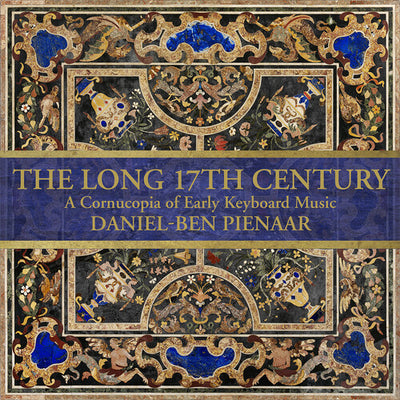
  • The Long 17th Century: A Cornucopia of Early Keyboard Music / Pienaar
    Avie Records

    The Long 17th Century: A Cornucopia of Early Keyboard Music / Pienaar

    CD · 2 discs

    $26.99
    Composer
    VARIOUS
    Artist
    Daniel-Ben Pienaar
    Released
    Feb 07, 2020

    The ever-inquisitive pianist Daniel-Ben Pienaar presents The Long 17th Century: A Cornucopia of Early Keyboard Music. The Long 17th Century refers to the period from the late 1500s to the early 1700s, an era noted for forward-thinking individuality and invention in all areas of life. This two-and-a-half hour recital surveys a pan-European variety of styles, genres and techniques, and comprises 36 works, each by a different composer, many not recorded before on a modern piano. Daniel-Ben Pienaar has been critically acclaimed for his previous albums on Avie: “a gloriously multi-faceted opus maximus ... Amazing and very much worth hearing” –Der Spiegel(on Beethoven’s Complete Piano Sonatas, AV2320) “dizzying virtuosity ... fresh, spontaneous, original readings that shed new light on the keyboard player’s Bible” –BBC Music Magazine (on J. S. Bach’s Well-Tempered Clavier, AV2299)


    REVIEWS:

    Have you noticed the growing trend of pianists taking up 17th-century keyboard works on the modern concert grand? Perhaps it has to do with the desire to be rebellious, or to attain a certain level of intellectual caché. Yet pianists also have valid artistic reasons to explore this repertoire. First and foremost are the sheer musical rewards. Secondly, the freedom one has in regard to phrasing, tempo, and embellishment can be liberating and creatively stimulating. For this remarkable two-disc collection, Daniel-Ben Pienaar has chosen 36 17th-century keyboard works, each by a different composer. He brilliantly reveals how a piano’s dynamic scope, timbral diversity, and sustaining capabilities can vividly and meaningfully serve this repertoire.

    One noticeable example is in Tarquino Merula’s Capriccio cromatico, where the ascending legato chromatic lines and detaché counterline with repeated notes take on distinctive characters. The Weckmann D minor Canzon’s virtuosic repeated notes gain color and drama through pianistic inflection, and via Pienaar’s dapper fingerwork, of course. Terraced dynamics and half-tints of pedal evoke trumpets and winds in Gabrieli’s joyous Canzon quarta.

    What bracing trills and hair-trigger scale passages Pienaar delivers throughout Muffat’s Partita IV, while serving up a more unified and colorfully contrasted reading of Buxtehude’s large-scale “La Capricciosa” Variations than most period performers manage to do. And while Pienaar allows for pockets of space or “air” between the notes in Keril’s Passacaglia, he manages to shape the sounds and silences into long-lined entities. I encourage listeners to discover their own favorite works and magic moments across this intelligently programmed, splendidly engineered, and boundlessly satisfying release.

    – ClassicsToday.com (10/10; Jed Distler)


    What makes it work is not just the dazzling precision and clarity of Pienaar’s finger technique (though that is certainly a vital factor), but the intelligence that has gone into his interpretations. He also communicates an individual and convincing vision for each piece, enough for every one of them to give delight.


    –Gramophone (Editor's Choice; June 2020)

    View full page
  • The Long 17th Century: A Cornucopia of Early Keyboard Music / Pienaar

    The Long 17th Century: A Cornucopia of Early Keyboard Music / Pienaar

    Avie Records Feb 2020
    2 discs
    CD
    $26.99
  • LE ROUX: Complete Works for 1 and 2 Harpsichords
    Sold Out

    LE ROUX: Complete Works for 1 and 2 Harpsichords

    Naxos Jul 2006
    1 disc
    CD
    $19.99
    Alpha

    Splendeurs de Versailles

    CD · 10 discs

    $40.99
    Composer
    CHARPENTIER COUPERIN LULLY
    Artist
    Sempe, Le Poeme Harmonique, Dumestre, Cafe Zimmermann, Frisch, Cap
    Released
    Oct 28, 2016

    Versailles is remembered for its court, its atmosphere, its music, and its splendor which defined a monument with an incomparably rich history. The works associated with the palace have traveled down the centuries, and today represent a precious part of the Western music tradition. In this release, Alpha retraces the musical life of the unique and luminous universe of Versailles. Le Poeme Harmonique, Café Zimmermann, Capriccio Stravagante, and many others invite themselves into the company of Jean-Baptiste Lully, Marc-Antoine Charpentier, and Jean-Henry d’Anglebert and share with us for a few hours the sumptuous concerts that made Versailles a place like no other.

    View full page
  • Splendeurs de Versailles
    Sold Out

    Splendeurs de Versailles

    Alpha Oct 2016
    10 discs
    CD
    $40.99