Search results: Search results

111 results

Products

    Brahms / Leenaars, Rundfunkchor Berlin, Deutsches Symphonie-Orchester Berlin
    Sony Masterworks

    Brahms / Leenaars, Rundfunkchor Berlin, Deutsches Symphonie-Orchester Berlin

    CD · 1 disc

    $11.98
    Artist
    Rundfunkchor Berlin
    Released
    May 03, 2019
    The Berlin Radio Choir sings major choral works by Johannes Brahms

    There was no point in his life when Johannes Brahms did not take an active interest in choral music. It was an interest that he evinced not only as a choral conductor in Detmold, Hamburg and Vienna but also as a composer who bequeathed to posterity a vast number of secular and sacred choral works. Among his principal compositions for chorus and orchestra were not only his German Requiem but also his Song of Destiny op. 54 (1871) for mixed chorus and orchestra. This was arguably the most significant of all Romantic settings of a poem by Friedrich Hölderlin and has now been selected by the Berlin Radio Choir for a CD that explores the whole vast range of Brahms’s choral writing. Under the direction of Gijs Leenaars, the Choir – heard here in various formations – is joined in some of these works by the Deutsches Symphonie-Orchester of Berlin. The Drei Gesänge op. 42, for example, are scored for mixed unaccompanied chorus, while Nänie op. 82 was written for chorus and orchestra. “All of the pieces that are featured on this CD show how well Brahms was able to write for the human voice,” says Gijs Leenaars, “and this is true of both their compositional textures and the impact of the sonorities that he uses.” At the same time Leenaars notes that the present programme is an ideal showcase for the Choir’s versatility. The Choir, he goes on, is a “great vehicle for choral works with orchestra, in which the right balance between orchestra and voices is a challenge”, while in the a cappella repertory the singers impress with the delicate textures of their voices.

    The texts that Brahms has set in this selection of pieces all raise existential questions about our lives as human beings. The Song of Destiny is taken from Hölderlin’s epistolary novel Hyperion and draws on the world of classical mythology, contrasting the carefree lives of the gods on Mount Olympus with the toilsome existence of mortals on earth. Nänie for chorus and orchestra was written in 1881 in memory of the painter Anselm Feuerbach, who had died the previous year. The motet “Warum ist das Licht gegeben dem Mühseligen?” (Wherefore is light given to him that is in misery?) op. 74 no. 1 revolves around the question of why an almighty God allows to us suffer. “Es tönt ein voller Harfenklang” (The sounds of a full-toned harp ring forth) comes from the Vier Gesänge op. 17, which Brahms wrote in 1860 for the women’s choir that he had founded in Hamburg the previous year. And the Geistliches Lied (Sacred Song) op. 30 for four-part mixed chorus and strings invites its listeners to be steadfast and take comfort in their faith in the face of suffering and death.
    View full page
    Ondine

    Brahms: Double Concerto; Viotti: Violin Concerto No. 22 / Tetzlaff, Järvi, Deutsches Symphonie-Orchester Berlin

    CD · 1 disc

    $9.49 $18.99 Save 50%
    Composer
    Johannes Brahms, Antonin Dvorak, Giovanni Battista Viotti
    Artist
    Christian Tetzlaff, Tanja Tetzlaff
    Released
    Oct 06, 2023

    This album by violinist Christian Tetzlaff and cellist Tanja Tetzlaff, together with the Deutsches Symphonie-Orchester Berlin conducted by Paavo Järvi, is dedicated in the memory of their longtime artistic partner, pianist Lars Vogt (1970–2022). At the heart of this album is Brahms, one of Lars Vogt’s favorite composers, and his late orchestral masterpiece, the Double Concerto. Brahms himself had admired one of Viotti’s violin concertos so much that he included material from the violin concerto into his work. With Christian Tetzlaff’s recording of the violin concerto, this album finally brings these two works together. Also included is Dvorák’s beautiful Silent Woods for cello and orchestra, a work by another composer that was very close to Lars Vogt’s heart.

    View full page
    Audite Musikproduktion

    Prokofiev: Violin Concertos / Cristian, Pietsch, Deutsches Symphonie-Orchester Berlin

    CD · 1 disc

    $20.99
    Composer
    PROKOFIEV, SERGEI
    Artist
    Pietsch, Deutsches Symphonie-Orchester Berlin, Macelaru
    Released
    Nov 03, 2017
    Following Sergei Prokofiev's works for violin and piano, Franziska Pietsch now presents an album featuring both Violin Concertos of the Russian composer, with whose oeuvre and idiom the artist - a former promising star of the GDR - has felt at home ever since her youth. Alongside Cristian Macelaru and the Deutsches Symphonie-Orchester Berlin she presents a thrilling new recording. The two violin concertos represent two phases in, and two sides of, Prokofiev's life and work. The first was written during an era of early successes, stylistically and temporally close to his Symphonie classique, but not premiered until he was in exile. The second mirrors the itinerant existence of his life as a musician in exile, but also his longing to return to Russia. Franziska Pietsch, the "Anne-Sophie Mutter of East Germany" (W. Dulisch). From promising star of the GDR with a burgeoning solo career to boycott, via a new beginning, chamber music and leading orchestras, back to being a soloist and enriched by a transformed understanding of her own role: with this recording of the Prokofiev Violin Concertos, Franziska Pietsch has come full circle. Thanks to her intensive engagement with chamber music and her experience as a concertmaster, Franziska Pietsch's performances as a soloist are not only world-class, but also characterised by an exceptional sense of chamber-like intimacy.
    View full page
    Linn Records

    Rachmaninov: Symphony No. 2 / Ticciati, Deutsches Symphonie-Orchester Berlin

    CD · 1 disc

    $20.99
    Composer
    RACHMANINOFF, SERGEI
    Artist
    Ticciati, Deutsches Symphonie-Orchester Berlin
    Released
    Sep 10, 2021

    Following acclaimed performances on tour in Japan and South Korea, Robin Ticciati and the Deutsches Symphonie-Orchester Berlin have recorded one of Rachmaninov’s best-known works. In contrast with the disastrous reception of the First Symphony and the ensuing three-year compositional hiatus, the Second Symphony was a resounding success when it was premiered by the composer in 1908. Its thematic unity, archlike melodic lines, rich orchestral colours and expansive structure still inspire awe, particularly when performed by musicians of the DSO’s calibre. The score is presented in its original unabridged version which reveals Rachmaninov’s regained confidence in his power to compose and his true symphonic achievement. This exhilarating performance marks Ticciati’s sixth album with the DSO.

    View full page
  • Beethoven: Piano Concertos Nos. 0-5 & Other Works / Nagano, Kodama, Deutsches Symphonie-Orchester Berlin
    Berlin Classics

    Beethoven: Piano Concertos Nos. 0-5 & Other Works / Nagano, Kodama, Deutsches Symphonie-Orchester Berlin

    CD · 4 discs

    $29.99
    Composer
    BEETHOVEN, LUDWIG VAN
    Artist
    Kodama, Deutsches Symphonie Orchester Berlin, Nagano
    Released
    Nov 01, 2019
    Together with the Berlin based Deutsches Symphonie Orchester, Mari Kodama and her husband Kent Nagano have now completed the recording of all of Beethoven's piano concertos by jumping, as it were, back in time twice: the last element of this recording series that has spanned more than 13 years was Beethoven's concerto "number nought” WoO 4- personally edited by Mari Kodama from the autograph score. The original manuscript of this piano concerto is kept at the State Library in Berlin. This is not a completed score, because there is no orchestration. That said, Beethoven annotated the short score, especially in the first two movements, with indications as to which instrument was to play which part. The orchestra score which is available today was written in the early twentieth century based on those annotations. The only problem is "armed with the knowledge we now have acquired about the young Beethoven, we would perform this concerto quite differently in places," explain Mari Kodama and Kent Nagano in unison. They therefore present a very personal adaptation that emerged during rehearsal with the orchestra and at the recording sessions, and which reflects Kodama's and Nagano's individual image of Beethoven. They aim to make audible the exuberant freshness and urgent sense of awakening in the young, almost childlike Beethoven's writing shortly before his artistic powers were to burst forth, the joie de vivre and vital energy in a style that owes something to the playfulness of both Haydn and Mozart. That is Mari Kodama's intention, and she plays it in precisely such a versatile manner.
    View full page
    Capriccio

    Bartók: The Piano Concertos / Barto, Eschenbach, Deutsches Symphonie-Orchester Berlin

    CD · 2 discs

    $21.99
    Composer
    Bela Bartok
    Artist
    Tzimon Barto
    Released
    Oct 11, 2024

    Béla Bartók is one of the unquestionably “great” composers and one of the few modern composers who established themselves in the repertoire. His three piano concertos are central to his biography and musical output, but only the Third, with some generosity, could be considered “popular.” Although well represented on disc, the first two are rare concert program guests. Tzimon Barto sees a problem in an all-too-mechanical approach to these two percussive works: “Even Bartók needs a supple touch. If you bang away at it, without rhythmical buoyancy, of course it will become tedious.” These recordings are his attempt at doing justice to his Bartók-ideal.

    REVIEW:

    Christoph Eschenbach and Tzimon Barto have a long history of collaboration. Bartók, too, has long been a frequent composer on Eschenbach’s programs.

    In these recordings, the two musicians offer very special, unconventional interpretations. They are not interested in motoric coolness, in hard-edged virtuosity, but in a very interesting way they search for moods and a narrative that cannot be found in the many other good interpretations of the Bartók concertos. Not with Zimermann/Boulez, not with Bavouzet/Noseda, not with Kocsis/Fischer, and, going back even further, not with Anda/Fricsay.

    Eschenbach and Barto take their time with the music and, with remarkable transparency and many warm colors, create sometimes very mysterious and exciting passages, such as in the slow movement of the first concerto, or a wonderfully atmospheric Allegretto, which, at nine and a half minutes, lasts up to two minutes longer than with other interpreters. Even more astonishing is the greatly extended Adagio religioso, which at nearly 14 minutes is up to four and a half minutes longer than other recordings used for comparison.

    All in all, however, this new recording is definitely interesting and worth listening to, because it brings out new aspects and gives Bartók a variety of expression that cannot be found anywhere else.

    — Pizzicato

    View full page
    Solo Musica

    Piazzolla, Massa: Nuevo Tango Concertos / Massa, Laycock, Deutsches Symphonie-Orchester Berlin

    CD · 1 disc

    $10.49 $20.99 Save 50%
    Composer
    MASSA PIAZZOLLA
    Artist
    Berliner Symphoniker, Massa, Laycock
    Released
    Sep 17, 2021
    Astor Piazzolla, the great Argentine composer and bandoneon player, was born exactly a century ago in 1921. Fascinated by the music of Bach, Mozart and Chopin, Piazzolla wanted to compose great classical music. From Alberto Ginastera he received lessons in orchestration, composition and conducting, as well as in literature and poetry. Following his studies with Ginastera, Piazzolla received a scholarship to study in Paris with the renowned pianist and composer Nadia Boulanger. Under her guidance, he began to conceive of and perfect his own style of composition. Composer and bandoneon player Omar Massa hails from Buenos Aires and has lived in Berlin since 2019. He is seen by music critics as the successor to Astor Piazzolla, whose work he has been performing from the age of six. Massa is considered to be an ambassador and champion of Argentine music as he too creates bridges to classical music with his own compositions. He combines minimalism with contemplative spaces, creates impressionistic colours, uses unusual meters and expands harmonic language without losing the inner melancholy of the true Tango Nuevo. Massa catapults the music of Buenos Aires into the 21st century. For over five decades, the Berlin Symphony Orchestra has been an integral part of Berlin's musical and cultural life, enriching the German orchestral landscape, and since 1990 has been the orchestra for all Berliners. In addition to the popular and long-established symphony concerts held in the Berlin Philharmonie, the Berlin Symphony Orchestra performs throughout Berlin and the surrounding area. With guest performances in Europe and tours to North and South America, Africa and Asia, as well as their appearances at international festivals (in France, Italy, Austria, Spain, Israel, among others), the Berlin Symphony Orchestra presents itself successfully worldwide and sees itself as a cultural ambassador for Berlin.
    View full page
    Naxos

    Brahms: Violin Concerto; Double Concerto / Tianwa Yang, Schwabe, Wit, Deutsches Symphonie-Orchester Berlin

    CD · 1 disc

    $19.99
    Composer
    BRAHMS, JOHANNES
    Artist
    Wit, Deutsches Symphonie-Orchester Berlin, Yang, Schwabe
    Released
    May 10, 2019

    Brahms’s string concertos are indissolubly linked with the musicians for whom the works were written. He wrote his Violin Concerto for Joseph Joachim, and inn it he combined what a contemporary critic termed ‘the great and serious’ with songful lyricism, melodic beauty, and a fiery Hungarian finale. To mend a breach with the violinist, Brahms later composed a concerto with the unusual combination of violin and cello, the latter played at the premiere by Joachim’s colleague Robert Hausmann. Neither instrument predominates in a work of reconciliation that embodies both drama and reflection. Highly acclaimed Naxos artists Tianwa Yang and Gabriel Schwabe are featured on this recording, as well as Antoni Wit, one of Naxos’s best-selling and best-known conductors.

    REVIEWS:

    [Yang] plays the concerto with great passion and expressivity, highlighting many details and indulging in more sliding than we usually hear today. Behind all this I sense a directness, a desire perhaps to expose the virtuosic elements of the piece. Conductor Wit is also a musician who does not tend to linger, but I am not sure they are always on the same page. Yang leans toward aggressive playing, while Wit is more mellow—more Eastern European. If you like the concerto with a minimum of philosophizing, you’ll like this performance because it is very well done.

    – American Record Guide

    In Yang’s and Schwabe’s hands the Double Concerto enjoys an incarnadine reading which benefits from a sweet, close-quarters recording. What we hear evinces both concentration and brio. When a performance of the Double really works it communicates a nicely elongated storminess, as is the case here and with the classic recording by Leonard Rose, Isaac Stern, and the Philadelphia conducted by Eugene Ormandy.

    Yang makes tense but re-creative work of the Violin Concerto. Elder statesman Antoni Wit has been facilitating with Naxos for many years. He and the Deutsches Symphonie-Orchester Berlin work in commodious harness with the two soloists.

    – MusicWeb International (Rob Barnett)

    View full page
    Alpha

    Beethoven: Piano Concertos Nos. 1 & 4 / Manze, Helmchen, Deutsches Symphonie-Orchester Berlin

    CD · 1 disc

    $20.99
    Composer
    BEETHOVEN, LUDWIG VAN
    Artist
    Manze, Helmchen, Deutsches Symphonie-Orchester Berlin
    Released
    Apr 24, 2020

    Beethoven’s piano concertos are a precious source for understanding the history of the practice of this instrument, which, in the early nineteenth century, permanently replaced the harpsichord in the hearts of composers. Thus one can still hear the gallant influence of Mozart in the First Concerto (1795-1800), whereas the Fourth (1805-06) reveals the introspective personality, at once vigorous and generous, of a Beethoven at the height of his artistic maturity. In the second installment of his recording of the complete concertos, the German pianist Martin Helmchen performs these two contrasting works with Andrew Manze and the Deutsches Symphonie-Orchester Berlin.

    View full page
    Signum Classics

    Brahms: Piano Concerto No. 2 - Piano Pieces / Tsybuleva, Reinhardt, Deutsches Symphonie-Orchester Berlin

    CD · 1 disc

    $9.99 $19.99 Save 50%
    Composer
    BRAHMS, JOHANNES
    Artist
    Tsybuleva, Deutsches Symphonie-Orchester Berlin, Reinhardt
    Released
    May 28, 2021

    Signum Records presents an exciting new collaboration and debut recording with Leeds International Piano Competition Winner (2015), Anna Tsybuleva, of music by Johannes Brahms together with the Deutsches Symphonie-Orchester Berlin, conducted by Ruth Reinhardt. Tsybuleva has been described by as embodying superb pianism and intelligent musicianship (Gramophone Magazine) and A pianist of rare gifts: not since Murray Perahias triumph in 1972 has Leeds had a winner of this musical poise and calibre (International Piano Magazine). Performance highlights have included performances with the Basel Symphony, Mariinsky Orchestra, National Philharmonic Orchestra of Russia, Royal Liverpool Philharmonic Orchestra, Singapore Symphony Orchestra, St. Petersburg Philharmonic Orchestra, and the Tokyo Symphony Orchestra. Alongside this, Tsybuleva has given recitals at such prestigious venues as Het Concertgebouw Amsterdam, Shanghai Oriental Arts Center, Tonhalle Zurich, and the Wigmore Hall, London.

    View full page
    Ondine

    Beethoven & Sibelius: Violin Concertos / Tetzlaff, Ticciati, Deutsches Symphony Orchestra Berlin

    CD · 1 disc

    $18.99
    Composer
    BEETHOVEN SIBELIUS
    Artist
    Tetzlaff, Deutsches Symphonie-Orchester Berlin, Ticciati
    Released
    Sep 13, 2019

    In this new concerto album one of the greatest violinists of our time, Christian Tetzlaff, performs two standard violin concertos in fresh new interpretations together with the Deutsches Symphonie-Orchester Berlin directed by the orchestra’s exciting new music director, Robin Ticciati.

    Christian Tetzlaff is considered one of the world’s leading international violinists and maintains a most extensive performing schedule. Musical America named him ‘Instrumentalist of the Year’ in 2005. His recording of the Bartók Violin Concertos (ODE 1317-2) received both Gramophone and ICMA Awards, and the recording was also a finalist for the BBC Music Award in 2019. His recording of the Violin Concertos by Mendelssohn and Schumann, released on Ondine in 2011 (ODE 1195-2), and Bach Sonatas and Partitas released in 2017 (ODE 1299-2D) received the ‘Preis der deutschen Schallplattenkritik’. In addition, in 2015 ICMA awarded Christian Tetzlaff as the ‘Artist of the Year’, and he also received ECHO ‘Instrumentalist of the Year’ award in 2017.

    REVIEWS:

    Tetzlaff may at times excitedly rush his fences, but in collaboration with Robin Ticciati and his alert Deutsches Symphonie-Orchester Berlin, he transforms aspects of what so many have treated as a sort of Holy Grail into a beer tankard. If Beethoven’s Concerto emerges as uncompromisingly provocative, Tetzlaff’s Sibelius also errs on the side of danger…In many respects, a real knock-out.

    – Gramophone (Editor's Choice)

    What I especially admire about these entrancing performances by Tetzlaff is the freshness and vitality he brings so effectively to these masterworks. One senses that he is entirely inside the music emotionally. Throughout both works the sound of Tetzlaff’s violin, a modern instrument made by German luthier Stefan-Peter Greiner, is glorious. Under Robin Ticciati the Deutsches Symphonie-Orchester Berlin excel with firm and resolute playing in performances which are entirely empathetic to the soloist from start to finish.

    – MusicWeb International

    View full page
  • Silvestrov: Symphony No 5, Postludium / Robertson, Lubimov
    Sony Masterworks

    Silvestrov: Symphony No 5, Postludium / Robertson, Lubimov

    CD · 1 disc

    $17.99
    Composer
    SILVESTROV, VALENTIN
    Artist
    David, Deutsches Symphonie-Orchester Berlin, Robertson
    Released
    Aug 06, 2007
    Silvestrov’s Fifth Symphony might well have emerged from Prospero’s island. The music epitomises something rich and strange. Ominous, heavy with threat (trs. 3, 5), dissonant but accessible, dreamy and romantic. Ham-fisted and insensitive but useful parallels include Mahler’s Adagietto, Berg, Griffes’ Pleasure Dome, the film scores of John Barry and the Hollywood 1970s and further enlivened by idyllic evocations of birdsong. A massive orchestra is used and there is an orchestral piano presumably played by Lubimov who is at the centre of things in the similarly ecstatic Postludium. At one point there is a low-key chatter of voices – but very low. This is voluptuously expressive music given spine by the undertow of gloom. I do not know why it has not made more headway. If there were any justice this would have been played at the BBC Proms but the same could be said of a host of other regrettably neglected works including Hovhaness’s Majnun and Etchmiadzin symphonies, of the Benjamin Dale tone poem The Flowing Tide, of Ronald Stevenson’s concertos, the oratorios and symphony of Yuri Shaporin and the piano concertos of Nikolai Kapustin.

    This Sony-Arkiv re-animation scores over the competition in various areas. Its sound is rich – bathed in warmth yet not smearing detail. Students of the work will find that the version under review is in nine tracks which certainly aids the process of getting to grips with a single span of three quarters of an hour. Even timid souls – and I count myself in their company – should make a point of hearing the remarkable Fifth Symphony. It is as much an ikon of the second half of the twentieth century as Gorecki’s Symphony No. 3 and the various mystic-religious works of Macmillan and Tavener. The difference is that the Silvestrov is sensuous to the point of saturation rather than devout to the point of asceticism.

    -- Rob Barnett, MusicWeb International
    View full page
  • Silvestrov: Symphony No 5, Postludium / Robertson, Lubimov

    Silvestrov: Symphony No 5, Postludium / Robertson, Lubimov

    Sony Masterworks Aug 2007
    1 disc
    CD
    $17.99
  • Weber: Der Freischutz / Janowski, Sweet, Ziesak, Seiffert, German Symphony Orchestra Berlin
    Sony Masterworks

    Weber: Der Freischutz / Janowski, Sweet, Ziesak, Seiffert, German Symphony Orchestra Berlin

    CD · 2 discs

    $15.98
    Composer
    WEBER, CARL MARIA VON
    Artist
    Sweet, Ziesak, Seiffert, Schmidt, Rydl, Rundfunkchor Berlin, Deutsches Symphonie-Orchester Berlin, J
    Released
    Feb 17, 2017
    The Overture is played with a sombre foreboding, the Peasants' March has a good raw sound, and the Wolfs Glen is vividly characterized. Among the singers, the most distinguished performance comes from Sharon Sweet. She has a most expressive sense of phrasing, always feeling the words and varying her rich, warm tone to convey them. Her two main numbers, ''Leise, leise'' and ''Und ob die Wolke'', are beautifully contemplative; and she joins sensitively in the Trio and the other ensembles. Ruth Ziesak's Aennchen sounds indeed a relation, with a family kinship in manner: she is less soubrettish than most singers of the role, but lively enough, and she makes an amusing success of the silly song about the dog. There is a magnificent Kaspar from Kurt Rydl, who glitters darkly in the Drinking Song, delivers ''Schweig! Schweig!'' with appalling menace, and speaks his lines in the Wolfs Glen more powerfully than any other performer of the role. Peter Seiffert brings to Max a good reputation as a Heldentenor in Wagner and Strauss; but there is an edge to his voice, and he can sound strained and even tremulous, as if he is trying too hard with melodic lines that for much of the time owe more to French example.

    – Gramophone
    View full page
    Capriccio

    Rihm: Das Gehege - Beintus: Le Petite Prince / Nagano, Deutsches Symphony Orchestra Berlin

    CD · 1 disc

    $21.99
    Composer
    BEINTUS RIHM
    Artist
    Dupuis, Schonweiss, Ecke, Deutsches Symphonie-Orchester Berlin, Nagano
    Released
    Sep 07, 2018

    When Kent Nagano assumed the direction of the Bavarian State Opera in Munich in autumn 2006, he had intended a new production of Richard Strauss’ Salome as one of the first premieres. He wanted to precede the challenging one-act opera after Oscar Wilde’s drama with a new music theatre work. He turned to Wolfgang Rihm. ‘I replied’, Rihm said in an interview with Die Zeit: ‘There’s only one thing: the final scene from Schlusschor by Botho Strauß. Nagano’s commission became the catalyst in transforming this desire into reality. This is the genesis of Das Gehege. A nocturnal scene for soprano and orchestra. Kent Nagano and Jean-Pascal Beintus (* 1966) met in the orchestra pit of the Opéra de Lyon in 1988. After considering the first orchestral manuscripts, the maestro, known for his openness and great erudition, encouraged the young man to expand his musical career. Several pictorial projects came to Nagano’s mind, which he entrusted to Beintus’ musical imagination: first, Wolf Tracks for recitator and orchestra (recorded with the speakers Bill Clinton and Michail Gorbachov), for which Beintus was awarded a Grammy in 2004, before in 2008 writing for the family concerts of the German Symphony Orchestra in Berlin a suite on Antoine de Saint-Exupéry’s omnipresent The Little Prince.

    View full page
  • V 7: EDITION FERENC FRICSAY -

    V 7: EDITION FERENC FRICSAY -

    Audite Musikproduktion Oct 2008
    1 disc
    CD
    $14.99
    Capriccio

    Brahms: The Piano Concertos / Barto, Eschenbach, Deutsches Symphony Orchestra Berlin

    CD · 2 discs

    $22.99
    Composer
    BRAHMS, JOHANNES
    Artist
    Barto, Deutsches Symphonie-Orchester Berlin, Eschenbach
    Released
    Oct 14, 2014

    The American pianist Tzimon Barto and the world famous conductor Christoph Eschenbach have had a very long and close friendship together. After their successful Capriccio recording of Tchaikovsky’s B flat Minor Concerto they follow up now with recordings of the Brahms Concertos, cornerpieces of the piano concerto literature and further examples of these two artist’s close working partnership. Mr. Barto and Mr. Eschenbach, iconoclasts both, offer a new focus on these masterpieces. Also to be heard are Mr. Barto’s interpretations of the 4 Ballades, op. 10.

    View full page
  • WIND ENSEMBLE & CONCERT BAND
    Wergo

    WIND ENSEMBLE & CONCERT BAND

    CD · 1 disc

    $20.99
    Composer
    HINDEMITH TOCH GAL KRENEK
    Artist
    Deutsches Symphonie-Orchester Berlin, Roger Epple
    Released
    May 01, 2000
    In 1926 Hindemith encouraged the composition of a new kind of original music for wind ensemble (military band) for chamber music performances at Donaueschingen and helped raise the genre to a level of achievement which continues today. Three of these works from 1926 are published on this CD, together with Hindemith's famous masterpiece Symphony in B flat and Ernst Krenek's Dream Sequence.
    View full page
  • WIND ENSEMBLE & CONCERT BAND

    WIND ENSEMBLE & CONCERT BAND

    Wergo May 2000
    1 disc
    CD
    $20.99
    CPO

    G. Schumann: Symphony in F Minor & Overtures / Feddeck, Deutsches Symphony Orchestra Berlin

    CD · 1 disc

    $18.99
    Composer
    SCHUMANN, GEORG
    Artist
    Deutsches Symphonie-Orchester Berlin, Feddeck
    Released
    Nov 03, 2017

    Do you know Georg Schumann? No, he is not the unknown brother, nephew or grandson of his famous name father Robert. Nevertheless, he was a respected composer, pianist and, above all, a music teacher. The German Symphonie-Orchester Berlin, under the direction of James Feddeck, has recently dealt with some of his great orchestral works. Trained by Carl Reinecke, encounters with Liszt, Brahms, Rubinstein, Mahler or Bruch, head of the master class for composition at the Prussian Academy of Arts in Berlin for more than half a century, Berlin Philharmonic's long-standing regular guest etc. All these are unmistakable signs of the importance of Georg Schumann as a composer, pianist, conductor and pedagogue. Musicians of the following generations would still have to be indefinitely grateful to him, since he and Richard Strauss, together with others, founded the cooperative of German composers, today's GEMA. And yet his name is nowadays no longer on concert programs, let alone in CD catalogs. It is all the more pleasing to see Georg Schumann again at cpo.

    View full page
  • The Romantic Piano Concerto Vol 2 / Michael Ponti
    Vox

    The Romantic Piano Concerto Vol 2 / Michael Ponti

    CD · 2 discs

    $29.99
    Composer
    HILLER LITOLFF MENDELSSOHN
    Artist
    Cao, Deutsches Symphonie-Orchester Berlin, Maga, Philharmonia Hungarica
    Released
    Jan 01, 1992
    This is one of seven volumes that represent the art some of the performing virtuoso-playing composers of the Romantic tradition. The notes tell us that each volume attempts stylistically to integrate composers who belonged to the same milieu and enjoyed professional relationships with each other.

    Moscheles' Concerto, Op. 58 is said to be one of his finest works, showing the classical influences of Beethoven, Schubert and Chopin. From the opening of the Allegro moderato one can be forgiven for thinking you are listening to an orchestral score composed by Mendelssohn. However the piano lines have more of a Saint-Saëns ring about them. Bold statements punctuate gently-flowing passages with lightweight orchestral involvement. The Adagio contains recitative-like figures with background tremolos that eventually lead into an Allegro agitato. This movement skips along with a bright theme that is extemporised and builds to a suitable coda and rousing close.

    Hiller's compositions are largely forgotten now but in his day his works reached the concert hall. His piano impromptu Zur Gitarre was played by Clara Schumann. His Concerto, Op. 69 contains some lovely melodies and has for too long been neglected, a point the CD notes confirm. Hiller premiered the work as soloist in Amsterdam (1856). It was performed in the presence of royalty nine years later, so we must assume that the work enjoyed a certain degree of popularity. This was one of the first piano concertos to utilise the key of F-sharp Minor and is full of ideas also original for the time. A Moderato movement opens the piece with an energetic main theme (without introduction) and use of alternating octaves - a device copied by d'Albert 28 years later. The emotional Andante espressivo is filled with ravishingly romantic melodies. It has a feeling of Liszt about it. A purposeful Allegro con fuoco closes the concerto.

    Henry Litolff was taken as a pupil for the composer Moscheles. The older man declared Litolff so good that a public performance was arranged which he gave at the age of fourteen. Later as a proficient pianist, Litolff undertook concert tours on the continent and wrote his Concerto Sinfonique about 1846. Berlioz monitored his progress and referred to Litolff "as one of our best composers", praising his knowledge, inspiration, mobility of melodic style, and excellence of orchestration. At 39 minutes it is a long concerto and with a four movement structure broke new ground. There is freshness to this composition that gives me the impression of sprightly youthful eagerness. Why this amazing work is not better known I can't guess, but it would be ideal for part of a Proms programme.

    An Allegro provides a majestic opening, with accelerating energy and an introduction of two principal ideas. In the Scherzo a Beethovenian hunting scene comes to mind, with echoes of the Ninth. The piano part complements the orchestra-dominated main theme. A peaceful Andante conveys a lyrical mood of relaxing charm, the piano syncopating a flowing horn melody. A bold Furioso moves with urgency before it breaks into a trumpet-led rendering of the Dutch National song "Wein Neerlands". The song weaves in and out of the movement before virtuosity brings the piece to an energetic close.

    Carl Reinecke is usually remembered for the cadenzas he wrote to other composers' classic concertos rather than for his own compositions. This is despite the fact that he was a prolific writer of around 300 works. His writing is not as demonstrative as the other composers in this set: there is more of a relaxed feel to this concerto. Reinecke made his debut as a violinist at 11 but toured Europe as a pianist, before turning to the education of others. Reinecke settled in Leipzig where he became professor of piano and composition at the Conservatorium.

    In Reinecke's Concerto the Allegro is a good vehicle for virtuosity, but there is practically no partnership with the orchestra. In the Adagio, sincerity of purpose is given with its meandering theme. A bold statement from the strings opens the Finale Allegro and rippling measures maintain momentum throughout the movement.

    Mendelssohn's Capriccio brilliant is well known and needs little introduction. Written as a fantasia for piano and orchestra it is constructed on four themes - introductory theme, fortissimo theme, pianissimo theme, and piano theme. It is here played with sensitivity and purpose.

    Rheinberger is better known for his organ compositions rather than the writing of orchestral works. He studied under Lachner and became an intimate friend of Schubert, yet his music is often linked with Brahms.

    His Concerto deviates in its opening Moderato from the Beethoven pattern by dispensing with the orchestral exposition and replacing it with a short preludial statement; the piano entering with the main idea and acting as a dominant force. An Adagio follows with lyrical delicacy and appealing musical ideas. The orchestra contributes with important thematic and colouristic contributions throughout. A piano solo opens the Allegro energico with a flourishing statement and running into a fast-flowing theme before returning to the heroic idea of the first movement.

    This set contains rarely recorded works of the lesser-known composers who provided a valuable contribution to the development of music through the 19th Century. The notes make interesting reading and give useful historical information. Descriptions of the works could have been fuller and more detailed.

    Michael Ponti plays with considerable dexterity, and handles both powerful and sensitive passages with considerable skill. The orchestras play competently under knowledgeable conductors.

    The analogue recordings of the '70s are clear without the extraneous noise that can show up in CD transfers of this period. They are pleasantly balanced for concerto recording with the piano placed nicely forward on the sound-stage. In the Reinecke concerto, a slight metallic timbre is noticed with the piano. A slight lack of dynamic range causes some detail of the orchestra to be hidden but this is not an obtrusive problem. There is no obvious mismatching in the acoustics or microphone placements between the different venues (not given).

    -- Raymond Walker, MusicWeb International
    View full page
  • The Romantic Piano Concerto Vol 2 / Michael Ponti

    The Romantic Piano Concerto Vol 2 / Michael Ponti

    Vox Jan 1992
    2 discs
    CD
    $29.99
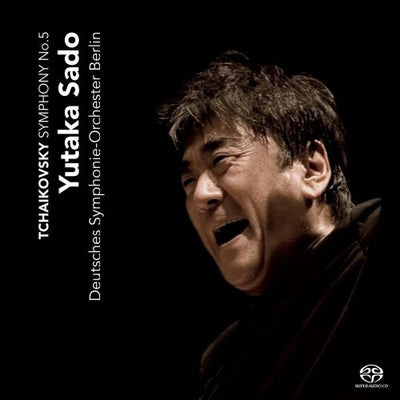
  • Tchaikovsky: Symphony No. 5

    Tchaikovsky: Symphony No. 5

    Challenge Classics Jan 2010
    1 disc
    SACD
    $20.99