CD · 1 disc
CD · 2 discs
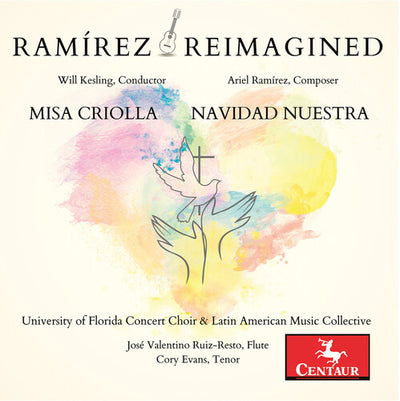
Missa Criolla, by Argentine composer Ariel Ramirez (1921-2010) is a Spanish vernacular setting of Roman mass liturgy. Navidad Nuestra, composed in 1964, is subtitled"A folk drama of the nativity based on rhythms and traditions of Hispanic America"
SACD · 1 disc
Vinyl · 1 disc
An audiophile LP transfer for an immersive tribute to a remote island off the coast of Brittany. Having become celebrated for his score to Amélie (2001), the French composer moved to the island of Ushant (Ouessant/Eusa), and this album is a musical tribute to his home, comprising ten pieces about ten specific places on the island. In 2016, Tiersen published a collection of pieces called Eusa, which Jeroen van Veen has combined with his 2021 collection, Kerber, named after a chapel on the island, to produce Island. The album has been a best-seller on CD for its contemplative mood and beauty. Among the 10 tracks, some offer the perfect soundtrack for contemplation on a long walk or staring out of a window on a train journey. Others seem predestined to be background music for study or relaxation. The pieces sound at times dreamy and wistful, at times bittersweet, at other times happily playful. With each song, your imagination can easily conjure a scene from a movie: a breakup after a fight in a cosy café or a nature documentary showing two baby birds opening their eyes for the very first time. This isn’t a collection about isolation; it’s more an expression of awareness of your own environment and your place within it: a sonic encapsulation of the hyper-local. Tiersen relates this approach to a night spent studying the stars – which he himself does. ‘You can look at things that are thousands of light years away and relate your own existence to this really cosmic element,’ he says. ‘But you get that same feeling with the things all around you.’
CD · 6 discs
By the time of the ‘Ottocento’ (19th century), opera was the dominant force in Italian musical culture, with bel canto composers such as Rossini and Donizetti creating a public appetite for opera that eclipsed achievements by Italy’s musical sons in other genres. Some of these composers who focused their energies instead on instrumental music, swimming against the operatic tide, remained in their native land, while others found a home (or were forced to find one) abroad.
Giuseppe Martucci (1856-1909) is one who stayed. A gifted pianist, he bypassed the operatic path and wrote music with a kind of fluent synthesis of Italian lyricism and German, dialectic approach to form that reached an early peak in his Cello Sonata of 1880. Yet Martucci, as a teacher of composition in Bologna and then Naples, urged the teenaged Alfredo Casella (1883-1947) to study abroad.
Ildebrando Pizzetti (1880-1968) is among the few composers in this set whose entire career centered in Italy, and he wrote a substantial body of instrumental music.
Before the war and eventual exile, Mario Castelnuovo-Tedesco (1895-1968) succeeded in reinventing an essentially Romantic model (of both form and harmony) for his own time with his Cello Sonata Op. 50 of 1928.
From seven years earlier, Ildebrando Pizzetti’s Sonata of 1921 is a more gloomy, even tortured affair. The Cello Sonata of Francesco Cilea (1866-1950), while unmistakably cast as an ‘operatic’ work from its opening solo, features a protagonist scarcely burdened by the existential angst to be found in comparable works from northern Europe.
Like Cilea, Ermanno Wolf-Ferrari (1876–1948) is known for his operas but unlike Cilea’s cello sonata, Wolf-Ferrari’s Op. 30 dates from the final three years of his life and belongs to a mature output of instrumental music.
Virtuoso cellists Alfredo Piatti (1822-1901) produced many trifles and showpieces to display his artistry to his adoring public in London. He was most proud of the set of six sonatas included in this set. In 1844 he made his first appearance in the English capital and soon settled there, playing both as a soloist and in one of the first celebrity string quartets.
The Cello Sonata by Mario Pilati (1903-1938) is another product of the fast-moving 1920s, formed in a Romantic tradition but inflected – like the music of Casella, Pizzetti, and Castelnuovo-Tedesco – by contemporary trends in impressionism and futurism.
From the next generation of composers, the Cello Sonata composed in 1948 by Eliodoro Sollim (1926-2000) fluently incorporates the kind of modal harmonies and cross-rhythms adopted by the likes of Bartók and Janáček from the folk traditions of their own cultures.
Showing Items 61-80 of 335