Composer
CD · 1 disc
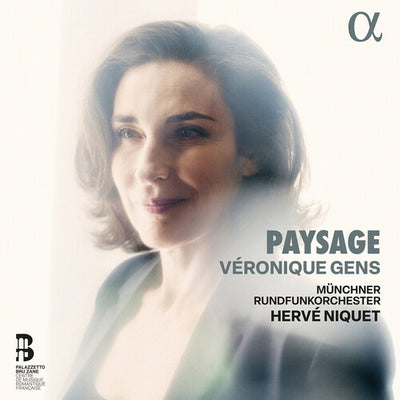
In this recital, Véronique Gens and Hervé Niquet bring back to life a neglected aspect of France’s Romantic heritage: songs with orchestral accompaniment. Aside from a few pieces by Debussy and Duparc, and Berlioz’s famous Nuits d’été, orchestral mélodies form a virtually forgotten continent. In collaboration with the specialists of the Palazzetto Bru Zane, Alpha now revisits these musical landscapes, taking us from Brittany (Hahn) to Persia, whose beauties Fauré and Saint-Saëns exalt in very different ways. Mélodies by Chausson, Gounod and Dubois and rarely heard instrumental pieces by Massenet, Fauré and Fernand de La Tombelle round out the journey with their musical reveries.
CD · 2 discs
Long’s 1940 recording with Jacques Thibaud, Maurice Vieux and Pierre Fournier is matchless in terms of ardor and urgency, one of the major chamber music recordings of the era.
Undoubtedly the foremost French female pianist of the 20th century, Marguerite Long (1874–1966) prided herself on her personal friendships with some of the foremost composers of her day – Debussy, Fauré and Ravel. She championed their works, premiering, amongst other things, Ravel’s G major piano concerto, and was to write books on the interpretation of each of them. This addition to our continuing French Piano School series is the first of two APR volumes, together containing her complete recordings of French repertoire, and of honorary Frenchman, Chopin.
REVIEW:
French music scholar Roger Nichols does the honors in the booklet essay, with laudable impartiality, for the first volume in APR’s ‘The French Piano School’ series focusing on the legendary pianist and teacher Maguerite Long. This collection is mostly devoted to music by Gabriel Fauré, including the exquisite Nocturne No 6 in D flat major, of which Long herself writes: ‘[Fauré] slides imperceptibly from one key to another through nuances of colour that an impressionist painter would envy.’
Long played the Sixth Barcarolle to Fauré himself, and two recordings of the piece are included as part of APR’s program, the earliest and gentler of the two from 1937, the more emphatic version dating from 20 years later. Likewise in the case of two versions of the Second Impromptu, this time from 1933 and 1957 again, though miraculously there’s very little to choose between them. Two versions of the Ballade in its orchestrated version vary principally in the way they’re recorded, in a relatively dry acoustic for the 1930 recording (under Philippe Gaubert), then with greater warmth 20 years later, where between them André Cluytens and Long stretch the timing by roughly a minute. Still, the crystalline tone of the earlier version holds a special appeal.
Then there are the two piano quartets, Op 15 in C minor with the Pasquier Trio, recorded in 1956, nimble and sensitive, though my own preference would be for the sweeter, edgier version by Robert Casadesus and members of the Calvet Quartet in 1935 (currently out on Scribendum). Turn then to the more tragic Op 45 in G minor, and Long’s 1940 recording with Jacques Thibaud, Maurice Vieux and Pierre Fournier is matchless in terms of ardor and urgency, one of the major chamber music recordings of the era.
Also included is Vincent d’Indy’s colorful Symphonie sur un chant montagnard français (Symphonie cévenole), brilliantly played by Long and expertly conducted by Paul Paray in 1934 – fine sounding, too, given its age. A truly excellent release, superbly transferred.
-- Gramophone
CD · 11 discs
Today one of the most highly respected string quartets, the Belcea were established in 1994 at the Royal College of Music in London and studied with the Chilingirian, the Amadeus, and later the Alban Berg quartets. Today one of the most highly respected string quartets, the Belcea were established in 1994 at the Royal College of Music in London and studied with the Chilingirian, the Amadeus, and later the Alban Berg quartets. They recorded for EMI Classics across nearly a decade, between 2000 and 2009, bringing about tremendous versions of quartets by Schubert, Britten, Bartók, and Mozart, to name a few.
"The Belcea Quartet throw every fibre of their beings into the most vivid projection of the masterpieces they undertake." - The Independent "These recordings form a crucial part of our life as a quartet and we hope that over the ensuing years they haven't lost their freshness and sense of adventure." - Krzysztof Chorzelski, violist of the Belcea Quartet
CD · 40 discs
His exceptional touch and sense of phrasing, his deep and personal understanding of the most varied repertoires, or even the legendary trio he formed together with Jacques Thibaud and Pablo Casals, made Alfred Cortot the greatest pianist of his time. Master of many disciples, notably the brilliant Dinu Lipatti, Samson François and Clara Haskil, Cortot also had a lasting influence on the Russian piano school through Samuil Feinberg and Heinrich Neuhaus, the latter himself being the revered teacher of Sviatoslav Richter.
All of the recordings in this set had undergone careful sound restoration in 2012, in order to respect as closely as possible the original sound. The remastering was carried out under the expert control of Mr. Guthrie Luke, a former disciple of Alfred Cortot who attended many recording sessions by Cortot. These recordings do not represent a "complete" edition: the many rolls engraved by the artist for Duo-Art, Aeolian and Pleyela labels have not been reproduced here, most of them doubling the 78-RPM repertoire. The first recordings are acoustic; and the ones with an electric microphone appeared as early as 1926.
Showing Items 201-207 of 207