Search results: Search results

43 results

Products

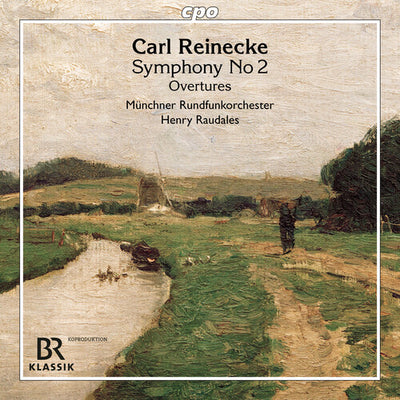
    Reinecke: Orchestral Works, Vol. 2
    CPO

    Reinecke: Orchestral Works, Vol. 2

    CD · 1 disc

    $18.99
    Composer
    Carl Reinecke
    Artist
    Munich Radio Orchestra
    Released
    Oct 18, 2024
    Anyone interested in Romantic music will inevitably come across the name Carl Reinecke. Countless aspiring composers from Germany and Scandinavia went to him to learn their craft. To those who wanted to make it in the city of the famous Gewandhaus Orchestra, he was an institution. Reinecke the composer enjoyed great success during his lifetime. However, as a preservationist of musical traditions, he was quickly forgotten after his death. The inevitable course of musical development swept him out of the way. This was not due to the quality of his music. Not only does his compositional technique stand up to scrutiny, but also his music as a sonic experience. This is particularly true of his three symphonies, all of which are now available in our catalogue with the release of the powerful Second in C minor
    View full page
  • Reinecke: Orchestral Works, Vol. 2

    Reinecke: Orchestral Works, Vol. 2

    CPO Oct 2024
    1 disc
    CD
    $18.99
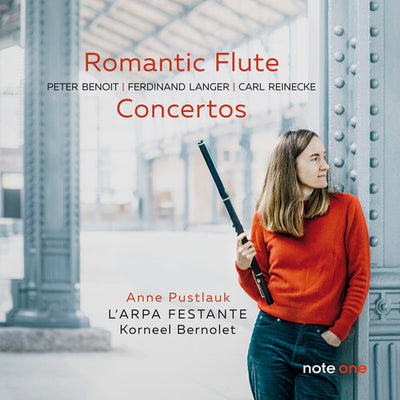
  • Romantic Flute Concertos
    NOTE ONE

    Romantic Flute Concertos

    CD · 1 disc

    $20.99
    Composer
    Ferdinand Langer Peter Benoit, Carl Reinecke
    Artist
    Anne Pustlauk, L'arpa festante, Korneel Bernolet
    Released
    May 15, 2026
    This CD recording with flutist Anne Pustlauk is an experiment: For about 15 years, she has been researching flute performance practices in the early and late 19th centuries, which differ greatly from our performance practices today. It is not only the historical instruments that make the difference; the playing style of that time is also extremely rare today. Together with L'arpa festante under Korneel Bernolet, Anne Pustlauk searches for new forms of expression without copying a specific playing style of that time. The artists demonstrate this impressively with the famous Flute Concerto, Op. 283, by Carl Reinicke and Peter Benoit's Symphonic Poem, Op. 43A, from 1865. The program also includes Ferdinand Langer's Flute Concerto in G minor, which he composed for his friend and colleague at the Mannheim Court Theater, Franz Neuhofer (a student of the famous flute maker Theobald Boehm), who held the position of principal flutist in the orchestra there.
    View full page
  • Romantic Flute Concertos

    Romantic Flute Concertos

    NOTE ONE May 2026
    1 disc
    CD
    $20.99
    Brilliant Classics

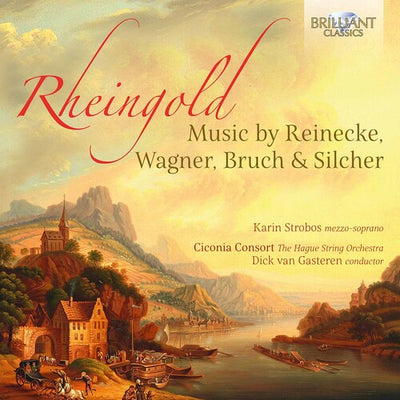
    Rheingold / Strobos, Gasteren, Ciconia Consort

    CD · 1 disc

    $6.99 $13.99 Save 50%
    Composer
    Max Bruch, Carl Reinecke, Friedrich Silcher, Richard Wagner
    Artist
    Karin Strobos, Ciconia Consort, Dick Van Gasteren
    Released
    Feb 11, 2022

    Previous Brilliant Classics albums by this Dutch string orchestra, based in The Hague, have focused on late-Romantic ‘American Pioneers’ (96086) and composers in early 20th-century Paris (95734). Under their founder-director Dick van Gasteren, they now turn to the rich history of Rhineland music from the high-point of its immortalisation in operatic culture as the bedrock of Wagner’s Ring cycle. Das Rheingold itself is present by implication in the cycle of Wesendonck-Lieder which Wagner composed on the shore of Lake Zurich, initially as sketches for Tristan und Isolde, which he had embarked upon as a venture to drum up interest and capital for the larger project of the Ring. Inspired by his intimate association with as well as the poetry of Mathilde Wesendonck, the wife of a wealthy silk merchant who was underwriting the composer’s sojourn in Zurich, Wagner then developed the songs into a self-contained cycle which throbs with transfigured desire much like the opera. The cycle is sung here by the mezzo-soprano Karin Strobos, whose career was launched by singing Octavian in Der Rosenkavalier at the Netherlands Opera under Sir Simon Rattle. She also sings the album’s notable rarity: a setting of Heine’s Loreley text, which describes the mythical creatures who lure unsuspecting Rhenish sailors to their doom like Greek Sirens. Originally composed as a male-voice partsong by Friedrich Silcher (1798-1860), the song has been transcribed by Dick van Gasteren for Strobos and La Ciconia. Complementing the songs are two unfamiliar but attractive examples of late-Romantic German string music: the Serenade Op.242 by Carl Reinecke, and the Concerto for String Orchestra by Max Bruch. Neither work enjoys more than a toehold on the record catalogue, and this engagingly vivid new recording makes the most persuasive case for them.

    REVIEW:

    Somehow this quartet of pieces brought to my mind the old wedding saw of “something old, something new, something borrowed, something blue.” For “something old” there is this Serenade of Carl Reinecke (1824–1910). Although I certainly recognize his name, I cannot recollect ever having heard any of his music before now, but this thoroughly delightful six-movement work shows that his oeuvre warrants further investigation.

    For “something new” we have a work by Max Bruch (1838–1920) — the string octet he wrote in 1920, only a few months before his death. In the score, Bruch indicated that the piece was also suitable for performance by a full string orchestra, and upon publication of that version his publisher Simrock attached the title “Concerto.” While the octet has enjoyed no less than six previous recordings in its original form, this is the first one for full orchestra, and thus makes a welcome addition to the Bruch discography.

    “Something borrowed” comes in the guise of Wagner’s Wesendonck Lieder, in a 2006 reduction for string orchestra by Gerhard Heydt. Frankly, I’m not certain what the point of this exercise is; certainly Wagner is hardly in need of reorchestration, and a good degree of tonal color is lost in subtracting woodwinds and brass. Mezzo-soprano Karin Strobos has a reasonably attractive and well produced but not exceptional voice; she sings with sincerity, but not the degree of subtle inflection these texts and settings require. This was by no means unpleasant to listen to, but there is no strong incentive to return to it.

    Finally, for “something blue,” Strobos sings a setting by Friedrich Silcher (1798–1860) of Heinrich Heine’s famous poem of the original Rhine Maiden, whose beautiful appearance and singing lure ships and sailors to destruction. Silcher’s Lied is a bit peculiar in that it’s a lilting, waltz-like ditty, devoid of any darker undertones. Here Strobos and the ensemble are in their proper element.

    The Ciconia Consort is further identified as being a nom de guerre for The Hague String Orchestra. Dick van Gasteren directs the players with a sure hand. The recorded sound is warm, with a certain degree of plush resonance. The booklet provides brief notes and song texts in German without translations. Although I would have preferred a full disc of lesser-known German string serenades, this definitely makes for enjoyable listening; cordially recommended.

    -- Fanfare (James A. Altena)

    View full page
  • Rheingold / Strobos, Gasteren, Ciconia Consort
    Sale

    Rheingold / Strobos, Gasteren, Ciconia Consort

    Brilliant Classics Feb 2022
    1 disc
    CD
    $13.99 $6.99Save 50%
    DUX

    Reinecke: Chamber Music

    CD · 1 disc

    $21.99
    Composer
    REINECKE, CARL
    Artist
    Widaszek, Tomaszewski, Domanska
    Released
    Nov 18, 2016
    Carl Reinecke, a German composer, conductor, pianist and pedagogue was one of the most influentual, many-sided and respected individuals in the musical life of the 19th century. This release contains a set of Reinecke's compositions for clarinet, horn and piano. The works featured here come from different periods of Reinecke's career and enable us to follow the development in his compositional style.
    View full page
  • Reinecke: Chamber Music

    Reinecke: Chamber Music

    DUX Nov 2016
    1 disc
    CD
    $21.99
    CPO

    Reinecke: Complete String Quartets

    CD · 2 discs

    $36.99
    Composer
    REINECKE, CARL
    Artist
    REINHOLD-QUARTETT
    Released
    Apr 12, 2019
    Five string quartets by Carl Reinecke from all the phases of his career, from it's beginnings to his old age, are extant. He himself played the first violin in his father's quartet and in this way very early became acquainted with an extensive quartet repertoire. When he began composing his first quartet, he not only was familiar with the contributions to this genre by Mozart and Beethoven but also knew Schumann's brand new Quartets op. 41. Reinecke pays homage to Schumann's music in particular in the lyrical moments of his Quartet No. 2. He composed the Quartets Nos. 3 and 4 during his years as the conductor of the Gewandhaus Orchestra. No. 3 surprises us with it's expansive key plans, which also make us sit up and take notice in his subsequent quartets and undermine the cliché of a epigone who rigidly adhered to convention and academism. In his last contribution to the genre, the Quartet No. 5, he remains true to his style. This work perhaps sounds somewhat less like Schumann and somewhat more like Brahms, whose music Reinecke very much admired.
    View full page
  • Reinecke: Complete String Quartets

    Reinecke: Complete String Quartets

    CPO Apr 2019
    2 discs
    CD
    $36.99
    CPO

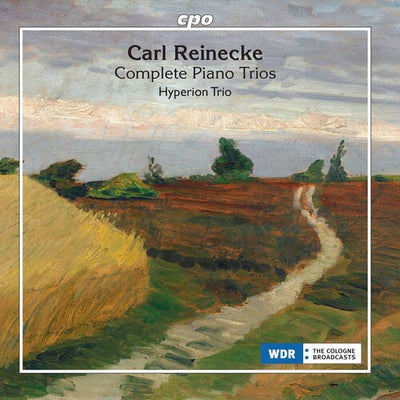
    Reinecke: Complete Piano Trios / Hyperion Trio

    CD · 2 discs

    $36.99
    Composer
    Carl Reinecke
    Artist
    Hyperion Trio
    Released
    Jan 14, 2022
    The Hyperion Trio, founded in 1999, has earned an outstanding international reputation over the past two decades, during which it has performed more than 250 works, including a number of world premieres, in its concert programs and independently designed concert cycles – always with the same three original members! On its latest double album the trio turns to works for piano trio by Carl Reinecke transmitted to us for all the phases of this composer’s life, from his beginnings to his old age. Although closeness to Schumann can clearly be heard in the early Piano Trio op. 38 of 1853, it is in every way a thoroughly independent composition both melodically and harmonically and was an important milestone for the succeeding generation of composers. In his two Serenades op. 126, composed twenty years after the first piano trio, great ambition is in evidence, despite the light tone of these works: the texture is more relaxed than it was in the first piano trio, and the thematic material is concise and forms the core for rich elaboration. The Piano Trio No. 2 op. 230, composed twenty years after the two serenades and no fewer than forty-two years after the first piano trio, places considerable demands on the interpreter, not only in the composition’s structural and motivic aspects but also purely technically in the field of precision ensemble playing. The beautiful harmonic features of the work are enormous, and the tight contrapuntal structure reveals a composer most highly schooled in convention as well as powers of musical invention and ambition beyond the reach of a good many of his younger contemporaries. The original conclusion is formed by Reinecke’s Piano Trio Version of Beethoven’s Triple Concerto op. 56. While his arrangement preserves the orchestral breadth, it simultaneously brings out the chamber components of the original work.
    View full page
  • Reinecke: Complete Piano Trios / Hyperion Trio

    Reinecke: Complete Piano Trios / Hyperion Trio

    CPO Jan 2022
    2 discs
    CD
    $36.99
  • The Eule Organ, Magdalen College, Oxford
    Convivium Records

    The Eule Organ, Magdalen College, Oxford

    CD · 2 discs

    $22.99
    Composer
    Frederic Austin, Fredrick Delius, Percy Grainger, Sigfrid Karg-Elert, Franz Liszt, Carl Reinecke, Da
    Artist
    Alexander Pott
    Released
    Sep 05, 2025
    This first recording of the Eule Organ of Magdalen College, Oxford (opened in January 2023) features a wide range of music performed by Alexander Pott. From Wagner to Delius, the repertoire showcases the instrument's German Romantic heritage as well as it's suitability for English 20th-Century transcription, thanks to it's distinctive voice, colour, breadth and sensitivity.
    View full page
  • The Eule Organ, Magdalen College, Oxford

    The Eule Organ, Magdalen College, Oxford

    Convivium Records Sep 2025
    2 discs
    CD
    $22.99
    Brilliant Classics

    Reinecke: Complete Cello Sonatas / Turkalj, Carratta

    CD · 1 disc

    $13.99
    Composer
    Carl Heinrich Reinecke
    Artist
    Ana Turkalj, Aleck Carratta
    Released
    Apr 22, 2022
    The fundamentally Romantic idiom of Carl Reinecke coexists with the twilight of the 19th century and the dawn of the 20th century. He was a precocious and prolific composer, who wrote music from an early age after his birth in the North German town of Altona in 1924. The last of his three cello sonatas was composed in the year of 1898 once he had retired from teaching duties at the Leipzig Conservatoire to become its director, while the first of them was composed in 1848, when Reinecke was serving as a young and brilliantly accomplished court pianist in Copenhagen. The trio of sonatas thus spans his maturity and effectively traces certain strands of his development as a composer. All three of them hew to the standard quick-slow-quick three-movement form in which the sonata’s argument is outlined by a discursive first movement, deepened by a reflective intermezzo and rounded off with an extrovert rondo finale. When it was belatedly published in 1855, the A minor Sonata won such popularity that Reinecke was soon asked to make a violin version of the piece. The dedicatee was Andreas Grabau, a cellist in the Gewandhaus Orchestra of which Mendelssohn was director, and indeed, the sonata rejoices in a quickness of thought and lively spirit which Felix would have recognized and appreciated. The D major Sonata Op.89 was composed in 1866 and published by Breitkopf & Hartel with a dedication to Carl Voigt. Is this a ‘midde-aged’ Reinecke? Certainly the first movement stands back from the high drama of the First Sonata, or at any rate gives way periodically to a very cellistic mode of introspection, inviting comparison in this regard with the recently composed E minor Cello Sonata of Brahms.
    View full page
  • Reinecke: Complete Cello Sonatas / Turkalj, Carratta

    Reinecke: Complete Cello Sonatas / Turkalj, Carratta

    Brilliant Classics Apr 2022
    1 disc
    CD
    $13.99
  • Reinecke: Complete Violoncello Sonatas / Manuel Fischer-dieskau, Connie  Shih
    MDG

    Reinecke: Complete Violoncello Sonatas / Manuel Fischer-dieskau, Connie Shih

    CD · 1 disc

    $23.99
    Composer
    REINECKE, CARL
    Artist
    Fischer-Dieskau, Shih
    Released
    Sep 01, 2011
    For British listeners, the name of Reinecke is likely to evoke Stanford’s recollection - after an uninspiring period of study with him - that “of all the dry musicians I have ever known, he was the most desiccated”. Scandinavians will remember that Grieg thought no better of the man and that for Svendsen, “not only is he envious and bloodless … he is also in the highest degree villainous”. Yet many musicians sought him out during his long reign at the Leipzig Gewandhaus (1860-1895), including Sullivan, Bruch, Delius and the three just mentioned, while Elgar travelled to Leipzig in 1882 to hear him conduct.
     
    If this all suggests a plodding academic, the “Undine” Sonata for flute and piano, the one work by Reinecke that remains at least on the fringe of the repertoire, is neither academic nor lacking in fantasy. A disc containing the First Symphony, the Violin Concerto and some smaller pieces suggested to me that further examination of Reinecke would be never less than pleasant, if hardly thrilling. Maybe thrilling would be too strong a word for these cello sonatas too, but they do suggest he was more inspired in chamber music than in larger orchestral pieces.
     
    In some ways the first sonata is the most attractive of all. Its ballad-like opening theme immediately catches the attention and the second theme is not only well contrasted, it is introduced in a very remote tonality indeed. What is striking about this movement is the mastery with which it combines free-flowing, rhapsodic feeling with tight formal control. Though Reinecke is said to have looked back to Mendelssohn and Schumann for his models, and certainly rejected Liszt and Wagner, his music combines romantic spirit with an intuitive sense of form. Here, at least, he was able to make his own personal fusion of classical ideals and romantic freedom. The second movement also contains a number of quite contrasting ideas and the finale has much surging passion.
     
    The claims of the second sonata are not to be underestimated, either. After a short but brooding introduction the first movement leads off with a pithy, expressive idea that revolved in my head for some days afterwards. Again, Reinecke’s formal control is tight even while the effect is of free rhapsody. The themes tend not to appear and reappear in the expected places and tonalities, and are inclined to undergo transformations just where an exact recapitulation might seem in sight. The second movement is marked “Quasi fantasia” and has much soaring romantic melody. The finale starts with a catchy tune but is inclined to chase its own tail a bit too much for its own good. This, admittedly, is a common failing among 19th century finales when not written by Brahms.
     
    Altogether, it may be said that, if Reinecke did not revolutionize sonata forms, he nevertheless evolved an intuitively inventive way of reinterpreting received formal wisdom. The interesting thing is that exactly the same thing could be said about his grudging pupil Stanford’s chamber music, even down to a tendency to write finales that chase their own tail. One is bound to wonder if Reinecke’s music did not have a greater influence on Stanford than he later cared to admit, having been so disappointed by the man himself. Also common to both composers is a complete equality between the two partners, with plenty of challenging material for both players and a continual melodic interplay that must make Reinecke’s chamber music rewarding to perform. Ultimately, I suppose this music inhabits smiling valleys and pleasant domestic surroundings rather than soar above the mountain peaks, but we can surely find a place for music that does this so attractively.
     
    The third sonata arouses more ambivalent reactions. Dedicated “to the shade of Brahms”, who had just died, its formal mastery will not be questioned. Furthermore, while in one sense it occupies harmonic ground solidly rooted in Schumann, its restless modulations look ahead to the world of Reger. It is a bitter, even vehement work by a composer whose art was by then left high and dry by musical progress. The only problem is that Reinecke’s easy flow of melodic inspiration seems to have dried up. The themes are clear-cut and functional, but neither the composer’s masterly development of them, nor these performers’ imagination and conviction, can hide the fact that the cupboard is a little bare. Only the second theme of the finale recalls the warmth of earlier years. Nevertheless, as often with late works by composers clinging to the style of their youth in the teeth of what they perceive as ugly modernism, the sense of isolation and disillusionment can be moving in themselves. Here, too, the case of Stanford is an obvious parallel.
     
    Manuel Fischer-Dieskau, just in case you’ve been wondering, is the great baritone’s son. It would seem that interventionism, as an interpretative creed, runs in the family. But, like his father at his best, MF-D knows how to intervene in a way that brings the music to life, and he extracts the maximum range of expression from these scores. The Canadian pianist Connie Shih has an easy technical command and a well-rounded tone in the heavier moments. She and the cellist seem in full agreement over how to play this music. They leave me wondering why the first two sonatas, at least, never made it into the not very large repertoire of romantic cello sonatas.
     
    Cellists reading these words may be wondering where they can get the scores. They will be delighted to find that the IMSLP-Petrucci Library, a great Internet resource, apparently offers all three for free download. They will be a bit less delighted when they find that the file of no.1 is missing pages 4-15, jumping from the first page of the first movement to the last page of the second, so you get only the finale complete. Also, there’s not a cello part, instead there’s an alternative violin part. The second sonata is complete but the piano part of no.3 lacks the last page, or maybe the last two. In compensation you get pages 10 and 11 twice. I used to think that people who do things for love not money do them properly, but on this showing even some who work for love are as slap-happy as any half-hearted employee anxious for the next coffee break. Granted, one shouldn’t look a gift-horse in the mouth, but we may reasonably check that it has all four legs.
     
    None of this little grumble, obviously, affects the value of this finely recorded and excellently annotated disc of three cello sonatas well worth investigating. The name of Reinecke is beginning to come alive for me.
     
    -- Christopher Howell, MusicWeb International
    View full page
    CPO

    Reinecke: Flute Concertos & Flute Sonatas / Ruhland

    CD · 1 disc

    $18.99
    Composer
    REINECKE, CARL
    Artist
    Ruhland, Heiligers, Liebreich
    Released
    Oct 06, 2017

    Tatjana Ruhland has been described as »the Paganini of the flute.« At the very latest since her debut at New York’s Carnegie Hall she has numbered among the most prominent artists performing on the flute. On the present program she dedicates herself to Carl Reinecke’s chamber and concertante flute compositions, all of which he composed during the second half of his life. Along with the Undine Sonata op. 167 for flute and piano, today his most frequently performed work, the recording features the two concertante works written by him when he was over eighty years old. Here the initial dominance of stylistic elements associated with Mendelssohn has yielded to a tonal language that is both electrifying and highly individual. Reinecke’s music is diatonic in design but so strongly pervaded by semitones and suspensions that it also continues to flow. The »build-up phase« of the concertante last movements is only one of the procedures hardly invented by Reinecke but very much loved by him.

    View full page
  • Reinecke: Flute Concertos & Flute Sonatas / Ruhland

    Reinecke: Flute Concertos & Flute Sonatas / Ruhland

    CPO Oct 2017
    1 disc
    CD
    $18.99
  • REINECKE: Music for Clarinet
    Naxos

    REINECKE: Music for Clarinet

    CD · 1 disc

    $19.99
    Composer
    REINECKE
    Artist
    Olivier Dartevelle (Clarinet) And Others
    Released
    Nov 21, 2006
    Distinguished in his day as a conductor and pianist, Reinecke is now remembered chiefly as the teacher of some of the leading composers of the later 19th century. He was, at the same time, an immensely prolific if relatively conventional composer.
    View full page
  • REINECKE: Music for Clarinet

    REINECKE: Music for Clarinet

    Naxos Nov 2006
    1 disc
    CD
    $19.99
  • Reinecke: Complete Works for Cello & Piano
    Naxos

    Reinecke: Complete Works for Cello & Piano

    CD · 1 disc

    $13.99 $19.99 Save 30%
    Composer
    REINECKE, CARL
    Artist
    Rummel, Kruger
    Released
    Mar 08, 2019
    Carl Reinecke's melodic gift, mastery of counterpoint, and idiomatic command of chamber repertoire, in particular, exemplify why he was acclaimed as one of the great representatives of German High Romanticism. His Cello Sonatas were composed over four decades. The First teems with freshness and a Schumannesque lyricism, while the Second is a more experimental work, with a notably quizzical slow movement. Virtuosity, solemnity and caprice are features of the Third Sonata, while the Three Pieces, Op. 146 offer an enticing contrast of songfulness and dance. Austrian cellist Martin Rummel is not only the last pupil of the legendary William Pleeth, but with the release of nearly 50 albums, one of the most distinguished cellists of his generation. He continually gains worldwide praise for his recordings of previously undiscovered music. First Prize winner of the prestigious Concours de Geneve in 2001, Roland Kruger has performed in venues such as the Concertgebouw, Amsterdam, the Palais des Beaux-Arts, Brussels, and the Kolner Philharmonie festival. As a soloist, he has worked with the Orchestre de la Suisse Romande, the Orchestre National de Belgique and the NDR Radiophilharmonie Hannover, among others.
    View full page
  • Reinecke: Complete Works for Cello & Piano
    Sale

    Reinecke: Complete Works for Cello & Piano

    Naxos Mar 2019
    1 disc
    CD
    $19.99 $13.99Save 30%
  • Amir Katz & Kilian Herold: Brahms - Reinecke - Draeseke

    Amir Katz & Kilian Herold: Brahms - Reinecke - Draeseke

    CAvi-music Aug 2012
    1 disc
    CD
    $19.99
    CPO

    Reinecke: Complete Works for Two Pianos / Piano Duo Genova & Dimitrov

    CD · 3 discs

    $36.99
    Composer
    Carl Reinecke
    Artist
    Genova & Dimitrov Piano Duo
    Released
    Jan 06, 2023

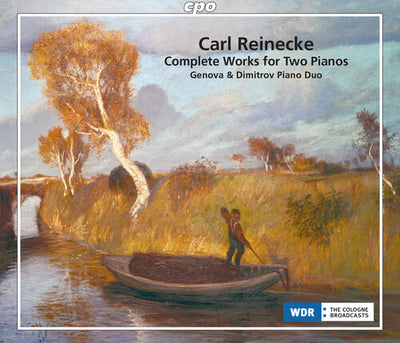
    Carl Reinecke became known not least for his piano works, in which he reveals his style rooted in Romanticism. He wrote not only for solo piano, but also for piano four hands and for two pianos. The piano duo Genova & Dimitrov have now discovered this group of works for themselves and describe Reinecke as "one of the greatest surprises and discoveries of our musical path". The duo now presents the first recording of all works for two pianos and reveals: "Even while playing through the beautiful, introductory phrase of his Andante with Variations op. 6, a whole new world opened up before us in a split second and drew us into the further almost 200 minutes. It is a world of multi-layered human emotions, contrasts and spontaneity, a world of boundless, pure love and courtesy for fellow human beings, of unconditional helpfulness and understanding, of the deepest respect for others, of devoted selflessness and unshakeable faith in God and in the good in people. All that is Carl Reinecke as a person gushes forth ceaselessly from his music. Through the present recordings, we hope to be able to pass on to our audience this 'source of life' as pure and unadulterated as possible, just as we received it as a gift from the great master." A brilliant complete edition!

    View full page
    CPO

    Reinecke: Die Wilden Schwäne, Op. 164 / Schwanen-Ensemble

    CD · 1 disc

    $18.99
    Composer
    REINECKE, CARL
    Artist
    Labonte, Shi, Romberger, Kohler, Petri, Mcgregor, Stertz, Gulyka, Kreutz, Kleinert, Schwanen-Ensembl
    Released
    Apr 08, 2016

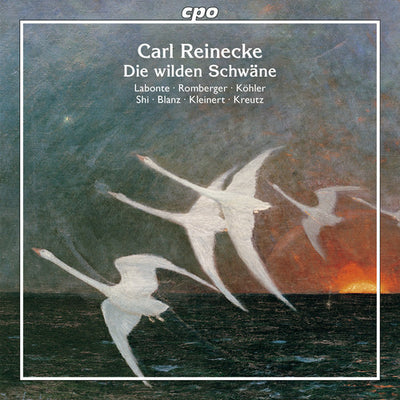
    This new release features Carl Reinecke’s Die wilden Schwaene (The Wild Swans). This work in sixteen musical numbers is based on a Hans Christian Andersen fairy tale. Performers on this release include soprano Kirsten Labonte, alto Gerhild Romberger, soprano Shuang Shi, baritone Markus Kohler, and more.

    View full page
  • Reinecke: Orchestral Works

    Reinecke: Orchestral Works

    Dynamic Feb 2016
    1 disc
    CD
    $18.99
  • REINECKE: Symphony No. 1 / King Manfred
    Naxos

    REINECKE: Symphony No. 1 / King Manfred

    CD · 1 disc

    $19.99
    Composer
    REINECKE
    Artist
    Alfred Walter
    Released
    Sep 01, 2001
    Reinecke wrote his Grand Romantic Opera in Five Acts, King Manfred, between April and December 1866 in Leipzig, using a libretto by Friedrich Roeber. The work received it's first performance on 26th July, 1867, at the Royal Court Theatre in Wiesbaden under the direction of Wilhelm Jahn and was published in 1868 by Breitkopf and Härtel. The opera deals with the fate of the war-like King Manfred of Sicily (1232-1266), an illegitimate son of the Hohenstaufen Emperor Frederick II, who had half Europe against him and fell in battle against Charles of Anjou. Reinecke chose this unfortunately Wagnerian subject in accordance with the taste of the time. Although critics of the day recognized the value of the work, it was to disappear from the repertoire within a few years. Only the splendid Overture and the Preludes were to retain a place until the turn of the century. The Overture is one of the most important works of Reinecke, constituting a character-sketch of Manfred, in the manner of Beethoven's Leonora, Schumann's Genoveva and Manfred and Wagner's Faust, rather than relying on the musical content of the opera. Here are all the ingredients of Romantic stage music, lyrical melodies for horn or cello, the sounds of the minstrel's harp, agitated running notes for the strings and massive chords for the brass, all handled with an assurance that makes it difficult to understand the present neglect of the piece. The Prelude to Act V deserves special mention. A short introduction presages the coming disaster, the death of Manfred, before a melodic line of lyrical intensity, a cogent demonstration of the creative power of the composer. It is with this music in mind that we may read Reinecke's assessment of his own achievement, in a letter to Ferdinand Hiller on his choral work Belsazar: "... you know that no brilliant, original inventiveness is at my disposal... , but I believe, nevertheless, that I have provided a thoroughly respectable piece of work, evidence of worthy endeavor, a passable command of form and good taste, perhaps also of good judgment".
    View full page
  • REINECKE: Symphony No. 1 / King Manfred

    REINECKE: Symphony No. 1 / King Manfred

    Naxos Sep 2001
    1 disc
    CD
    $19.99
  • Leipzig! Grieg, Svendsen, Hartmann, Reinecke for Wind Octet

    Leipzig! Grieg, Svendsen, Hartmann, Reinecke for Wind Octet

    LAWO Classics Apr 2014
    1 disc
    SACD
    $18.99
  • The Deep Has Always Known Me
    PENTATONE

    The Deep Has Always Known Me

    CD · 1 disc

    $19.99
    Composer
    Lili Boulanger, Florence Price, Carl Reinecke, Franz Schubert, William Grant Still
    Artist
    Brandon Patrick George, Bryan Wagorn
    Released
    May 29, 2026
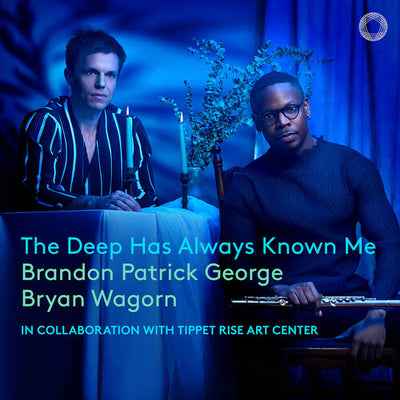
    GRAMMY-winning flutist Brandon Patrick George and pianist Bryan Wagorn present The Deep Has Always Known Me, an album inspired by the myth of Undine - her emergence from the depths, her experience of love, and her transformation into human form. The title, an original idea by the artists, reflects the mystery and emotional intensity at the core of the programme. Developed since 2022 and rooted in one of the duo's first post-pandemic performances, the project grew from a desire to create something meaningful after a long period of separation, centred on themes of love, loss, and solace. Romantic repertoire forms the album's foundation, with works by Franz Schubert and Carl Reinecke exploring longing and devotion through literary narratives and nature-infused sound worlds. Music by Lili Boulanger, Florence Price, and William Grant Still expands this expressive journey with warmth, intimacy, and richness of color. United by close listening and deep musical trust, George and Wagorn shape a recording that offers reflection, connection, and quiet emotional depth.
    View full page
  • The Deep Has Always Known Me

    The Deep Has Always Known Me

    PENTATONE May 2026
    1 disc
    CD
    $19.99
    Brilliant Classics

    Music for Viola & Piano by Schumann, Sibelius et al. / Piva, Filistovich

    CD · 1 disc

    $10.99 $13.99 Save 21%
    Composer
    Frank Bridge, Carl Reinecke, Robert Schumann, Jean Sibelius, Henry Vieuxtemps, Henryk Wieniawski
    Artist
    Massimo Piva, Inessa Filistovich
    Released
    Feb 16, 2024

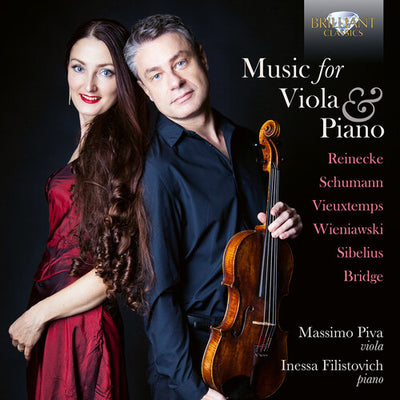
    On this unique and originally programmed journey, the violist Massimo Piva takes the kind of fantasy journey (Fantasiereise) that forms one of the cornerstones of German Romanticism. It is in the context of highly wrought, fantastic tales that Schumann’s style is formed from a literary point of view: Hoffmann's short stories and Jean Paul's novels, inhabited by bizarre characters and surreal situations, are his polar stars. On the musical side, he had an 18th-century heritage of fantasies by composers such as Mozart or C.P.E. Bach to draw upon, in which the notion of the fantasy is still linked to the Baroque idea of improvisation.
    This is the background to the Marchenbilder Op.113, which Schumann worked on feverishly in March 1851. As a masterpiece in his late style, the collection shivers with obsession and fevered dreams. Placing them side by side illuminates the degree to which Reinecke was inspired by Schumann’s example in his own Fantasiestucke Op.43. But this recital moves on into less familiar territory, where the viola’s personality as a melancholy guide takes us to repertoire by Vieuxtemps (an F minor Elegy), Wieniawski (Rêverie in F sharp minor) and Sibelius (Rondo in D minor) by composers much better known for their prowess as violinists, and as violinst-composers.
    The recital reaches a natural chronological end with the pre-eminent poet of the viola in the early decades of the 20th century, Frank Bridge. No violist he, but inspired by the artistry of Lionel Tertis, Bridge came to write a good deal for the instrument such as the Two Pieces featured here, and found its mellow, soulful voice a natural fit for his own as a composer. As a former member of the Lucerne Festival Orchestra and Orchestra Mozart, Massimo Piva worked extensively with the conductor Claudio Abbado. As a member of the Quartetto Prometeo he has performed both modern and classic repertoire across Europe, working with composers including Sciarrino and Fedele, and recorded the complete works for string quartet by Hugo Wolf on Brilliant Classics (94166).

    View full page
  • Music for Viola & Piano by Schumann, Sibelius et al. / Piva, Filistovich
    Sale

    Music for Viola & Piano by Schumann, Sibelius et al. / Piva, Filistovich

    Brilliant Classics Feb 2024
    1 disc
    CD
    $13.99 $10.99Save 21%