Search results: Search results

130 results

Products

  • Russian Ballet Favorites

    Russian Ballet Favorites

    Naxos Sep 1997
    1 disc
    CD
    $19.99
  • Great Ballet
    Naxos

    Great Ballet

    CD · 10 discs

    $74.99
    Composer
    ADAM DELIBES GLAZUNOV KHACH
    Artist
    Various
    Released
    Apr 24, 2012
    GREAT BALLET (10-CD Box Set)

    Ballet was born from the late Renaissance movement in Europe, combining the classical skills of music, dance and drama. Its origins can be traced back to the dance traditions of the nobility in the French and Italian courts of the fifteenth century. The creation of classical ballet as we know it was developed under the auspices of Louis XIV, and was then further refined in France and Russia in the nineteenth century into the hugely influential and highly skilled concert dance form with which we are familiar today. Fittingly this collection starts in France, with one of the most haunting and memorable examples of the ballet form: Adam’s Giselle. We are then swept along in a whirlwind tour of some of the greatest Russian ballets by such great composers as Prokofiev, Khachaturian and Shostakovich, while no ballet anthology would be complete without Tchaikovsky’s three Romantic masterpieces Swan Lake, Sleeping Beauty and The Nutcracker. From Delibes to Stravinsky, this collection amply demonstrates why ballet remains one of the most loved musical genres.

    Reviews of some of the original recordings that make up this set:

    Swan Lake
    "With Yablonsky's version of this great work we can enjoy it (if we choose) as a kind of Straussian (Richard) tone poem. The ‘plot’ is fundamentally about the striving of a 'superhero' against evil and allowing him to triumph through the power of love.

    So how does Yablonsky’s version compare to the other recordings? Well, Bonynge is operatic in his conception rather than symphonic. Previn for me brings greater excitement than Yablonsky, but once again it is predicated on having sight as well as hearing stimulated. One mentally has to supply the dancing with Previn.

    What we have in this Naxos recording is a fine concert performance that allows us to concentrate on the music without having to superimpose movement, colour and narrative. Although we can if we want to - and it is excellent too!"

    -- John France, MusicWeb International

    Raymonda
    "If you want to be reminded just how great the three Tchaikovsky ballets really are - and why The Sleeping Beauty remains the best three-act ballet score of them all then listen to the complete Raymonda. Not that it's a bad piece of work by any means. Even the bottom line - which is that Tchaikovsky simply has inspired dance-melodies by the yard while Glazunov doesn't - is something turned to good use in Raymonda. For while Tchaikovsky finds a new idea or two for each of his characteristic dances, which only throws still more into relief the few truly symphonic stretches of his scores (of which the "Sleep" interlude in The Sleeping Beauty has to be the finest), Glazunov forges connections throughout. A waltz melody becomes a pizzicato variation; even a racy coda turns out to be a brilliant transformation of the grand "Pas de deux" with further themes appended. The three principal characters - sweet Raymonda, her chivalrous hero and the lovesick villain (a Saracen, naturally) - have their leitmotifs, but the plot remains uninterestingly confused. It serves only to provide Glazunov with every flavouring in the balletic hook: medievalism and moonshine in Act I, orientalia in Act 2, a Magyar divertissement in the last and weakest of the acts (poor stuff compared with the outer acts of Coppélia).

    That makes for a feeble sense of unity, but few dull moments; and so welcome to a first-rate complete performance. Alexander Anissimov was a conductor unfamiliar to me. He keeps the Moscow Symphony Orchestra on their toes: the strings are keener of articulation than their Bolshoi or Kirov counterparts while balances and dynamics are all observed in an end result of greater sophistication than you might expect from this source (with handsome sound to match). Anissimov excels in the grand symphonic unfolding of the first two numbers and the two Entr'actes, over which he takes more time and care than Fedotov."

    -- Gramophone [8/1996]

    Le sacre du printemps
    "Robert Craft's performance of The Rite of Spring, rescued from oblivion on Koch, proves that in the early ballets he can be both accurate as well as exciting. Extremely well played by the London Symphony, seldom have the complex textures in the Introduction to Part One or the Ritual of the Rival Tribes sounded so clear and natural. And yet, in the Dance of the Earth, or the concluding Sacrificial Dance, Craft pulls out all of the stops to really impressive effect."

    -- David Hurwitz, ClassicsToday.com
    View full page
  • Great Ballet

    Great Ballet

    Naxos Apr 2012
    10 discs
    CD
    $74.99
  • RUSSIAN BALLET MASTERPIECES

    RUSSIAN BALLET MASTERPIECES

    Chandos Sep 1990
    1 disc
    CD
    $6.99
  • Noel / Angele Dubeau, La Pieta
    Analekta

    Noel / Angele Dubeau, La Pieta

    CD · 1 disc

    $20.99
    Composer
    BRUBECK GLAZUNOV IRELAND
    Artist
    Dubeau, La Pieta
    Released
    Nov 09, 2010
    Angele Dubeau and La Pieta take us around the world in a sparkling selection of Christmas themes for small string orchestra. Some tunes are familiar, others are new to us but ring with the essence of timelessness as they are surely international favorites bound for familiarity here through many repeated listenings. One characteristic every work on the program shares... simply beautiful melodies and the sound of shimmering, silken strings. This is a joyous and festive celebration sure to become a new holiday classic. - ArkivMusic

    -------------------------

    Silent night! Holy night! Hearing just a few notes of this eternal carol is enough to envelop us in a sweet tranquility and inner peace that goes well beyond the meaning of the words written by Joseph Mohr and music famous song by Franz Xaver Gruber. Jumbled memories arise of snow-covered countryside, crackling fires, delicious aromas filling the house, the joyful shouts of excited children unwrapping presents. Has Christmas turned into mere nostalgia, or can we rediscover the true meaning of this celebration? Angèle Dubeau thinks we can and, through both popular songs and carols works associated with the Nativity, she offers here a voyage through a world with diverse origins and traditions. This musical tour and celebration of the Nativity will take you to Finland, Italy, France, Germany, Austria, the United Kingdom, Russia, and, closer to home, Mexico and Canada, with the Huron Carol.

    God Jul!

    In Scandinavia, Christmas celebrations begin on December 13, the feast day of Saint Lucy, when a young girl is chosen in each village to represent her. Clothed in white and a crown of candles, she goes from house to house—along with a retinue of girls in white dresses and boys with pointy, star-spangled hats—bringing light, the symbol of life and renewal, for the coming year. In Finland, the official festivities begin with a declaration of “Christmas Peace” broadcast live on December 24 from Turku Cathedral. A few moments later, Christmas bells ring out across the country, as conveyed by Joulun Kellot (“Christmas Bells”), an interpretation written by Armas Toivo Valdemar Maasalo. Juleniss, the Finnish equivalent of Santa Claus, rewards good children during the night that follows; one wonders if he is tempted to hum the song Julvisa (“Christmas Song”, subtitled Give me no Splendour, Gold or Pomp), written by a young Jean Sibelius.

    Buon Natale!

    While Christmas in Italy might first bring to mind panettone, a Christmas sweet bread invented in Milan around 1490 that is served stuffed with cream, topped with a sauce or covered in chocolate, the country is above all the cradle of the Nativity scene. Indeed, Francis of Assisi created one of the first “living” nativity scenes in 1223, with villagers playing various character roles. Whether miniature or almost life size, these reproductions of the manger scene quickly became a tradition, with Italian families setting them up nine days before Christ’s birthday. It is not surprising, then, that two of Italy’s most well-known Baroque composers, Antonio Vivaldi and Guiseppe Torelli, dedicated idyllic concertos to “the holy birth.”

    Joyeux Noël!

    In France, cantiques de Noël remain the most important part of popular celebrations of the Nativity. By the 16th century, numerous versions of these carols existed in a variety of regional dialects, and they were distributed by door-to-door salesmen who also carried “Christmas Bibles” and engraved prints (often with a carol on the back). Here, Angèle Dubeau performs Noël nouvelet, Laissez paître vos bêtes and La Vierge à la crèche, set to a text by Alphonse Daudet.

    Fröhliche Weihnachten!

    In Germany, Christmas is Weihnachten (holy nights), and this is where the tradition of the Christmas tree originates. Legend has it that Saint Boniface (ca. 680–754) used the triangular shape of the evergreen tree to explain the concept of the Trinity to the pagans. The first mention of the modern Christmas tree dates back to 1521 in the Alsatian town of Sélestat. Even before this, however, the Christmas mystery plays performed in church squares frequently made use of trees decorated with fruit, offerings, decorations and candles (the candle tradition being attributed to Martin Luther). Two centuries later, Johann Melchior Molter wrote a delicate concerto grosso, inspired by the scene of the adoration of the shepherds.

    ¡Féliz Navidad!

    In central America, Mexicans celebrate Las Posadas (the inns) which, starting December 16, commemorates Joseph and Mary’s search for lodging. As night falls, a procession sets off, led by children carrying a small decorated platform bearing statues of Joseph and Mary, who is riding a donkey. As the procession of villagers winds through the streets singing litanies, they knock at various doors along the route. Each time they are turned away with the cruel words “There is no room,” until the procession arrives at the appointed house or church. Then, the doors are flung wide in the open spirit of Christmas and the celebration begins, concluding with the breaking of a piñata, refreshments and dancing. The lullaby performed here, entitled “Sleep, Holy Infant”, comes from Dave Brubeck’s Christmas cantata, “La Fiesta de la Posada”, written to a text by his wife, Iola Brubeck and arranged by Russell Gloyd especially for Angèle Dubeau. Upon hearing the recording, Mr. Brubeck’s reaction was: “This is fantastic. She is playing from her heart.”

    Hristos Razdajetsja!

    Orthodox Russians have always liked to transform religious events into celebrations, hence the string quartet Jour de Fête by Alexander Glazunov, which evokes the festivities held on the night of January 6 to 7, Christ’s birthday on the Julian calendar. After the church service, everyone sits down to “Holy Supper,” which cannot be started until the first star appears in the sky, an homage to the star that guided the Magi. After the feast, tradition dictates that a plate of braided bread called kalach is left on the table between two candles, in honour of deceased members of the family. Angèle Dubeau offers here one of the rare recordings of this work.

    Merry Christmas!

    Christmas is celebrated enthusiastically in the United Kingdom. Houses are decorated with bright lights, children sing Christmas carols (such as “Holy Boy” by John Ireland) in the street, collecting spare change for the poor, and Christmas pudding is the traditional post-Christmas-dinner dessert. Another important tradition began here: the sending of Christmas cards, a custom that began in the 15th century and expanded significantly in the 18th century with the development of lithography.

    Jesous Ahatonhia

    The Huron carol Jesous Ahatonhia (Jesus is born) was written by the Jesuit Jean de Brébeuf in 1641. Hoping to better convey the meaning of Christmas, the priest adapted the text to the reality of the First Nations people. Hence, Jesus is wrapped in rabbit skins, he sleeps in a bark lodge, the adoring shepherds are replaced with hunters, and three Indian chiefs take the place of the Magi. Canadian composer Kelly-Marie Murphy based her work Huron Carol Interlude on the carol. The interlude of the title refers to the third movement of her string quintet Dance Me Through the Panic, from which she borrowed shimmering colours and a sense of melancholy, imbuing the carol melody with a very particular mood and evoking, in her own words, an “imagery of ice, snow, solitude and prayer.” When she heard this Angèle Dubeau’s rendition of her work, the composer wrote: “This is a wonderfully performed and produced interpretation of Huron Carol Interlude. There is a rich, full sound, with a perfect sense of pacing and colour. It expresses my ideas beautifully. Heartfelt thanks and congratulations to Angèle Dubeau!”

    © Lucie Renaud
    Translation: Peter Christensen
    View full page
  • Noel / Angele Dubeau, La Pieta

    Noel / Angele Dubeau, La Pieta

    Analekta Nov 2010
    1 disc
    CD
    $20.99
    Brilliant Classics

    Rachmaninoff & Prokofiev: Cello Sonatas

    CD · 1 disc

    $8.99
    Composer
    RACHMANINOFF PROKOFIEV TCHAI
    Artist
    Russakovsky, Nicholson
    Released
    May 27, 2014
    Rachmaninov, Prokofiev: Cello Sonatas / Russakovsky, Nicholson / Composer: Sergei Rachmaninov, Peter Ilyich Tchaikovsky, Alexander Glazunov, Sergei Prokofiev / Performer: Alexander Russakovsky, Amber Shay Nicholson / Number of Discs: 1. Cellist Alexander Russakovsky enjoys an international reputation as a performer and teacher. He has given master classes as far afield as Latin America and Taiwan, and in recent years has won first prize at the Angela and Maurice M. Clairmont Competition in Tel Aviv and the Performing Arts Foundation Competition in Santa Barbara. Pianist Amber Shay Nicholson won the 2001 Rachmaninoff Concerto No.3 competition at the Eastman School of Music; she is also a former member of the piano faculty of the University of Southern Mississippi. Recorded in 2012. This new recording brings together two great, but altogether different 20th century Cello Sonatas from Russia: the gorgeous and deeply romantic cello sonata by Rachmaninoff, of near-symphonic proportions, and the cello sonata by Prokofiev, a hybrid piece of his later period, a fascinating mixture of the romantic, the grotesque and the introspective side of the multi faceted composer. As interludes we hear arrangements of Tchaikovsky's ballet music from Sleeping Beauty, and the Sérénade Espagnole by Glazunov, a brilliant show piece. Beautiful, expressive and "Slavic" performances by Russian cellist Alexander Russakovsky.
    View full page
  • Rachmaninoff & Prokofiev: Cello Sonatas

    Rachmaninoff & Prokofiev: Cello Sonatas

    Brilliant Classics May 2014
    1 disc
    CD
    $8.99
    Piano Classics

    Piano Classics Explorer Set: Slavic Edition

    CD · 10 discs

    $48.99
    Composer
    Sergei Lyapunov, Felix Blumenfeld, Nikolai Medtner, Vitezslav Novak, Viktor Kosenko, Alexander Glazu
    Artist
    Various
    Released
    Sep 22, 2023

    A budget-priced box of critically acclaimed piano albums exploring the rich diversity of Slavic piano music: an ideal introduction to the Romantic and post-Romantic world of Slavic pianism beyond the canon of Tchaikovsky and Rachmaninoff.

    The notable feature of this set dedicated to piano music by composers from Slavic nations is its sheer diversity. It would be possible to trace their writing for the keyboard back variously to Chopin and Schumann, but the same could be said of any other group of composers around Europe from the late 19th century onwards. What the set does illustrate is the rise of pianists, trained in a system that became known as the ‘Russian Piano School’, who could take on such formidably demanding scores as Lyapunov’s Transcendental Studies and Medtner’s ‘Winter Wind’ Sonata.

    Pianist-composers such as Bortkeiwicz, Blumenfeld and Medtner flourished across Europe in the first decades of the last century, and so did piano manufacturers, producing ever more reliable and tonally sophisticated instruments that could cope with the rigours of these scores. A generation before them, Viteslav Novak in the Czech Republic and Dora Pejacevic in Croatia were writing less prodigiously demanding music which took its expressive cue from the tone-pictures of Schumann rather than the broader canvases of Liszt. In Ukraine, Viktor Kosenko was one of several composers here to use old church modes in his narmony, lending it both a patina of antiquity and at times an other-worldly novelty. In Romania, George Enescu pursued this path still further in finding a new world for the piano hardly less distinctive than Scriabin’s.

    Back in Ukraine, the music of Ihor Shamo embodies a kind of melancholy yearning that is both a natural inheritance from Rachmaninoff and perhaps the nearest to a ‘Slavic’ expressive trait. All the performances here were recorded within the last decade and received with critical enthusiasm on their release.

    This budget reissue includes all the original sleeve notes, making it a worthwhile investment for collectors and newcomers alike.

    Past praise of previously released volumes included in this set:

    Blumenfeld: Préludes (24) / Mark Viner

    A welcome disc that adds two substantial Etudes in addition to the Preludes. Felix Blumenfeld (1863–1931), was a celebrated pianist, conductor, and teacher whose pupils included Horowitz and Barere. That is certainly worth boasting about. Of his own compositions, there is certainly plenty of craftsmanship at hand, if maybe not the ultimate in originality. Would I recommend this? Definitely.

    -- American Record Guide

    Pejačević: Piano Music / Ekaterina Litvintseva

    Ekaterina Litvintseva’s new anthology covering about half of Dora Pejačević's piano music seriously raises her profile. Moving chronologically from her early salonesque trifles to her powerful Second Sonata, a work clearly preparing the way for an abandonment of tonality, it features exceptional playing from the supremely gifted pianist.

    -- Fanfare

    Novák: Pan / Tobias Borsboom

    Inspired by the idea of the Greek god Pan, the work is a sprawling and ambitious one that evokes impressionist uses of tone color and Richard Strauss’s tone poems. There are lovely movements, especially in the blossoming melodies in `Mountains’. `Sea’ has some rippling melodies and lush harmonies. Borsboom offers useful liner notes to illuminate the use of thematic material in the work, especially how the `Prologue’ presents a theme and melodies that appear in the rest of the movements. It is a bit hard to hear the cyclical unity, though, and this music might not be everyone’s cup of tea. Borsboom’s playing is very capable.

    -- American Record Guide

    Enescu: Suite, Op. 18; Piano Sonata No. 3 / Saskia Giorgini

    Saskia Giorgini’s idiomatic virtuosity is completely at one with Enescu’s sound world. By holding the first-movement of the Third Sonata's Vivace con brio ever-so-slightly back, Giorgini secures steadier rhythm throughout and conveys greater differentiation between detached and sustained passages. She keeps the long Andantino cantabile hauntingly afloat as she contours the music’s melodic, accompanimental and purely decorative elements in three-dimensional perspective. The same can be said regarding the Allegro con spirito’s conversational counterpoint and appropriately muted left-hand repeated-note ostinatos; here is where the Bösendorfer’s ‘fortepiano in the body of a concert grand’ timbre particularly speaks. In short, Giorgini has truly internalized this elusive, oddly gripping music, whetting the appetite for an eventual Enescu cycle. Recommended.

    -- Gramophone

    View full page
  • Piano Classics Explorer Set: Slavic Edition

    Piano Classics Explorer Set: Slavic Edition

    Piano Classics Sep 2023
    10 discs
    CD
    $48.99
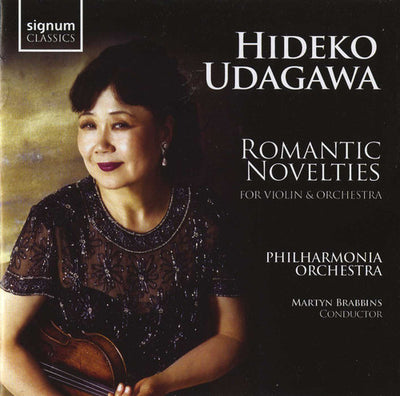
  • Romantic Novelties

    Romantic Novelties

    Signum Classics Jan 2010
    1 disc
    CD
    $19.99
  • Chant du menestrel
    Ars Produktion

    Chant du menestrel

    CD · 1 disc

    $18.99
    Composer
    Alexander Arutiunyan, Edvard Baghdarsaryan, Alexander Glazunov, Sergei Rachmaninoff, Alexey Shor, Py
    Artist
    Narek Hakhnazaryan, Wiener Symphoniker, Tigran Hakhnazaryan
    Released
    Oct 17, 2025
    For this album, Narek Hakhnazaryan has selected works that showcase the characteristics of cello playing: it's tonal warmth, emotional depth and versatility. The interplay of original works and arrangements has resulted in a program that sees the cello as a unifying voice - inspired by the figure of the medieval minstrel in Glasunov's Chant du menestrel Op.71.
    View full page
  • Chant du menestrel

    Chant du menestrel

    Ars Produktion Oct 2025
    1 disc
    CD
    $18.99
    Haenssler Classic

    Night Stories - Nocturnes / Jenny Lin

    CD · 1 disc

    $20.99
    Composer
    VARIOUS
    Artist
    Jenny Lin
    Released
    May 27, 2014
    The night has always been a time of enchantment; embodying the uncanny, but also the romantic side of human existence. For this Hänssler Classic release Jenny Lin has selected a program of night pieces that speak to both the sensual and more complex psychological aspects of nocturnal experiences – from Debussy’s "Clair de lune" to Arthur Lourié‘s "A Phoenix Park Nocturne" to Liszt's "Liebestraum" she evokes sounds, dancing, romance, far from everyday experiences, whispering of things hidden from the light of day. She evokes thoughts and visions from a shadowy realm that draws us into our inner world. A dramatically styled CD, expressive of human longing for the nocturnal side. - Hänssler Classic, (Translated from German)
    View full page
  • Night Stories - Nocturnes / Jenny Lin

    Night Stories - Nocturnes / Jenny Lin

    Haenssler Classic May 2014
    1 disc
    CD
    $20.99
    Naxos

    Great Russian Symphonies

    CD · 10 discs

    $74.99
    Composer
    TCHAIKOVSKY BORODIN PROKOFIE
    Artist
    Various
    Released
    Apr 24, 2012
    GREAT RUSSIAN SYMPHONIES (10-CD Box Set)

    The word ‘symphony’ is used to describe an extended orchestral composition in Western classical music. By the eighteenth century the Italianate opera sinfonia—musical interludes between operas or concertos—had assumed the structure of three contrasting movements, and it is this form that is often considered as the direct forerunner of the orchestral symphony. With the rise of established professional orchestras, the symphony assumed a more prominent place in concert life between 1790 and 1820 until it eventually came to be regarded by many as the yardstick by which one would measure a composer’s achievement.

    The symphony came late to Russia. The first attempts at a Russian Nationalist symphony were made in the late nineteenth-century by Balakirev and his acolytes, Borodin and Rimsky-Korsakov as well as by Tchaikovsky, whose symphonies (despite his European leanings) have a distinctly Russian flavour. In their wake followed numerous composers, from Glazunov to Myaskovsky, similarly instilling their music with the melodies of their homeland. In the years that followed Russian politics had an unmistakable impact on the Russian symphonists, as Rachmaninov and Prokofiev (among others) went into exile whilst composers such as Shostakovich vented their political frustrations through the medium of music—his Leningrad Symphony being a prime example.

    R E V I E W:

    The most important works here also tend to get the best performances. So let’s proceed in order of overall quality. Best are Shostakovich’s Fifth with Petrenko, Borodin’s Second and Rimsky-Korsakov’s Scheherazade with Schwarz, Kuchar’s Prokofiev First and Fifth, and Kalinnikov’s First, and Antoni Wit in Tchaikovsky’s Fifth and Sixth. All the rest are fair to good. These include Glazunov’s Sixth and Rachmaninov’s Second (and The Rock) with Anissimov, Shostakovich’s Seventh and Miaskovsky’s 25th (Yablonsky), Tchaikovsky’s Fourth and assorted short works (1812 Overture, Romeo and Juliet) with Adrian Leaper, and Scriabin’s Poem of Ecstasy and Third Symphony with Golovschin. Topping it all off is a pretty respectable Antar Symphony conducted by André Anichanov. Yes, you can do better in most of this music, but this 10-disc set is well-chosen and an easy way to get a big pile of popular and unfairly neglected Russian symphonies, so who’s complaining?

    -- David Hurwitz, ClassicsToday.com
    View full page
  • Great Russian Symphonies

    Great Russian Symphonies

    Naxos Apr 2012
    10 discs
    CD
    $74.99
  • TCHAIKOVSKY
    Sale

    TCHAIKOVSKY

    Sony Masterworks Apr 2016
    1 disc
    CD
    $12.98 $6.49Save 50%
    Brilliant Classics

    Nocturnes from 19th Century Russia, Vol. 1 / Bart van Oort

    CD · 1 disc

    $10.99 $13.99 Save 21%
    Composer
    Konstantin Antipov, Alexander Glazunov, Michael Glinka, Karl Eduard Hartknoch, Vasily Kalinnikov, An
    Artist
    Bart Van Oort
    Released
    Nov 17, 2023

    This recording, along with the forthcoming Vol.2, represents a first, comprehensive anthology of the Russian nocturne in its nearly two-hundred-year development. Some nocturnes are recorded here for the first time. The earliest Russian nocturnes were composed by Mikhail Glinka (1804–1857) and owe a debt to his teacher, the Irish composer John Field. The first, in E flat, was written in 1828 before his first trip to Italy. His Nocturne in F minor ‘La Séparation’, written at the height of his career, is styled like a ‘romance’ (song) without words. Karl Eduard Hartknoch (1796–1834) made his debut in 1816 as a concert pianist in Leipzig. In 1824 he moved to Russia, first to St. Petersburg and then to Moscow where he worked as a music teacher. He left a considerable number of piano compositions, including two concertos and the three Nocturnes Op.8. Anton Rubinstein (1829–1894) was a key figure in the history of Russian music, the first of the nation’s composers whose works for solo piano embodied the same serious artistic ideas as his symphonies and chamber music. He wrote eleven Nocturnes, two of them for piano four hands. The two Nocturnes by Piotr Ilyich Tchaikovsky (1840–1893) were written in the 1870s and are regarded as real jewels of Russian music. Tchaikovsky was interested in the subtle movements of the human soul, and like his symphonic and operatic works, his nocturnes abound with the heartfelt poetry of everyday life. Alexander Scriabin (1872–1915) was famous during his lifetime as a piano virtuoso, known for performing his own music. Scriabin wrote the majority of his works for the piano, and the two Nocturnes Op.5 reveal the influence of Frederic Chopin (his model during his early years). While not the first, the Nocturne for the Left Hand in D Flat is perhaps the greatest 19th-century masterpiece written for the left hand. Konstantin Antipov (1859–1927) was a member of the Belyaev Group. He graduated from Rimsky-Korsakov’s composition class at the St Petersburg Conservatory in 1886. Antipov is the author of a symphonic allegro, piano pieces (including two nocturnes), romances and other works. Alexander Glazunov (1865–1936) was an outstanding composer, conductor, educator, and social activist. He worked at the St Petersburg Conservatory for almost 30 years, directing it for more than 20. His style is characterized by attention to texture, harmonic sumptuousness and clarity of melodic lines. Vasily Kalinnikov (1866–1900) lived a short but eventful and creative life. His most significant output was orchestral: symphonies, intermezzos and incidental music for Tolstoy’s Tsar Boris. He wrote just seven works for the piano in the 1890s. His impressionistic Nocturne in F-sharp minor resembles lyrical miniatures in the spirit of Tchaikovsky.

    View full page
  • Nocturnes from 19th Century Russia, Vol. 1 / Bart van Oort
    Sale

    Nocturnes from 19th Century Russia, Vol. 1 / Bart van Oort

    Brilliant Classics Nov 2023
    1 disc
    CD
    $13.99 $10.99Save 21%
    Klavier

    William F. Santelmann: American Bandmasters Association Recording Series

    CD · 1 disc

    $18.99
    Composer
    WAGNER RIMSKY-KORSAKOV
    Artist
    Santelmann, Us Marine Band
    Released
    Oct 14, 2014

    William F. Santelmann (1902-84), USMC (Ret.), was 21st Leader/Director of the USMB, serving from 1940-55. His musical training began at age six with his father, then-Director of the Marine Band Captain William H. Santelmann. He was accepted into the Marine Band in 1923. Klavier presents a commemorative disc of recordings featuring this noted mid-20th c. USMB Band Director. (Klavier)

    View full page
  • Stravinsky: Ballets Russes
    HARMONIA MUNDI

    Stravinsky: Ballets Russes

    CD · 2 discs

    $21.99
    Artist
    LES SIECLES / ROTH, FRANCOIS-XAVIER
    Released
    Jul 16, 2021

    In the space of three ballets, a previously unknown Russian composer revolutionized the music of his time. With The Firebird and Petrushka, respectively fairytale and folktale, and of course The Rite of Spring, a telluric invocation with it's insanely innovative harmonies and rhythms, Stravinsky dynamized the Late Romantic orchestra, taking it to literally unheard-of places. Among the very first musicians to perform these works on the instruments that witnessed their birth, François-Xavier Roth and Les Siècles inaugurated a far-reaching rediscovery of these seminal pieces, giving today's listeners an opportunity to appreciate to the full their audacity and their harsh, savage power.


    REVIEW:


    This is a labour of love for conductor François-Xavier Roth. His research into the famous Ballet Russes shows that not only was that organisation they involved intimitely with Stravinsky's three famous ballets recorded here (Le sacre du printemps, Petrushka and L'oiseau de feu), but the Ballets Russes also enjoyed a wide repertoire. To hear some of that repertoire here - in the form of Les Orientales, which contains music by Glazunov, Christian Sinding, Anton Arensky and Grieg - and all performed with a period authenticity (for Stravinsky!) is nothing short of revelatory. Roth conducts his group Les Siècles with gusto but also with the skill of a master restorer - the thickest textures in Le sacre and Petrushka become crystal clear; his rhythms are lighter than many listeners will be used to, taking us back to the dance while adding an extra layer of buoyancy to the performances.


    – Classical Music Explorer (Colin Clarke)

    View full page
  • Stravinsky: Ballets Russes

    Stravinsky: Ballets Russes

    HARMONIA MUNDI Jul 2021
    2 discs
    CD
    $21.99
    GIA

    Meditation: Zither & Piano / Murray, Davenet

    CD · 1 disc

    $18.99
    Composer
    BRAHMS CHOPIN SHOSTAKOVICH
    Artist
    Murray, Davenet
    Released
    May 12, 2017

    The Meditation collection was created to feature famous classical melodies in an original dialogue between two distinctive instruments. These beautiful recordings will encourage a sense of calmness and serenity during meditation. Philippe Davenet on piano and Martial Murray on the angelic zither join forces for this latest edition in the series. Satie's "Gymnopédie No. 3," Chopin's "Nocturne in C sharp Minor," and Offenbach's "Barcarolle" from the Tales of Hoffman are just a few of the classic titles you'll discover on this marvelous recording.

    View full page
  • Meditation: Zither & Piano / Murray, Davenet

    Meditation: Zither & Piano / Murray, Davenet

    GIA May 2017
    1 disc
    CD
    $18.99
  • The Art Of The Theremin / Clara Rockmore

    The Art Of The Theremin / Clara Rockmore

    Delos Jan 1987
    1 disc
    CD
    $13.99
    Doremi

    Mozart, Sarasate, Sibelius, Wieniawski: Bronislaw Gimpel Live vol. 1 / Gimpel, Berlin Philharmonic et al.

    CD · 2 discs

    $40.99
    Composer
    Grigoras Dinicu, Alexander Glazunov, Fritz Kreisler, Edouard Lalo, Wolfgang Amadeus Mozart, Niccolo
    Artist
    Bronislaw Gimpel, West German Radio, Karol Gimpel, Richa
    Released
    May 06, 2022
    A brilliant violinist with virtuoso flair, effortless technique and wonderful artistry. Bronislaw Gimpel has made many recordings and his legacy is also preserved on many radio broadcasts, such as those in this album. Born in Lvov, Poland, in 1911, Gimpel began the violin at 5. His first public appearance came in 1919, when he played the Mendelssohn Concerto. His international performances began at 14, when he performed the Goldmark Concerto with the Vienna Philharmonic. He immigrated to the United States in 1937 and Otto Klemperer invited him to be the concertmaster of the Los Angeles Philharmonic, which he also occasionally conducted. He remained there until 1942. In the latter half of the 1940s he was a frequent soloist and conductor of the ABC Radio Orchestra in New York. In 1950 he formed the Mannes-Gimpel-Silva Piano Trio which had a great success. In 1956 he returned to Europe where he re-established a substantial concert career and his engagements included guest soloist with the Berlin Philharmonic. He returned to the United States in 1967 to take up a position on the Faculty of Fine Arts at the University of Connecticut and returned once again to Europe in 1973 to teach at the Royal Northern College of Music in Manchester. Gimpel passed away in 1979, at the age of 68.
    View full page
  • Russian Soul

    Russian Soul

    Ars Produktion Jan 2012
    1 disc
    SACD
    $21.99
  • LYADOV: COMOPLETE PIANO MUSIC 3 & 4

    LYADOV: COMOPLETE PIANO MUSIC 3 & 4

    NORTHERN FLOWERS Sep 2016
    2 discs
    CD
    $23.30
  • InCanto Notturno
    Stradivarius

    InCanto Notturno

    CD · 1 disc

    $16.99
    Composer
    Claude Debussy, Gabriel Faure, Johann Wenzel Kalliwoda, Franz Liszt, Hieronymus Weickmann
    Artist
    Federica Cardinali, Lisa Redorici
    Released
    Jan 16, 2026
    It is a rather widespread opinion that the genesis of musical compositions intended to positively impress the listener's soul is often connected to an initial illumination that expands within a creative process that is per se rather ordinary. It is that creative spark constituting the generating principle which, as it unfolds, gives form and narrative cohesion to the sound archetype. This is the premise underlying the album by the duo Cardinali-Redorici, the realisation of a project that presents itself as a refined exploration of soundscapes delineated by the poietic encounter between viola and piano, through a dialogue aimed at capturing the most varied emotional nuances. In the panorama of string instruments, the viola is characterised by a highly suggestive timbral eloquence stemming from the range of frequencies within which it moves - an extension that makes it possible to perceive, at opposite extremes, sensations of both a lyrical luminosity typical of the violin and dark tones attributable to the gravitas of the cello. This contributes to making this medium ideal for translating into sound an expressiveness of musical thought drawing it's quintessence from a persistent search for intimacy, oscillating between lightness and depth. In this sense, the listener of InCanto Notturno is projected into an intense and exciting sound journey - ranging from the exploration of affections ascribable to a certain romantic lyricism to the stylistic refinement typical of Impressionism -, also reaching suggestive incursions into less beaten territories of the repertoire with the proposal of rarely performed compositions.
    View full page
  • InCanto Notturno

    InCanto Notturno

    Stradivarius Jan 2026
    1 disc
    CD
    $16.99