Search results: Search results

7 results

Products

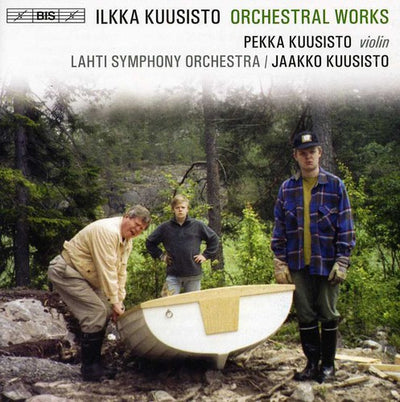
  • Kuusisto: Orchestral Works

    Kuusisto: Orchestral Works

    BIS Oct 2011
    1 disc
    CD
    $21.99
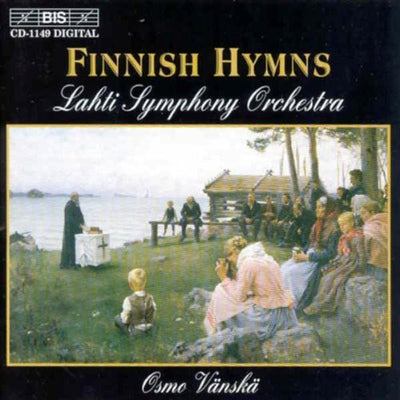
  • Finnish Hymns 1

    Finnish Hymns 1

    BIS Dec 2001
    1 disc
    CD
    $21.99
  • Siita Tuntee Joulun, A Finnish Christmas

    Siita Tuntee Joulun, A Finnish Christmas

    BIS Oct 2008
    1 disc
    CD
    $21.99
  • Sibelius: Overture In A Minor, Etc / Vanska, Lahti So
    BIS

    Sibelius: Overture In A Minor, Etc / Vanska, Lahti So

    CD · 1 disc

    $21.99
    Composer
    SIBELIUS, JEAN
    Artist
    Osmo, Astrid, Vanska, Stina, Riska, Ekblad
    Released
    Aug 01, 2004

    The music of Snöfrid, a major work for orchestra, narrator, and chorus, strongly resembles that of The Wood-Nymph. Given its date of composition (1900) it comes straight out of Sibelius' early maturity, and much as I normally detest any music for narrator and orchestra, this is powerful stuff that does not deserve to be neglected. The same holds true of the cantata Oma Maa (My Country), though the Coronation Cantata of 1896, pleasant enough, is more of an occasional work. All three are very well performed by the Lahti Symphony Orchestra under Osmo Vänskä, as we have come to expect. The Jubilate Choir, while not as polished as some, has the right enthusiasm and the populist touch that the music ideally demands. It isn't a large body, and this actually seems to work to the music's advantage, allowing orchestral detail to register naturally and keeping each work from sounding over-inflated. On the other hand, there's certainly no question of timid or tepid performances. There have been other good recordings of Sibelius' works for chorus and orchestra, not least from Paavo Berglund, but these equal or surpass the competition in just about any area you care to name.


    As for the orchestral works, the performances are just as fine. The Andante Festivo, not a major work in any case, sounds unusually gripping in this taut interpretation, while Rakastava ("The Lover") is tuneful and charming, if not much more. The real treat here is the Overture in A minor, another mature work (1902) full of arresting writing for the brass section and a central allegro that, in its pastoral freshness, could have come from the pen of no other composer. Fans of Sibelius who don't know this piece will find much to savor--and again, this is as fine a performance as it has ever received. Indeed, the entire package is unusually interesting and uniformly desirable, which is unusual given the wide-ranging variety of music on offer. Sonically this is as fine as anything BIS has given us from Lahti, which is to say that it's on par with the best the industry has to offer. If you are looking to extend your Sibelius collection beyond the best-known symphonies and tone poems, this extremely enjoyable disc should command your immediate attention. [12/1/2004]
    --David Hurwitz, ClassicsToday.com
    View full page
  • Sibelius: Overture In A Minor, Etc / Vanska, Lahti So

    Sibelius: Overture In A Minor, Etc / Vanska, Lahti So

    BIS Aug 2004
    1 disc
    CD
    $21.99
  • Sibelius Edition Vol 8 - Orchestral Music
    BIS

    Sibelius Edition Vol 8 - Orchestral Music

    CD · 6 discs

    $59.99
    Composer
    SIBELIUS, JEAN
    Artist
    Jaakko, Kuusisto
    Released
    Apr 01, 2009
    Click here to view all 13 volumes of The Sibelius Edition


    3332860.az_SIBELIUS_Orchestral_Works_Osmo.html

    SIBELIUS Orchestral Works • Osmo Vänskä, cond; 1 Neemi Järvi, cond; 2 Jaakko Kuusisto (vn); 4 cond; 3 Leonidas Kavakos (vn); 5 Dong-Suk Kang (vn); 6 Marko Ylönen (vc); 7 Lahti SO; 1,3 Gothenburg SO 2 • BIS 1921 (6 CDs: 420:41)


    Overture in E. 1 Scène de ballet. 1 Karelia: Complete music; 1 Overture; 2 Suite. 1 Impromptu. 2 Presto. 1 Press Celebrations Music. 1 Menuetto. 1 Coronation March. 1 March of the Pori Regiment. 1 Overture in a. 1 Romance in C. 1 Cortège. 1 Pan and Echo. 1 The Countess’s Portrait. 1 Violin Concerto: (1903–04); 1 (1905). 5 Rakastava. 1 2 Serenades. 2,6 2 Serious Melodies (2 versions). 1,2,6,7 6 Humoresques. 2,6 Academic March. 2 March of the Finnish Jäger Battalion. 1 3 Pieces, op. 96. 1 Suite mignonne. 1 Suite champêtre. 1 Suite caractèristique. 1 Morceau romantique. 1 Suite for Violin and Strings. 1,6 Andante festivo. 1 Processional. 1 Preliminary and alternative versions 1,3,4


    Sibelius wrote a colossal amount of music for the orchestra. Already issued in BIS’s Sibelius Edition are boxes devoted to the tone poems (Vol. 1), theater music (Vol. 5, including the full scores plus the suites drawn from the composer’s incidental music), and voice and orchestra (Vol. 3); still to come, of course, is the volume of symphonies (Vol. 12, projected). That makes 21 or 22 well-filled CDs. Then there’s the present set, Vol. 8, which consists of everything else: works for violin and orchestra (about two CDs), music for patriotic pageants (one-and-a-half discs), and various occasional pieces, suites, and other works that don’t fit any of the above categories. The Sibelius quote with which annotator and project advisor, Andrew Barnett, begins his program notes could well serve as an epigram for the entire project: “I am myself a man of the orchestra. You must judge me from my orchestral works.”


    Most of the contents of this set were first issued on single CDs: the Karelia music on BIS 915, the Press Celebrations Music on 1115, the two versions of the Violin Concerto on 500, the remaining works for violin and orchestra on 472, and various smaller works on 1265, 1445, 1485, and 1565. Items appearing here for the first time are the Karelia Suite, Menuetto, Romance, March of the Finnish Jäger Battalion , the three French-titled Suites, opp. 98 and 100, and the Processional , as well as several preliminary and alternative versions.


    The sheer quantity of material here makes it most practical to discuss the works by category. Along with the Violin Concerto, the most important music in this set is that provided by Sibelius for two patriotic pageants during the Russian crackdown of the 1890s. Thinly disguised as benefits, the first in 1893 for education in the Viipuri district, the second in 1899 for the Press Pension Fund (the Russians had banned a Finnish newspaper), the Karelia and Press Celebrations pageants in reality served as nationalist rallies. The Karelia music, written the year after Kullervo and only two years after Sibelius’s first orchestral works, consisted of an Overture and music for eight tableaux; the Eighth Tableau quotes the song that would later become Finland’s national anthem. The Overture was published independently as op. 10, and three of the eight tableaux were adapted to form the Karelia Suite , op. 11. The remaining music—the entire score totals 50 minutes—is well worth hearing; particularly striking are the runic singing of Tableau 1 and the “siege” music of Tableau 6. In the runic singing, I prefer the earthy female voices used in Tuomas Ollila’s recording for Ondine to the bland baritones used here; otherwise, Vänskä’s version is more compelling. BIS includes Järvi’s energetic 1982 recording of the Overture (to avoid redundancy, one supposes), but gives the Suite in a new recording by Vänskä. I’m not sure why: there are plenty of fine recordings of the Suite already, and Sibelius collectors serious enough to consider this volume doubtless already have their favorite versions; mine is the RCA/Decca recording by Alexander Gibson, not currently available.


    The Press Celebrations Music is almost as extensive, comprising a prelude and music for six tableaux; the final movement, “Finland Awakes,” with a new ending, became Finlandia , published as op. 26/7 in the expectation that the entire score would follow. In fact, only three other tableaux were published in revised form as Scènes historiques I , op. 25. The various stages of revision of Finlandia can be heard in Vol. 1 of the Edition; in the original, instead of the familiar apotheosis of the hymn tune, the ending consists of a series of bombastic fanfares. The Press Celebrations score is also included on the Ondine disc, but Vänskä is the clear winner.


    The other major work here, of course, is the Violin Concerto. Kavakos and Vänskä give a compelling performance of the familiar 1905 revised version; it’s a performance of extremes, with the many technical challenges met head-on and the more lyrical music played with great sensitivity. Fans of Oistrakh on the one hand or Heifetz on the other won’t want to discard their favorites, but Kavakos offers yet another good option. The real story, though, is the 1991 version of Sibelius’s original score by the same artists; I believe it remains the only recording of the 1903–04 version. The comparison is intriguing; longtime Fanfare subscribers can find David K. Nelson’s detailed review in 14:6. It is impossible to discuss the two versions at length here, but two points should be made: first, the original is both longer and more difficult, including several fascinating passages that were later cut; second, as is almost invariably true, Sibelius’s final thoughts are his best. The revised version eliminates some interesting digressions and much extraneous detail, making it more cohesive and giving it more impact. The original version is still well worth hearing, not only because the comparison is so interesting, but also because it does include a good deal of music later eliminated. The two versions were originally issued in tandem, but here the original version is placed in an “appendix” on the last disc of the set, along with early or alternative versions of other works.


    Kang and Järvi give sympathetic readings of the Two Serenades and the Serious Melodies ; the latter are also given, in the appendix, in Sibelius’s cello version by Ylönen and Vänskä. Only the Humoresques are a bit of a letdown. These superb pieces, written in 1917–18 when Sibelius was working on the Fifth Symphony under horrible conditions, are technically demanding and musically complex; they should be far better known, but their format—six short pieces totaling about 20 minutes—seems to have no niche in today’s concert programs. Kang and Järvi are less volatile, less exciting than Aaron Rosand on an ancient Vox LP. I have not heard the recordings of the violin-and-orchestra works by Tetzlaff or Kuusisto; Robert Maxham gave the former a mostly favorable review in 26:6, but the latter does not appear in the Fanfare Archive.


    The many other pieces in this set can be addressed only briefly. Sibelius’s first orchestral works were the Overture in E Major and the Scène de ballet , both written in 1891; in 31:1, I preferred Järvi to Vänskä in the former, the reverse in the latter. The Overture in A Minor was written to fill out the program for the premiere of the Second Symphony; supposedly it was composed in a single evening. It certainly is far thinner in substance than the Symphony; its introduction, striking in its use of the trumpets, fails to go anywhere. The well-known Romance in C Major is given a rather perfunctory reading; Pan and Echo , a “Dance Intermezzo” sometimes grouped with the tone poems, is a striking miniature.


    Rakastava (“The Lover”), a three-movement work for string orchestra with triangle and timpani written in 1911, the time of the Fourth Symphony, is a small masterpiece. It actually grew out of a much earlier choral work (thus perhaps explaining the anomalous opus number 11), and it was revised in 1912, Sibelius being dissatisfied with the arrangement. Again the final version is far superior to the earlier one, included in the appendix. Vänskä gives a sympathetic account.


    Most of the remaining works are of minor importance; the Three Pieces , op. 96, and the three suites that followed, written between 1919 and 1922, are all essentially salon music; the Suite for Violin and String Orchestra, written in 1929 and thus one of Sibelius’s final compositions, is likewise not consequential. The Andante festivo , a 1938 arrangement of a work composed in 1922 for string quartet, is notable not only for its noble formality, but also because the recording of Sibelius’s live broadcast for the New York World’s Fair is the only surviving document of his conducting. That recording shows that almost everyone, including Vänskä, takes the piece too quickly; Vänskä’s version here has a timing of 5:10 versus Sibelius’s 6:55. Finally, the Processional is an arrangement of one of several songs Sibelius wrote for the Finnish Masonic lodge in 1927, again making it one of his last works.


    The contents of this set range from some of Sibelius’s finest, most important works to some of the least significant products of his mature years. If you don’t have the single CD of the two versions of the Violin Concerto, or either of the pageant scores, or if you absolutely must have every scrap of orchestral music he created, this set’s for you. Collectors who have been acquiring each volume of the Edition as it is released will find this one of the more rewarding ones. Essential for Sibelians.


    FANFARE: Richard A. Kaplan
    View full page
  • Sibelius Edition Vol 8 - Orchestral Music

    Sibelius Edition Vol 8 - Orchestral Music

    BIS Apr 2009
    6 discs
    CD
    $59.99
  • Aho: Concerto for Soprano Saxophone & Quintet for Winds and Piano / Paulsson, Storgards, Lapland Chamber Orchestra
    BIS

    Aho: Concerto for Soprano Saxophone & Quintet for Winds and Piano / Paulsson, Storgards, Lapland Chamber Orchestra

    SACD · 1 disc

    $21.99
    Composer
    AHO, KALEVI
    Artist
    Paulsson, Storgards, Jalkanen, Moilanen, Niskanen, Mojzer, Puputti, Kuusi
    Released
    Nov 03, 2017

    To date, Kalevi Aho has composed sixteen symphonies and twenty-eight concertos, several operas and a large number of chamber works – a rate of production which is all the more impressive considering the complexity and originality displayed by each new work. On this latest in a long series of BIS releases with Aho’s music, two of his most recent works are performed by the musicians of the Lapland Chamber Orchestra. The orchestra and its artistic director John Storgårds have collaborated with the composer on several projects, and the Concerto for Soprano Saxophone is a commission from the orchestra, at the suggestion of the Swedish saxophonist Anders Paulsson. A specialist on the soprano saxophone, Paulsson also demonstrated the instrument’s capabilities to Aho as part of his preparations. The Quintet for Winds and Piano was composed just over a year before the concerto and is here heard in a performance by the pianist Vainö Jalkanen, and woodwind players from the Lapland orchestra. The reason for the unusual combination of instruments is that the work was intended as a companion piece to Mozart’s quintet for the same forces. Closing the album, finally, is the almost 10-minute long Solo I for violin, the first in the composer’s series of virtuosic solo pieces for each of the instruments of the orchestra. It was composed in 1975 and receives a performance from another longtime Aho collaborator, the violinist Jaakko Kuusisto, who has previously performed the solo part of the composer’s Symphony No.3 for violin and orchestra.

    View full page
  • The Essential Sibelius
    BIS

    The Essential Sibelius

    CD · 15 discs

    $99.99
    Composer
    SIBELIUS, JEAN
    Artist
    Folke, Grasbeck
    Released
    Nov 01, 2006

    Includes work(s) by Jean Sibelius. Ensembles: Lahti Symphony Orchestra, Tempera String Quartet, Gothenburg Symphony Orchestra, Helsinki University Chorus, Dominante Choir. Conductors: Osmo Vänskä, Neeme Järvi. Soloists: Leonidas Kavakos, Dong-Suk Kang, Anne Sofie von Otter, Bengt Forsberg, Monica Groop, Folke Gräsbeck.

    View full page
  • The Essential Sibelius

    The Essential Sibelius

    BIS Nov 2006
    15 discs
    CD
    $99.99