One-Day Sale | September 29th, 2026

One-Day Sale | September 29th, 2026

ONE DAY ONLY — 400+ TITLES 50% OFF!

For one day only, save a huge 50% OFF on over 400 titles from BIS, Chandos, BR-Klassik, Sony Masterworks, Avie Records, DUX, and more!

Explore works by Respighi, Bartók, Felix Mendelssohn, Fanny Mendelssohn, and other celebrated composers, with acclaimed performances from the Sinfonia of London, The Bach Choir, Minnesota Orchestra, and many more.

With hundreds of recordings at HALF PRICE, now is the time to fill the gaps in your collection, discover something new, or finally grab those titles on your wishlist.

PLUS — enjoy FREE SHIPPING on orders over $60!

Don’t miss your chance to save 50%. Shop the sale now before it ends Wednesday, September 30 at 9:00 AM!

    Chandos

    English Music for Strings / Wilson, Sinfonia of London

    SACD · 1 disc

    $10.99 $21.99 Save 50%
    Composer
    BERKELEY BLISS BRIDGE
    Artist
    Sinfonia Of London, Wilson
    Released
    Feb 05, 2021

    During the 1930s, Bliss, Britten, and Berkeley all contributed major works to the repertoire for string orchestra, following in the footsteps of Elgar and Vaughan Williams. They are joined on this album by Frank Bridge whose Lament was composed during the First World War. This is the fourth recording by John Wilson with his award-winning Sinfonia of London. Bliss composed Music for Strings after he had completed the film score for Korda’s Things to Come, driven by his desire to compose a piece of ‘pure music’, expressing his own ideas rather than those of others. Commissioned in May 1937 by Boyd Neel for the Salzburg Festival that summer, Britten’s Variations on a Theme of Frank Bridge was composed at great speed, and helped to establish the young composer’s international reputation. Dedicated to his teacher, Frank Bridge, the theme is taken from the second of Bridge’s Three Idylls for string quartet. Lennox Berkeley composed his Serenade for Strings at Snape Maltings, where he was living with Britten in 1938 / 39. By the time of its completion the nation was at war and the music seems to reflect the composer’s anxious mood as the world faced an uncertain future.

    REVIEWS:

    The players may have changed since Barbirolli but the spirit has not. And the sound. Sumptuous is one word – but because this is Wilson that goes hand-in-hand with the keenest articulation. There’s a rosiny immediacy about it all, like being on the podium, or better yet inside the sound.. Wilson’s way with strings has come a long way from Hollywood – but the lustre is inescapable.

    – Gramophone (Editor's Choice, February 2021)

    Here in the Bridge Lament is a prime example of the heartfelt precision and beauty of tone that typifies John Wilson’s Sinfonia of London. There’s plenty of heart, too, in their superlative treatment of Britten’s marvellous Bridge variations, warmly delivered even during the parody character pieces clustered together in the first half. Wilson’s team prove equally adroit in Berkeley’s Serenade.

    – BBC Music Magazine

    View full page
  • English Music for Strings / Wilson, Sinfonia of London
    Sale

    English Music for Strings / Wilson, Sinfonia of London

    Chandos Feb 2021
    1 disc
    SACD
    $21.99 $10.99Save 50%
    BIS

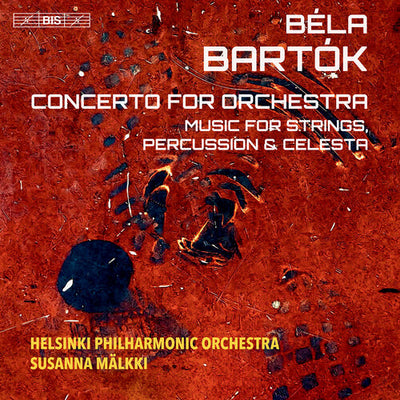
    Bartók: Concerto for Orchestra; Music for Strings, Percussion & Celesta / Mälkki, Helsinki Philharmonic

    SACD · 1 disc

    $10.99 $21.99 Save 50%
    Composer
    BARTOK, BELA
    Artist
    Malkki
    Released
    Oct 01, 2021

    On two highly praised albums, Susanna Mälkki and her players in the Helsinki Philharmonic Orchestra have released recordings of Béla Bartók’s three scores for the stage – The Miraculous Mandarin, The Wooden Prince and Bluebeard’s Castle, all written before 1918. The team now takes on two of his late orchestral masterpieces. Composed in 1936 for the Basel Chamber Orchestra, Music for Strings, Percussion and Celesta is one of the purest examples of Bartók’s mature style, with its synthesis of folk music, classicism and modernism. One immediately striking feature is the unusual instrumentation: two string orchestras seated on opposite sides of the stage, with percussion and keyboard instruments in the middle and towards the back. In 1940, during the Second World War, Bartók emigrated to the U.S.A., where he initially found it difficult to compose. In 1943 he received a prestigious commission from the Boston Symphony Orchestra, however, and in less than eight weeks he composed the Concerto for Orchestra. In it he worked with contrasts between different sections of the orchestra, and the soloistic treatment of these groupings was his reason for calling the work a concerto rather than a symphony.

    REVIEW:

    There hasn’t been a coupling of these two iconic works this successful in, well, decades. Usually the pieces get divided between different performers, or if it’s the same forces throughout, one work comes off better than the other. Not here. Start with the Music for Strings, Percussion and Celesta. No one (except possibly Reiner) attempts to play it at Bartók’s indicated timings–around six+ minutes per movement. Everyone is slower, and often rightly so, but sometimes rather too much slower. Mälkki sounds just about perfect: in the range of seven minutes per movement, with an eerily flowing opening fugue, a ferocious second movement Allegro, a terrifying Adagio (listen to those timpani glissandos at the bottom of the texture), and a finale that features an imaginative and characterful flexibility of tempo, highlighting its dance-like character. The Helsinki strings play with extraordinary discipline, even if some of the “special effects” such as col legno bowing could resister more strongly. Never mind. It’s a great performance.

    So is that of the Concerto for Orchestra. Perhaps the best thing I can say about it is that it sounds like a genuine collaborative effort between conductor and orchestra. Mälkki keeps the music flowing, reveling in the fine ensemble that the Helsinki Philharmonic has become: the brass fugato in the first movement, the “games of pairs” in the second, or the eerie woodwind solos in the brooding Elegia–nothing here is less than world-class. In the finale, Mälkki finds an idea balance between hard-driving forward movement and precision of articulation. She also keep something especially exciting in reserve for the coda, which dashes away thrillingly. BIS has captured the entire production in powerfully present, tactile sound that really lets you hear down through the ensemble, from top to bottom. This really is an exceptional release. If you love this music, be sure to hear it.

    – ClassicsToday.com (10/10; David Hurwitz)

    View full page
    Chandos

    Rachmaninoff: Piano Duets

    CD · 1 disc

    $10.99 $21.99 Save 50%
    Composer
    RACHMANINOFF, SERGE
    Artist
    Lortie, Mercier
    Released
    Nov 13, 2015

    Twenty five years after their last recording of piano duets on Chandos, the Canadien pianists Louis Lortie and Hélène Mercier return in a watershed collection of magnificently played duets by Rachmaninoff including the two suites and an arrangement for his Symphonic Dances. The Lortie/Mercier piano duo have known one another since their early teens, and have a considerable collaborative discography that showcases their affinity for the art of 4 hands and 2 pianos performances and repertoire.

    View full page
  • Rachmaninoff: Piano Duets
    Sale

    Rachmaninoff: Piano Duets

    Chandos Nov 2015
    1 disc
    CD
    $21.99 $10.99Save 50%
    BIS

    Kornauth & Fuchs: Works for Viola and Piano / Litton Duo

    SACD · 1 disc

    $10.99 $21.99 Save 50%
    Composer
    FUCHS KORNAUTH
    Artist
    K. Litton, A. Litton
    Released
    Nov 05, 2021

    In the spring of 2020, the Covid pandemic caused turmoil in the concert diaries of most musicians, including the conductor Andrew Litton and his wife Katharina Kang Litton, principal violist of New York City Ballet. To find an outlet for their musical expression they began to explore the repertoire for viola and piano together. Having played the sonatas by Brahms they came across the music by two other Viennese composers, Brahms’ near-contemporary Robert Fuchs and his student Egon Kornauth. Fuchs – who the less-than-effusive Brahms called ‘a splendid musician’ – had a long and distinguished career at the Vienna Conservatory where his other students included such composers as Mahler, Wolf, Sibelius, Zemlinsky and Korngold. That the sonatas recorded here were composed around the same time as Schoenberg’s Second String Quartet can be hard to believe – as is the fact that Fuchs’s Phantasiestücke (composed in his 80th and final year) was contemporary with Bartók’s Piano Concerto No. 1. But if they are not in any way pioneering, all three works are beautifully achieved: formally both strong and flexible, with a subtle, deeply-felt emotional coloring of their own. The Litton Duo close the recital with a piece that has a personal significance for the two – an arrangement of the Korean folk song Arirang which they received as a wedding present from Stephen Hough.

    View full page
  • Kornauth & Fuchs: Works for Viola and Piano / Litton Duo
    Sale

    Kornauth & Fuchs: Works for Viola and Piano / Litton Duo

    BIS Nov 2021
    1 disc
    SACD
    $21.99 $10.99Save 50%
    BIS

    Bach, Kuhnau, Zelenka: Magnificats / Suzuki, Persson, Bach Collegium Japan

    CD · 1 disc

    $10.99 $21.99 Save 50%
    Composer
    BACH, J.S.
    Artist
    Ger, Akira, Turk, Masaaki, Tachikawa, Miah, Suzuki, Yukari, Persson, Bach Collegium Japan, Nonoshita
    Released
    Apr 01, 1999

    REVIEW:

    In the early 1730s Bach revised his E flat major Magnificat of 1723, transposing it to D major and omitting the interpolations peculiar to Christmas performances in Leipzig. (Recent research suggests such richly scored Latin Magnificats could be performed in Lutheran churches at some 15 annual festivals, not just the three – Xmas, Easter, Ascension – previously supposed.) The D major was apparently Bach’s preferred version and is the one commonly played today, as on this latest instalment of Masaaki Suzuki’s acclaimed survey of Bach’s sacred vocal music. Suzuki’s Magnificat, like his earlier Bach recordings, is sharply focused and performed with engaging conviction. My benchmark disc, by Philippe Herreweghe, grips with its palpable air of excitement. Suzuki’s reading is cooler, more nuanced and has a clearer acoustic; yet Herreweghe’s soloists retain a slight edge – few could match Barbara Schlick and oboist Marcel Penseele in rapt duet on ‘Quia respexit’. Herreweghe’s coupling is the splendid Cantata, BWV 80; Suzuki offers a trio of fascinating rareties. The Magnificat by Kuhnau, Bach’s predecessor at Leipzig, resembles Bach’s in instrumentation and division of text: it’s a lively, attractive piece, trumpets ringing out boldly in the bright opening chorus. Two shorter Magnificats by Bach’s Dresden-based contemporary Zelenka represent a very different and highly individual approach, the C major’s tripartite structure creating an almost concerto-like framework for soprano soloist. Suzuki’s excellent, scrupulous performances should provoke greater interest in Kuhnau’s and Zelenka’s church music – the latter’s Missa Dei Filii, by Tafelmusik/Frieder Bernius (DHM), is also highly recommended. Performance: 5 (out of 5), Sound: 5 (out of 5)

    -- Graham Lock, BBC Music Magazine

    View full page
    Chandos

    Strauss, Korngold & Schreker: Metamorphosen / Wilson, Sinfonia of London

    SACD · 1 disc

    $10.99 $21.99 Save 50%
    Composer
    Korngold, Schreker, Strauss
    Artist
    Sinfonia Of London, Wilson
    Released
    Apr 01, 2022

    One of the New York Times' 5 Classical Albums to Hear Now

    Shortlisted for the Gramophone Awards

    Perhaps nobody since John Barbirolli has been able to make strings sing like the brilliantly talented John Wilson.

    Following their critically acclaimed album of English Music for Strings, Sinfonia of London and John Wilson turn to Germany and three outstanding works for string orchestra. Franz Schreker’s Intermezzo, the oldest piece here, was composed in 1900, before Schreker’s rise to fame in the opera houses of Germany and Austria, but shows strong indications of what was to follow. Korngold composed the Symphonische Serenade following his return to Vienna from Hollywood after the Second World War, and shortly before he wrote his Symphony in F sharp. Korngold effortlessly conjures a vivid range of colors and textures from his large forces (32 violins, 12 violas, 12 cellos, and 8 basses) in a work that explores the virtuosity of the players to the full. Composed in 1945, as a reaction to the horrors of the war, and the desecration of German culture, Richard Strauss’s Metamorphosen for 23 solo strings seems to look backwards to the German Romantic tradition (a trait even more evident in his Four Last Songs, of 1948). The moving final passage, marked ‘In Memoriam’, leaves the listener to contemplate in silence.

    "Wilson’s release wins hands down. Part of the victory is due to the conductor and string players’ panache…whatever the mood, the Sinfonia’s tone stays full-blooded and refulgent, just like Chandos’s recording." -Times of London

    REVIEW:

    What a fine and stimulating recording this is. Perhaps nobody since John Barbirolli has been able to make strings sing like the brilliantly talented John Wilson. Franz Schreker’s “Intermezzo” here has a sheen to it that is intensely delicate one minute and impossibly sumptuous the next. Strauss’s “Metamorphosen” has rarely had such an agonizingly drawn out, lovingly burnished performance as this. Even better is the rarity that accompanies it: Korngold’s Symphonic Serenade, a disfigured, difficult recollection of all that poignantly easygoing light music in the Austrian tradition, written when he returned to Vienna from Hollywood. The hush that Wilson finds for its slow movement is indescribably haunting.

    -- The New York Times

    View full page
  • Strauss, Korngold & Schreker: Metamorphosen / Wilson, Sinfonia of London
    Sale

    Strauss, Korngold & Schreker: Metamorphosen / Wilson, Sinfonia of London

    Chandos Apr 2022
    1 disc
    SACD
    $21.99 $10.99Save 50%
    Ondine

    Mahler: Symphony No 6, Piano Quartet / Eschenbach, Philadelphia Orchestra

    SACD · 2 discs

    $13.49 $26.99 Save 50%
    Composer
    MAHLER, GUSTAV
    Artist
    Eschenbach
    Released
    Oct 03, 2002

    REVIEW:

    The Philadelphia Orchestra’s first two releases for Ondine under Christoph Eschenbach (Bartók and Tchaikovsky) were extremely good, no doubt about it, but this Mahler Sixth is really extraordinary. Part of its success must stem from the fact that the best German conductors usually do misery especially well, finding the dark side of just about everything. If you don’t believe me, check out Kurt Sanderling’s startlingly deep and edgy rendition of Poulenc’s Concert Champêtre on Supraphon. So you can just imagine what can happen with a piece like Mahler’s Sixth. Anyone fortunate enough to have heard Eschenbach’s performances of this work with the NDR Orchestra in Hamburg will know that he has a special feeling for its harrowing intensity and expressionistic instrumental palette. Toss in the collective virtuosity of the Philadelphia Orchestra, and the result is, to put it mildly, pretty special.

    As a coupling, the early piano quartet movement is more appropriate than you might at first think. First of all, it shares the same key as the symphony, and second, it’s useful to have it along as part of an all-Mahler program, allowing collectors to round out their collections without having to search for an acceptable all-chamber-music program. The engineering also represents the best in this series so far, with virtually no audience noise, tremendous presence in both stereo and multichannel formats, and extremely natural balances between orchestral sections. I know that Mahler Sixes seem to be a dime a dozen these days, but this one, a first for Philadelphia, belongs among the elite few (Bernstein I and II, Chailly, Levi, T. Sanderling, and Gielen). It’s just bloody thrilling.

    — ClassicsToday.com (David Hurwitz)

    View full page
  • Mahler: Symphony No 6, Piano Quartet / Eschenbach, Philadelphia Orchestra
    Sale

    Mahler: Symphony No 6, Piano Quartet / Eschenbach, Philadelphia Orchestra

    Ondine Oct 2002
    2 discs
    SACD
    $26.99 $13.49Save 50%
    Ondine

    Mozart: Piano Concertos Nos. 9 & 24 / Vogt, Chamber Orchestra of Paris

    CD · 1 disc

    $9.49 $18.99 Save 50%
    Composer
    Wolfgang Amadeus Mozart
    Artist
    Lars Vogt
    Released
    Sep 15, 2023

    The early death of award-winning pianist and conductor Lars Vogt on September 5, 2022 shocked profoundly the international music world. Some 16 months earlier, already aware of his diagnosis and in the middle of his treatment sessions, the artist had an urgent desire to record a Mozart piano concerto album together with the Orchestre de chambre de Paris. He believed that performing these fantastic works that he so much admired would also be the best medicine for his condition. For this Mozart album Lars Vogt coupled two concertos: the early, exuberant Piano Concerto No. 9, nicknamed ‘Jeunehomme’ and written by Mozart in his early 20s; together with the melancholic and nostalgic Piano Concerto No. 24, which is considered by many to be Mozart’s greatest piano concerto – a perfect closure to Vogt’s final concerto album.

    REVIEWS:

    The slow movements, deeply felt, inevitably emerge with extra poignancy, but elsewhere Vogt revels in Mozart’s playful wit. The album is a fitting memorial to Vogt’s musicianship, courage and humanity.

    -- The Times of London

    Vogt was particularly distinguished by his remarkable interpretations of Brahms which earned him numerous laudatory reviews. Former musical director of the Paris Chamber Orchestra, with whom he collaborated for the last time on this disc, he also assumed the role of professor at the prestigious Hochschule für Musik in Hanover. Despite being diagnosed with cancer in 2021, he decided to immerse himself in recording Mozart's Piano Concertos Nos. 9 and 24 with unwavering determination. This is reminiscent of the context in which the Requiem in D minor was written, which, according to some accounts, was composed in anticipation of the Austrian composer's own funeral.

    As for Vogt, he unfortunately never had the opportunity to hear the finished disc. From his entrance [in Concerto no. 9], Lars Vogt uses a slightly shy sound, dictated by a delicate restraint, thus creating an intimate atmosphere conducive to the sonic development of the piece. A form of mutual respect between musicians and conductor emerges, at the same time creating a virtuous circle which, through the minutes that pass, gradually contributes to strengthening the emotional depth of the interpretation.

    What follows is one of the most painful pages that Mozart has written, the opening of the second movement of this concerto. Tragically reflecting the condition in which Vogt found himself, the first chords in C minor resonate like a death knell, the darkest and most poignant moment of this record. Finally, after a clarification brought by the modulation in E flat major, this concerto closes with a rondo overflowing with hope.

    The Piano Concerto No. 24, completed in 1786 in Vienna, is introduced by an orchestral overture lasting more than two minutes which, it should be noted, is performed masterfully by the Paris Chamber Orchestra. Directed by Vogt himself, together they succeed in perfectly capturing the overall dramatic color of this work, thereby creating the most favorable terrain for the musical development of the solo that follows. By breaking through the silence left by the orchestra, Vogt transports us, while reassuring us with his simple and charming playing. The second movement, for its part, does not seem to deviate from the very essence of this disc, namely unequaled finesse.

    The soft moments are played like a caress on the keyboard, evoking emotions which unfold with a more than captivating sweetness. Each note seems to be enveloped in a veil of tenderness, creating a significant intimate atmosphere. Finally, this concerto closes with a lively allegretto in apotheosis which brings a final touch of vitality to the whole work. Despite his state of health, Lars Vogt leaves us with this record a testimony of perseverance and unwavering optimism. He succeeds with flying colors in captivating us in the space of an hour while ultimately retracing a life journey. A touching album to discover this September.

    -- Crescendo

    View full page
  • Mozart: Piano Concertos Nos. 9 & 24 / Vogt, Chamber Orchestra of Paris
    Sale

    Mozart: Piano Concertos Nos. 9 & 24 / Vogt, Chamber Orchestra of Paris

    Ondine Sep 2023
    1 disc
    CD
    $18.99 $9.49Save 50%
    BIS

    Pettersson: Concerto; String Trio; Works for Violin & Piano / Wallin

    SACD · 1 disc

    $10.99 $21.99 Save 50%
    Composer
    Allan Pettersson
    Artist
    Ulf Wallin, Sueye Park, Daniel Vlashi Lukaci, German Tcakulov, Alexander Wollheim, Thomas Hoppe
    Released
    Aug 04, 2023

    Between 1934 and 1949, Allan Pettersson, one of Sweden’s foremost composers of symphonies, wrote chamber works that differ greatly from his later production. With his Two Elegies, composed at the tender age of 17, Pettersson drew the enthusiasm of his teacher, who saw in him the makings of a composer. The Four Improvisations for string trio recall Bartók’s music with their rhythmic vitality. The Andante espressivo is more personal with its experimental melodic and harmonic leanings. After his forced return from Paris in 1939, where he had gone to study, Pettersson composed a tender and lyrical Romanza and, three years later, his only piece for solo piano, the elegiac and meditative Lamento.

    The most important work on this recording is the Concerto for Violin and String Quartet, a harsh, dense work that places great demands on the musicians. Initially rejected by the critics, the work now appears almost unique in terms of its radical tonal language and experimental use of extended techniques. For this recording, Ulf Wallin has brought together colleagues and friends to perform these lesser-known works, which nevertheless constitute an essential milestone in the career of the great Swedish composer.

    REVIEW:

    The Concerto for Violin and String Quartet of 1949, which opens the program and makes up over half of the album’s run time, is a lush work with numerous challenges for performers, both technically and harmonically, that from the outside would seem likely to limit the scope of listeners who would enjoy it. However, credit to the present performers, for these demands are met, and the results are thoroughly interesting and thought-provoking. The Concerto is the latest included work, chronologically, and it is a clear step toward the composer’s symphonic writing. The earliest works here are the Two Elegies for Violin and Piano, from 1934. These lovely, short tunes reflect the schooling the composer had undertaken; one could perhaps mistake these as having been written in the previous century.

    Pianist Thomas Hoppe, Wallin is another draw. Aside from ideal backing on the violin and piano works, Hoppe delivers a beautiful reading of Pettersson’s Lamento for Solo Piano. There is a lot to take in here, and listeners will be rewarded with subsequent hearings.

    -- AllMusic.com (Keith Finke)

    View full page
  • Pettersson: Concerto; String Trio; Works for Violin & Piano / Wallin
    Sale

    Pettersson: Concerto; String Trio; Works for Violin & Piano / Wallin

    BIS Aug 2023
    1 disc
    SACD
    $21.99 $10.99Save 50%
    Chandos

    Mozart: Piano Concertos, Vol. 9 / Bavouzet, Takács-Nagy, Manchester Camerata

    CD · 1 disc

    $10.99 $21.99 Save 50%
    Composer
    Wolfgang Amadeus Mozart
    Artist
    Jean-Efflam Bavouzet, Manchester Camerata
    Released
    Mar 08, 2024

    The three concertos featured on this album were composed together in 1782 / 83 – shortly after Mozart had left his patron and position in Salzburg to establish himself as a freelance composer and performer in Vienna. The concertos were all performed by the composer in a series of subscription concerts that he gave in the city. All share the same form – opening movement in sonata form, slow movement in ternary form, and a bright rondo finale. Despite these similarities, though, each piece has its own distinct character and identity; such was the extent of Mozart’s genius for invention. Although formally scored for strings with wind, horns, trumpets, and timpani, Mozart also offered them to his publisher to be performed ‘a quatro’ – for strings only. These would be the last concertos he wrote in which this would be possible, and it is certainly likely that it reflected a need to earn greater income as opposed to being a purely artistic decision. As in the rest of this series, Jean-Efflam Bavouzet is joined by the Manchester Camerata and Gábor Takács-Nagy, who open the album with a dazzling performance of the Overture to Die Entführung aus dem Serail, which dates from the same period.

    View full page
  • Mozart: Piano Concertos, Vol. 9 / Bavouzet, Takács-Nagy, Manchester Camerata
    Sale

    Mozart: Piano Concertos, Vol. 9 / Bavouzet, Takács-Nagy, Manchester Camerata

    Chandos Mar 2024
    1 disc
    CD
    $21.99 $10.99Save 50%
    BIS

    Brahms: Five Sonatas For Violin & Piano, Vol. 2 / Wallin, Pöntinen

    SACD · 1 disc

    $10.99 $21.99 Save 50%
    Composer
    BRAHMS, JOHANNES
    Artist
    Wallin, Roland Pontinen
    Released
    Jan 03, 2020

    Ulf Wallin and Roland Pöntinen made their first duo-recording for BIS in 1991 and have released acclaimed recital albums ranging from Schumann and Liszt to Alfred Schnittke, by way of Schoenberg and Hindemith. With the present disc they bring their most recent project to a close: a recording of all the works by Johannes Brahms for violin and piano. These include not only the three well-known and -loved numbered violin sonatas, but also the Scherzo from the so-called F.A.E. Sonata and the composer’s own violin versions of the two sonatas for clarinet and piano. Wallin and Pöntinen open the present release with Sonata No. 2 in E flat major, Op. 120, composed in 1894 for clarinet and transcribed for the violin a year later. As the clarinet part extends further down than the lowest note on the violin, Brahms made considerable revisions to the clarinet part, which entailed changes in the piano part, and consequently the printing of a new piano score. This is followed by the second and third violin sonatas, in A major and D minor respectively. Both works were composed during the summer of 1886 in Thun in Switzerland and are clearly related, even though they inhabit completely different expressive worlds.

    View full page
  • Brahms: Five Sonatas For Violin & Piano, Vol. 2 / Wallin, Pöntinen
    Sale

    Brahms: Five Sonatas For Violin & Piano, Vol. 2 / Wallin, Pöntinen

    BIS Jan 2020
    1 disc
    SACD
    $21.99 $10.99Save 50%
    Ondine

    Lutosławski: Works for Orchestra / Tetzlaff, Collon, Finnish Radio Symphony

    CD · 1 disc

    $9.49 $18.99 Save 50%
    Composer
    Witold Lutoslawski
    Artist
    Christian Tetzlaff
    Released
    Nov 03, 2023

    This new album continues Ondine’s award-winning series of orchestral works by Witold Lutosławski (1913–1994) together with the Finnish Radio Symphony Orchestra. The series has gathered several accolades, including a Grammy nomination, a BBC Music Magazine Awards nomination, and several recording of the month awards and best recordings of the year nominations. This album includes the composer’s early hit, his folklorish masterpiece Concerto for Orchestra, which is among his most performed compositions.

    The album also includes Partita for Violin and Orchestra (with Christian Tetzlaff as soloist), a virtuosic 5-movement work which in its orchestral version is not short of a Violin Concerto. The rarity in the album is Lutosławski’s Novelette from 1979, which, although fragmentary, is already pointing toward the ideas of his 3rd Symphony.

    REVIEW:

    This illuminating program constitutes an ideal introduction as well as a must for the composer’s admirers. In the early Concerto for Orchestra, the orchestra plays with surging vitality, but also great delicacy. In the later works on the program, the playing is again incisive rather than heavy. This is a recording to cherish.

    — American Record Guide

    View full page
    Ondine

    Brahms: Double Concerto; Viotti: Violin Concerto No. 22 / Tetzlaff, Järvi, Deutsches Symphonie-Orchester Berlin

    CD · 1 disc

    $9.49 $18.99 Save 50%
    Composer
    Johannes Brahms, Antonin Dvorak, Giovanni Battista Viotti
    Artist
    Christian Tetzlaff, Tanja Tetzlaff
    Released
    Oct 06, 2023

    This album by violinist Christian Tetzlaff and cellist Tanja Tetzlaff, together with the Deutsches Symphonie-Orchester Berlin conducted by Paavo Järvi, is dedicated in the memory of their longtime artistic partner, pianist Lars Vogt (1970–2022). At the heart of this album is Brahms, one of Lars Vogt’s favorite composers, and his late orchestral masterpiece, the Double Concerto. Brahms himself had admired one of Viotti’s violin concertos so much that he included material from the violin concerto into his work. With Christian Tetzlaff’s recording of the violin concerto, this album finally brings these two works together. Also included is Dvorák’s beautiful Silent Woods for cello and orchestra, a work by another composer that was very close to Lars Vogt’s heart.

    View full page
    Chandos

    Echoes of Bohemia - 20th-Century Czech Music for Winds / Orsino Ensemble

    SACD · 1 disc

    $10.99 $21.99 Save 50%
    Composer
    Pavel Haas, Leos Janacek, Bohuslav Martinu, Anton Reicha
    Artist
    Llinos Owen, Peter Sparks, James Baillieu
    Released
    Sep 01, 2023

    Following their début album, Belle Époque, the Orsino Ensemble turns its attention to music from Bohemia. There is a strong tradition of Czech wind playing, and hence a wealth of great repertoire on which to draw.

    Antoine Reicha was a contemporary (and friend) of Beethoven. His E flat Quintet, published in 1817, demonstrates his harmonic ingenuity and talent for idiomatic instrumental writing. Mládí, described by Janácek as ‘…a sort of memoir of youth’, was composed in 1924 in celebration of the composer’s own seventieth birthday, and the mood of the piece is optimistic throughout.

    Born in Brno, Pavel Haas studied at the city’s conservatory, under Janácek – indeed Haas is widely considered to be Janácek’s greatest pupil. Composed in 1929, the Wind Quintet typifies his quirky musical imagination and affinity for instrumental timbre.

    Bohuslav Martinu came from the small town of Policka, on the Czech-Moravian border, but received his early musical education in Prague, where he also played second violin in the Czech Philharmonic. A government scholarship enabled him to move to Paris in the early 1920s to study with Roussel. Martinu immersed himself in Parisian musical life, the works of Stravinsky and the Jazz scene proving two considerable influences on his own compositions. His Sextet for Wind and Piano is considered one of his most successful Jazz-inspired pieces and, although an early work, demonstrates the natural melodic style so typical of his later works.

    REVIEW:

    Reicha’s Quintet pairs different combinations of instruments together with delightful felicity, and the bubbly horn writing is a constant delight. It’s a well-paced reading, too, coming in at 28 minutes. The Orsino Ensemble’s performance of Janáček’s Mládi is crisp and tight and I especially appreciated Walker’s pipy and lithe piccolo playing.

    The church acoustic has been well judged and there’s no sense of billowy or unfocused sound, rather a warm, uncloying well-cushioned directness. There isn’t – or, at least, I’ve not been able to find – an exact competitor to this disc so the excellence of the performances stands in the Chandos team’s favor as does the adventurous repertoire. Carping critics like me may suggest alternatives in individual works but overall this is a highly effective disc.

    -- MusicWeb International (Jonathan Woolf)

    View full page
  • Echoes of Bohemia - 20th-Century Czech Music for Winds / Orsino Ensemble
    Sale

    Echoes of Bohemia - 20th-Century Czech Music for Winds / Orsino Ensemble

    Chandos Sep 2023
    1 disc
    SACD
    $21.99 $10.99Save 50%
    Chandos

    Ravel, Berkeley & Pounds: Orchestral Works / Wilson, Sinfonia of London

    SACD · 1 disc

    $10.99 $21.99 Save 50%
    Composer
    Lennox Berkeley, Adam Pounds, Maurice Ravel
    Artist
    Sinfonia Of London
    Released
    Feb 16, 2024

    The three composers whose works appear on this album are interconnected: Ravel was a mentor to Lennox Berkeley, and Berkeley to Pounds. Le Tombeau de Couperin marks Ravel’s movement towards neoclassicism, its forms and style a re-invention of ones from the French baroque.

    Originally written for solo piano, the movements of the suite were dedicated to friends whom Ravel had lost in the First World War. In 1919, he orchestrated four of the six movements (the version performed here). Berkeley met Ravel a number of times in the 1920s, working as an interpreter and tour-guide whilst Ravel was in London. Ravel advised him to study with Nadia Boulanger, which he did, between 1926 and 1932.

    Commissioned by Sir Arthur Bliss for the BBC Symphony Orchestra in 1942, the Divertimento initially received a mixed reception, but has since found many supporters (including Pounds). The critic Peter Dickinson felt it showed an ‘instinctive and unimpassioned creativeness associated with the French aesthetic, but by no means restricted to it’.

    Adam Pounds studied privately with Berkeley in London during the late 1970s, and in his own music has perpetuated the firm commitment of the two earlier composers to clarity and accessibility in everything they wrote. His Third Symphony was written in 2021 and is a response to the national lockdowns in 2020 and 2021 prompted by the Covid-19 pandemic. Pounds states that the piece captures the ‘sadness, humor, determination, and defiance’ which everyone faced at this time – not least musicians. Scored for relatively modest orchestral forces, the work is dedicated to Sinfonia of London and John Wilson who here give the work its world première recording.

    View full page
  • Ravel, Berkeley & Pounds: Orchestral Works / Wilson, Sinfonia of London
    Sale

    Ravel, Berkeley & Pounds: Orchestral Works / Wilson, Sinfonia of London

    Chandos Feb 2024
    1 disc
    SACD
    $21.99 $10.99Save 50%
  • BEETHOVEN: SINFONIE NR. 5/TRIP
    Sale

    BEETHOVEN: SINFONIE NR. 5/TRIP

    Sony Masterworks Jan 2013
    1 disc
    CD
    $11.98 $5.99Save 50%
    Chandos

    Dutilleux: Le Loup / Wilson, Sinfonia of London

    SACD · 1 disc

    $10.99 $21.99 Save 50%
    Composer
    DUTILLEUX, HENRI
    Artist
    Walker, Koch, Davies, Sinfonia Of London, Wilson
    Released
    Jun 04, 2021

    Following the success of their previous album, English Music for Strings, John Wilson and his Sinfonia of London turn their attention to the music of Henri Dutilleux. His ballet Le Loup was composed as a commission for Roland Petit’s dance company and premièred in Paris in March 1953. Rarely recorded – this is the first recording by a non-French orchestra – the work unfolds in three tableaux and tells a convoluted tale of a bridegroom who jilts his bride (to run away with a gypsy) by persuading her that he has been changed into a wolf. Over time she discovers that the wolf is real, but her feelings turn from terror to love and when the alarmed villagers hunt the wolf, she defends him and dies at his side. The album is completed by three world première recordings of new orchestrations (by Kenneth Hesketh) of wind solos written for the Paris Conservatoire in the 1940s. Both the Sarabande et Cortège and Sonate pour hautbois are virtuosic tours de force for their soloists, as is the Sonatine pour flûte, which displays the lyricism, agility, and sparkling incisive qualities of the flute in what became Dutilleux’s most-performed work.

    View full page
  • Dutilleux: Le Loup / Wilson, Sinfonia of London
    Sale

    Dutilleux: Le Loup / Wilson, Sinfonia of London

    Chandos Jun 2021
    1 disc
    SACD
    $21.99 $10.99Save 50%
    Chandos

    Brahms: Clarinet Trio; Cello Sonatas Nos. 1 & 2 / Collins, Watkins, Brown

    CD · 1 disc

    $10.99 $21.99 Save 50%
    Composer
    BRAHMS, JOHANNES
    Artist
    Collins, Watkins, Brown
    Released
    Jul 29, 2014

    Paul Watkins presents three enduring masterpieces of the chamber music repertoire, Johannes Brahms’s two cello sonatas and the Clarinet Trio. Joining Mr. Watkins are two musicians of the highest caliber, the pianist Ian Brown, his established duo partner, and clarinetist Michael Collins. Completed in 1865, the Cello Sonata No. 1 is somewhat reserved in character, with an elaborate fugal finale that pays homage to Bach. Some twenty years later, Brahms composed his more adventurous, expansive and extroverted Cello Sonata No. 2. The Clarinet Trio, op. 114 was written for clarinetist Richard Mühlfeld, an artist who inspired Brahms to compose a series of works for the clarinet considered some of the supreme masterpieces in the instrument’s repertoire. “Perhaps no clarinetist around today is capable of floating a purer, smoother and more beautifully contoured melodic line than Michael Collins, and he is often heard at his best in [Brahms’s] four late masterpieces.” - BBC Music Magazine “Paul Watkins [is] unquestionably, in my opinion one of today’s foremost cellists.” - Fanfare

    View full page
  • Brahms: Clarinet Trio; Cello Sonatas Nos. 1 & 2 / Collins, Watkins, Brown
    Sale

    Brahms: Clarinet Trio; Cello Sonatas Nos. 1 & 2 / Collins, Watkins, Brown

    Chandos Jul 2014
    1 disc
    CD
    $21.99 $10.99Save 50%
    BIS

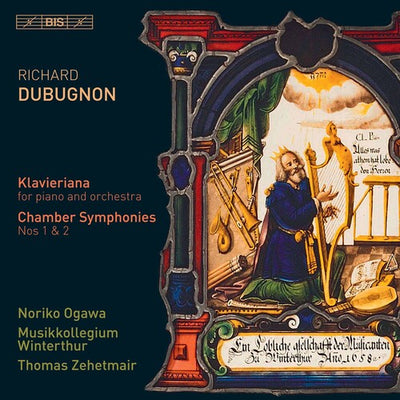
    Dubugnon: Klavieriana, Chamber Symphonies Nos. 1 & 2 / Ogawa, Zehetmair, Winterthur Musikkollegium

    SACD · 1 disc

    $10.99 $21.99 Save 50%
    Composer
    DUBUGNON, RICHARD
    Artist
    Ogawa, Musikkollegium Winterthur, Zehetmair
    Released
    Apr 09, 2021

    Born in 1968, the Swiss composer Richard Dubugnon writes music that has been described as ‘driven by a playful modern sensibility’ (New York Times). His work list includes all genres, from solo pieces to large orchestral works, such as the Helvetia Symphony, scored for the same forces as Stravinsky’s Rite of Spring. He has also written for smaller orchestra, however, and this disc is bookended by his two chamber symphonies. Chamber Symphony No.?1 was composed in 2013, and in his liner notes the composer admits to influences from Arnold Schoenberg and Franz Schreker, as well as Olivier Messiaen: ‘if passionate gestures evoke the decadent Vienna of the turn of the 20th century, the overall harmonic color remains quite “French”… Switzerland is, after all, half way between Vienna and Paris.’ In contrast, the initial inspiration for Chamber Symphony No. 2 (2017) was a visual one – a stained-glass panel from 1658 commemorating the first members of Musikkollegium Winterthur, for which the work was written. Dubugnon creates a chaconne based on the colours of the stained glass, but also includes a Bach fragment in allusion to a reference on the panel to Psalm 150. These elements are used in various ways throughout the piece, which ends in a big accelerando. Framed by the symphonies is the concerto Klaveriana for piano, orchestra and obbligato celesta. Featuring a wide range of piano techniques, the concerto is unusual in that it incorporates an important part for the celesta which functions as a mysterious reflection of the piano. The album is a first on BIS from Musikkollegium Winterthur under its conductor Thomas Zehetmair, with Noriko Ogawa as the soloist in Klaveriana.

    View full page
    Chandos

    Bartok: Concerto for Orchestra, Dance Suite & Rhapsodies / Ehnes, Gardner, Bergen Philharmonic

    SACD · 1 disc

    $10.99 $21.99 Save 50%
    Composer
    BARTOK, BELA
    Artist
    Ehnes, Gardner
    Released
    Nov 03, 2017

    Four years after a highly successful Bartok recording with the Melbourne Symphony Orchestra, Edward Gardner here returns to the composer on SACD, with James Ehnes as solo violinist, and his Bergen Philharmonic Orchestra. The central piece in this recording is the Concerto for Orchestra, the largest work that Bartok completed during the last five years of his life and described by the composer, in the program notes for its 1944 premiere, as ‘a gradual transition from the sternness of the first movement and the lugubrious death-song of the third, to the life-assertion of the last one.’ It is joined by the Dance Suite, the immediate predecessor, among Bartok’s few works for full orchestra without a soloist, of the Concerto for Orchestra, though by more than two decades; and by the violin Rhapsodies, the colorful folk influences of which are revealed by James Ehnes, a specialist in the repertoire, who already has recorded the complete sonatas as well as the concertos for violin and for viola to critical acclaim.

    View full page