Arkiv Outlet

    Chandos

    English Music for Strings / Wilson, Sinfonia of London

    SACD · 1 disc

    $10.99 $21.99 Save 50%
    Composer
    BERKELEY BLISS BRIDGE
    Artist
    Sinfonia Of London, Wilson
    Released
    Feb 05, 2021

    During the 1930s, Bliss, Britten, and Berkeley all contributed major works to the repertoire for string orchestra, following in the footsteps of Elgar and Vaughan Williams. They are joined on this album by Frank Bridge whose Lament was composed during the First World War. This is the fourth recording by John Wilson with his award-winning Sinfonia of London. Bliss composed Music for Strings after he had completed the film score for Korda’s Things to Come, driven by his desire to compose a piece of ‘pure music’, expressing his own ideas rather than those of others. Commissioned in May 1937 by Boyd Neel for the Salzburg Festival that summer, Britten’s Variations on a Theme of Frank Bridge was composed at great speed, and helped to establish the young composer’s international reputation. Dedicated to his teacher, Frank Bridge, the theme is taken from the second of Bridge’s Three Idylls for string quartet. Lennox Berkeley composed his Serenade for Strings at Snape Maltings, where he was living with Britten in 1938 / 39. By the time of its completion the nation was at war and the music seems to reflect the composer’s anxious mood as the world faced an uncertain future.

    REVIEWS:

    The players may have changed since Barbirolli but the spirit has not. And the sound. Sumptuous is one word – but because this is Wilson that goes hand-in-hand with the keenest articulation. There’s a rosiny immediacy about it all, like being on the podium, or better yet inside the sound.. Wilson’s way with strings has come a long way from Hollywood – but the lustre is inescapable.

    – Gramophone (Editor's Choice, February 2021)

    Here in the Bridge Lament is a prime example of the heartfelt precision and beauty of tone that typifies John Wilson’s Sinfonia of London. There’s plenty of heart, too, in their superlative treatment of Britten’s marvellous Bridge variations, warmly delivered even during the parody character pieces clustered together in the first half. Wilson’s team prove equally adroit in Berkeley’s Serenade.

    – BBC Music Magazine

    View full page
  • English Music for Strings / Wilson, Sinfonia of London
    Sale

    English Music for Strings / Wilson, Sinfonia of London

    Chandos Feb 2021
    1 disc
    SACD
    $21.99 $10.99Save 50%
  • Un Siecle de Musique Francaise: Erik Satie
    Sale

    Un Siecle de Musique Francaise: Erik Satie

    Sony Masterworks May 2016
    2 discs
    CD
    $9.98 $4.99Save 50%
    Naxos

    Rossini: Complete Piano Music - Péchés de vieillesse (Sins of Old Age) / Marangoni

    CD · 13 discs

    $32.48 $64.99 Save 50%
    Composer
    Rossini, Gioachino
    Artist
    Alessandro Marangoni
    Released
    Nov 26, 2021

    Rossini drew a line under his hugely successful operatic career at the age of 37 and wrote little until his final years in Paris, where he became renowned for his musical salons. For these he wrote numerous short piano pieces which he jokingly called Péchés de vieillesse (Sins of Old Age): sometimes experimental miniatures that can raise a smile or touch the heart, blurring boundaries between the irreverent and the serious. Rossini’s publisher Antonio Pacini considered the composer’s late works as his most illustrious period: ‘what he composes daily is a series of masterpieces that seems as though it will never end.’ Including songs and fascinating novelties, this acclaimed complete edition contains a myriad of rarities and numerous world premiere recordings.

    View full page
  • Juilliard String Quartet: The Early Columbia Recordings
    Sony Masterworks

    Juilliard String Quartet: The Early Columbia Recordings

    CD · 16 discs

    $27.48 $54.98 Save 50%
    Composer
    VARIOUS
    Artist
    JUILLIARD STRING QUARTET
    Released
    Sep 17, 2021

    Following up its widely acclaimed reissues of the Juilliard Quartet’s complete Epic and RCA Victor albums – originally issued between 1956 and 1960 – Sony Classical is excited to present a new box set collecting the earliest albums of this august American ensemble. Made between 1949 and 1956 in Columbia’s studio on Manhattan’s 30th St., these landmark recordings are mostly new to CD.

    From its first appearances in New York, the Juilliard Quartet was identified as a champion of modern music. Its first recordings for American Columbia, all included here, were dedicated to the works of Alban Berg and Béla Bartók (then only recently deceased), as well as to Arnold Schoenberg (still very much alive), and to active American composers including William Schuman. But the heart of this release comprising 16 newly mastered CDs and also featuring works by Mozart, Ravel, Webern, Milhaud, Copland, Peter Mennin, Alexei Haieff and Andrew Imbrie, are three discs containing the premiere of Béla Bartók’s six quartets on records, which were set down in 1949. They appeared on LP and 78s the following year, bringing the Juilliard Quartet its first real celebrity. Recorded on 78-rpm shellacs rather than on tape, this path-breaking set thus consists of live, unedited performances. When reissued some years ago on CD – the only portion of the new Sony Classical box set ever to have appeared before on silver discs – it was rapturously praised in Fanfare magazine for “its joy of discovery, which remains completely fresh and vivid” even though numerous other traversals of the Bartók cycle had appeared in the meantime.

    Another Juilliard milestone was the premiere of Arnold Schoenberg’s four quartets on records, set down in 1951–52. At last, all these historic Juilliard String Quartet recordings are available to today’s music lovers.

    REVIEWS:

    [An] engrossing 16-disc box set of [the Juilliard Quartet's] earliest recordings for the Columbia label, many appearing on disc for the first time.

    What other quartet of that era would have made its recorded debut not with standard repertoire but with a cantata by Darius Milhaud, written just a few years before? There are works here by composers both renowned (Berg, Webern, Copland) and virtually forgotten (Peter Mennin, Alexei Haieff), all rendered in the Juilliard’s trademark sound: X-ray clear and devoid of schmaltz.

    Two complete cycles anchor the set: Bartok (the first recording of his six quartets) and Schoenberg. Given how unfamiliar these works were at the time, the Juilliard’s confidence and authority is stunning. Subsequent recordings may have disclosed other aspects of this repertory, but that does not dampen the freshness and sense of discovery audible here.

    -- The New York Times

    If patience is a virtue, then fans of the Juilliard String Quartet’s earliest records must be saints. For only now have these much-cherished monaural recordings returned to circulation, some 70 years after their debuts, in a new 16-CD set from Sony Classical titled “Juilliard String Quartet: The Early Columbia Recordings, 1949-56.” The quartet, currently observing its 75th anniversary, is still going strong, though the present ensemble naturally comprises personnel entirely different from those selected for the group at its founding in 1946 by the composer William Schuman, then president of the famed Juilliard School in New York.

    Sony has been good to the Juilliard, having previously released important sets of recordings from a bit later in the group’s life, specifically the 1950s and ’60s, when the quartet made what quickly became fabled discs for Epic and RCA Victor. The addition of this box means the quartet’s early prime is now thoroughly documented. (That said, good luck acquiring those Epic and RCA reissues, which were quicky snatched up—something worth keeping in mind while pondering this latest one.)

    String quartets, with their changing personnel and specialized repertory, have rarely achieved lasting fame, at least among the larger population. They have never in modern times commanded the attention that celebrated instrumental soloists garner, and they haven’t the institutional resources that orchestras command. So releases like this one serve a special purpose. They make us aware of great musicians who might otherwise be, at best, dimly recalled. And, certainly in this case, they return to public attention extraordinary performances that should never have been out of the limelight.

    -- The Wall Street Journal

    View full page
  • Juilliard String Quartet: The Early Columbia Recordings
    Sale

    Juilliard String Quartet: The Early Columbia Recordings

    Sony Masterworks Sep 2021
    16 discs
    CD
    $54.98 $27.48Save 50%
    Sony Masterworks

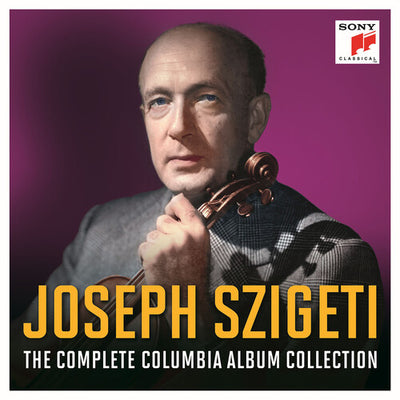
    Joseph Szigeti: Complete Columbia Album Collection

    CD · 17 discs

    $29.97 $59.98 Save 50%
    Composer
    BACH BARTOK HANDEL MOZART
    Artist
    Joseph Szigeti
    Released
    Apr 09, 2021

    Sony Classical is pleased to announce the release of a 17-CD box set collecting the recordings made between 1940 and 1956 for American Columbia by the renowned Hungarian violinist Joseph Szigeti.

    Szigeti had a remarkable career. Born in 1892 in Budapest, where he studied with Jenő Hubay, one of most celebrated virtuosos and teachers of that golden era of violin playing, he was praised by the iconic German violinist Joseph Joachim at his Berlin debut in 1905; lived in London for several years following his acclaimed 1907 debut and played chamber music with, among others, Myra Hess and Ferruccio Busoni; was a frequent visitor after the war to the Soviet Union, where he introduced Prokofiev’s First Violin Concerto; made his triumphant American debut at Carnegie Hall under Stokowski in 1925; toured the world during the 1930s before finally settling in the US in 1940.

    It was in that year that Szigeti renewed his friendship with fellow Hungarian émigré Béla Bartók, and in April the two gave a now-legendary recital in Washington which featured Bartók’s First Violin Rhapsody of 1928 – a work dedicated to and premiered by Szigeti in Europe. In May 1940, Columbia recorded their interpretation of this “vehicle for Szigeti’s biting and wholly magnificent fiddling” (MusicWeb International) in New York. That performance appears here for the first time on CD, along with another important work by Bartók, the classic first recording of his Contrasts for clarinet, violin and piano, written for and performed with Szigeti and Benny Goodman.

    The rest of the new collection displays many more treasures of Szigeti’s passionate dedication to chamber music: in Bach, Handel, Tartini, Mozart, Beethoven, Schubert, Brahms, Dvořák, Debussy, Ravel, Bloch, Busoni, Prokofiev, Stravinsky and Henry Cowell, collaborating with such artists as Andor Foldes – another Hungarian émigré – as well as with Mieczyslaw Horzowski, Myra Hess, Pablo Casals and Igor Stravinsky.

    There are, of course, major orchestral works represented in the new Szigeti edition, including two towering concertos in D major – the Brahms, recorded in 1945 with Eugene Ormandy conducting the Philadelphia Orchestra, and the Beethoven, recorded in 1947 with Bruno Walter and the New York Philharmonic (“an account of impassioned grandeur” – MusicWeb International) – along with Busoni’s early Violin Concerto in D major, recorded in 1954 with Thomas Sherman conducting the Little Orchestra Society. Szigeti’s numerous Bach concerto recordings for Columbia are here as well, conducted by Casals, Fritz Stiedry and George Szell.

    As Nathan Milstein, one of his great colleagues, said in a touching tribute to Szigeti, who died in 1973: “He was an incredibly cultured musician. Actually, his talent grew out of his culture. … I always admired him, and he was respected by musicians.” In his late years, Joseph Szigeti finally got the appreciation he deserved from the general public as well. Sony Classical’s new collection his Columbia recordings, many never before released on CD at Sony Classical, can only further enhance that appreciation.

    REVIEWS:

    Joseph Szigeti (1892-1973) was the violinistic equivalent of a “kunst diva”, just as Gidon Kremer is today. He never had a particularly beautiful tone, while his bowing and intonation grew less dependable with age. Yet Szigeti never put a wrong musical foot forward. His phrasing communicated form, character, architecture, and astute harmonic awareness, with musical considerations always taking precedence over physical expediency.

    Sony/BMG’s 17-CD collection of Szigeti’s complete Columbia Masterworks recordings stands out for exemplary remasterings that stem from the best possible source material. His intense yet thoughtful collaborations with Mieczyslaw Horszowski in Beethoven’s Sonatas Nos. 1, 5, 6, and 10 have never sounded so full-bodied and detailed as they do here. The same goes for the 1947 Beethoven Concerto, where the New York Philharmonic turns in firm and insightfully aligned playing under Bruno Walter’s direction. It contrasts to the conductor’s relatively casual and deferential backing in Szigeti’s 1932 recording, which, however, finds Szigeti on far better form.

    Rehearing Szigeti’s 1949 Bach Sonata No. 3 in C major for violin solo reminded me just how much more fluent and controlled this performance is in comparison to the violinist’s relatively tenuous Vanguard remake. Likewise, his masterful 1940 account of the D minor concerto based on Bach’s keyboard concerto BWV 1052 is technically, musically, and sonically superior to the bloated 1950 reading under Pablo Casals’ direction. Szigeti’s Casals Festival contributions are admittedly uneven.

    His collaborations with Béla Bartók, Igor Stravinsky, and Henry Cowell are both historically important and musically illuminating. Somehow the older Szigeti’s wiry tone imparts welcome character and tension to sonatas by Hindemith, Ravel, and Busoni, as well as the rarely heard Prokofiev solo sonata and Busoni concerto. It must be said, though, that the latter’s final scherzando-like passages are heavy going for the veteran violinist, as are the Busoni sonata’s overextended fugal sequences.

    Listeners expecting suaveness and elegance in Brahms’ G major Op. 78 and D minor Op. 108 sonatas with Horszowski may wince at Szigeti’s tremulous and effortful execution. Still, he makes every note count, and the aching fragility that emerges from Op. 78’s outer movements and Op. 108’s deliberately unfolding third movement compels my undivided attention. Yet this Brahms D minor pales next to the power and authority of Szigeti’s great 78 rpm edition with pianist Egon Petri. As for the short encore-type pieces favored in the shellac era, Szigeti plays them dutifully rather than lovingly; he wasn’t a charmer like Kreisler, Elman, Milstein, or Ricci. Or Heifetz, for that matter.

    The booklet includes full discographical data, an informative essay by Tully Potter, and Szigeti’s own notes for a 1970 Japanese reissue of his Schubert recordings. Even if just half of this collection represents Szigeti at his best, Sony/BMG’s comprehensive and meticulous production values deserve the highest accolades. In the meantime, a complete edition of Szigeti’s pre-war European 78s is long overdue.

    -- ClassicsToday.com (Jed Distler)

    The 31 works, from sonatas to chamber works to concertos, span Bach and Beethoven to Debussy, Ravel, Busoni and Henry Cowell. Bartók is pianist in his own Rhapsody No 1 for Violin and Piano. All the Brahms, including the Trio No 2 in C major with Hess and Casals, is to treasure. Szigeti plays Dvořák with grace and melancholy, and gives bite and attack to Stravinsky. The style may be redolent of another era, yet still this playing speaks to us.

    – Guardian (UK)

    This is a quite wonderful set, one of the highlights being an all-Busoni disc, the Second Sonata with Mieczysπaw Horszowski and the Violin Concerto with the Little Orchestra Society under Thomas Sherman. No one listening could fail to grasp the profound level of Szigeti's musical understanding.

    – Gramophone

    SET CONTENTS

    DISC 1:
    Bartók: Violin Rhapsody No. 1, Sz.87 (Remastered)   
    Bartók: Contrasts for Clarinet, Violin and Piano, Sz.111   
    Bloch: Three Pictures of Chassidic Life for Violin and Piano (Remastered)   
    Milhaud (arr. Lévy): Saudades do Brasil, Op. 67: No. 9, Sumare (Remastered)   
    Falla (arr. Levy): El Sombrero de Tres Picos, Parte I, Danza de la molinera (Remastered)   
    Mozart: Divertimento No. 15 in B-Flat Major, K. 287, "2. Lodronsche Nachtmusik" (Remastered)   

    DISC 2:
    Mussorgsky-Rachmaninoff: Sorochintsy Fair, Act III: No. 5, Gopak (Remastered)   
    Dvorák (arr. Kreisler): Slavonic Dance in E Minor, Op. 46, No. 2 (Arr. in G Minor) (Remastered)   
    Dvorák (arr. Kreisler): Slavonic Dance No. 3 in A-Flat Major, Op. 46, No. 3 (Arr. in E Minor) (Remastered)   
    Hubay: Scènes de la Csárda No.4, Op. 32, "Hejre Kati", I. Lento ma non troppo. Allegro moderato (Remastered)   
    Hubay: Scènes de la Csárda No.4, Op. 32, "Hejre Kati", II. Allegro molto (Remastered)   
    Kodály (arr. Szigeti): Háry János Suite, IZK 26: V. Intermezzo (Remastered)   
    Brahms: 21 Hungarian Dances for Orchestra, WoO 1: No. 5 in G Minor (Remastered)   
    Debussy: Violin Sonata No.3 in G Minor, L. 140 (Remastered)   
    Hubay: The Zephyr, Op. 30, No. 5 (Remastered)   
    Schubert, Francois: Bagatelle Op. 13, No. 9, "Die Biene" (Remastered)   
    Stravinsky: Duo Concertant for Violin and Piano   
    Stravinsky: Pastorale, Song without Words for Violin & Woodwind Quartet   
    Stravinsky: Russian Maiden's Song   

    DISC 3:
    Beethoven (Cadenza: Joseph Joachim): Violin Concerto in D Major, Op. 61   

    DISC 4:
    Brahms: Violin Concerto in D Major, Op. 77   
    Brahms: Violin Sonata No.3 in D Minor, Op.108: II. Adagio   

    DISC 5:
    Beethoven: Violin Sonata No.1 in D Major, Op. 12, No. 1 (Remastered)   
    Schubert: Violin Sonata in D Major, D.384   
    Schubert (arr. Friedberg): Piano Sonata No.17 in D Major, D.850: IV. Rondo. Allegretto moderato (Remastered)   
    Beethoven: Violin Sonata No.7 in C Minor, Op. 30, No. 2 (Remastered)   

    DISC 6:
    Prokofiev: Violin Sonata No.1 in F Minor, Op. 80 (Remastered)   
    Prokofiev: Violin Sonata No. 2 in D Major, Op. 94bis (Remastered)   

    DISC 7:
    Bach, J.S.: Violin Sonata No. 3 in C Major, BWV 1005   
    Bach, J.S. (arr. Reitz): Keyboard Concerto No. 1 in D Minor, BWV 1052   

    DISC 8:
    Schubert: Fantaisie for Piano & Violin in C Major, Op.Posth. 159, D. 934   
    Corelli (arr. H. Leonard): Violin Sonata in D Minor, Op.5 No.12 "La Folia" (Variations Serieuses)   
    Debussy (arr. Roelens): Suite bergamasque, L. 75: No. 3. Clair de lune   
    Lalo (arr. Szigeti): Aubade from "Le Roi d'Ys" (Act III)   
    Tchaikovsky: 6 Pieces, Op. 51: No. 6, Valse sentimentale   
    Bach, J.S. (arr. Szigeti): Violin Partita No.3 in E Major, BWV 1006: VI. Bourrée (Remastered)   

    DISC 9:
    Bach, J.S.: Concerto for Flute, Violin and Keyboard in A Minor, BWV 1044 (Remastered)   
    Bach, J.S.: Violin Concerto No. 1 in D Minor, (arr. BWV 1052/1056) (Remastered)   
    Bach, J.S.: Brandenburg Concerto No. 5 in D Major, BWV 1050   

    DISC 10:
    Schubert: Rondo in B Minor for Piano and Violin, D.895 (Op.70) "Rondeau brillant"   
    Beethoven: Violin Sonata No.10 in G Major, Op. 96 (Remastered)   
    Schubert: Violin Sonata in A Major, Op. 162. D. 574 "Grand Duo" (Remastered)   

    DISC 11:
    Brahms: Piano Quartet No. 3 in C Minor, Op. 60   
    Brahms: Piano Trio No. 2 in C Major Op. 87   

    DISC 12:
    Cowell: Sonata No. 1 for Violin and Piano (1945) (Remastered)   
    Shapero: Sonata for Piano Four Hands (1941) (Remastered) (Harold Shapero, piano; Leo Smit, piano)
    Cowell: Celestial Vision: How Old Is Song? (Remastered)   

    DISC 13:
    Beethoven: Violin Sonata No.5 in F Major, Op. 24 "Spring"   
    Beethoven: Violin Sonata No. 6 in A Major, Op. 30, No. 1   

    DISC 14:
    Bach, J.S. (arr. Szigeti): Violin Concerto in G Minor, BWV 1056 (Remastered)   
    Handel: Violin Sonata in D Major, HWV 371 (Remastered)   
    Tartini (Cadenzas: Szigeti): Violin Concerto in D Minor, D. 45 (Remastered)   
    Tartini: Violin Sonata in G Major, B. G19 (Remastered)   

    DISC 15:
    Ravel: Violin Sonata No.2 in G Major, M. 77   
    Hindemith: Violin Sonata in E Major (1939)   
    Prokofiev: Sonata for Solo Violin in D Major, Op. 115 (Remastered)   
    Prokofiev: Five Melodies for Violin and Piano, Op. 35bis (Remastered)   

    DISC 16:
    Busoni: Violin Concerto, Op.35a, BV 243   
    Busoni: Violin Sonata No.2, Op.36a, BV 244   

    DISC 17:
    Brahms: Violin Sonata No.1 in G Major, Op. 78 "Regen" (Remastered)   
    Brahms: Violin Sonata No.3 in D Minor, Op.108 (Remastered)

    View full page
  • Joseph Szigeti: Complete Columbia Album Collection
    Sale

    Joseph Szigeti: Complete Columbia Album Collection

    Sony Masterworks Apr 2021
    17 discs
    CD
    $59.98 $29.97Save 50%
  • Leonard Bernstein - 10 Album Classics
    Sony Masterworks

    Leonard Bernstein - 10 Album Classics

    CD · 11 discs

    $24.98 $49.98 Save 50%
    Composer
    Ludwig van Beethoven, Leonard Bernstein, Antonin Dvorak, George Gershwin, Gustav Mahler, Igor Stravi
    Artist
    Leonard Bernstein, Dietrich Fischer-Dieskau
    Released
    Jun 23, 2023

    Sony Classical is pleased to present a special edition of Leonard Bernstein’s American Columbia recordings from the 1950s and 1960s. Some of the conductor-composer’s most celebrated interpretations and works are collected here on these carefully chosen 10 original albums on 11 CDs. 

    There is, of course, the still-astonishing album that launched Leonard Bernstein’s international reputation as the most dynamic and charismatic conductor of his era, Stravinsky’s Rite of Spring recorded in January 1958 – two months after his appointment as the youngest music director in the New York Philharmonic’s history. Reviewing a 2013 reissue, ClassicsToday.com declared: “It has an excitement, spontaneity, and primal fury that no other version quite matches.” 

    The Bernstein recording that launched the “Mahler Renaissance” in the 1960s is also here: his Third Symphony with the New York Philharmonic, which has arguably never been surpassed. And while we’re talking about Third Symphonies, Bernstein’s “Eroica” still sounds “wonderfully vibrant” (Gramophone) a half century after its first release. There is also his reading of Dvořák’s most popular symphony – “There’s no such thing as a ‘definitive’ recording [of the “New World”], but if there were, this one would come close to that imagined ideal” (ClassicsToday) – and two from Haydn’s magnificent “Paris” set: “It’s debatable whether there have been better performances” (ClassicalNet).  

    Bernstein himself conducts and plays Gershwin’s Rhapsody in Blue (“The one indispensable recording of this familiar work, paired with an equally fine American in Paris” – New York Times). Bernstein the pianist also accompanies Dietrich Fischer-Dieskau, at the peak of his matchless career, in an acclaimed album of Mahler lieder. The ballets Rodeo and Billy the Kid by Bernstein’s mentor and friend Aaron Copland are included: “Even the composer couldn't make [them] dance the way Bernstein does” (New York Times).  

    Bernstein the composer is also generously represented. The original Broadway cast recording of Candide from 1956 is included, as is the definitive version of his most famous work: the original Broadway cast recording of West Side Story from 1957. 

    The re-masterings in this new collection are the best ever issued of these thrilling recordings by one of the last century’s greatest musicians, selected from the Grammy® award-winning Leonard Bernstein – The Composer and the Leonard Bernstein – Remastered editions. Sony Classical’s new 11-CD Leonard Bernstein box set is the perfect introduction to the work of this American genius.

    Past praise of previously released recordings included in this set:

    Mahler: Symphony No. 3 / Lipton, Bernstein, NYP

    This was the finest performance of Mahler’s Third when it was first issued back in 1962, and in some ways it has never been surpassed. Bernstein catches the riotous vulgarity of the first movement march music like no other conductor–not even his own digital remake reaches the level of sheer abandon he whips up here, and he also has the best of all fifth movements (bright and cheery, with dazzlingly prominent percussion).

    -- ClassicsToday.com (10/10; David Hurwitz)

    Dvořák: Symphony No. 9 / Bernstein, NYP

    There’s no such thing as a “definitive” recording, but if there were, this one would come close to that imagined ideal. Its special qualities haven’t dimmed a bit in decades since it was recorded, and every interpretive decision comes across with the inevitability of fate itself. First, you get the first-movement exposition repeat (very unusual for its time), then there’s the very slow (but still very flowing) Largo, gorgeously played and far from the trudge-fest that Bernstein would make of for DG. The scherzo goes like the wind, the fastest ever, and the finale offers simply the last word in excitement. If you don’t own this performance in some form, then you don’t know the “New World”.

    -- ClassicsToday.com (10/10; David Hurwitz)

    View full page
  • Leonard Bernstein - 10 Album Classics
    Sale

    Leonard Bernstein - 10 Album Classics

    Sony Masterworks Jun 2023
    11 discs
    CD
    $49.98 $24.98Save 50%
    Signum Classics

    Great American Songbook / King's Singers

    CD · 2 discs

    $10.99 $21.99 Save 50%
    Composer
    COLEMAN RODGERS PORTER HAMI
    Artist
    King'S Singers, Firman
    Released
    Oct 29, 2013

    Around the time The King's Singers was starting up, one of the most productive periods of songwriting in history was coming to a close in America, starting with composers such as Gershwin, Kern, Berlin and Porter in the early 1920s, and continuing through to the early 1960s. In this new 2-CD studio recording - featuring brand new a cappella arrangements by jazz composer and arranger Alexander L'Estrange, and swing-orchestra performances with the South Jutland Symphony Orchestra - The King's Singers bring their own unique performance style to this wonderful music.

    View full page
  • Great American Songbook / King's Singers
    Sale

    Great American Songbook / King's Singers

    Signum Classics Oct 2013
    2 discs
    CD
    $21.99 $10.99Save 50%
  • Lorin Hollander: Complete RCA Album Collection
    Sony Masterworks

    Lorin Hollander: Complete RCA Album Collection

    CD · 8 discs

    $23.48 $46.98 Save 50%
    Composer
    Johann Sebastian Bach, Ludwig van Beethoven, Ernest Bloch, Johannes Brahms, Leon Kirchner, Modest Mu
    Artist
    Lorin Hollander
    Released
    Jun 24, 2022

    The American pianist Lorin Hollander was only 14 years old in 1958 when he recorded his first album for RCA, a personal selection of “22 Favorites” entitled Discovering the Piano. Its success led to a sequel the following year. Over the next eight years he produced an acclaimed series of releases for the Red Label, establishing an international career which would eventually encompass more than 2,500 appearances as a pianist, conductor and passionate advocate for arts education. Hollander has performed with many of the world’s leading orchestras and collaborated with conductors such as Bernstein, Szell, Ormandy, Leinsdorf, Previn, Haitink, Ozawa and Mehta. Sony Classical is now pleased to present a new 8-disc box set offering Lorin Hollander’s complete RCA discography for the first time on CD.

    A child prodigy, he was born in New York City into a musical family – his father was associate concertmaster of the NBC Symphony Orchestra under Toscanini. Lorin began playing the piano at the age of three and within two years had memorized the complete first book of the Well-Tempered Clavier. At eleven, he made his Carnegie Hall début playing Mozart’s C major Concerto K 467. His list of distinguished teachers and mentors includes Eduard Steuermann, Olga Stroumillo, Leon Fleisher, Max Rudolf and Rudolf Serkin.

    Sony’s Lorin Hollander box begins with those two early albums of “favorites” by Bach, Mozart, Beethoven, Schubert, Schumann, Chopin, Mendelssohn, Liszt, Brahms, Grieg, Rimsky-Korsakov, Falla, Granados, Rachmaninoff and Paderewski. In 1963, with Erich Leinsdorf and the Boston Symphony, he premièred and recorded the Fantasy and Variations for Piano and Orchestra by Norman Dello Joio. RCA Victor’s release, a coupling with the Ravel G major Concerto, became Hollander’s international record début and found critical acclaim on both sides of the Atlantic. High Fidelity in the US wrote that “the eighteen-year-old pianist’s amazing digital skill and bravura are just what are demanded for the Fantasy and Variations”, while Gramophone in the UK, was grateful for “our first taste on records of the music of Norman Dello Joio, the 50-year-old New York composer who was at one time a pupil of Hindemith. The piano part is immensely athletic: Hollander scuttles up and down the keyboard with great efficiency, and the orchestra is equally on its toes.”

    Hollander recorded further virtuoso concertos in 1964 and 1965. The Prokofiev Fifth, also with Leinsdorf and the BSO, was hailed as “a super-brilliant performance” by High Fidelity. Of the Khachaturian Piano Concerto coupled with Bloch’s Scherzo fantasque – made in London with the Royal Philharmonic Orchestra under André Previn – High Fidelity wrote enthusiastically: “The Scherzo fantasque has many of the jagged dissonances and virile qualities of Bloch’s writing in the early Twenties. It is fiercely virtuosic and thus ideally suited to the percussive, tigerish Mr. Hollander. In the Khachaturian … Hollander’s work is also first-rate technically … I find the performance excellent.”

    Two solo albums from 1965 and 1966 rounded out Hollander’s RCA discography, Mussorsky’s Pictures at an Exhibition, coupled with works by Prokofiev and Rachmaninoff, and a coupling of Beethoven’s “Tempest” Sonata, the Schumann Arabeske, a Brahms Intermezzo and Myra Hess’s beloved Bach transcription “Jesu, Joy of Man’s Desiring”. The set concludes with a curiosity, recorded for Columbia’s “Modern American Music Series” in 1973: the concert work for soprano and chamber ensemble fashioned by American composer Leon Kirchner from his opera Lily. Kirchner plays the piano part and conducts an ensemble featuring Lorin Hollander on celesta, clarinettist Richard Stoltzman, violinist James Buswell and violist Nobuko Imai. The soprano soloist is Diana Hoagland.  

    SET CONTENTS 

    DISC 1:
    • Rimsky-Korsakoff (arr. Rachmaninoff): Flight of the Bumblebee
    • Granados: Spanish Dance in E Minor, Op. 5, No. 5 "Playera - Andaluzia"   
    • Schubert: Momento Musical In F Minor, Op. 94, No. 3
    • Mendelssohn: Venetian Boat Song, No. 6
    • Chopin: Etude in C Minor, Op. 10, No. 12 "Revolutionary"
    • Paderewski: Menuet célèbre in G Major  
    • Falla: Ritual Fire Dance
    • Liszt: Liebestraum No. 3
    • Chopin: Für Elise (Albumblatt)  
    • Chopin: Prelude in C Minor, Op. 28/20  
    • Brahms: Waltz in A-Flat Major, Op. 39/15 
    • Debussy: Claire de lune   
    • Chopin: Waltz in C Sharp Minor, Op. 64/2
    • Beethoven: Minuet No. 2 in G Major
    • Mozart: Piano Sonata No. 16 in C Major, K. 545: I. Allegro "Sonata Facile"
    • Mozart (arr. Hollander): Minuet (From "Don Giovanni") 
    • Bach: Two-Part Invention No. 13 in A Minor, BWV 784   
    • Schumann: Album für die Jugend, Op. 68: X. Fröhlicher Landmann, von der Arbeit zurückkehrend.  
    • Schumann: Album für die Jugend, Op. 68: II. Soldatenmarsch. Munter und straff
    • Schumann: Träumerei 
    • Grieg: Anitra's Dance
    • Chopin: Etude in G-Flat, Op. 25, No. 9 "Butterfly" 

    DISC 2:

    • Chopin: Polonaise in A-Flat Major, Op. 53
    • Chopin: Scherzo No. 2 in B-Flat Minor, Op. 31 
    • Liszt: Hungarian Rhapsody No.6 in D-Flat Major, S.244/6 
    • Liszt: Mephisto Waltz No. 3, S.216 
    • Brahms: 3 Intermezzi, Op. 117/2
    • Brahms: Rhapsody in G Minor, Op. 79/2 
    • Rachmaninoff: Prelude in C-Sharp Minor, Op. 3/2  

    DISC 3:

    • Dello Joio: Fantasy and Variations for Piano and Orchestra
    • Ravel: Piano Concerto in G Major  
    Lorin Hollander, piano / Boston Symphony Orchestra / Erich Leinsdorf, conductor

    DISC 4:

    • Prokofiev: Violin Concerto No. 1 in D Major, Op. 19 [Erick Friedman, violin]    
    • Prokofiev: Piano Concerto No. 5 in G Major, Op. 55    
    Lorin Hollander, piano / Boston Symphony Orchestra / Erich Leinsdorf, conductor

    DISC 5:

    • Khachaturian: Piano Concerto in D-Flat Major, Op. 38  
    • Bloch: Scherzo fantasque, B. 78
    Lorin Hollander, piano / Royal Philharmonic Orchestra / Andre Previn, conductor

    DISC 6:

    • Mussorgsky: Pictures at an Exhibition
    • Rachmaninoff: Prelude In C-Sharp Minor, Op. 3/2 
    • Prokofiev: Toccata, Op. 11

    DISC 7:

    • Beethoven: Sonata No. 17 in D Minor, Op. 31/2 "The Tempest  
    • Bach, J. S. (arr. Hess): Choral: "Jesu, Joy of Man's Desiring"  
    • Brahms: Intermezzo in B-Flat Minor, Op. 117/2
    • Schumann: Arabeske, Op. 18 

    DISC 8:

    • Kirchner: Lily (1973) 
    Diana Hoagland, soprano / Columbia Chamber Soloists / Leon Kirchner, pianist/conductor
    • Kirchner: String Quartet No. 2 (1958)
    Lenox String Quartet

    View full page
  • Lorin Hollander: Complete RCA Album Collection
    Sale

    Lorin Hollander: Complete RCA Album Collection

    Sony Masterworks Jun 2022
    8 discs
    CD
    $46.98 $23.48Save 50%
    BIS

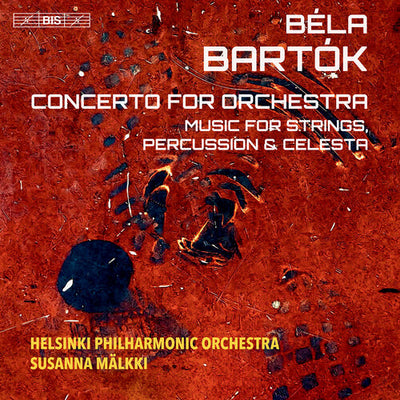
    Bartók: Concerto for Orchestra; Music for Strings, Percussion & Celesta / Mälkki, Helsinki Philharmonic

    SACD · 1 disc

    $10.99 $21.99 Save 50%
    Composer
    BARTOK, BELA
    Artist
    Malkki
    Released
    Oct 01, 2021

    On two highly praised albums, Susanna Mälkki and her players in the Helsinki Philharmonic Orchestra have released recordings of Béla Bartók’s three scores for the stage – The Miraculous Mandarin, The Wooden Prince and Bluebeard’s Castle, all written before 1918. The team now takes on two of his late orchestral masterpieces. Composed in 1936 for the Basel Chamber Orchestra, Music for Strings, Percussion and Celesta is one of the purest examples of Bartók’s mature style, with its synthesis of folk music, classicism and modernism. One immediately striking feature is the unusual instrumentation: two string orchestras seated on opposite sides of the stage, with percussion and keyboard instruments in the middle and towards the back. In 1940, during the Second World War, Bartók emigrated to the U.S.A., where he initially found it difficult to compose. In 1943 he received a prestigious commission from the Boston Symphony Orchestra, however, and in less than eight weeks he composed the Concerto for Orchestra. In it he worked with contrasts between different sections of the orchestra, and the soloistic treatment of these groupings was his reason for calling the work a concerto rather than a symphony.

    REVIEW:

    There hasn’t been a coupling of these two iconic works this successful in, well, decades. Usually the pieces get divided between different performers, or if it’s the same forces throughout, one work comes off better than the other. Not here. Start with the Music for Strings, Percussion and Celesta. No one (except possibly Reiner) attempts to play it at Bartók’s indicated timings–around six+ minutes per movement. Everyone is slower, and often rightly so, but sometimes rather too much slower. Mälkki sounds just about perfect: in the range of seven minutes per movement, with an eerily flowing opening fugue, a ferocious second movement Allegro, a terrifying Adagio (listen to those timpani glissandos at the bottom of the texture), and a finale that features an imaginative and characterful flexibility of tempo, highlighting its dance-like character. The Helsinki strings play with extraordinary discipline, even if some of the “special effects” such as col legno bowing could resister more strongly. Never mind. It’s a great performance.

    So is that of the Concerto for Orchestra. Perhaps the best thing I can say about it is that it sounds like a genuine collaborative effort between conductor and orchestra. Mälkki keeps the music flowing, reveling in the fine ensemble that the Helsinki Philharmonic has become: the brass fugato in the first movement, the “games of pairs” in the second, or the eerie woodwind solos in the brooding Elegia–nothing here is less than world-class. In the finale, Mälkki finds an idea balance between hard-driving forward movement and precision of articulation. She also keep something especially exciting in reserve for the coda, which dashes away thrillingly. BIS has captured the entire production in powerfully present, tactile sound that really lets you hear down through the ensemble, from top to bottom. This really is an exceptional release. If you love this music, be sure to hear it.

    – ClassicsToday.com (10/10; David Hurwitz)

    View full page
    Naxos

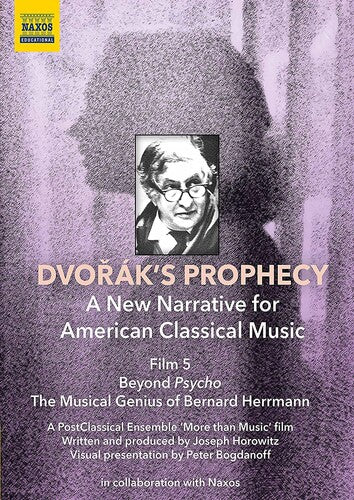
    Dvorak's Prophecy - Film 5 - Beyond Psycho: The Musical Genius of Bernard Herrmann [DVD]

    DVD · 1 disc

    $6.49 $12.99 Save 50%
    Artist
    William Sharp
    Released
    Nov 12, 2021

    “Beyond Psycho - The Musical Genius of Bernard Herrmann”
    A PostClassical Ensemble “More than Music” film
    Written and produced by Joseph Horowitz
    Visual presentation by Peter Bogdanoff
    Film five in the six-film Naxos series:
    “Dvorak’s Prophecy: A New Narrative for American Classical Music”

    Hollywood’s supreme film composer was a casualty of the standard narrative - as he himself was bitterly aware. Not only were his movie scores high creative accomplishments; Bernard Herrmann was a formidable- and formidably unfashionable- concert composer whose Clarinet Quintet may be the most beautiful chamber music by an American. His Psycho Narrative, which we also sample, surpasses the Psycho Suite we normally hear. He honed his gift for dramatizing the spoken word as the pre-eminent composer for a genre no longer remembered: the radio drama. This film samples Whitman (1944) – a Norman Corwin radio play that deserves to live as a concert work. It also exemplifies how radio, an unprecedented mass medium, once consolidated the American experience, its biggest star being Franklin D. Roosevelt. Participants include the Whitman scholar Karen Karbiener, the critic Alex Ross, Murray Horwitz on radio lore, and William Sharp on playing Walt Whitman to music by Bernard Herrmann.

    View full page
    Chandos

    Rachmaninoff: Piano Duets

    CD · 1 disc

    $10.99 $21.99 Save 50%
    Composer
    RACHMANINOFF, SERGE
    Artist
    Lortie, Mercier
    Released
    Nov 13, 2015

    Twenty five years after their last recording of piano duets on Chandos, the Canadien pianists Louis Lortie and Hélène Mercier return in a watershed collection of magnificently played duets by Rachmaninoff including the two suites and an arrangement for his Symphonic Dances. The Lortie/Mercier piano duo have known one another since their early teens, and have a considerable collaborative discography that showcases their affinity for the art of 4 hands and 2 pianos performances and repertoire.

    View full page
  • Rachmaninoff: Piano Duets
    Sale

    Rachmaninoff: Piano Duets

    Chandos Nov 2015
    1 disc
    CD
    $21.99 $10.99Save 50%
    Sony Masterworks

    Artur Rodziński: The Complete Cleveland Orchestra Recordings

    CD · 13 discs

    $31.97 $63.98 Save 50%
    Composer
    Ludwig van Beethoven, Alban Berg, Hector Berlioz, Claude Debussy, Armas Jarnefelt, Jerome Kern, Feli
    Artist
    The Cleveland Orchestra
    Released
    Nov 03, 2023

    Following Sony Classical’s 16-CD release of Artur Rodziński’s New York Philharmonic recordings, here is the label’s eagerly awaited 13-disc collection of his complete recordings with the Cleveland Orchestra, which Rodziński headed from 1933 to 1943. The fiery, volatile Polish conductor (1892–1958) – whose lean, propulsive style emulated that of his idol Toscanini – earned a reputation as a builder of great orchestras: he led and developed the Los Angeles Philharmonic before taking up his position in Cleveland. In 1935, he brought nationwide attention to the midwestern orchestra when he conducted it in the US première of Shostakovich’s opera Lady Macbeth of the Mtsensk District. During his tenure in Cleveland, Rodziński moulded its orchestra into a brilliant ensemble which his successor, George Szell, would then elevate to international pre-eminence. Meanwhile, Rodziński was also active in Europe, becoming the first naturalized American to conduct the Vienna Philharmonic at the Salzburg Festival. There Toscanini admired his work and in 1938 picked him to train his new NBC Symphony Orchestra. In Cleveland between 1939 and 1942, Rodziński conducted a number of important recordings for Columbia Masterworks, all of them contained in this new set.

    With dedicatee Louis Krasner as soloist, he made the first studio recording of the Berg Violin Concerto. His other acclaimed 78-sets include the Berlioz Symphonie fantastique, Rimsky-Korsakov’s Scheherazade (“among the finest statements ever given this incorrigibly popular score” – High Fidelity), Strauss’s Ein Heldenleben, the Fifth Symphony of Tchaikovsky (“Remarkable here is the tension of the second movement and the heroic close to the first” – Gramophone) as well as those of Sibelius and Shostakovich, Tchaikovsky’s Romeo and Juliet (“Unsullied excitement” – Gramophone), Debussy’s La Mer and the orchestral “scenario” from Jerome Kern’s Show Boat – plus a previously unreleased recording of Mendelssohn’s Violin Concerto with Nathan Milstein. Until now, most of these albums have only been released on 78s and reissued on LP. Thus Sony Classical’s meticulously transferred and mastered 13-disc collection of Rodziński’s Cleveland recordings fills a large gap in this still widely admired conductor’s CD discography.

    View full page
  • Artur Rodziński: The Complete Cleveland Orchestra Recordings
    Sale

    Artur Rodziński: The Complete Cleveland Orchestra Recordings

    Sony Masterworks Nov 2023
    13 discs
    CD
    $63.98 $31.97Save 50%
    Cedille

    Jewish Cabaret In Exile / New Budapest Orpheum Society

    CD · 1 disc

    $9.99 $19.99 Save 50%
    Composer
    VARIOUS
    Artist
    New Budapest Orpheum Society
    Released
    May 26, 2009

    "The beautifully produced Çedille album of Jewish cabaret music broke new ground. Yet more depths were revealed in a ravaged culture: modest, entertaining, and humane." -- Paul Ingram, Fanfare

    The booklet accompanying this release is so thick that it requires a double jewel case to accommodate it and the single CD it documents. So extensive are the essay, annotations, and bibliography to this production—assumed to have been authored by the New Budapest Orpheum’s director, Philip V. Bohlman, though nowhere is he credited as the author—that I will not even try to summarize their contents, which cover the history, politics, and poetics of Yiddish song in stage, screen, vaudeville, and cabaret. The program of Jewish cabaret songs contained herein complements some of the volumes that appeared in the massive Milken Archive of American Jewish Music, though the composers represented on the current CD were not necessarily transplants to American soil. Of those who enriched the Jewish cabaret literature, some did make it to U.S. shores, notably Hanns Eisler, Kurt Weill, and Arnold Schoenberg. But others, such as Viktor Ullmann and Pavel Haas, perished in the Holocaust.

    The disc is divided into seven sections: (1) “The Great Ennui on the Eve of Exile,” featuring songs by Edmund Nick and Erich Kästner; (2) “The Exiled Language—Yiddish Songs for Stage and Screen,” featuring unattributed songs, but at least one by Abraham Ellstein; (3) “Transformation of Tradition,” presenting songs by the aforementioned Eisler; (4) “The Poetics of Exile,” offering songs by Kurt Tucholsky, as well as additional songs by Eisler; (5) “Traumas of Inner Exile,” featuring songs by Ullmann; (6) “Nostalgia and Exile,” presenting additional unattributed songs; and (7) “Exile in Reprise,” offering songs by Friedrich Holländer.

    The songs were chosen to reflect the various phases of exile—physical, emotional, and psychological—that European Jewry experienced in the period leading up to and during WW II and its immediate aftermath, roughly 1935 to 1945, a period that accounts for the second great exodus of Jews from Europe. Primarily then, these are songs from the smoke-filled nightclubs and entertainment halls of Berlin and other European cities before the rise of Hitler, from the barracks of the concentration camps during the Holocaust, and from the months and years following the liberation. The before, during, and after the Shoah aspects of the recorded material frame and reflect the corresponding attitudes, mindsets, and living conditions of the times—from a song like Elegy in the Forest of Things, expressing a kind of resigned world weariness; to Ellstein’s Deep as Night that tries to deaden the senses to the pain of the outside world with the surrogate internal pain of a longed for love; to the bitter sarcasm of Eisler’s Sweetbread and Whips and Georg Kreisler’s Poisoning Pigeons, a song about spreading arsenic on graham crackers and feeding them to the birds in the park; and finally to I’m an Irrepressible Optimist, a song from the aftermath which cannot erase memories and finds optimism only in the release of death. 

    The New Budapest Orpheum Society is an ensemble-in-residence at the University of Chicago. A mixed group of vocalists (Julia Bentley, mezzo-soprano and Stewart Figa, baritone) and instrumentalists (Iordanka Kisslova, violin; Stewart Miller, string bass; Hank Tausend, percussion; and Ilya Levinson, piano), the NBOS performs regularly at Chicago’s universities, synagogues, and cultural institutions, and has also appeared at the United States Memorial Holocaust Museum and the American Academy in Berlin. Philip V. Bohlman is the group’s artistic director; and Ilya Levinson, in addition to her role as pianist, also serves as music director and arranger.

    Readers who acquired and enjoyed the three volumes from the Milken Archive of American Jewish Music titled “Songs of the American Yiddish Stage” (Naxos 8.559405, 8.559432, and 8.559455) will find much in “Jewish Cabaret in Exile” to their liking. One needn’t necessarily be Jewish, however, to appreciate this material, much of which had its origins in the dives, dance halls, and strip joints of Bertolt Brecht’s, Kurt Weill’s, Lotte Lenya’s, and Marlene Dietrich’s Berlin. Some of it is pretty heady stuff, with the gender-bending sexual stereotyping and absurdist satire of a decadent, Dada-costumed culture on the verge of imploding. Recommended then if you love it. If you don’t, best leave it.
    -- Jerry Dubins, Fanfare

    Track listing details:

    I. The Great Ennui on the Eve of Exile
    Edmund Nick (1891–1973) & Erich Kästner (1899–1974)
    1 Die möblierte Moral / The Well-Furnished Morals (1:48)
    2 Das Wiegenlied väterlicherseite / The Father’s Lullaby (4:49)
    3 Die Elegie in Sachen Wald / Elegy in the Forest of Things (3:29)
    4 Der Gesang vom verlorenen Sohn / The Song of the Lost Son (5:13)
    5 Das Chanson für Hochwohlgeborene / The Chanson for Those Who Are Born Better (2:43)
    6 Der Song “man müßte wieder . . .”/ The Song “Once Again One Must . . .” (3:59)

    II. The Exiled Language — Yiddish Songs for Stage and Screen
    7 Moses Milner (1886–1953): In Cheider / In the Cheder (5:46)
    8 Mordechai Gebirtig (1877–1942): Avreml, der Marvikher / Abe, the Pickpocket (5:12)
    9 Abraham Ellstein (1907–1963): Tif vi di Nacht / Deep as the Night (3:07)

    III. Transformation of Tradition
    Hanns Eisler (1898–1962):
    From Zeitungsausschnitte, Op. 11 (Newspaper Clippings)
    10 Mariechen / Little Marie (1:49)
    11 Kriegslied eines Kindes / A Child’s Song of War (2:32)

    IV. The Poetics of Exile: Songs by Hanns Eisler and Kurt Tucholsky (1890–1935)
    12 Heute zwischen Gestern und Morgen / Today between Yesterday and Tomorrow (2:35)
    13 Bügerliche Wohltätigkeit / Civic Charity (3:01)
    14 Zuckerbrot und Peitsche / Sweetbread and Whips (2:20)
    15 An den deutschen Mond / To the German Moon (2:46)
    16 Einigkeit und Recht und Freiheit / Unity and Justice and Freedom (1:53)
    17 Couplet für die Bier-Abteilung / Couplet for the Beer Department (1:26)

    V. Traumas of Inner Exile
    Viktor Ullmann (1898–1944)
    Three Yiddish Songs (Brezulinka), op. 53 (1944)
    18 Berjoskele / The Little Birch (4:18)
    19 Margaritkele / Little Margaret (1:37)
    20 Ich bin a Maydl in di Yorn / I’m Already a Young Woman (1:30)

    VI. Nostalgia and Exile
    21 Georg Kreisler (b. 1922): Tauben vergiften / Poisoning Pigeons (2:46)
    22 Hermann Leopoldi (1888–1959) and Robert Katscher (1894–1942): Ich bin ein unverbesserlicher Optimist / I’m an Irrepressible Optimist (3:46)
    23 Misha Spoliansky (1898–1985) / Marcellus Schiffer (1892–1932): Heute Nacht oder nie / Tonight or Never (3:22)

    VII. Exile in Reprise
    Friedrich Holländer on Stage and Film
    24 Friedrich Holländer (1896–1976): Marianka (2:32)
    25 Wenn der Mond, wenn der Mond . . . / If the Moon, If the Moon . . . (3:00) Lyrics by Theobald Tiger (Kurt Tucholsky)

    View full page
  • Jewish Cabaret In Exile / New Budapest Orpheum Society
    Sale

    Jewish Cabaret In Exile / New Budapest Orpheum Society

    Cedille May 2009
    1 disc
    CD
    $19.99 $9.99Save 50%
    Sony Masterworks

    Beethoven: The Violin Sonatas / Francescatti, Casadesus

    CD · 7 discs

    $22.98 $45.98 Save 50%
    Composer
    BEETHOVEN, LUDWIG VAN
    Artist
    Zino Francescatti, Robert Casadesus
    Released
    May 08, 2020

    These two patrician French musicians were leading lights at American Columbia from the 1940s until well into the 1960s. During World War II, violinist Zino Francescatti and pianist Robert Casadesus began performing as a duo (they were both also collaborators with Ravel early in the careers), and in the decades since then the Columbia/Sony catalogue has documented this partnership distinguished by interpretive grace and technical polish. Although Francescatti is probably best remembered for his wide-ranging concerto recordings with Bernstein, Ormandy and Bruno Walter and Casadesus for his sparkling Mozart concertos with Szell, their duo recordings were also greatly admired by music lovers, especially their landmark interpretations of the Beethoven Violin Sonatas. The first of these recordings – made in mono between 1949 and 1957 in New York, when both musicians were living in the US – comprised Nos. 3–9. A remake, this time the complete cycle, was recorded in stereo in Paris in 1958 and 1961. Now Sony Classical is reissuing all of these performances in a single 7-CD box set.

    All of their recordings of Beethoven violin sonatas were held in the highest critical esteem. The mono recordings earned special praise from Gramophone in the UK for expressiveness without undue romanticism and from High Fidelity in the US for an equality between the two musicians not often found in recordings of these works. Similar plaudits for the stereo versions, Gramophone commending Francescatti’s “cool, relaxed ease and sweet tone [in the “Spring” Sonata] … Casadesus is wonderfully good, too … The playing is effortless and relaxed in the true chamber music way … Both in this [Op. 96] and the C minor Sonata they give the kind of limpid, poetic classical performances in which every detail falls miraculously into place. This is playing with a lifetime of musical experience behind it … The perspective is faultlessly calculated; but of course not even the best engineer in the world could have produced such a result without a ‘marriage of true minds’ between the performers.” High Fidelity’s reviewer referred to the players’ “general tendency towards objective clarity, rhythmic brio, and superb instrumental refinement … The entire set – flawlessly well articulated, cleanly reproduced, and with every element of Beethoven’s writing meticulously set into proper perspective – can be highly recommended.”

    The new box contains two performances never before issued: the duo’s 1957 New York recordings of the “Spring” Sonata and of Op. 30 No. 1, which were apparently withheld because of the imminent commencement of the cycle’s complete remake in stereo.

    View full page
  • Beethoven: The Violin Sonatas / Francescatti, Casadesus
    Sale

    Beethoven: The Violin Sonatas / Francescatti, Casadesus

    Sony Masterworks May 2020
    7 discs
    CD
    $45.98 $22.98Save 50%
    BIS

    Kornauth & Fuchs: Works for Viola and Piano / Litton Duo

    SACD · 1 disc

    $10.99 $21.99 Save 50%
    Composer
    FUCHS KORNAUTH
    Artist
    K. Litton, A. Litton
    Released
    Nov 05, 2021

    In the spring of 2020, the Covid pandemic caused turmoil in the concert diaries of most musicians, including the conductor Andrew Litton and his wife Katharina Kang Litton, principal violist of New York City Ballet. To find an outlet for their musical expression they began to explore the repertoire for viola and piano together. Having played the sonatas by Brahms they came across the music by two other Viennese composers, Brahms’ near-contemporary Robert Fuchs and his student Egon Kornauth. Fuchs – who the less-than-effusive Brahms called ‘a splendid musician’ – had a long and distinguished career at the Vienna Conservatory where his other students included such composers as Mahler, Wolf, Sibelius, Zemlinsky and Korngold. That the sonatas recorded here were composed around the same time as Schoenberg’s Second String Quartet can be hard to believe – as is the fact that Fuchs’s Phantasiestücke (composed in his 80th and final year) was contemporary with Bartók’s Piano Concerto No. 1. But if they are not in any way pioneering, all three works are beautifully achieved: formally both strong and flexible, with a subtle, deeply-felt emotional coloring of their own. The Litton Duo close the recital with a piece that has a personal significance for the two – an arrangement of the Korean folk song Arirang which they received as a wedding present from Stephen Hough.

    View full page
  • Kornauth & Fuchs: Works for Viola and Piano / Litton Duo
    Sale

    Kornauth & Fuchs: Works for Viola and Piano / Litton Duo

    BIS Nov 2021
    1 disc
    SACD
    $21.99 $10.99Save 50%
    Naxos

    Dvorak's Prophecy - Film 2 - Charles Ives' America [DVD]

    DVD · 1 disc

    $6.49 $12.99 Save 50%
    Artist
    Pianists Steven Mayer And Paul Sanchez, William Sharp
    Released
    Nov 12, 2021

    “Charles Ives' America”
    Written and produced by Joseph Horowitz
    Visual presentation by Peter Bogdanoff
    Film two in the six-film Naxos series:
    “Dvorak’s Prophecy: A New Narrative for American Classical Music”

    Steeped in nostalgia, in his Danbury childhood and the New England Transcendentalists with whom he profoundly identified, in the American experience of race which he absorbed from his Abolitionist grandparents, Ives used the past with consummate empathy and brave artistry. A musical Whitman or Melville, he embodies the American trope of the “self-made genius,” heeding Emerson’s call to cut the cultural umbilical cord with Europe, forging an original path. The music at hand here includes his Second Symphony (a milestone in culling the vernacular to set beside Huckleberry Finn), The Housatonic at Stockbridge (possibly the most sublime nature reverie in the American orchestral repertoire), and The St. Gaudens in Boston Common (a singular ghost dirge in tribute to Colonel Robert Gould Shaw’s Black Civil War regiment). We also hear portions of Ives’s Concord Sonata performed by Steven Mayer (an interpretation seasoned by a lifetime of advocacy) and half a dozen Ives songs peerlessly sung (in live performance with Paul Sanchez) by William Sharp. The commentators include the Ives scholar Peter Burkholder, James Sinclair, William Sharp and Judith Tick.

    ‘Charles Ives’ America may be the most important film ever produced about American music. Horowitz moves Ives from the fringes squarely to his position as the seminal composer of our country’ – JoAnn Falletta, Music Director, Buffalo Philharmonic Orchestra.

    View full page
  • Dvorak's Prophecy - Film 2 - Charles Ives' America [DVD]
    Sale

    Dvorak's Prophecy - Film 2 - Charles Ives' America [DVD]

    Naxos Nov 2021
    1 disc
    DVD
    $12.99 $6.49Save 50%
    BIS

    Bach, Kuhnau, Zelenka: Magnificats / Suzuki, Persson, Bach Collegium Japan

    CD · 1 disc

    $10.99 $21.99 Save 50%
    Composer
    BACH, J.S.
    Artist
    Ger, Akira, Turk, Masaaki, Tachikawa, Miah, Suzuki, Yukari, Persson, Bach Collegium Japan, Nonoshita
    Released
    Apr 01, 1999

    REVIEW:

    In the early 1730s Bach revised his E flat major Magnificat of 1723, transposing it to D major and omitting the interpolations peculiar to Christmas performances in Leipzig. (Recent research suggests such richly scored Latin Magnificats could be performed in Lutheran churches at some 15 annual festivals, not just the three – Xmas, Easter, Ascension – previously supposed.) The D major was apparently Bach’s preferred version and is the one commonly played today, as on this latest instalment of Masaaki Suzuki’s acclaimed survey of Bach’s sacred vocal music. Suzuki’s Magnificat, like his earlier Bach recordings, is sharply focused and performed with engaging conviction. My benchmark disc, by Philippe Herreweghe, grips with its palpable air of excitement. Suzuki’s reading is cooler, more nuanced and has a clearer acoustic; yet Herreweghe’s soloists retain a slight edge – few could match Barbara Schlick and oboist Marcel Penseele in rapt duet on ‘Quia respexit’. Herreweghe’s coupling is the splendid Cantata, BWV 80; Suzuki offers a trio of fascinating rareties. The Magnificat by Kuhnau, Bach’s predecessor at Leipzig, resembles Bach’s in instrumentation and division of text: it’s a lively, attractive piece, trumpets ringing out boldly in the bright opening chorus. Two shorter Magnificats by Bach’s Dresden-based contemporary Zelenka represent a very different and highly individual approach, the C major’s tripartite structure creating an almost concerto-like framework for soprano soloist. Suzuki’s excellent, scrupulous performances should provoke greater interest in Kuhnau’s and Zelenka’s church music – the latter’s Missa Dei Filii, by Tafelmusik/Frieder Bernius (DHM), is also highly recommended. Performance: 5 (out of 5), Sound: 5 (out of 5)

    -- Graham Lock, BBC Music Magazine

    View full page
    Sony Masterworks

    Beethoven: The Complete String Quartets (1982 Live Recordings) / Juilliard String Quartet

    CD · 9 discs

    $14.48 $28.98 Save 50%
    Composer
    BEETHOVEN, LUDWIG VAN
    Artist
    JUILLIARD STRING QUARTET
    Released
    Dec 04, 2020

    In the 1960s and in the decades following, the Budapest String Quartet’s mantle at Columbia was passed on to the Juilliard String Quartet. Over the years, with some changes in personnel, the ensemble repeatedly set down its famously lean, energetic and expressive interpretations of the Beethoven quartets in New York recording studios. These have remained catalogue staples. Less well known is the Beethoven cycle they recorded live in Washington at the Library of Congress in 1982. Gramophone singled out this complete traversal for its special depth and flexibility. Presented here on 9 albums, this is its first Sony release.

    REVIEW:

    The slow introduction to the C Major Quartet No. 9 is handled wonderfully, which sets up well for the rest of the movement and the work as a whole. These are followed by nice recordings of the “Harp” and “Serioso” quartets, thus bringing the middle period to an end.

    The late quartets open with a really nice recording of the Nos. 12 and 13, with the first of these being particularly fine. The final disc of the nine houses the 15th and 16th quartets, which again receive fairly good recordings. Overall, the tempos selected here tend to be slower than in their earlier recording, which is usual for live recordings.

    Overall sound quality is, at times, a bit of an issue here, even taking into account the live nature of these recordings, and overall isn't up to the sound quality of the quartet's highly regarded 1960s studio cycle of these works for RCA.

    – MusicWeb International

    View full page
  • Beethoven: The Complete String Quartets (1982 Live Recordings) / Juilliard String Quartet
    Sale

    Beethoven: The Complete String Quartets (1982 Live Recordings) / Juilliard String Quartet

    Sony Masterworks Dec 2020
    9 discs
    CD
    $28.98 $14.48Save 50%
    Naxos

    Dvorak's Prophecy - Film 6 - Lou Harrison & Cultural Fusion [DVD]

    DVD · 1 disc

    $6.49 $12.99 Save 50%
    Artist
    Wan-Chi Su And François-Joël Thiollier, Po, Pasternack, Michael Boriskin, Emanuele Arciuli, Tim Fain
    Released
    Nov 12, 2021

    “Lou Harrison and Cultural Fusion”
    A PostClassical Ensemble “More than Music” film
    Written and produced by Joseph Horowitz
    Visual presentation by Peter Bogdanoff
    Film six in the six-film Naxos series:
    “Dvorak’s Prophecy: A New Narrative for American Classical Music”

    Joe Horowitz writes of this film: "No non-Western musical idiom has so impacted on the Western concert tradition as Indonesian gamelan, beginning with the Javanese Pavilion at the 1889 Paris Exposition: an epiphany. Sampling gamelan-inspired works by Debussy, Poulenc, Messiaen, and McPhee, we arrive at a paragon exemplar of cultural fusion – Lou Harrison – and a pair of concertos, for violin and piano, unsurpassed by those of any other American. The composer/scholar Bill Alves demonstrates the layered complexity of Javanese gamelan, and how it translates into keyboard textures composed by Harrison for Keith Jarrett. For Harrison’s Concerto for Violin and Percussion, we tour the “junk percussion” – including flowerpots and washtubs – that Harrison made sing and dance."

    He goes on to write "We now inhabit a “postclassical” musical aesthetic that, rather than piling on modernist complexity, draws inspiration from a variety of sources, Eastern and Western, “high” and popular. The prophetic figure, it seems to me is Lou Harrison, who practiced world music before there was a name for it. Harrison was certainly a composer who discovered a usable past – including music from Indonesia, China, and Japan. In the New World, a usable starting point was and remains the sorrow songs of African Americans, so eloquently celebrated around the turn of the twentieth century by W. E. B. Du Bois and Antonin Dvořák. Dvořák’s 1893 prophecy that “negro melodies” would foster a “great and noble” school of American music has never seemed more pertinent.”

    "These six beautiful films reveal a compelling, inclusive musical tradition, deeply interwoven with American culture." – J. Peter Burkholder, author of 'A History of Western Music' and 'Listening to Charles Ives'.

    View full page
  • Dvorak's Prophecy - Film 6 - Lou Harrison & Cultural Fusion [DVD]
    Sale

    Dvorak's Prophecy - Film 6 - Lou Harrison & Cultural Fusion [DVD]

    Naxos Nov 2021
    1 disc
    DVD
    $12.99 $6.49Save 50%
    Naxos

    Dvorak's Prophecy - Film 4 - Aaron Copland: American Populist [DVD]

    DVD · 1 disc

    $6.49 $12.99 Save 50%
    Artist
    Benjamin Pasternack
    Released
    Nov 12, 2021

    “Aaron Copland: American Populist”
    A PostClassical Ensemble “More than Music” film
    Written and produced by Joseph Horowitz
    Visual presentation by Peter Bogdanoff
    Film four in the six-film Naxos series:
    “Dvorak’s Prophecy: A New Narrative for American Classical Music”

    Buffeted by social and political currents, Copland can seem unmoored: a cork in a stream. He was politicized by the Depression- and by the example of Mexico, whose artists galvanized national identity and progressive thought. He wrote a prize-winning workers’ song and addressed a Communist picnic in Minnesota. Twenty years later, the Red Scare targeted him as a traitor. Can his odyssey be read as a parable illuminating the fate of the American artist?  This film features a reenactment of Copland’s grilling by Senator Joseph McCarthy (played by Edward Gero). It also highlights the most consequential Copland score we don’t know: his ingenious music of Lewis Mumford’s 1939 World’s Fair film The City, itself a complex product of the Popular Front. We reconsider the valedictory Piano Fantasy, in which Copland refreshed his modernist roots- a galvanizing performance by Benjamin Pasternack, who also recalls a telling encounter with the composer. The other commentators include the American historians Michael Kazin and Joseph McCartin, who ponder the tangled legacy of American populism of the left and right.

    "The 'Dvořák’s Prophecy' film series makes an essential contribution to our understanding of the history of music in America, and of the role that music has played, and must continue to play, in American culture as a whole. The films are both enlightening and entertaining. I can readily envision their use in classrooms, in both introductory and advanced-research contexts. Non-specialists will also enjoy them thoroughly. Because Horowitz does not shy away from political, racial, and gender issues of intense contemporary relevance, these films are especially important right now." – Larry Starr, Emeritus Professor of Music, University of Washington

    View full page
  • Dvorak's Prophecy - Film 4 - Aaron Copland: American Populist [DVD]
    Sale

    Dvorak's Prophecy - Film 4 - Aaron Copland: American Populist [DVD]

    Naxos Nov 2021
    1 disc
    DVD
    $12.99 $6.49Save 50%